What Makes a Winter Boot Warm Enough
How warm winter boots should be depends on two things working together: the insulation weight inside them and how well they keep wind and moisture from reaching your foot in the first place. A boot rated at 400 grams of insulation with mesh panels or a weak seal around the tongue can feel colder outside than a 200-gram boot that blocks wind properly.
How Warm Should Winter Boots Be, By Insulation Weight
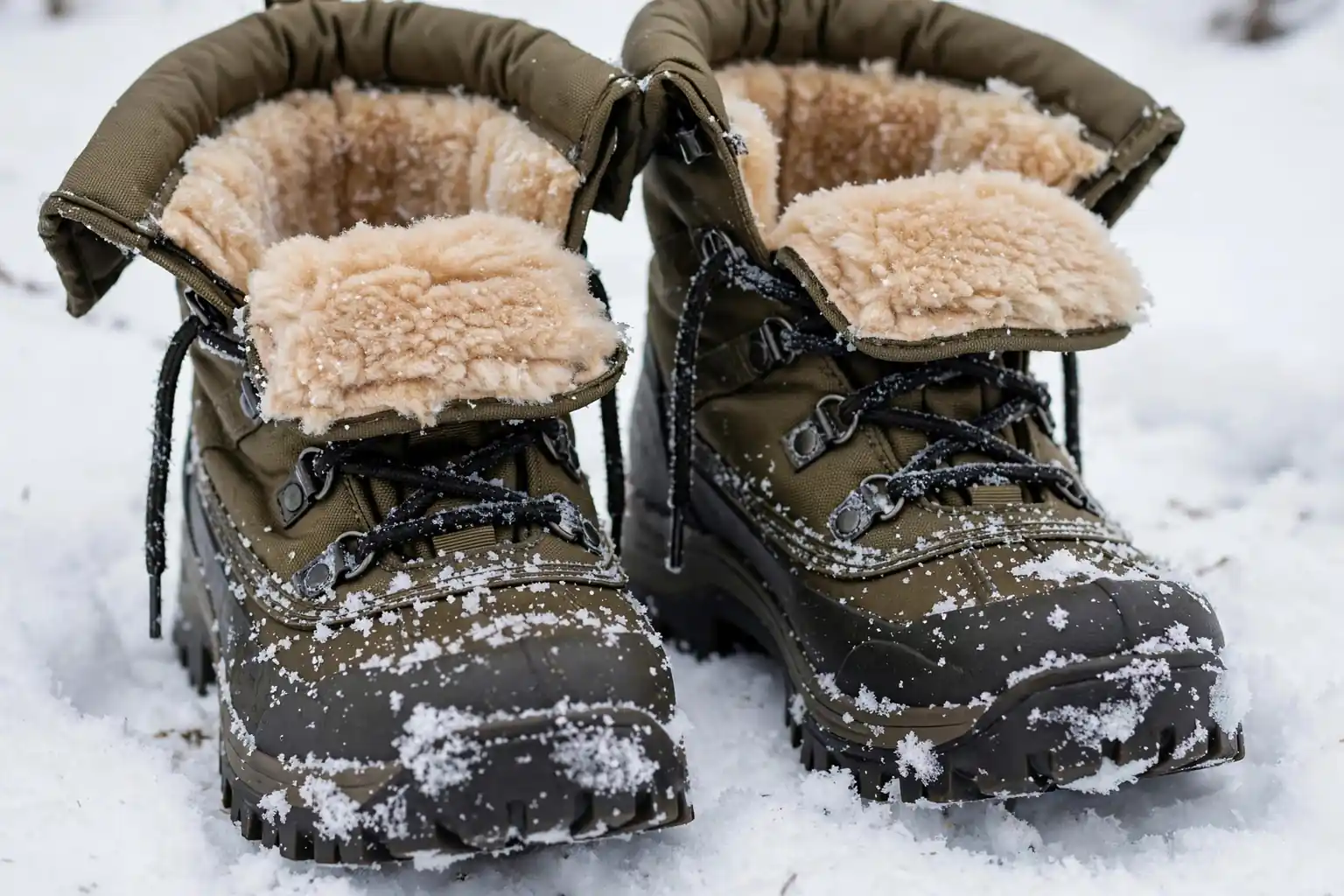
Insulation weight is listed in grams per square meter of synthetic fill, usually Thinsulate or a house-brand equivalent. As a rough guide: 200 grams suits people who are moving, like walking a dog or shoveling, down to about 20°F. Around 400 grams covers standing outside for longer stretches in similar cold. Anything from 600 to 1,000+ grams is built for staying still in deep cold, like ice fishing or watching a parade, not for hiking or errands where your own movement generates heat.
More insulation is not automatically better. A heavily insulated boot on an active foot traps sweat, and damp insulation loses much of its warming power. Match the rating to how still you’ll actually be, not to the coldest number on the shelf.
Where Boots Lose Their Rating in Practice
A few things quietly cancel out a good insulation number:
- Fit that’s too tight. Thick socks stuffed into a snug boot compress the insulation and cut circulation, and cold feet are often a circulation problem more than an insulation one.
- Wind exposure at the ankle. A low collar or loose cuff lets cold air pump in with every step, which is why the wind chill matters as much as the thermometer reading.
- A compromised waterproof layer. Wet insulation, wet or dry, conducts heat away from your foot far faster than dry insulation does.
- Standing on cold ground. A thin or worn outsole lets cold transfer up from concrete or packed snow no matter what’s rated inside the boot.
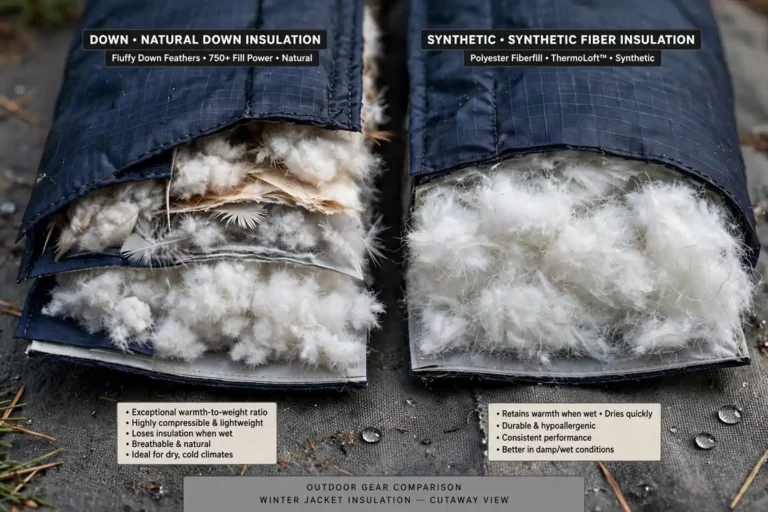
Insulation type matters too, and the tradeoffs are the same ones that show up in synthetic versus down insulation in a winter jacket: synthetic fill in a boot keeps working if it gets damp, while natural fill insulates better per ounce but collapses when wet. For boots specifically, synthetic is the more forgiving choice given how often feet end up in slush.
A well-built boot and a well-built coat solve the same problem from different ends, and the same logic that goes into buying a coat built to last several winters applies here: durable materials and a proper seal matter more over time than a headline insulation number.
Brands often print a temperature “comfort rating” in degrees alongside the gram number, but there’s no standardized lab test behind most of these figures — one company’s -40°F boot and another’s aren’t directly comparable. Treat the printed temperature as a rough marketing claim, and treat the gram insulation weight paired with your own sense of how still you’ll be as the more reliable guide.
If your feet are cold in boots rated for the temperature you’re in, check fit and sock thickness before assuming you need a warmer boot. A boot that’s technically warm enough on paper will still feel cold if it’s cutting off blood flow to your toes.
Warmth Is a System, Not a Feature
No single element makes a winter boot warm. Warmth emerges from a system of insulation, waterproofing, fit, and moisture management working together, and a boot that excels at one while failing another will leave you cold. Understanding the system lets you evaluate boots intelligently instead of trusting temperature ratings that are, frankly, marketing approximations with no standardized testing behind them.
The insulation layer does the core work of trapping warm air. Most winter boots use synthetic insulation measured in grams: 200g suits mild winter conditions and active use, 400g handles general cold weather, and 800g plus targets extreme cold or stationary activities like ice fishing. But the gram number alone misleads. A 400g boot with a waterproof membrane and proper fit outperforms an 800g boot that lets water in or fits so tightly it compresses the insulation. Always evaluate the complete package. The same systems thinking applies to other winter gear, and down versus synthetic insulation in jackets follows parallel principles.
Why Fit Determines Warmth More Than Specs
A boot that fits too tightly is a cold boot regardless of its insulation rating. Compression squeezes the loft out of insulation, eliminating the air pockets that actually retain heat. It also restricts blood circulation to the toes, which is the fastest route to cold feet. Your toes should be able to wiggle freely, and you should test fit with the actual socks you will wear, ideally the thick wool socks that are themselves part of the warmth system. Shop for winter boots in the afternoon when feet are slightly swollen, mimicking conditions after hours of wear.
Conversely, a boot that is too loose lets cold air pump in and out with each step, a phenomenon called bellows effect. The heel should be secure with minimal lift, the midfoot snug but not tight, and the toe box roomy. This is a narrower target than most people expect, which is why trying boots on properly matters more than any specification sheet.
Waterproofing and Moisture Management
Wet feet are cold feet, always. Water conducts heat away from skin roughly twenty five times faster than air, so a boot that keeps water out is doing most of the warmth work before insulation even matters. Look for waterproof membranes like Gore Tex or equivalent, sealed seams, and gusseted tongues that block water entry at the lacing. But waterproofing has a tradeoff: the more waterproof the boot, the less breathable it tends to be, and trapped sweat is its own kind of wet.
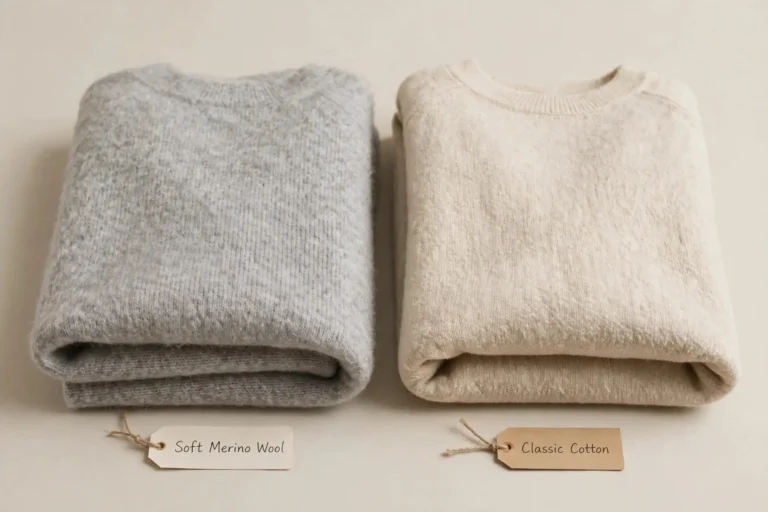
This is where moisture management completes the system. Wool or wool blend socks wick sweat away from skin and retain warmth even when damp, unlike cotton which holds moisture against the foot and accelerates heat loss. Never wear cotton socks in winter boots. Change socks if your feet sweat heavily during activity then stop moving. The boot membrane, the sock fabric, and your activity level form a moisture equation that matters as much as the insulation rating.
Outsole and Cold Ground Transfer
Heat escapes downward too. The outsole and midsole separate your feet from frozen ground, and their insulating value matters for anyone standing on cold surfaces. Thick lugged soles with air pockets insulate better than thin flat ones. Rubber compounds also stiffen in extreme cold, reducing grip. Boots designed for serious cold use specialized rubber that stays pliable at low temperatures. If your winter involves icy sidewalks rather than deep wilderness, prioritize the outsole’s ice traction alongside its insulation.
Matching Boots to Actual Use
The warmest boot is not the best boot if it does not match your activity. Highly insulated pac boots excel for stationary cold: spectating, ice fishing, standing at bus stops. They are miserable for hiking because the bulk restricts ankle movement and the insulation overheats active feet, creating the sweat problem. Active winter pursuits call for lighter insulated hikers with 200 to 400g insulation, good ankle support, and breathability. Urban commuting needs something in between: warm enough for the platform wait, sleek enough for the office, with soles that handle cleared but icy sidewalks.
Temperature ratings on boots deserve skepticism. There is no industry standard test, so one brand’s minus forty rating and another’s minus twenty five cannot be compared directly. Use ratings only for rough sorting within a single brand’s lineup. Real world reviews from people in your climate doing your activities are far more informative. And remember that personal cold tolerance varies enormously with circulation, body composition, and acclimatization. For building the rest of a durable winter wardrobe, buying a coat that lasts ten winters applies the same buy once logic to your outer layer. More cold weather gear guides are at Factblaze.
Sock and Insole Pairings That Add Real Warmth
The single biggest upgrade is a merino wool sock replacing a cotton one. Cotton holds sweat against your skin and loses all insulation when damp, while wool keeps insulating even when it is wet from perspiration. A medium-weight merino hiking sock, around 60 to 70 percent wool, adds several degrees of effective warmth to the same boot with no other changes.
Layering socks works, but only if the boot has room. A thin liner sock under a medium wool sock traps an extra pocket of warm air between the layers. If your toes feel cramped after adding the liner, you have lost more warmth than you gained — tight boots restrict blood flow, and cold toes follow. The boot should let you wiggle your toes freely.
Aftermarket insoles are the most underrated move. The thin foam footbed most boots ship with is barely insulation. Swap it for a wool-felt or foil-backed thermal insole and you block the cold coming up through the sole, which is where a lot of heat escapes. Felt insoles can add the equivalent of a full temperature-rating step on their own.
What does not move the needle: extra-thick socks in an already snug boot, and heated socks as a fix for boots that are simply too cold for the conditions. Get the fit and the insole right first.
Frequently Asked Questions
How much insulation do I need in a winter boot?
For active use in moderate winter, 200g is usually enough. For general cold weather with mixed activity, 400g is the versatile sweet spot. For extreme cold or mostly stationary use, look at 600 to 1000g. Adjust upward if you run cold or have poor circulation, downward if you run hot or stay very active.
Are expensive winter boots worth it?
Up to a point. The jump from a fifty dollar boot to a one hundred fifty dollar boot buys real improvements: better membranes, better insulation, better soles. Beyond two hundred dollars you are often paying for brand, marginal weight savings, or extreme cold specialization most people do not need. Focus on the system fit for your use case rather than price as a proxy for warmth.
Can I make my current boots warmer?
Somewhat. Upgrading to quality wool socks is the highest impact change. Adding insulated insoles helps with ground cold. Waterproofing spray restores DWR on the exterior. But you cannot fix fundamentally inadequate insulation or a poor fit with accessories. If the boot is wrong, replace it.
How do I dry winter boots without damaging them?
Remove insoles and laces, stuff with newspaper to absorb moisture, and let them air dry at room temperature away from direct heat. Never put leather or membrane boots on a radiator or in front of a fire. Direct heat cracks leather, delaminates membranes, and hardens adhesives. Patience preserves the boot.
Do I need different boots for wet snow versus dry cold?
Ideally yes, because the demands differ. Wet snow prioritizes waterproofing and sealed construction above all. Dry extreme cold prioritizes maximum insulation and wind blocking. One boot can cover both if it is well made, but people in climates with both conditions often benefit from a waterproof active boot plus a heavily insulated cold weather boot.
Conclusion
A warm winter boot is a system: adequate insulation that is not compressed by poor fit, waterproofing that keeps liquid water out, moisture management that handles sweat, and soles that block ground cold. Match the system to your actual activities, fit boots with real winter socks, and treat temperature ratings as rough guides rather than promises. Get the system right and winter becomes something you move through comfortably rather than endure. For independent boot testing and comparisons, OutdoorGearLab’s winter boot reviews evaluate real world performance across categories.