A Checklist for Choosing the Right Sock Weight
Choosing sock weight comes down to matching thickness to your activity level and your boot’s fit, not to how cold it is outside. A thick sock in a snug boot can make your feet colder than a thin one, because it compresses the insulation around your foot and restricts the circulation that keeps feet warm in the first place.
A Quick Guide to Choosing Sock Weight by Activity
Sock weight generally falls into three bands:
- Liner or lightweight — thin, close-fitting, built for moisture management under another sock or inside a snug boot during high-output activity like running or ski touring.
- Midweight — the everyday choice for hiking, commuting, or standing around outside in moderate cold. This covers most people’s actual needs.
- Heavyweight or expedition — thick, cushioned socks meant for stationary cold, like ice fishing or standing at a bus stop for a long stretch, worn in boots sized to accommodate the extra bulk.
Check the Boot Fit Before You Buy Socks
Try on boots with the sock weight you actually plan to wear, not your thinnest pair. If your toes touch the front of the boot or the boot feels tight across the top of your foot once the sock is on, you need either a thinner sock or a half-size larger boot — going up in sock thickness alone will make a marginal fit worse.
Fiber Matters as Much as Thickness
Merino wool holds warmth when damp and resists odor over multiple wears, which is part of why it shows up so often in the fiber content of care labels for winter-weight socks. Cotton socks do the opposite: they hold onto sweat and lose insulating power once wet, which is why cotton is a poor choice for anything beyond mild, dry conditions. A wool or wool-blend sock in a midweight will usually outperform a thicker all-cotton sock in real cold.
The apparel industry’s own fiber content standards, tracked by groups like the American Apparel & Footwear Association, are why sock labels list percentages rather than just a marketing term like “thermal” — the blend on the label tells you more than the packaging does.
Once you’ve settled on a sock system that fits your boots properly, the same boots will hold their shape and insulation longer if you store them properly between wears rather than leaving damp socks balled up inside them.
Doubling up on thin socks to reach the same total thickness as one midweight pair sounds efficient, but two socks stacked together shift and bunch inside a boot in ways a single properly sized sock doesn’t, and the extra seam bulk can create pressure points that get uncomfortable well before your feet get cold. Wool socks also lose loft over dozens of washes if they’re dried on high heat, so air-drying extends the effective warmth of a pair longer than the fiber content alone would suggest.
Buy socks after you’ve settled on boots, not before, and bring the socks with you when you try boots on. That one habit prevents more cold-feet complaints than any specific weight or fiber choice.
Sock weight sounds like a trivial detail until your feet are sweating in July or freezing in January. The weight of a sock, how thick and cushioned its knit is, determines comfort more than almost any other sock feature. Choosing well is straightforward once you know what the categories mean and how to match them to your shoes and activities.
Understanding sock weight categories
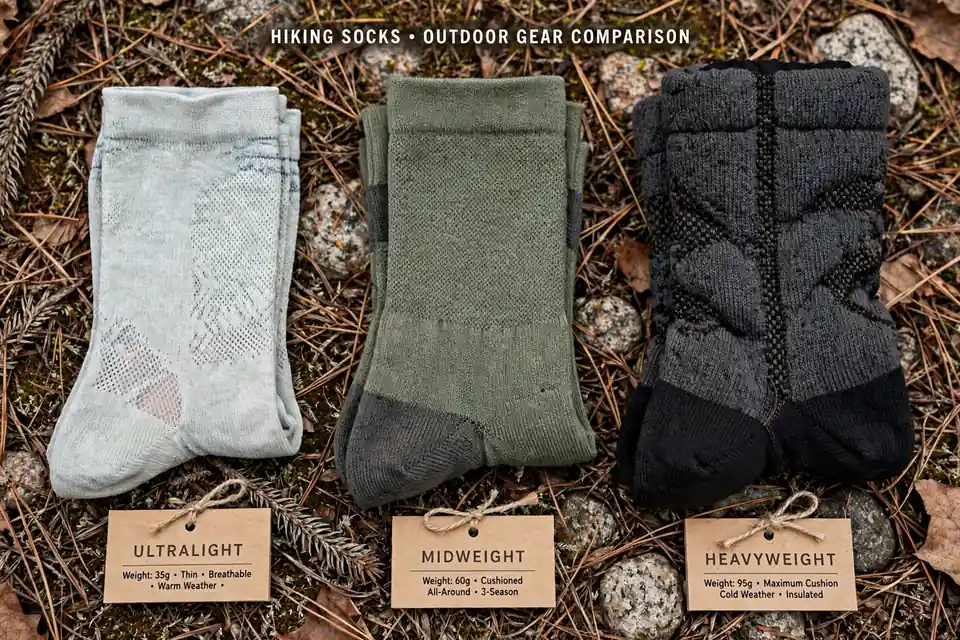
Sock makers generally work with four weight classes. They are not formally standardized, but the terms are used consistently enough to shop by.
Ultralight and lightweight
These are thin socks with minimal or no cushioning. They fit easily in snug shoes, breathe well, and suit warm weather and activities where shoe fit is precise, like cycling or dress wear. The trade-off is less impact absorption and less insulation. In winter they are only appropriate as part of a layering system.
Midweight
The versatile middle ground. Midweight socks have moderate cushioning, usually in the heel and forefoot, and work across three seasons. For most people buying general-purpose socks, this is the default right answer. They pair well with everyday sneakers and casual boots without crowding the fit.
Heavyweight
Thick, heavily cushioned socks built for cold and impact. Think hiking, skiing, and work boots. They insulate well and protect feet on long days, but they need roomy footwear. Stuffing heavyweight socks into tight shoes defeats the purpose: compression squeezes out the insulating air and restricts circulation, making feet colder. If you wear cushioned wool socks, understanding the fiber helps too, and our guide to what merino wool means on a care label explains why merino dominates this category.
Matching weight to activity
The right weight depends on what your feet will actually be doing.
Running and court sports
Lightweight to midweight with targeted cushioning. Runners generally want thin enough socks to preserve shoe fit, with padding only where impact lands. Heavy cushioning in running socks can cause blisters by creating excess movement inside the shoe.
Hiking and outdoor work
Midweight to heavyweight, with cushioning matched to pack weight and terrain. Heavier loads and rougher trails justify more padding. Height matters here too: crew or knee-high socks protect against brush, boots, and ticks. Moisture management becomes critical on long days, which is why wool and wool blends dominate hiking socks.
Everyday and office wear
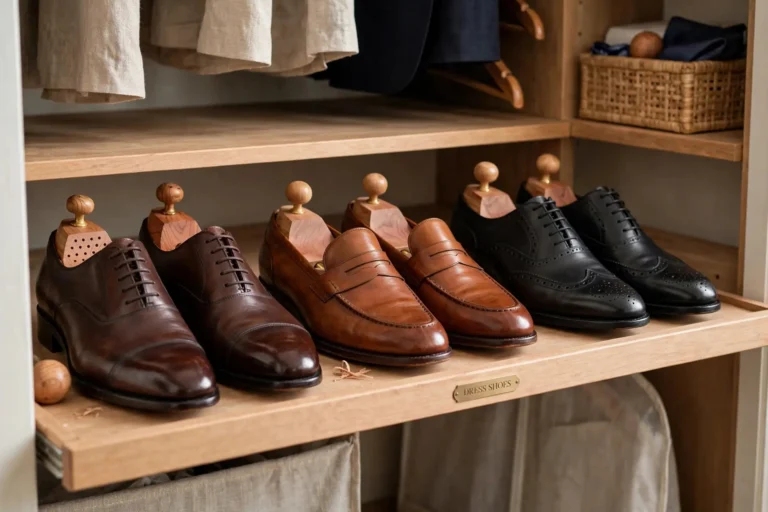
Lightweight to midweight depending on shoe and season. Dress shoes with their snug fit demand thin socks. Casual sneakers accept midweight comfortably. One underrated factor is how socks interact with the rest of an outfit’s proportions; our checklist for choosing the right belt width covers a similar principle of matching accessory scale to the overall look.
Winter and extreme cold
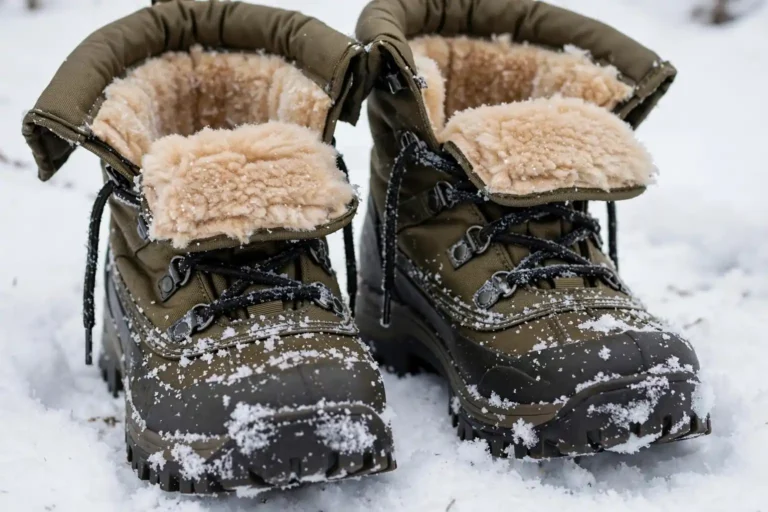
Heavyweight, with room in the boot to spare. The most common cold-feet mistake is wearing the thickest socks in boots that are too tight for them. Insulation needs loft, and loft needs space. Some cold-weather workers layer a thin liner sock under a heavyweight outer sock, which also reduces friction and blisters.
Fiber and construction matter as much as weight
Two socks of the same weight can perform very differently depending on what they are made of and how they are knit.
Fiber content
Cotton is comfortable initially but holds moisture, making it a poor choice for activity or cold. Wool regulates temperature and resists odor but costs more. Synthetics wick well and dry fast but can smell. Blends try to capture the best of each. For athletic and outdoor use, avoid 100% cotton. The U.S. Army’s cold weather guidance has long emphasized this point, and the REI sock buying guide gives a clear breakdown of fiber trade-offs.
Cushioning placement
Weight is not distributed evenly in a good sock. Targeted cushioning puts padding in the heel, ball, and sometimes the shin while keeping the rest thinner for fit and breathability. Fully cushioned socks exist but are a blunt instrument. Look at where the padding actually sits relative to your needs.
Fit details
Arch support bands, seamless toes, and proper heel pockets separate good socks from foot-shaped tubes. A sock that bunches or slips causes blisters regardless of weight. Sizing matters: socks sized S/M/L based on shoe size fit better than one-size options.
Common sock weight mistakes
Sock Weight and Shoe Fit: Why Thick Socks Change Your Size
Sock thickness changes the inside of your shoe by a real, measurable amount. A heavyweight hiking sock adds roughly a quarter inch of padding around your foot compared to a thin dress sock. That is enough to turn a comfortable shoe into a tight one, especially across the toe box where there is the least room to give.
The rule of thumb: buy shoes in the socks you will actually wear with them. If you try on boots in thin socks and wear them with thick ones, you will feel the pinch on the first real walk. If a shoe fits perfectly in thin socks but you want it for thick socks, go up half a size. The extra length matters less than the extra volume.
Liner plus outer sock combos, popular with hikers to prevent blisters, add the most bulk of all. A thin synthetic liner under a midweight wool sock is effectively a heavyweight setup. Size your hiking boots for the full combo, not just the outer sock, and try them on at the end of the day when your feet are slightly swollen.
Going the other direction works too. If your shoes stretched out or your feet shrank, a thicker sock can rescue the fit without new shoes. Just watch for heel slip: if the thicker sock makes your heel lift, the shoe is too big in volume, and no sock will fix that.
A few patterns account for most sock disappointment.
Wearing winter socks in tight shoes
As noted, compression kills insulation. If your winter boots feel tight with heavyweight socks, the boots are too small for that sock, not the other way around. Size winter footwear with the intended sock on.
Ignoring moisture
Sweaty feet in cotton socks get cold fast and blister easily. Moisture management, through fiber choice and weight appropriate to exertion level, matters more than raw thickness for comfort on active days.
One sock for everything
The dream of a single perfect sock dies on contact with reality. Running, office, hiking, and deep winter genuinely need different tools. A small rotation of three weights covers nearly every scenario.
Frequently Asked Questions
What sock weight is best for everyday wear?
Midweight for most people. It offers enough cushioning for comfort without crowding casual shoes, and it works across most of the year. Go lightweight for snug dress shoes or hot weather, heavyweight only for real cold.
Do thicker socks keep feet warmer?
Up to a point, and only if the shoe has room. Insulation works by trapping air, so a thick sock compressed in a tight shoe insulates worse than a thinner sock with air space around it. Fit the footwear to the sock, not the other way around.
Are wool socks worth the price?
For outdoor activity and cold weather, yes. Wool’s temperature regulation, moisture handling, and odor resistance are genuinely superior. For the office, the advantages are subtler and cotton blends are fine for many people.
How many pairs of each weight do I need?
A practical minimum is a week’s worth of your most-used weight plus a few pairs of the others. Most people end up with mostly midweight, some lightweight for summer and dress shoes, and a few heavyweight pairs for winter.
When should I replace socks?
When cushioning compresses flat, elastic fails, or thin spots appear, especially at the heel and ball. Worn socks cause blisters and lose insulation. Good socks last one to two years of regular rotation; cheap ones often less than a season.
Conclusion
Choosing sock weight is really about matching three things: the activity, the footwear, and the weather. Get those aligned and comfort mostly takes care of itself. Start with midweight as your baseline, go thinner for precision fit and heat, thicker for cold and impact, and always leave the shoe enough room to let the sock do its job. Small detail, big difference. Find more practical buying guides on the Factblaze homepage.