Capsule Wardrobe Essentials
There is a specific kind of frustration that comes from standing in front of a closet packed with clothes and feeling like you have nothing to wear. It is not a shortage of clothing , it is a shortage of the right clothing. That is exactly the problem a capsule wardrobe solves.
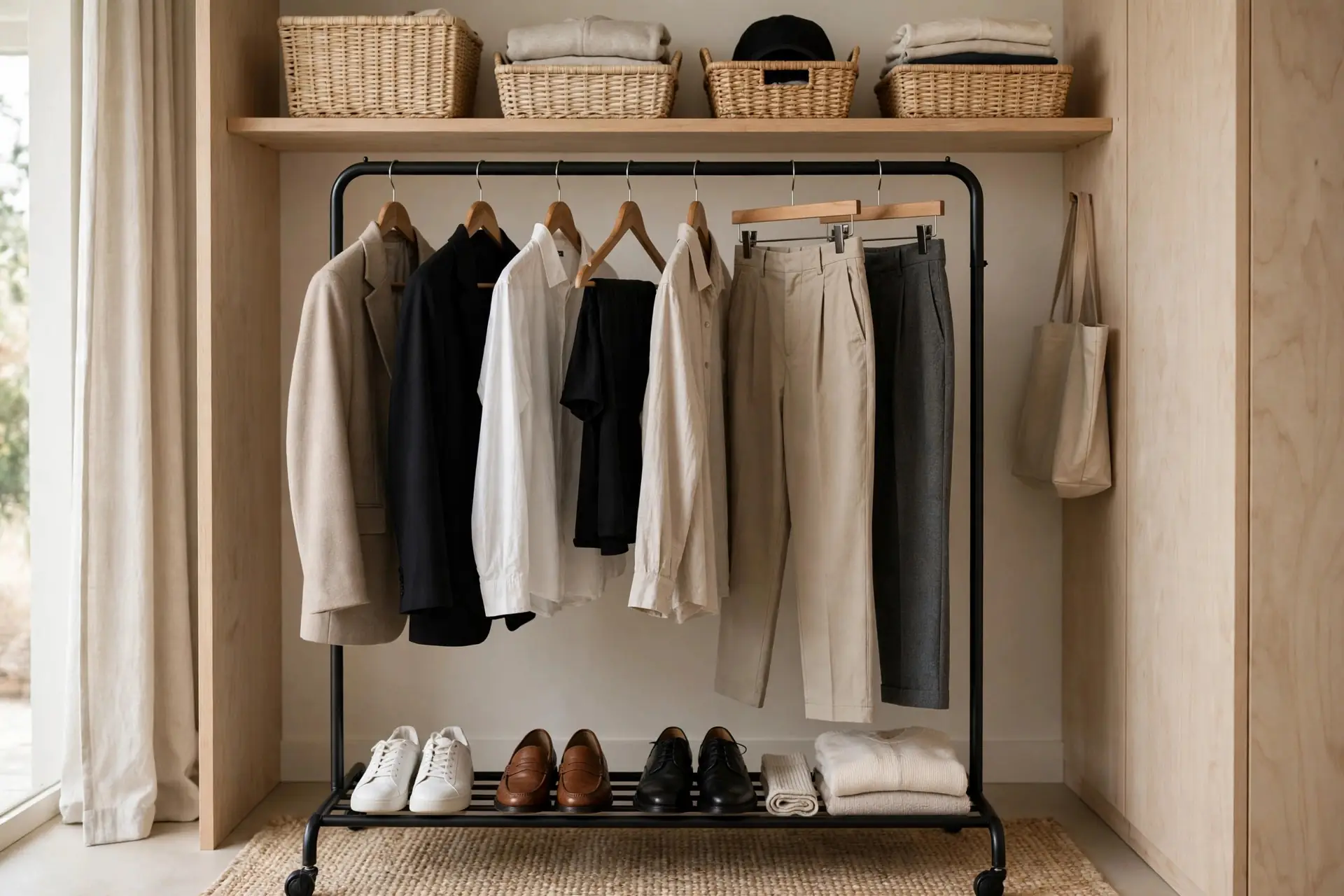
A capsule wardrobe is a curated collection of versatile, high-quality pieces that work seamlessly together, allowing you to create dozens of different outfits from a relatively small number of items. The concept was originally introduced by London boutique owner Susie Faux in the 1970s and later popularized by designer Donna Karan, but it has found a far wider audience in recent years. As of 2025, the global capsule wardrobe market is valued at approximately $6.8 billion and is projected to reach $13.7 billion by 2034, a reflection of how mainstream the philosophy has become.
This guide covers everything you need to know: what capsule wardrobe essentials actually are, which specific pieces belong in a women’s and men’s collection, how to build a cohesive color palette, and how to start the process without feeling overwhelmed.
What Makes a Capsule Wardrobe Different from a Regular Closet ?
The difference is not just about having fewer clothes. It is about having clothes that work together. Every item in a capsule wardrobe should coordinate with multiple other pieces. If you cannot imagine wearing a new garment in at least three distinct outfits with what you already own, it probably does not belong.
Traditional closets tend to grow through impulse purchases, trend-driven buys, and gifts that accumulate without intention. A capsule wardrobe, by contrast, is built with a clear purpose. The result is less clutter, significantly reduced decision fatigue, and a wardrobe that actually reflects your life rather than aspirational shopping habits you never acted on.
Research consistently shows that most people wear only about 20% of their clothing 80% of the time. A well-built capsule wardrobe essentially turns that 20% into your entire collection.
How Many Pieces Should a Capsule Wardrobe Have
There is no universally correct number, despite what many guides suggest. The commonly cited figure is somewhere between 30 and 40 pieces total, but the more useful framework is to base the count on your actual lifestyle rather than an arbitrary rule.
A person who works a hybrid schedule will need a different balance of casual versus professional pieces than someone who works exclusively from home. Someone in a colder climate needs more layering options than someone living in a warm coastal city. The goal is cohesion and functionality, not hitting a specific number.
What you should aim for is a wardrobe where every category reflects how you actually spend your time. If you attend formal events once a year, owning three formal gowns is a waste of wardrobe space. If you work in an office four days a week, having only one pair of professional trousers is a gap.
The Core Capsule Wardrobe Essentials for Women
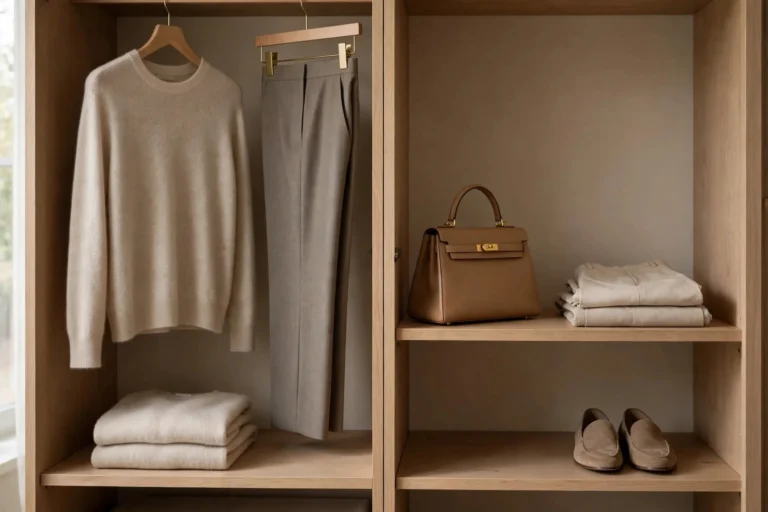
The pieces listed below are widely regarded as the foundation of a classic women’s capsule wardrobe. They are chosen for their versatility, longevity, and ability to dress up or down depending on context.
Tops and Layers
White button-down shirt. This is arguably the single most versatile garment in existence. Worn tucked into trousers for a polished office look, half-tucked with denim for a weekend outfit, or layered open over a fitted tee, it adapts to nearly any occasion.
High-quality white and black t-shirts. Basic by name, essential by function. Invest in ones made from a dense, natural fabric — they will retain their shape wash after wash and form the backbone of dozens of casual and layered outfits.
Neutral knitwear. A crewneck or fine-knit cardigan in a neutral tone like oatmeal, camel, or light grey bridges the gap between casual and polished, works across all seasons, and layers naturally over almost everything else.
A well-fitted blazer. One of the hardest-working pieces in any wardrobe. In a neutral color — navy, charcoal, or camel — a structured blazer instantly elevates jeans, makes a midi skirt look professional, and completes a monochrome look with minimal effort.
Bottoms
Dark-wash or straight-leg jeans. A pair of jeans that fits you well is irreplaceable. Dark washes read as more versatile across occasions, while a straight-leg or slim-straight silhouette tends to age better than trendier cuts.
Tailored trousers. In a neutral color like black, charcoal, or stone, a pair of well-cut trousers serves work environments, evening outings, and smart-casual situations alike.
A midi or pencil skirt. One skirt in a neutral or muted tone adds variety to a capsule without requiring a large wardrobe footprint. A midi length in particular crosses seasons and dress codes with ease.
Outerwear and Occasion Pieces
A classic trench coat. The trench coat is one of the most enduring garments in Western fashion for a reason. It works over everything, transitions between seasons, and has never really gone out of style.
The little black dress. A well-chosen LBD — neither too formal nor too casual — fills the gap when you need something appropriate for an event, a dinner, or any situation that calls for slightly more effort than your daily wardrobe.
Footwear
White leather sneakers. Clean, minimal, and compatible with nearly every casual and smart-casual outfit in the collection.
Loafers or ballet flats. A flat, structured shoe in a neutral tone that carries you from daytime errands to professional settings without requiring a heel.
Ankle boots. A versatile boot in a neutral leather or suede works across trousers, skirts, and jeans. Choose a heel height you can actually wear comfortably for extended periods.
The Core Capsule Wardrobe Essentials for Men
Men’s capsule wardrobes are sometimes described as “system dressing” — where the goal is for every item to connect logically to every other. A well-executed men’s capsule of 20 to 25 pieces can cover nearly every social and professional situation.
Tops
White and light blue dress shirts. These two colors cover formal, business, and smart-casual occasions without duplication. Look for a proper fit through the shoulders and chest — alterations make an enormous difference.
Premium t-shirts in white, black, and navy. The same principle applies here as for women: fabric quality determines longevity. Heavier cotton weights hold their shape and look intentional rather than underdressed.
A knitted polo. A fine-knit polo in navy, white, or a muted tone sits above a plain t-shirt in formality without approaching the territory of a dress shirt, making it extremely practical for smart-casual environments.
Crewneck or V-neck sweaters. One or two knitwear pieces in neutral tones provide texture and layering options that expand the range of outfits significantly.
Bottoms
Dark-wash straight-leg jeans. The same logic applies for men as for women. A well-fitting pair of dark jeans can be dressed up with a blazer and loafers or dressed down with a t-shirt and sneakers.
Chinos in navy or stone. Chinos occupy the critical middle ground between denim and tailored trousers. They pair equally well with sneakers and Oxford shoes, making them some of the most used pieces in any capsule.
Tailored trousers in grey or navy. Essential for professional environments and any formal occasion. A single pair in a versatile neutral covers a considerable amount of ground.
Outerwear
A navy or charcoal blazer. The cornerstone of a men’s smart-casual and professional wardrobe. Worn with chinos and a dress shirt, it becomes business-ready. Paired with dark jeans and a t-shirt, it reads as elevated casual.
A trench coat or quality casual jacket. For everyday outerwear, a well-made trench coat or a clean-lined casual jacket in a neutral color covers transitional weather while maintaining a polished appearance.
Footwear
Minimalist white leather sneakers. The modern standard for clean, versatile casual footwear.
Leather boots or loafers. A single quality pair of leather footwear, whether boots, derbies, or loafers — handles professional settings and elevated social occasions with equal ease.
Building a Color Palette That Actually Works
A cohesive color palette is what allows your capsule wardrobe essentials to function as a system rather than a collection of unrelated garments. Without it, even a carefully curated set of pieces can fail to mix and match effectively.
Start with Base Neutrals
Choose two or three anchor colors that will form the majority of your wardrobe. The most reliable combinations include black, white, and navy; or beige, camel, and brown for a warmer palette. These neutrals are inherently compatible with each other and with most other colors.
Add One or Two Signature Colors
Signature colors reflect your personal style and provide visual interest without compromising versatility. A deep burgundy, a muted olive, or a dusty slate blue can each work as a signature color alongside a neutral foundation. Choose colors that genuinely suit your complexion and that you gravitate toward naturally.
Use Accent Colors Sparingly
Reserve one or two accent colors for statement pieces, accessories, or seasonal additions. These are the colors that express personality — a cobalt blue bag, a terracotta scarf, or a soft blush knitwear piece. They work precisely because they are outnumbered by neutrals.
How to Start Building Your Capsule Wardrobe (Without Wasting Money)
The most common mistake people make when attempting a capsule wardrobe is shopping first and auditing later. The process should work in the opposite direction.
Step 1: Conduct a closet audit. Pull everything out and assess what you actually wear. If you haven’t reached for something in a year and cannot imagine a concrete occasion to wear it, it is not part of your wardrobe in any real sense.
Step 2: Identify your lifestyle categories. Break your life into the environments you actually dress for — not the ones you imagine dressing for. If your realistic weekly split is 70% casual, 25% professional, and 5% formal, your wardrobe should roughly reflect that.
Step 3: Identify gaps, not trends. Make a list of the items your existing wardrobe is genuinely missing based on your lifestyle analysis. A blazer, a versatile boot, a quality base layer — these are gaps worth filling. A printed statement dress you’ll wear once a season is not.
Step 4: Buy intentionally and slowly. Build your capsule over time. Rushing to purchase everything at once leads to compromise buys that undermine the system. Prioritize one quality piece over two mediocre ones.
Step 5: Reassess seasonally. A capsule wardrobe is not a permanent, static collection. Review it every few months and rotate in seasonal pieces — heavier knitwear and layering options in autumn and winter, lighter fabrics and transitional pieces in spring and summer.
If you are also thinking about how your home environment shapes your overall lifestyle — including how you dress and present yourself — you might find the perspectives shared on real estate and living spaces genuinely interesting.
The Sustainability Case for Capsule Wardrobes
One of the more compelling arguments for the capsule wardrobe approach has nothing to do with aesthetics or convenience. The fashion industry accounts for approximately 10% of global carbon emissions annually, and an estimated 85% of textiles end up in landfills rather than being recycled or resold.
Choosing to invest in a smaller number of higher-quality, longer-lasting garments directly reduces textile waste at the individual level. Natural fibers — cotton, wool, linen, silk — also tend to biodegrade more readily than synthetics, making them a better long-term choice both for longevity and environmental impact.
A McKinsey report found that 60% of consumers planned to reduce clothing purchase frequency in 2025, and more than 68% of global shoppers between 18 and 45 now factor environmental impact into purchasing decisions. The capsule wardrobe is, in many ways, the most practical expression of those values.
Explore more interesting facts about living well and animal companions in our collection of fun cat facts — a lighthearted read if you enjoy discovering surprising truths about everyday life.
Capsule Wardrobe vs. Minimalist Wardrobe: Are They the Same Thing
They overlap considerably but are not identical. A minimalist wardrobe prioritizes owning as few items as possible, sometimes as a philosophical stance on consumption. A capsule wardrobe is more pragmatic — it defines a functional collection of coordinating pieces without necessarily adhering to a specific item count or lifestyle ideology.
You can build a capsule wardrobe with 50 pieces if your lifestyle genuinely requires that range. The distinction is intentionality: every piece should earn its place, and the collection as a whole should function as a coherent system. Minimalism is a value; a capsule wardrobe is a method.
For more information on building a sustainable and intentional wardrobe, Google’s search results surface a wide range of current guides, outfit inspiration, and sustainable fashion brands worth exploring.
Frequently Asked Questions
What are the most important capsule wardrobe essentials for beginners?
For someone starting from scratch, the highest-priority pieces are a white button-down shirt, well-fitting jeans, a neutral blazer, a quality crewneck or cardigan, a trench coat, versatile trousers, and two or three clean pairs of shoes — white sneakers, loafers or ballet flats, and ankle boots. These cover the largest proportion of everyday situations with the most flexibility.
How many pieces should a capsule wardrobe have?
Most guidelines suggest 30 to 40 pieces total, but there is no single correct number. The right size depends on your lifestyle, climate, and how varied your daily wardrobe needs are. The more important question is whether every item in the collection coordinates with the others and actually gets worn.
What is the difference between a capsule wardrobe for women and one for men?
The underlying principles are identical — a focused collection of versatile, coordinating pieces in a cohesive color palette — but the specific items differ. Women’s capsules typically emphasize more silhouette variety (skirts, dresses, varied tops), while men’s capsules tend to focus on systematic layering and the interplay between trousers, shirts, and outerwear.
Can you build a capsule wardrobe on a budget?
Absolutely, though it takes more patience and selectivity. Thrift stores, consignment shops, and end-of-season sales are all viable sources for quality pieces at lower price points. The important thing is prioritizing fit and fabric quality over brand names. A well-fitting secondhand blazer in a quality wool blend will outperform a brand-new one in a cheap synthetic fabric every time.
How often should you update a capsule wardrobe?
A seasonal review — roughly every three to four months — is usually sufficient. The goal is not to overhaul the wardrobe but to rotate out pieces that are worn or no longer relevant and introduce one or two well-considered additions that fill genuine gaps. The core of your capsule should remain relatively stable from year to year.
Conclusion
Building a capsule wardrobe is ultimately an exercise in understanding your own life clearly enough to dress for it rather than for some idealized version of it. The capsule wardrobe essentials outlined here are not rules — they are starting points. What matters is that every piece you own has a clear purpose, coordinates with the rest of your collection, and reflects the way you actually move through your days.
The immediate benefit is practical: fewer decisions, more confidence, less waste. The longer-term benefit is financial — spending more on fewer, better things tends to cost less over time than repeatedly buying cheap items that need to be replaced. And for the growing number of people thinking carefully about sustainable consumption, a well-maintained capsule wardrobe is one of the most tangible changes an individual can make.
Start where you are. Audit what you have. Fill only the genuine gaps. The perfect wardrobe is not the one with the most pieces — it is the one you actually reach for.