30 Hilarious Cat Facts That Will Make You Laugh Out Loud
Cats have a talent for being ridiculous. One minute your cat is staring at a wall like it just saw a ghost, and the next it’s sprinting across the room at 3 a.m. for no reason at all. If you’ve ever wondered why cats act the way they do, you’re about to find out — and you’re going to laugh while you’re at it.
This list pulls together some of the most hilarious cat facts, fun facts about cats, and downright bizarre feline behaviors backed by real science and veterinary research. Whether you’re searching for fun facts about cats to share with friends, curious facts about cats for a trivia night, or you just want to understand your own weird little roommate a bit better, this guide covers it all.
Let’s get into it.
Why Cats Are Objectively Hilarious Creatures
Cats aren’t trying to be funny. That’s exactly why they are.
Unlike dogs, who often perform for laughs, cats behave the way they do because of instinct, biology, and a personality that doesn’t care what anyone thinks. Veterinary behaviorists say most “weird” cat habits — zoomies, staring contests, sitting in boxes, knocking things off tables — trace back to hunting instincts, territory marking, or simple comfort-seeking. The comedy is a side effect.
Knowing the “why” behind the funny makes these facts about cats even more entertaining, so we’ll explain the science along the way.
Hilarious Cat Facts About Behavior
1. Cats Get the “Zoomies” for a Reason
That sudden burst of sprinting around the house, usually late at night or early morning, is called Frenetic Random Activity Periods, or FRAPs. Cats are crepuscular, meaning they’re naturally most active at dawn and dusk. Zoomies are simply built-up energy that has nowhere else to go.
2. They Knock Things Off Tables On Purpose
This isn’t clumsiness. Cats often bat objects off ledges to test gravity, get your attention, or practice the same paw-swipe motion they’d use to catch prey. Some behaviorists call it a leftover hunting instinct that just happens to knock your coffee mug over.
3. Cats Ignore You, Then Sit on Your Laptop the Second You Open It
Cats are drawn to warmth, attention, and anything you’re currently focused on. Your laptop is warm, glowing, and clearly the center of your attention — which, in cat logic, means it needs a cat sitting on it immediately.
4. A Cat’s “Slow Blink” Is a Real Compliment
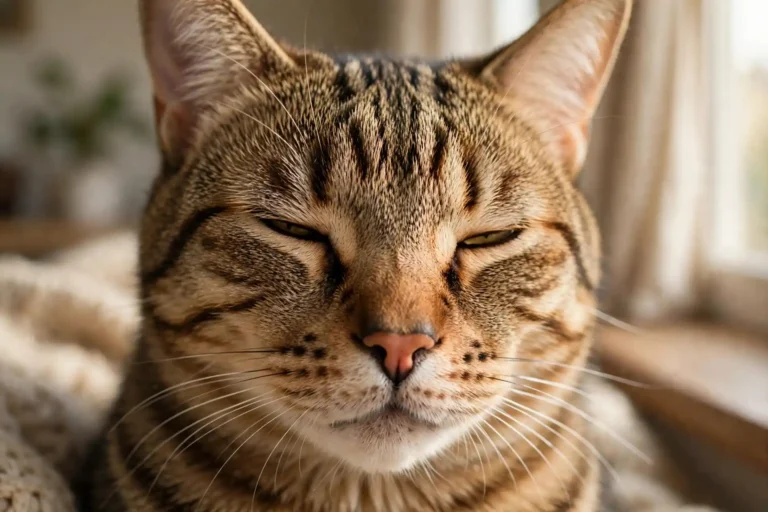
If your cat slow-blinks at you, take it as flattery. Researchers at the University of Sussex found that slow blinking functions like a cat smile, and cats are more likely to approach a person who slow-blinks back at them.
5. Boxes Are Basically Cat Magnets
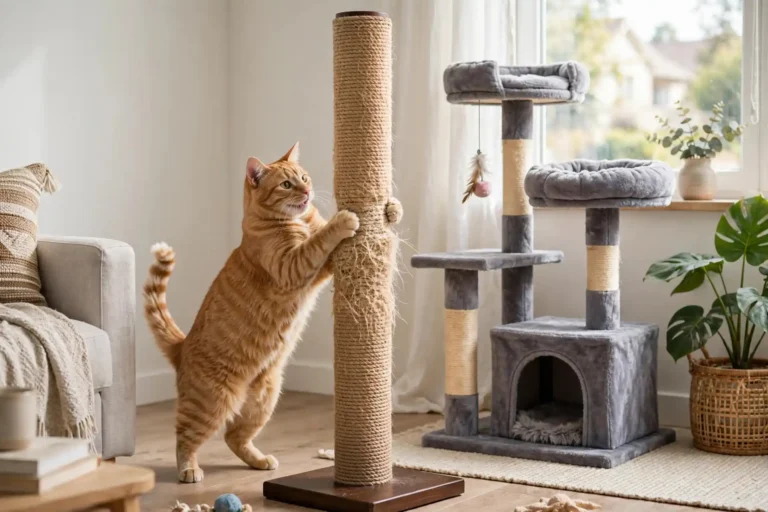
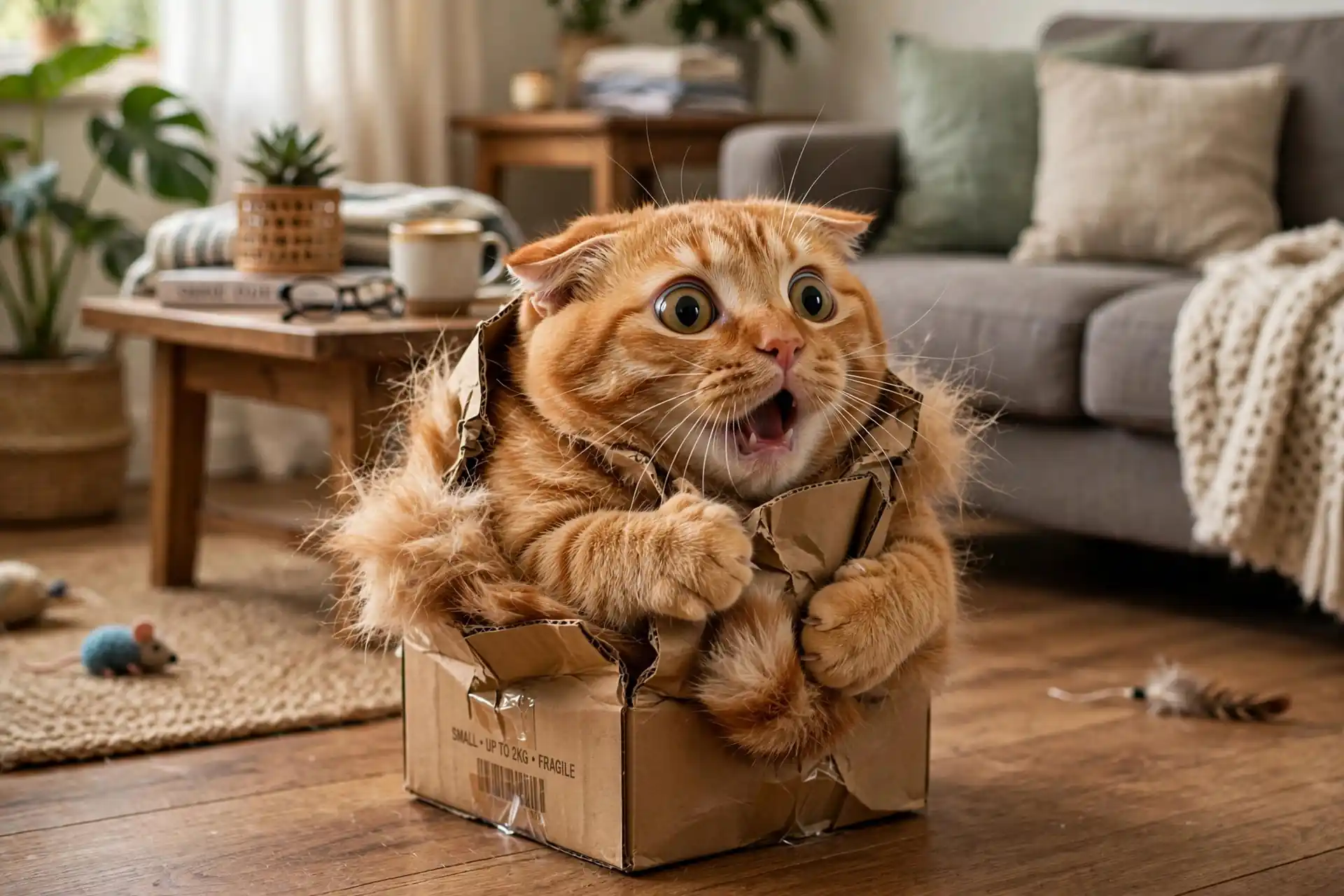
Give a cat a $60 cat tree and a cardboard box, and the box wins every time. Vets say boxes offer a cozy, enclosed space that helps cats feel safe and hidden from predators, even indoor cats who’ve never met one.
6. Cats “Meow” Almost Exclusively for Humans
Adult cats rarely meow at each other. Meowing is a behavior cats developed specifically to communicate with people. In other words, your cat learned a whole new language just to boss you around.
7. They Can’t Taste Sweetness
Cats lack the taste receptor gene for sweetness, so that piece of cake you’re eating means nothing to them. Their obsession is with your food’s smell and texture, not sugar.
8. Whisker Fatigue Is a Genuine Thing
Some cats refuse to eat from deep, narrow bowls because their whiskers keep brushing the sides, which can overstimulate their sensitive nerve endings. Switching to a shallow, wide dish sometimes fixes what looks like pickiness.
9. Cats Headbutt You On Purpose (It’s Called Bunting)
That head bump against your leg or face is a scent-marking behavior called bunting. Cats have scent glands on their heads, and bunting is their way of claiming you as theirs.
10. They Sleep Up to 16 Hours a Day
Domestic cats spend roughly 12 to 16 hours a day asleep, and some snooze up to 20 hours. Big cats and small housecats share this trait, likely tied to the amount of energy hunting requires in the wild, even though your indoor cat’s biggest hunt is a red laser dot.
Fascinating and Funny Physical Facts About Cats
11. A Cat’s Nose Print Is as Unique as a Human Fingerprint
No two cats share the same nose pad pattern, ridges, and bumps included.
12. Cats Have a Third Eyelid
Called the nictitating membrane, this extra eyelid helps protect and moisten a cat’s eye. You’ll usually only notice it when your cat is drowsy or unwell.
13. They Can Rotate Their Ears 180 Degrees
Each cat ear has around 32 muscles controlling it, letting cats swivel their ears independently to pinpoint sounds with impressive accuracy.
14. Cats Walk Like Camels and Giraffes
Cats move both legs on one side of their body before switching to the other side, a rare gait shared with camels and giraffes. Most other animals move diagonally opposite legs together.
15. A Cat’s Purr Might Actually Heal Bones
Studies suggest cat purring frequencies, typically between 25 and 150 Hz, may promote bone density and tissue healing. So your cat isn’t just being cute on your lap; it might be running its own physical therapy session.
16. Cats Have Almost No Collarbone
This is why cats can squeeze through gaps that seem impossibly small. If their head fits, the rest of the body usually follows.
17. Their Tongues Are Covered in Tiny Hooks
Under a microscope, a cat’s tongue looks like it’s covered in hundreds of tiny spines called papillae, which work like a built-in hairbrush for self-grooming.
18. Cats Can’t See Directly Under Their Nose
That’s part of why cats sometimes seem to “miss” a treat sitting right in front of them; their whiskers take over the job their eyes can’t do at close range.
19. A Group of Cats Is Called a Clowder
And a group of kittens is called a kindle. Somewhere out there, a room full of fluffy kittens is technically “on fire.”
20. Cats Have More Bones Than Humans
Humans have 206 bones. Cats have around 230, thanks to their long, flexible spine and tail.
Hilarious Historical and Cultural Cat Facts
21. Ancient Egyptians Could Be Sentenced to Death for Harming a Cat
Cats were so revered in ancient Egypt that killing one, even accidentally, could carry the death penalty. Families would sometimes shave their eyebrows in mourning when a household cat died.
22. A Cat Was Once “Mayor” of an Alaskan Town
Stubbs, an orange tabby, served as the honorary mayor of Talkeetna, Alaska, for around 20 years. There was no human mayor because the town operated under a different governing system, but Stubbs still got the title, the fan mail, and the tourists.
23. The Internet Was Basically Built for Cats
Cat videos and memes are among the most searched and shared content online. A single viral cat video can rack up hundreds of millions of views, more than most Hollywood movie trailers.
24. Napoleon Was Reportedly Terrified of Cats
Ailurophobia, the fear of cats, has been attributed to several historical figures, including Napoleon Bonaparte, according to popular historical accounts.
25. A Cat Named Unsinkable Sam Survived Three Sinking Ships
According to naval lore, this World War II ship’s cat survived the sinking of three separate vessels, earning a legendary (if slightly exaggerated) reputation among sailors.
Weird and Wonderful Cat Senses and Abilities
26. Cats Can Jump Up to Six Times Their Body Length
Powerful hind leg muscles let an average housecat clear jumps that would be like a human leaping over a two-story building.
27. They Can Hear Higher Frequencies Than Dogs
Cats can detect sounds up to around 64,000 Hz, well above the human range of about 20,000 Hz and higher than most dogs, which helps them hear the ultrasonic squeaks of rodents.
28. Cats Always Seem to Land on Their Feet, But Not Always Safely
The “righting reflex” lets cats twist their flexible spine mid-fall to land feet-first. It’s real, but vets warn it doesn’t make cats fall-proof, and high falls can still cause serious injuries.
29. A Cat’s Whiskers Are Roughly as Wide as Its Body
This built-in measuring tool helps cats judge whether they can fit through a gap before committing to the squeeze, which explains why they still sometimes get it hilariously wrong.
30. Cats Can Detect Barometric Pressure Changes
Many owners notice their cats acting strange right before a storm. Cats are sensitive to shifts in air pressure and may hide or become restless as weather changes.
Common Mistakes People Make About Cat Behavior
Even devoted cat owners misread these signals often:
- Assuming a purring cat is always happy. Cats also purr when anxious, in pain, or self-soothing.
- Thinking a swishing tail means friendliness. In cats, a fast-swishing tail usually signals irritation, not excitement like it does in dogs.
- Believing cats are low-maintenance because they’re independent. Cats still need mental stimulation, play, and routine vet visits.
- Ignoring litter box avoidance as “attitude.” It’s frequently a sign of a medical issue or stress, not spite.
- Punishing scratching instead of redirecting it. Scratching is a natural, necessary behavior tied to claw health and scent marking.
Understanding these small details makes a huge difference in reading your cat correctly instead of assuming the worst.
Fun Facts About Cats That Double as Trivia Night Winners
- A cat’s average body temperature is around 101 to 102.5°F, slightly warmer than a human’s.
- Cats spend nearly a third of their waking hours grooming themselves.
- The heaviest domestic cat on record weighed over 46 pounds.
- Cats have scent glands on their cheeks, paws, and tail base, which is why they rub against furniture, doorframes, and you.
- A cat’s brain is about 90% similar to a human’s in structure, more similar than a dog’s brain.
- Cats can make over 100 different vocal sounds, while dogs make around 10.
Frequently Asked Questions About Cats
What is the funniest fact about cats? One of the most amusing cat facts is that adult cats rarely meow at each other; they developed meowing specifically to communicate with humans, essentially learning a language just to talk to us.
Why do cats do random funny things like knock stuff off tables? It usually comes down to instinct. Batting objects, sprinting through the house, and pouncing on nothing are leftover hunting behaviors that show up even in cats who’ve never hunted a day in their lives.
Do cats actually understand when we laugh at them? Cats can pick up on tone of voice and body language, but there’s no strong evidence they understand humor the way people do. They’re more likely reacting to your energy than “getting the joke.”
What is a strange but true fact about cat anatomy? Cats have almost no functioning collarbone, which is why they can squeeze through openings that look far too small for their bodies.
Are hilarious cat facts backed by science, or just internet myths? Many are grounded in real animal behavior research, from feline body language studies to veterinary observations on sleep and hunting instincts, though some viral “facts” get exaggerated online, so it’s worth checking reputable veterinary or research sources.
Final Thoughts
Cats are proof that you don’t need to try hard to be funny. Between the 3 a.m. zoomies, the box obsession, the death-defying leaps, and the meows they invented just for us, cats manage to be endlessly entertaining without even trying.
If you enjoyed these hilarious cat facts, you might also like learning about facts about lions, the wild cousins your housecat secretly resembles more than you’d think, or exploring ice bear facts for another look at how instinct shapes strange and wonderful animal behavior.