First-Time Room Painting: Mistakes to Avoid
Paint is the easy part. Nearly every visible flaw in a first paint job traces back to something skipped before the roller ever touched the wall, and the prep work takes longer than the painting itself.
Skipping the Wall Prep
Dust, grease near light switches, and old nail holes all show through paint if they’re not dealt with first. Wipe the walls down, spackle holes and let them dry fully, then sand smooth — paint doesn’t hide texture, it highlights it under the right light. Glossy or semi-gloss trim and old paint need a light scuff sand too, or the new coat won’t grip and will peel within months. Wear a dust mask while sanding, and if the home was built before 1978, test old paint for lead before sanding it rather than assuming it’s safe.
Not Using Painter’s Tape Properly
Tape applied to a dusty edge, or pressed down carelessly, lets paint bleed underneath, which shows up as a ragged line once the tape comes off. Press the edge down firmly with a putty knife or a fingernail before painting, and pull the tape at a low angle while the last coat is still slightly wet — waiting until it’s bone dry risks peeling fresh paint off with it.
Underestimating Coverage and Coats
One coat almost never covers evenly, especially over a darker existing color or bare drywall, and stopping because it “looks close enough” while wet is a common trap — paint dries a different sheen than it appears wet. Buy enough for two full coats from the start rather than guessing mid-project and hunting for a can that matches the batch.
Ignoring Ventilation and Drying Time
Paint fumes build up fast in a closed room; open windows and run a fan pulling air out, not just circulating it. Rushing between coats is its own mistake — most paints need four hours minimum before a second coat, longer in humid weather, and painting over a tacky first coat drags color and leaves visible roller marks.
A drop cloth, painter’s tape, a sanding sponge, and patience between coats matter more than the brand of paint in the can. Reputable how-to references are worth checking for anything beyond a straightforward wall — trim, ceilings, or ventilation in a smaller room all have their own wrinkles worth reading up on first.
Most bad paint jobs aren’t a bad painter’s fault. They’re a rushed prep job wearing a coat of color.
You have probably already learned the hard way that painting is less about the painting and more about everything around it. First-timers tend to focus on color and brushstrokes while the real problems build up quietly: in the prep, the products, and the pacing. Below are the areas where first-time painters most often go wrong, along with what to do instead so your room actually looks like the picture in your head.
Skipping the Prep Work That Decides the Finish
The single biggest divider between a professional-looking paint job and an amateur one is what happens before the first drop of paint goes on the wall. Paint magnifies whatever is underneath it. A bump, a crack, a patch of peeling old paint will all show through the new coat, sometimes more visibly than before. First-timers who skip sanding and filling are not saving time; they are borrowing trouble from the finish they wanted.
At minimum, wash the walls to remove dust, grease, and grime, especially in kitchens and bathrooms. Fill holes and cracks with spackle, let it dry fully, then sand it smooth. Run your hand over the surface in raking light; your fingers will find imperfections your eyes missed. For dents and small holes in drywall, our guide to patching a small drywall hole walks through the simple version of this job before you ever open a paint can.
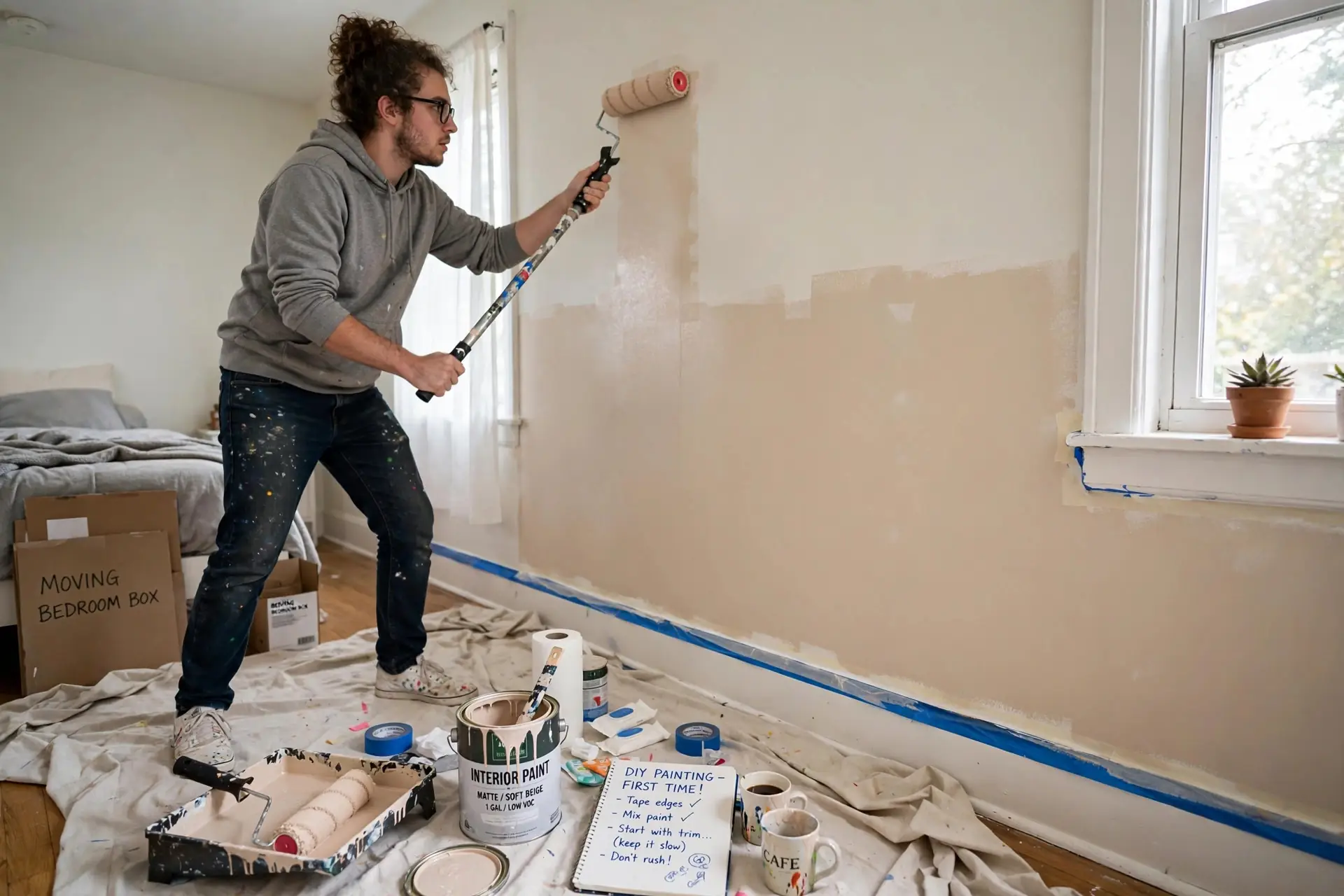
Taping is the other half of prep. Press painter’s tape firmly along trim, baseboards, and ceilings, and seal the edge with a fingernail or putty knife. Cheap or poorly applied tape lets paint bleed underneath, which is how those wavy edges happen.
Choosing the Wrong Paint for the Room
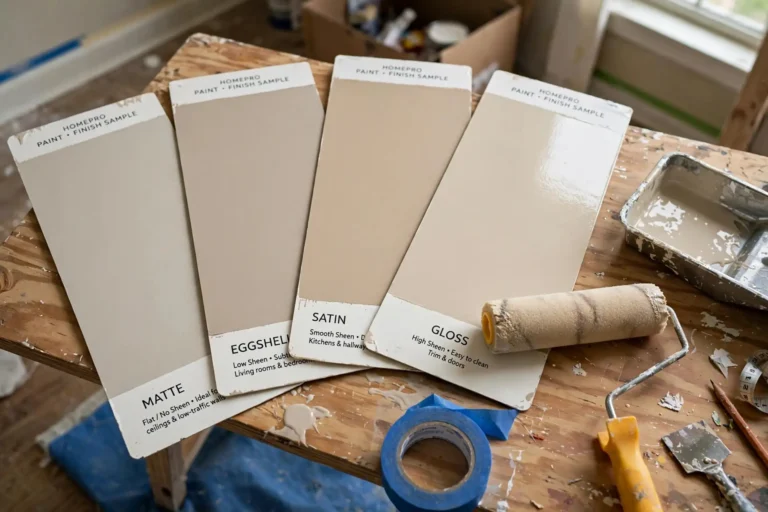
Paint is not one product; it is a family of products, and grabbing whatever is on sale is how first-timers end up with a bedroom wall that shines like a bathroom tile or a bathroom wall that mildews within a year. Flat and matte finishes hide wall imperfections but scuff easily and are hard to clean, which makes them right for low-traffic ceilings and adult bedrooms, and wrong for hallways, kitchens, and kids’ rooms.
For rooms that take abuse or moisture, eggshell, satin, or semi-gloss are the practical picks: they stand up to wiping and resist moisture far better than flat paint. If you want the full breakdown, see our guide to choosing the right paint finish room by room. The sheen also changes how the color reads, so a color that looked perfect on a matte swatch can look noticeably brighter in satin.
Quality matters too. Budget paint often needs three coats where a mid-tier paint needs two, which erases the savings in both time and money. One coat of primer plus two coats of decent paint beats four coats of cheap paint every time.
Painting in the Wrong Conditions
Paint has opinions about temperature and humidity, and ignoring them is a classic first-timer mistake. Most interior latex paints want room temperatures roughly between 50 and 85 degrees Fahrenheit with moderate humidity. Paint applied in a cold, damp room dries slowly and may never cure to its proper hardness.
Ventilation matters as much as temperature. Open windows when weather allows, and run a fan to move air through the room. Proper airflow helps the paint cure evenly. Low-odor and zero-VOC paints have made this easier than it used to be, but oil-based products absolutely still require it.
If your home was built before 1978, there is one more condition to check before you sand anything: old paint may contain lead. The EPA’s lead information page explains how to test for it and the precautions to take. Sanding or scraping lead paint without proper precautions creates hazardous dust, so this is the step to take seriously rather than skip.
Using the Wrong Tools and Technique
The tools are half the job, and first-timers often buy the cheapest roller, brush, and tray in the aisle. Cheap rollers shed lint into your paint and leave a stippled, uneven texture. A decent roller cover with the right nap length for your wall texture, a quality angled brush for cutting in, and a sturdy tray make an immediate visible difference.
Technique counts too. Load the roller evenly, work in manageable sections using a W or M pattern, and maintain a wet edge so each new section blends into the last without lap marks. Cutting in by hand along trim and ceilings takes practice; do it before rolling each section so the rolled texture overlaps the brushed edges. Rushing this part is what produces the visible lines and patchy coverage that mark a first attempt.
Clean your tools properly between sessions. Latex paint cleans up with soap and water, but only before it dries. Wrap brushes and rollers tightly in plastic if you are pausing for the day; wash them fully if you are done.
Underestimating Time and Overdoing Coats
Most first-timers budget an afternoon for a job that takes a full weekend once prep, drying time, and cleanup are counted honestly. Paint needs real drying time between coats, usually a few hours for latex, and recoating too early can pull the previous coat off the wall or create a gummy, uneven layer. Read the can for the recoat window and respect it.
The related mistake is thinking more coats fix everything. Two proper coats over primer are the standard for a reason. If coverage still looks uneven after two coats, the problem is usually the application or the paint quality, not the coat count.
Plan the order of work too. Top to bottom is the rule: ceilings first, then walls, then trim and baseboards, so drips land on surfaces you have not painted yet. Moving furniture to the center of the room and covering it with drop cloths, rather than trying to paint around it, saves both time and accidents.
Forgetting Cleanup and the Long Tail
The job is not done when the last coat dries. Cleanup done carelessly undoes good work: pulling tape too late tears the new paint, and dragging a ladder across a fresh baseboard leaves a mark you will notice every day. Pull tape at the right moment, touch up any bleed-through with a small brush, and give the room its full cure time before hanging anything back up.
Save your leftovers properly. A labeled can with the room name, color name, and finish stored upright in a cool indoor spot is worth real money when you need a touch-up in two years. Paint stored in a freezing garage or sweltering shed degrades.
Finally, resist the urge to judge the color on day one. Paint settles as it cures over a week or two, and your eyes are still calibrated to the old color. Live with it for a few days before deciding whether you picked wrong.
The Painting Order Pros Use (Ceiling to Trim)
Always paint the ceiling first. Gravity guarantees that ceiling paint will spatter onto whatever is below it, so you want those drips landing on surfaces you have not painted yet. Cut in the edges with a brush, then roll in 4-foot sections, keeping a wet edge as you go. Let it dry fully — about four hours for latex — before moving down.
Next come the walls, painted top to bottom. Cut in along the ceiling line, around windows and doors, and into the corners first, then roll each wall in W-shaped strokes. Finish one wall before starting the next, and keep the roller loaded; going back over a half-dry wall leaves lap marks that show in daylight. Tape the ceiling line first, so any slip lands on dry ceiling paint a quick touch-up fixes.
Only when the walls are fully dry do you paint the trim, baseboards, and doors. Trim work is slow, detail-heavy brushwork, and you will lean ladders and rest hands against the walls while doing it. Fresh wall paint forgives those bumps; wet wall paint does not. Paint doors last so they can dry without being closed.
The order exists to cut rework. Every coat is cheap to fix if the layer beneath it is already dry and untouched. Skip the sequence — trim before walls, say — and every wall-rolling session means re-taping and re-touching the trim. Ceiling to trim finishes the job in three passes with no second-guessing.
Frequently Asked Questions
Do I really need primer, or can I skip it?
You need it in most first-time situations: over bare drywall or repairs, over dark colors you are covering with light ones, and over glossy existing paint. Primer seals the surface and gives the topcoat something to grip. Skipping it usually means an extra topcoat, which costs more than the primer would have.
How many coats of paint does a room actually need?
One coat of primer plus two coats of topcoat is the standard for interior walls. One coat alone almost always shows uneven coverage once it dries. A third topcoat is rarely necessary with decent paint and proper technique.
Why does my paint look streaky or patchy?
The usual causes are rolling over paint that has started to dry (losing the wet edge), an underloaded roller, cheap paint, or skipping primer over a surface with different absorption. Work in smaller sections, keep the roller loaded, and maintain a wet edge to prevent lap marks.
When should I worry about lead paint?
If your home was built before 1978 and you plan to sand, scrape, or disturb old paint, test for lead first. The EPA provides guidance on testing and safe practices. If lead is present, follow proper containment procedures or hire a certified professional.
How long should I wait before putting furniture back?
Most latex paints are dry to the touch in a few hours but need days to cure fully. Light furniture can usually go back after 24 hours, but wait longer before placing heavy items against walls or hanging shelves, and check the paint can for cure times.
Conclusion
First-time painting mistakes are almost all avoidable once you know where they hide: in the prep you wanted to skip, the finish you grabbed without thinking, the conditions you ignored, and the timeline you underestimated. Slow down on the front end and the paint will take care of itself on the back end. For more practical home guides like this one, browse Factblaze, where every project gets the same plain-language treatment.