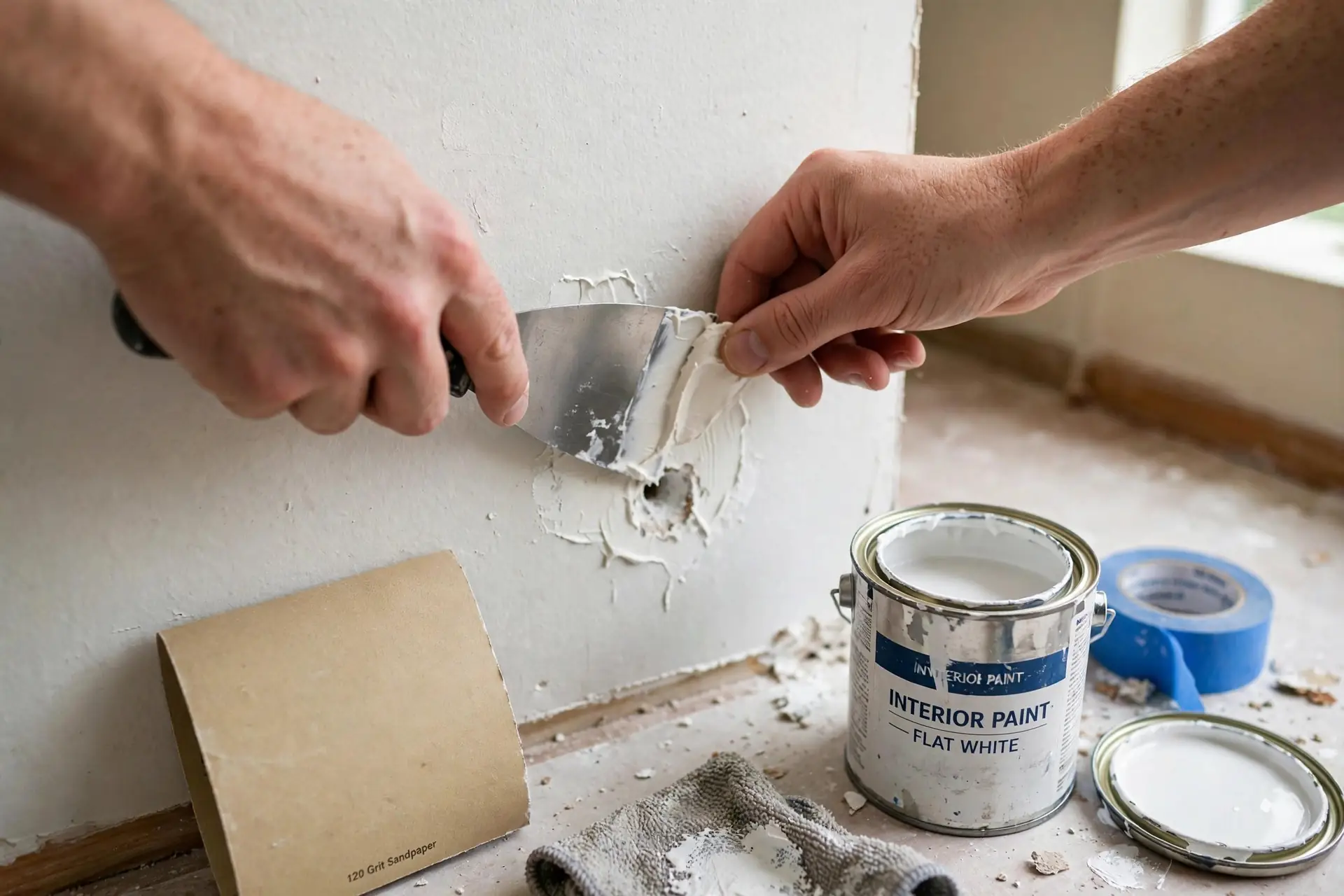
How to Patch a Small Drywall Hole Without It Showing
Small holes fail to disappear for one reason almost every time: too much joint compound, applied in one thick pass, then sanded unevenly. The fix isn’t more compound — it’s thin layers, patience between coats, and sanding that blends into the wall around the hole instead of just the hole itself.
What You Need First
For a hole under an inch or two, a self-adhesive mesh patch, joint compound, a 6-inch putty knife, a fine-grit sanding sponge, and a small brush for touch-up paint cover it. Wear a dust mask while sanding — dried joint compound dust is fine enough to irritate your lungs if you’re working more than a couple of small spots — and lay down a drop cloth, since the dust travels further than it looks like it will. If the home was built before 1978 and the wall has old paint on it, test for lead before sanding rather than assuming it’s fine.
The Technique That Avoids a Bump
Press the mesh patch flat over the hole so it overlaps the surrounding wall by at least an inch on every side. Apply the first coat of compound thin enough that the mesh pattern is barely visible through it — resist filling the hole in one pass, since that’s what creates the raised lump that catches light later. Feather the edges out well beyond the patch itself, dragging the knife from the compound toward clean wall so the thickness tapers to nothing rather than stopping at a hard edge.
Where People Go Wrong
Sanding too soon is the most common mistake; compound needs to fully dry, not just look dry, which usually takes longer than the can’s estimate in a humid room. Sanding only the raised spot instead of blending several inches out from the patch leaves a shadow that’s invisible under direct light and obvious the moment sun hits the wall at an angle. Two or three thin coats, each sanded lightly and feathered a bit wider than the last, beats one thick coat every time.
Finishing It Off
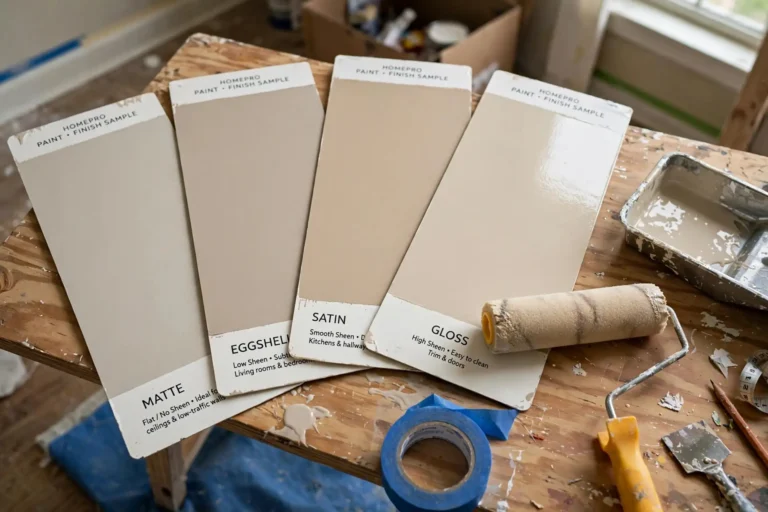
Prime the patch before painting — bare compound absorbs paint differently than the rest of the wall and will “flash,” showing as a dull spot even under a full coat. Match the sheen as well as the color; a satin touch-up on a matte wall shows up under lamplight even when the color is identical. General home-repair references are worth a look if the wall has plumbing or wiring running behind the damaged area — a mesh patch is only appropriate for cosmetic holes, not anything that involved cutting into a stud bay for access, which is a job for a licensed pro.
Done right, a patched wall photographs and lamp-lights the same as the wall around it — the whole test is whether a stranger could find it without being told where to look.
Most small drywall holes are genuinely easy to fix. What makes them show afterward is almost never the patch itself. It is the rushed sanding, the skipped primer, or the paint that does not quite match. The basics are covered above. Below is the detail that turns an okay patch into one you cannot find, even when you know where to look.
Match the Repair Method to the Hole Size
Not every hole deserves the same approach. Using the wrong method is the most common reason patches fail or show, so size up the damage before you open a tub of compound.
Nail holes and small dings
Holes under a quarter inch, the kind left by nails, small screws, and picture-hanger pins, need nothing but lightweight spackle. Press it in with a putty knife, scrape flush, let it dry, and sand lightly. No patch, no tape, no drama.
Quarter-size holes up to a few inches
This is the classic doorknob-punch or anchor-tear range, roughly one to four inches across. A self-adhesive mesh patch or a metal repair patch is the right tool here. Center the patch over the hole, press it flat, and feather joint compound over it in thin layers. The key word is layers. Two or three thin coats, each fully dry before the next, will always beat one thick coat that cracks as it shrinks.
Anything bigger than your fist
Once a hole passes about four to six inches, mesh patches run out of strength. The proper fix is a drywall patch, sometimes called a California or hot patch: cut a piece of drywall slightly larger than the hole, trim the back paper to create a flange, and bed it in compound. It produces a repair that is structurally part of the wall rather than a bandage on top of it. Holes approaching a foot across usually call for cutting back to the studs, which is worth handing to a professional if you have never done it.
The Materials That Decide Whether It Shows
A patch job is only as good as what goes into it. The right materials cost very little, but the wrong ones, usually chosen for convenience, are exactly what make repairs visible.
Compound choice matters
For small patches, lightweight spackling compound is easier to sand than heavyweight joint compound, and it shrinks less. For larger repairs, use an all-purpose or topping joint compound, which feathers out more smoothly. Setting-type compound, the powder you mix with water, dries by chemical reaction rather than evaporation, so it barely shrinks and can be recoated in under an hour, though it is less forgiving to sand.
The right tools for an invisible edge
You need a flexible putty knife in the four-to-six-inch range, a wider taping knife around ten inches for feathering, fine-grit sandpaper or a sanding sponge in the 120 to 220 range, and a damp cloth for cleanup. The wide knife is the secret weapon: it spreads the transition between compound and wall over several inches so light rolls across it instead of catching an edge.
The Patching Process, Step by Step
With materials in hand, the actual work is methodical rather than difficult. Rushing any single step is what creates the visible repairs people complain about.
Prep the hole first
Trim away any loose paper, crumbling gypsum, or torn edges with a utility knife, cutting back to solid material. Wipe away dust with a barely damp cloth. Compound bonds poorly to dust and loose paper, and a patch built on a crumbly foundation will crack within months.
Apply thin coats and let them dry fully
Spread the first coat firmly enough to fill the hole and bond the patch, then scrape it as flat as you can. Let it dry completely, which takes longer than the label suggests in humid or cold rooms. Apply the second coat wider than the first, feathering the edges out with the wide knife. A third coat, wider still, is what makes the repair disappear. Between coats, knock down ridges with light sanding, but save the real sanding for the end.
Sand like you mean it, then stop
Final sanding should be done with light pressure and a fine grit, working in a circular motion and feeling for ridges with your fingertips rather than trusting your eyes. If you can feel an edge with your eyes closed, you will see it once painted. But know when to stop: over-sanding exposes the patch or scuffs the surrounding paint.
The Part Everyone Rushes: Texture and Paint
The patching is the easy half. Matching the wall’s texture and paint is where invisibility is actually won or lost: a perfectly flat patch on an orange-peel textured wall will catch the light wrong and announce itself from across the room.
For light orange-peel or knockdown textures, aerosol texture spray matched to your wall type gets you most of the way there. Practice on cardboard first, because the spray pattern depends heavily on distance and speed. Apply it lightly. You can always add more, but too much texture over a small patch looks worse than none at all. For smooth walls, skip the texture step entirely and focus on sanding.
Primer is not optional. Bare compound absorbs paint differently than the surrounding wall, and paint applied directly over a patch will dry to a visibly different sheen, a defect painters call flashing. One coat of primer over the patched area, extended slightly beyond it, equalizes absorption. Then paint the patch with the wall’s original paint if you have it. If you are repainting the whole wall anyway, the job gets dramatically easier. If that larger project is on your horizon, our walkthrough of painting a room for the first time covers the prep and technique that make the difference. Detailed step-by-step photo guides from resources like This Old House are also worth a look before you start.
Stop the Hole From Coming Back
A patch that fails twice is usually a symptom, not bad luck. Doorknob holes return because nobody installed a door stop. Anchor holes return because the replacement anchor is the same type that tore out the first time. Before you close up the toolbox, fix the cause.
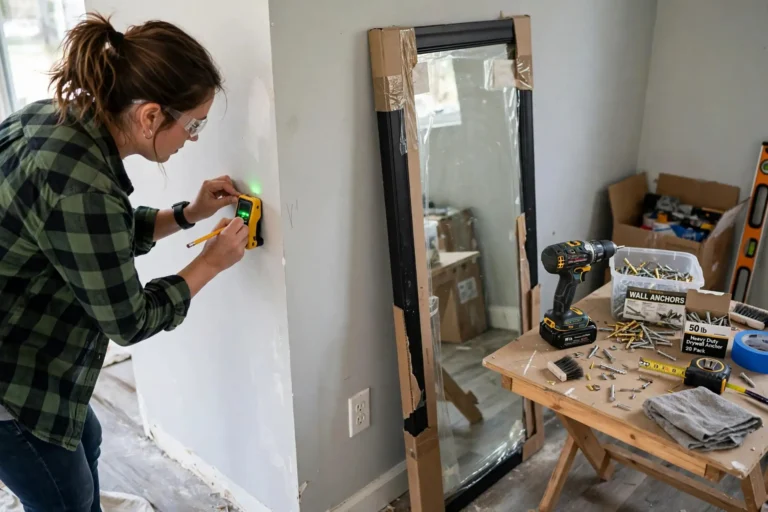
If the hole came from a wall anchor that pulled out under load, the anchor was wrong for the weight or the wall type. Plastic expansion anchors in drywall hold very little, and they cause a huge share of patch jobs. For anything with real weight, step up to toggle bolts or snap-toggle anchors, which spread the load across a much larger area of the wall’s back side. Our guide to hanging anything heavy on a wall covers how to match anchors to loads so the same spot never needs patching again.
For doorknob damage, a five-dollar hinge-pin or wall-mounted door stop installed in two minutes prevents the next patch.
How to Patch a Drywall Hole Without Buying a Kit
For a nail hole or small dent, you need only spackle and a putty knife — a butter knife works in a pinch. Press spackle into the hole, scrape it flush in one firm pass, and let it dry. One thin coat beats a thick blob, which shrinks and cracks as it dries. Sand lightly when dry, wipe the dust, and paint. Ten minutes plus drying time.
For a hole up to about two inches — a doorknob punch or a torn-out anchor — raid the recycling bin instead of the hardware store. Cut stiff cardboard slightly larger than the hole, poke a string through its center, and feed it in. Smear joint compound around the hole’s edges, pull the cardboard tight against the back of the drywall with the string, and hold it while the compound grabs. Snip the string, then fill the hole with compound in two thin layers.
This works when solid drywall surrounds all four edges of the hole for the backing to grip. It fails on crumbled edges, holes bigger than a fist, or damage near a corner with nothing behind the wall. In those cases buy a self-adhesive mesh patch kit — a few dollars, and it gives the compound something to grip across a wider span.
Two thin coats always beat one thick one, and sanding between coats is what makes the patch disappear. Rushing either step is how you end up staring at a visible bump for years.
Frequently Asked Questions
How long should I wait between coats of joint compound?
Until it is dry all the way through, not just dry to the touch. Thin coats in a warm, dry room may be ready in a few hours, while thick coats or humid conditions can need a full day. Recoating over damp compound leads to cracking or bubbling later.
Can I use spackle instead of joint compound for a mesh patch?
For very small holes, yes. For mesh patches over larger holes, joint compound is the better choice because it bonds to the mesh and feathers more smoothly. Spackle tends to shrink and crack in thicker layers.
Why does my patch show through the paint?
The usual causes are skipped primer, which leads to flashing, paint that does not match the original color or sheen, or a texture mismatch. Primer plus the original wall paint solves the vast majority of visible patches.
Do I need to sand between every coat?
Light sanding or scraping between coats to remove ridges and tool marks helps, but the critical sanding is the final one. Do not sand aggressively between coats, or you will thin the repair you just built up.
When should I call a professional instead?
Call one for holes larger than about a foot across, damage involving studs or electrical boxes, water-damaged drywall, or ceilings, where gravity works against every step of the repair. A pro will also be faster, which matters if the damage is in a highly visible spot.
Conclusion
An invisible drywall patch is not a talent. It is a sequence: the right method for the hole size, thin coats with real drying time, careful sanding you check by touch, texture that matches, primer without exception, and paint that matches the wall. Fix the cause while you are at it, and the wall stays clean. For more home repair guides that respect your weekend, browse the DIY section here on Factblaze.