Wool vs Cotton for Everyday Wear: Key Differences
Wool vs cotton comes down to two different jobs, not one fiber being better than the other. Wool regulates temperature better than cotton in both directions, which is why it shows up in everything from winter coats to summer suiting in hot climates. Cotton is more breathable against skin at moderate temperatures and easier to care for. Past that, the differences that change how a garment performs are more specific than “wool is warm, cotton is cool.”
Warmth and Moisture
Wool fiber has a natural crimp that traps air, and it can absorb a meaningful amount of moisture, roughly a third of its dry weight, before it feels wet to the touch. That’s why wool socks and base layers stay functional even when you’re sweating, while a soaked cotton shirt clings to skin and pulls heat away from the body fast. Cotton is the better choice for hot, dry conditions where you want sweat to evaporate quickly rather than sit in the fiber.
Durability and How Each Fiber Ages
Wool fibers can bend thousands of times without breaking, which is part of why a well-made wool coat or suit can last decades with basic care. Cotton fibers are strong when new but lose tensile strength with repeated washing and sun exposure, so cotton garments tend to show their age through thinning fabric and fading rather than structural failure.
Wool also resists odor longer between washes because its structure doesn’t hold onto bacteria the way cotton does, which is why a wool sweater can go several wears before it needs cleaning, while a cotton t-shirt usually needs washing after one.
Care
This is where cotton wins outright for most people. Most cotton garments handle a normal machine wash and dryer cycle for years. Wool typically needs cold water, a wool-specific detergent, and flat drying, and many wool garments are dry-clean only because the fiber felts and shrinks under heat and agitation. If you don’t want to think about laundry, that alone might decide the question for you.
Wool vs Cotton: Picking the Right One for a Given Piece
For base layers and socks worn against skin during activity, wool’s moisture handling usually wins. For everyday shirts, underwear, and warm-weather clothing, cotton’s breathability and easy care make more sense. For structured outerwear and suiting meant to last years, wool’s resilience and shape retention hold up better over time. Woolmark’s fiber and care guides go into more detail on wool’s specific properties if you’re deciding between the two for a particular garment.
Most closets need both. The mistake is expecting one fiber to do the other’s job.
Static, Pilling, and Everyday Comfort
Cotton rarely builds up static, which is one reason it stays comfortable through a full day in typical indoor humidity. Wool can generate static in dry winter air, though blending it with a small amount of synthetic fiber usually reduces this. Pilling is a different story: cheaper wool-synthetic blends pill more than either fiber does on its own, while long-staple cotton resists pilling better than the short-staple cotton used in budget t-shirts. Neither difference makes one fiber strictly better; it just tells you what to expect between washes.
Wool versus cotton is one of the oldest debates in clothing, and it persists because neither fiber wins outright. Each dominates different conditions. Understanding where the difference actually shows up in daily wear, rather than in marketing claims, leads to better buying decisions and fewer uncomfortable days.
How the fibers differ
The differences start at the microscopic level and cascade upward into everything you feel.
Fiber structure
Wool fibers are crimped, elastic, and covered in overlapping scales. Cotton fibers are relatively straight, inelastic ribbons. Wool’s crimp creates natural loft that traps air; its elasticity lets it bend and recover. Cotton’s structure gives it smoothness and softness but little bounce-back. These structural facts explain nearly every performance difference below.
Moisture behavior
This is the most important difference. Wool can absorb up to about 30% of its weight in moisture vapor without feeling wet, because moisture goes inside the fiber. Cotton absorbs too, but holds it between fibers where you feel it, and it maxes out around 7-8% before feeling damp. In practice: wool keeps feeling dry while working hard, cotton gets clammy. Our detailed merino wool label guide explains the fiber science behind wool’s moisture advantage.
Where wool wins in everyday wear
Several common situations clearly favor wool.
Temperature swings
Wool insulates when it is cold and breathes when it is warm, buffering the transitions that make cotton uncomfortable. A wool shirt works across a 20-degree range that would have you changing cotton shirts twice. For variable spring and fall weather, wool is the lower-maintenance choice.
Odor resistance
Wool’s moisture management starves odor-causing bacteria, and the fiber itself resists holding smells. A wool garment can be worn multiple times between washes without offending anyone. Cotton holds odor readily and usually needs washing after every wear. For travel, this difference is enormous: fewer garments, less laundry, less packing.
Wrinkle resistance
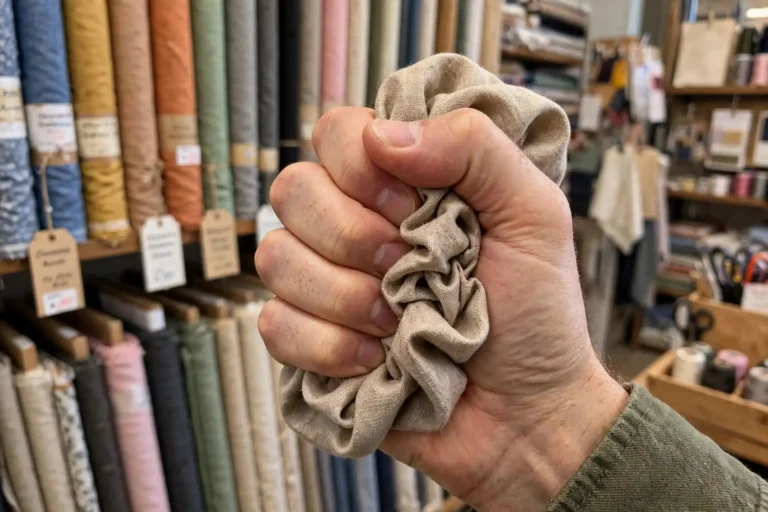
Wool’s elasticity means it springs back from creasing. A wool garment hung overnight often looks freshly pressed. Cotton wrinkles if you look at it wrong. For anyone who hates ironing, this alone can justify wool’s price premium. The Woolmark benefits guide documents these performance characteristics with industry testing data.
Where cotton wins
Cotton is not the underdog people sometimes paint it as. It has genuine advantages.
Hot, dry heat
In sustained high heat with low activity, cotton’s breathability and cool initial feel are pleasant. A loose cotton shirt in dry 90-degree weather is comfortable in a way wool, even lightweight wool, sometimes is not. Cotton also feels cooler to the initial touch, which matters psychologically on hot days.
Easy care and price
Cotton tolerates machine washing, hot dryers, and neglect that would destroy wool. It is dramatically cheaper at every quality level. For basics you wear hard and replace often, underwear, gym shirts, kids’ clothes, cotton’s economics are unbeatable.
Softness perception
Good cotton, especially long-staple varieties like Pima or Egyptian, feels smooth and soft in a way that appeals to many wearers. Coarse wool can itch; cotton almost never does. For sensitive skin on a budget, cotton is the safe default.
The middle ground: when it hardly matters
Honesty requires admitting that for many everyday situations, the difference is subtle.
Mild weather, low activity
Sitting in a 72-degree office, a cotton shirt and a wool shirt feel remarkably similar for the first few hours. The differences emerge with exertion, temperature change, extended wear, or skipped laundry. If your days are climate-controlled and sedentary, buy on price, style, and feel rather than fiber ideology.
Blends
Cotton-wool and wool-synthetic blends try to split the difference, with varying success. A cotton-merino blend can offer cotton’s easy feel with some of wool’s resilience. As with all blends, check percentages: a token 5% wool does almost nothing. If pilling concerns you with wool blends, our pilling guide explains what to expect.
Making the choice
A practical framework rather than a universal verdict.
Choose wool when
Temperature varies, odor matters, you hate ironing, you travel light, or the garment gets multi-day wear. Socks, base layers, sweaters, and travel clothing are wool’s strongest categories.
Choose cotton when
It is genuinely hot, the item gets hard use and frequent washing, budget matters most, or you simply prefer the feel. T-shirts, summer casual, kids’ clothes, and bedding are cotton’s home turf.
A note on sustainability
Fiber choice has environmental dimensions worth a brief mention. Wool is biodegradable and renewable, but sheep farming carries land and methane costs. Cotton is also biodegradable and renewable, but conventional cotton is pesticide and water intensive. Organic and responsibly certified options exist for both. As with most textile sustainability questions, the biggest lever is buying well and keeping garments in use longer, which dwarfs the fiber-level differences for most consumers.
Frequently Asked Questions
Is wool always warmer than cotton?
As insulation, yes, wool traps air better and keeps insulating when damp. But warmth also depends on fabric weight and construction. A heavy cotton sweatshirt is warmer than a thin wool dress shirt. Compare actual garments, not just fibers.
Why does wool cost so much more?
Animal fiber production is inherently more expensive than growing cotton: fewer animals, seasonal shearing, sorting by quality, and more complex processing. Fine wools cost more still. The price reflects real production costs, not just branding.
Can you machine wash wool?
Superwash-treated wool, yes, on gentle cycles. Untreated wool will felt and shrink with heat and agitation. Always check the care label. Cotton, by contrast, survives almost any washing without complaint.
Which is better for exercise?
Wool, for most exercise. Its moisture management and odor resistance are ideal for sustained activity. Cotton’s infamous outdoor-sports nickname, the fabric of death, comes from how dangerously cold wet cotton gets. For gym sessions, synthetics also compete well.
Does wool shrink?
Untreated wool can felt and shrink irreversibly with heat and agitation. Superwash wool resists this. Cotton can also shrink, especially in hot dryers, but it is more predictable and less catastrophic. Follow care labels for both.
Conclusion
Wool wins on performance across variable conditions; cotton wins on price, easy care, and hot-weather comfort. The smart wardrobe uses both strategically rather than pledging allegiance to one. Put wool where its strengths matter, socks, layers, travel, and cotton where its simplicity shines. For more fiber and fabric guides, explore the Factblaze homepage.