What Makes Denim Different From Other Cotton Twill
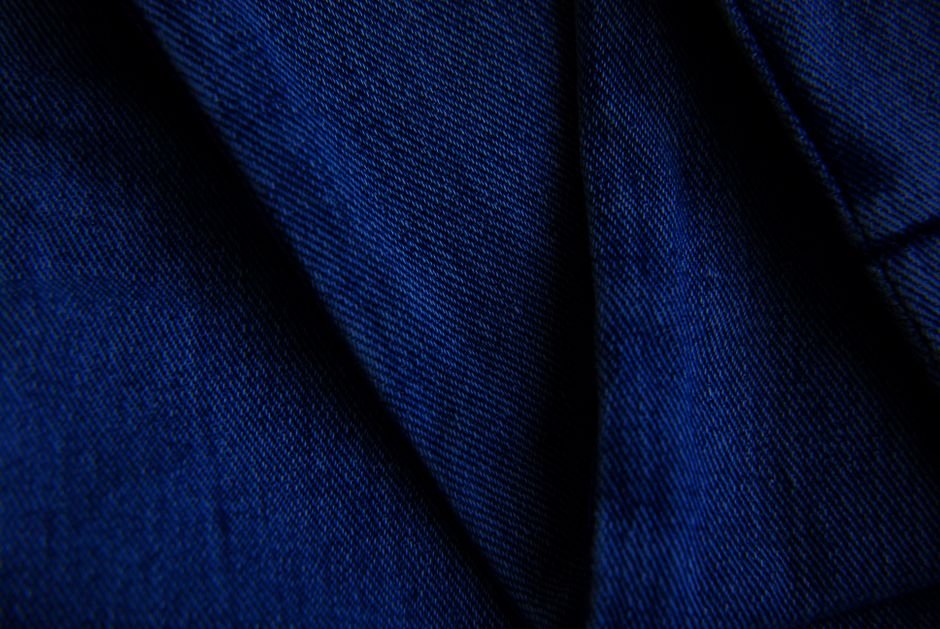
Denim is a twill weave, but not every twill is denim. What sets it apart is how the yarns are dyed and crossed: indigo-dyed warp threads running over two weft threads at a time, which is what gives denim its diagonal rib and its fade.
The Weave Itself
Twill weaves are defined by a diagonal pattern, visible as a rib running across the fabric. In denim, the warp yarn (running lengthwise) passes over two weft yarns and under one, repeated in a step that shifts by a thread each row. That offset is what creates the diagonal line. Other cotton twills, like chino or gabardine, use the same basic structure but with different yarn weights, thread counts, and finishing, which is why they drape and wear differently even though the weave geometry is close.
Why the Dye Matters as Much as the Weave
Denim’s warp threads are dyed with indigo before weaving, but only on the surface — the core of each thread stays white. The weft threads are left undyed entirely. That’s why worn denim fades unevenly at the knees and seat: friction wears away the dyed outer layer of the warp threads and exposes the white core underneath. A twill fabric dyed all the way through, like most chino, doesn’t fade the same way; it just gets lighter and duller overall instead of developing contrast.
Weight also separates denim from lighter twills. Most denim runs from 11 to 16 ounces per square yard, heavier than the 7 to 9 ounces typical of chino. That extra weight is part of why denim holds its shape and resists abrasion better than a lighter twill with the same weave structure.
Selvedge denim, woven on older narrow-width shuttle looms, finishes its own edge with a tightly bound band so the fabric doesn’t fray when cut. Modern projectile looms, which weave wider fabric faster, leave a raw edge that has to be serged afterward. The weave and dye process are otherwise the same — selvedge is a production method, not a different fiber or twill structure.
What This Means When You’re Buying
A heavier denim (14 oz and up) feels stiffer out of the package but holds creases and fade patterns longer. Lighter denim (under 12 oz) softens faster and is comfortable sooner, at the cost of wearing through sooner at stress points like the inner thigh and pocket edges. Neither is more authentic — the right weight depends on whether you want the fabric to soften fast or last long.
If you’re trying to judge how a specific pair will age, how denim fades over time is a better predictor than weight alone, since dye process and finishing vary between mills even at the same ounce weight. And if you’re deciding between denim and something lighter for a jacket, the same weave logic applies to wool vs cotton for everyday wear — weight and weave together decide how a fabric holds up, not fiber content on its own.
For more on how twill and indigo dyeing shaped the fabric, Levi Strauss & Co., one of the original denim makers, keeps a public record of the process.