How to Tell If Fabric Will Wrinkle Before You Buy
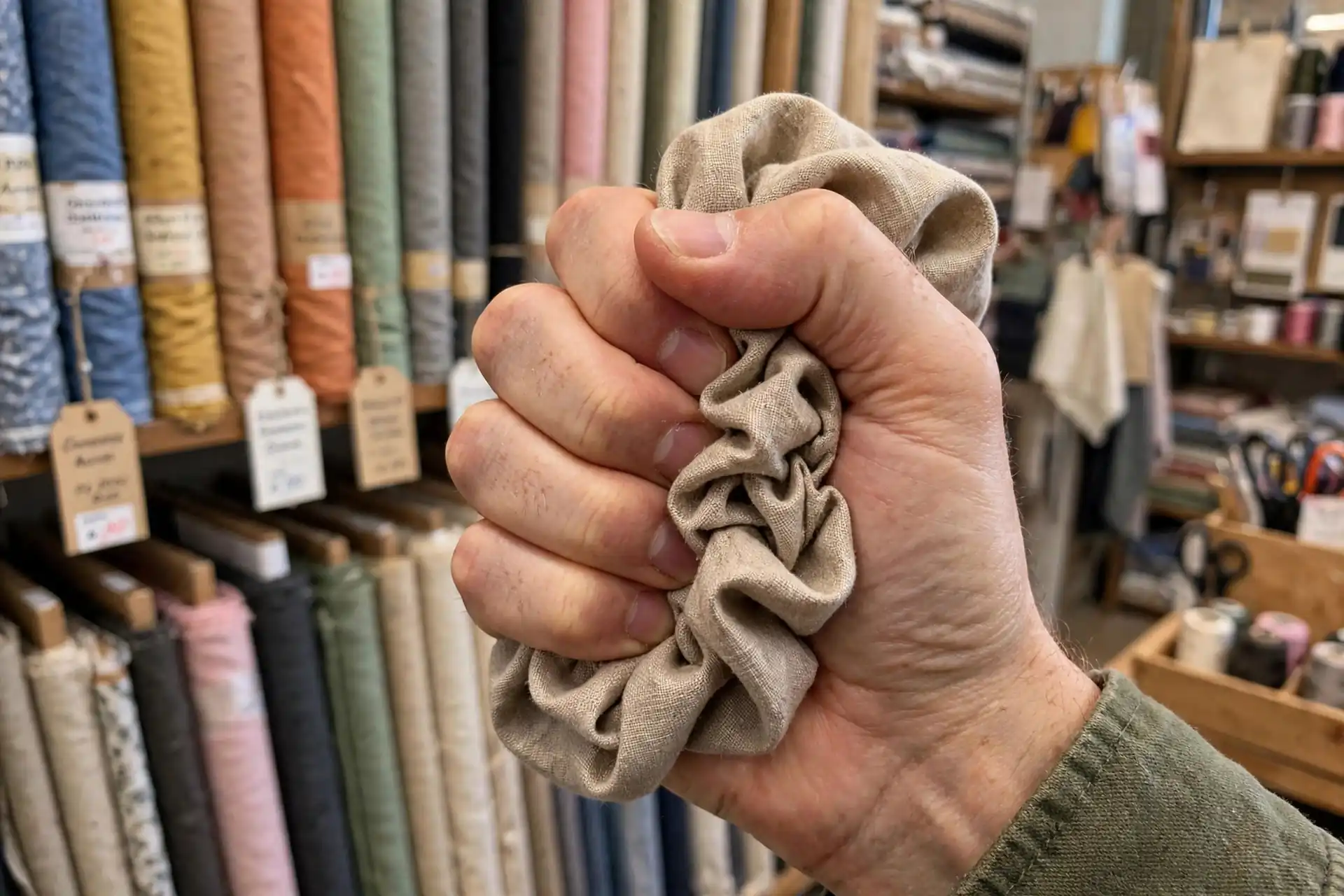
Scrunch a handful of the fabric in your fist, hold it for five seconds, and let go. Watch what happens in the next ten seconds: if the creases fall out on their own, the fabric will probably survive a normal day of wear. If they stay put, that is what the front of your shirt will look like by the time you sit down at your desk. This is the fastest fabric wrinkle test there is, and stores rarely stop you from doing it.
The test works because wrinkling is mostly a question of fiber elasticity, not thread count or price. A $200 linen shirt will wrinkle harder than a $20 polyester one, because linen fibers are stiff and don’t spring back once bent. Weave and finish shift the result a little, but fiber content decides most of it.
What the Fabric Wrinkle Test Tells You, and What It Doesn’t
A garment that passes the scrunch test in the store will still wrinkle somewhat after a full day of sitting, driving, or being packed in a bag. The test isn’t predicting perfection; it’s predicting how fast the fabric recovers and how deep the creases set. A fabric that springs back in two seconds under gentle finger pressure is a different proposition from one that needs to be steamed to look presentable again.
Run the same test on a seam or a doubled-over section, not just a single flat area. Linings, blends, and structured pieces sometimes behave differently once you account for how the garment is put together.
Fiber Content Is the Real Predictor
If you’d rather read the tag than touch the garment, fiber content tells you most of what you need to know:
- Wrinkles easily: linen, rayon, high-cotton-content fabrics without a blend, silk
- Resists wrinkling: polyester, nylon, wool, spandex blends, and anything labeled “wrinkle-resistant” or treated with a durable-press finish
- Depends on the blend: cotton-poly blends, cotton with a small percentage of spandex, and rayon blended with synthetic fiber
Cotton is the fiber people get wrong most often. On its own it wrinkles readily because the cellulose fibers don’t have much elastic memory, which is part of why cotton pieces are so often blended with a small amount of synthetic fiber or given a finishing treatment. Cotton Incorporated, the fiber’s own industry research group, publishes ongoing work on how fiber structure and finishing affect performance like this.
When Wrinkling Doesn’t Matter
Not every wrinkle-prone fabric is a bad buy. A linen shirt worn loose and slightly rumpled reads as intentional in a lot of settings; the same fabric in a tailored suit does not. Ask what the garment needs to look like by the end of the day it’s worn, then weigh that against how it feels in your hand right now. A stiff, resistant fabric that never wrinkles but also never softens with wear is its own kind of tradeoff.
If you’re buying something you’ll wear for a full workday, pack for travel, or sit in for hours, the fist test takes five seconds and tells you more than the price tag or the marketing copy.
Few clothing disappointments sting like a beautiful garment that emerges from its first wash looking like a topographic map. Wrinkling is largely predictable before you buy, if you know how to read the fabric. A sixty-second test in the store, plus some label literacy, separates the easy-care pieces from the high-maintenance ones.
The scrunch test: how to do it right
The classic wrinkle test is simple, but technique matters.
The method
Take a section of the fabric, ideally from an inconspicuous area like an inside seam allowance, and scrunch it tightly in your fist for about ten seconds. Release and watch. Fabrics that smooth out within seconds will generally resist wrinkling in wear. Fabrics that hold sharp creases will wrinkle every time you sit down. Test a few areas if you can, because finishes and linings behave differently from face fabrics.
What the results mean
Quick recovery indicates resilient fibers or a wrinkle-resistant finish. Slow recovery with soft creases suggests moderate wrinkling that steaming will fix. Sharp creases that persist signal a garment that will demand ironing after every wear. There is no failing grade here, only information: a linen shirt that wrinkles is not defective, but you should know what you are signing up for. Our guide to common mistakes buying clothes online covers how to assess these qualities when you cannot touch the fabric at all.
Fiber content predicts wrinkling
The single best predictor of wrinkle behavior is what the fabric is made of. Memorize this hierarchy and you will rarely be surprised.
The worst offenders
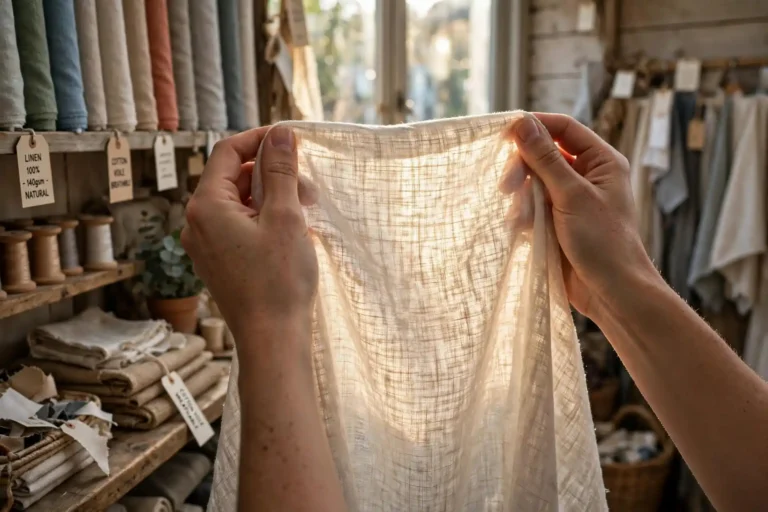
Linen wrinkles more than any common apparel fabric. Its fibers are stiff and inelastic, so creases set hard. Rayon and viscose also wrinkle readily, though they usually press out easily. Pure cotton sits in the middle: it wrinkles noticeably but the creases are softer than linen’s. Silk wrinkles too, though its creases tend to fall out with body heat and hanging.
The resilient fibers
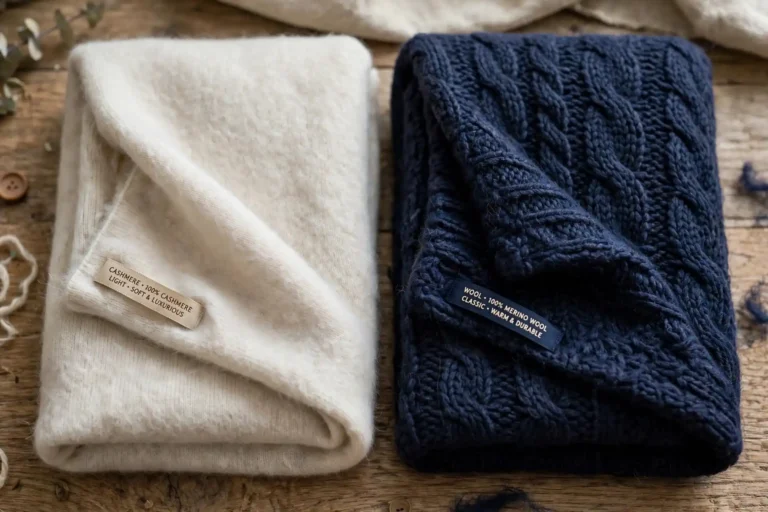
Wool is the natural wrinkle champion. Its fibers are elastic and recover from bending, which is why a wool suit can survive a day of sitting and still look decent. Synthetics like polyester and nylon barely wrinkle at all, which is why they dominate travel clothing. Elastane and spandex add recovery to any blend. For a deeper look at how wool’s structure creates this resilience, see our guide to merino wool on care labels.
Blends and what they tell you
A cotton-polyester blend wrinkles less than pure cotton; the synthetic component adds recovery. Wool with a touch of elastane resists wrinkles better than pure wool and holds shape longer. When a label shows a wrinkle-prone fiber blended with a resilient one, expect behavior somewhere between the two, weighted toward whichever dominates the percentage.
Weave and knit structure
Fiber is only half the story. How the yarns are put together changes wrinkle behavior substantially.
Weave tightness
Tightly woven fabrics wrinkle less than loosely woven ones in the same fiber. A dense cotton twill resists creasing better than a loose plain-weave cotton. Heavier fabrics generally wrinkle less visibly than featherweight ones because their own weight pulls creases out when hung.
Knits versus wovens
Knits, including jersey and sweater knits, resist wrinkling far better than wovens because the looped structure stretches and recovers. This is why a knit blazer travels better than a woven one and why T-shirts rarely need ironing. If low maintenance is the priority, knits are the safer category. The Textile Exchange maintains fiber and fabric resources that explain these structural differences in technical depth.
Finishes
Wrinkle-resistant, permanent press, and easy-care finishes are chemical treatments that improve recovery. They work, though they can slightly change hand feel and may wash out gradually over many launderings. A finish does not change the underlying fiber, so a finished linen still behaves more like linen than like polyester.
Reading wrinkles in context
Wrinkling is not always a flaw to avoid. Context determines whether it matters.
When wrinkles do not matter
Casual summer linen is supposed to look relaxed; pressing it crisp misses the point. Knit garments, dark colors, and textured fabrics all hide creases well. If the garment’s style is casual and the fabric is dark or patterned, moderate wrinkling is invisible in practice.
When wrinkles ruin the effect
Light-colored woven trousers, crisp white shirts for formal settings, and structured garments where sharp lines matter all suffer visibly from wrinkles. For these, either choose resilient fabrics or commit honestly to the ironing the garment will need.
Frequently Asked Questions
Does the scrunch test work on all fabrics?
It works on most apparel fabrics as a relative indicator. It is less informative on very heavy fabrics, which resist scrunching regardless, and on knits, which almost always pass. Use it mainly to compare woven fabrics and to calibrate expectations.
Which fabric wrinkles the least?
Polyester and other synthetics wrinkle least among common fabrics, followed by wool and wool blends. For natural fibers with minimal wrinkling, wool is the clear winner. Treated easy-care cottons are the best option if you want cotton specifically.
Can you prevent linen from wrinkling?
Not really, and you should not try too hard. Linen’s wrinkling is inherent to the fiber. Heavier linen wrinkles less sharply than lightweight linen, and linen blends with cotton or synthetics improve somewhat. Embracing the relaxed look is the practical answer.
Do wrinkle-resistant finishes wash out?
Gradually, yes. Most durable-press finishes survive dozens of wash cycles but diminish over the garment’s life. Harsh detergents and high heat accelerate the loss. The underlying fabric’s natural behavior reasserts itself as the finish fades.
Is steaming as good as ironing for wrinkles?
For most everyday wrinkles, yes, and it is gentler on fabrics. Steam relaxes fibers without the pressure and heat of an iron. Deep-set creases in stiff fabrics like linen or heavy cotton may still need an iron. Hanging a garment in a steamy bathroom is a decent travel substitute.
Conclusion
Predicting wrinkles comes down to three things: scrunch the fabric, read the fiber content, and consider the weave. Linen and rayon will wrinkle, wool and synthetics will not, and everything else falls somewhere in between. Match the fabric’s behavior to how much maintenance you will actually do, and you will stop being surprised by your own closet. Find more practical buying guides on the Factblaze homepage.