How to Unclog a Drain Without Harsh Chemicals
Most slow drains are a hair and soap-scum clog sitting within reach of a plunger or a drain snake, not a problem that needs a bottle of caustic chemical cleaner. To unclog a drain without chemicals, start with the simplest tool that can physically remove the blockage before reaching for anything that dissolves it.
Start With a Plunger, Then a Zip Tool
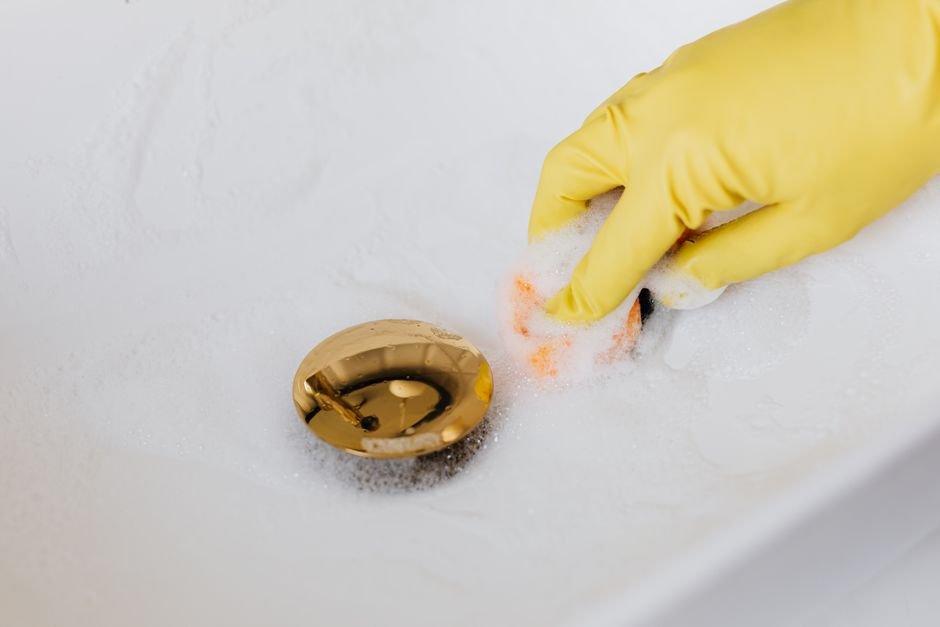
A cup plunger works on sink and tub drains the same way it works on a toilet: block the overflow opening with a wet rag, add enough water to cover the plunger’s cup, and pump straight up and down to push the clog loose rather than just moving air around. For bathroom sinks and tubs, a plastic zip tool, sometimes sold as a drain snake stick, is often more effective than plunging because it physically pulls out the hair clump causing most of the slowdown. Wear disposable gloves for this part, since what comes out is not pleasant.
If the clog sits deeper than a zip tool reaches, a hand-crank plumbing snake feeds further into the pipe and can break up or hook a blockage a plunger can’t reach. This is still a hand tool, no chemicals or power equipment involved, and it works on both sink and tub drains with the right attachment.
What Works Without a Bottle
- Boiling water: effective on soap and grease buildup in metal pipes; skip this on PVC, which can soften or warp under near-boiling water.
- Baking soda and vinegar: half a cup of each, left to fizz for 15 minutes, then flushed with hot water. It won’t dissolve hair, but it helps with grease film and odor.
- A wet/dry shop vac: set to liquid mode and sealed tightly around the drain opening, it can pull a clog out the way it went in.
Skip the two-in-one approach of dumping baking soda and vinegar down a drain that’s already sitting full of standing water; the reaction needs to happen in the pipe, not floating on top of stagnant water where it has nothing to work against.
When to Stop and Call a Plumber
A single slow drain is usually local to that fixture. Multiple drains backing up at once, gurgling sounds from other fixtures when one runs, or water backing up into a tub when you flush a toilet all point to a blockage further down the main line, which is outside what a plunger or a zip tool can fix. That’s a sign of a problem in the shared drain line rather than the fixture itself, and pushing harder with a home tool at that point risks pushing the clog into a spot that’s harder to reach, not clearing it.
Chemical drain cleaners aren’t banned for a good reason here so much as they’re often the wrong tool: they work by heat and caustic reaction, which can damage older metal pipes and rubber seals, and they turn a simple mechanical clog into a standing pool of hazardous liquid if the first attempt doesn’t clear it. The EPA’s Safer Choice program is a useful reference if you do want a labeled cleaning product instead of a mechanical approach, since not every bottle on the shelf marked “natural” is actually gentler on pipes or skin.