What “Merino Wool” Means on a Care Label
Merino wool on a care label means the garment is spun from the fleece of Merino sheep, a breed raised specifically for unusually fine, soft fiber. That fineness is the whole story: it’s why merino wool feels comfortable against skin instead of scratchy the way a heavier wool coat can.
Why Fiber Diameter Is the Real Difference
Wool fiber is measured in microns, and that number determines how a fabric feels. Standard sheep’s wool often runs 30 microns or thicker, coarse enough that most people notice it against bare skin. Merino fiber typically falls between 15 and 24 microns, thin enough to bend rather than poke. The lower the micron count, the softer and often the more expensive the garment, since fine-wool sheep produce less fleece per animal.
That same thinness gives merino wool other properties people associate with performance fabric: it traps air for warmth without much bulk, and it manages moisture by absorbing vapor into the fiber itself rather than sitting wet against skin. That’s why you’ll see merino in base layers and hiking socks as often as in sweaters. Merino also resists odor better than synthetic fabric, since the fiber’s structure binds odor-causing bacteria instead of letting them multiply on the surface the way sweat trapped against polyester does — part of why merino base layers can go several days of wear before they need washing.
What Else the Label Is Telling You
A tag that says “100% merino wool” is a different product than one that says “merino wool blend.” Blends, usually mixed with nylon or elastane, trade some of the softness and breathability for durability and stretch, which matters if the item is socks or something that gets pulled on and off daily. Superfine or ultrafine merino refers to an even lower micron count, generally used for dress shirts and lightweight travel layers where next-to-skin comfort matters most.
Caring for It Without Ruining It
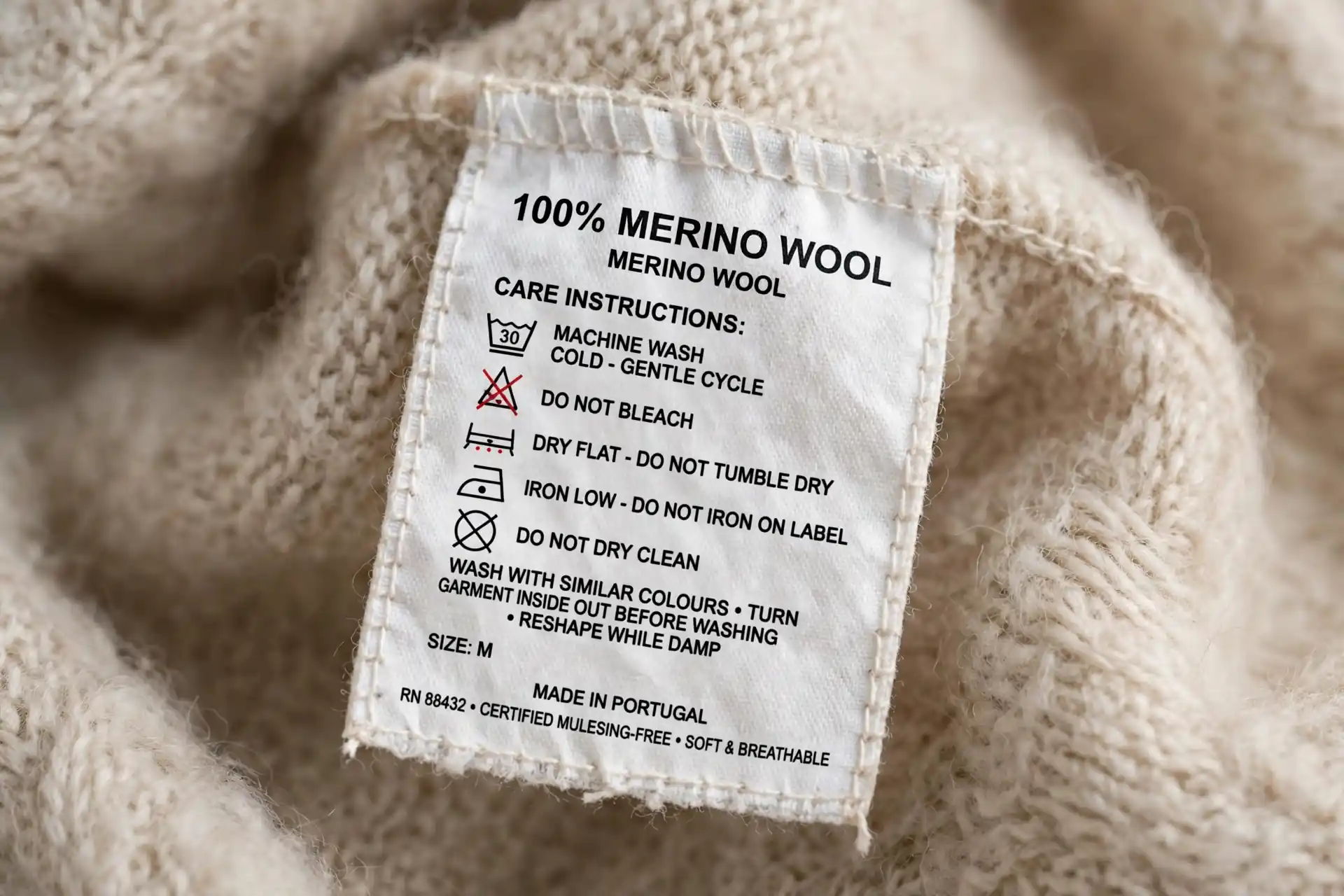
The label’s wash symbols matter more with merino than with sturdier fabric, because the same fineness that makes it soft also makes it prone to felting if agitated in hot water. Hand washing or a machine’s wool cycle in cold water, followed by laying flat to dry, is the safest default regardless of what other wool care advice you’ve heard. Skip the dryer entirely; heat and tumbling are what shrink wool permanently, not the washing itself.
Pilling is a separate issue from felting and comes from friction rather than heat, so a sweater that’s rubbed against a bag strap all day will pill faster no matter how carefully it’s washed.
Merino isn’t a marketing term the way some fabric names have become; it refers to a specific, verifiable fiber source, and the Woolmark certification exists precisely so shoppers can confirm a garment is what the label claims. If you’re deciding between merino and a cheaper wool blend, the micron count on the tag is a better guide than the price alone — and it helps to know how wool behaves differently from cotton under everyday wear, and to run a quick fabric check before buying.
Merino wool shows up on care labels with an air of quiet superiority, and the reputation is mostly earned. But the label tells you less than you might think. Understanding what merino actually means, how it differs from regular wool, and what the care instructions are really protecting helps you buy better and keep the garment alive longer.
What merino wool actually is
Merino is not a brand or a treatment. It is wool from Merino sheep, a breed developed in Spain and now raised mainly in Australia and New Zealand. The defining feature is fiber fineness, and fineness changes everything about how the fabric feels and performs.
Microns and why they matter
Wool fibers are measured in microns. Traditional wool might run 25 microns or thicker, which is why it can feel scratchy: coarse fibers bend less easily against skin and trigger itch receptors. Merino typically ranges from about 15 to 24 microns, with premium grades under 18. Below roughly 20 microns, most people stop perceiving itch entirely. This is the entire basis of merino’s next-to-skin reputation. The Woolmark Learning Centre publishes detailed explainers on fiber measurement and what the numbers mean in practice.
Merino versus regular wool
Beyond softness, merino’s fine fibers create more bends per inch, which gives the yarn natural elasticity. It resists wrinkling, holds shape, and drapes well. It also has the temperature regulation wool is famous for, arguably better than coarser wools, because the fine fibers trap air efficiently while still breathing. If you are weighing it against other winter fibers, our cashmere vs wool comparison for winter sweaters puts the trade-offs side by side.
What the label does not tell you
A care label that says merino wool leaves out several things that affect your experience.
Blends and percentages
Check whether it says 100% merino or a blend. Merino blended with nylon or polyester, common in socks and base layers, gains durability at some cost to softness and odor resistance. A 50% merino blend behaves quite differently from pure merino. The label must state percentages, so read the full fiber content line rather than stopping at the word merino.
Grade and origin
Not all merino is equal. Extra-fine merino under 18 microns feels noticeably different from 23-micron merino, but labels rarely state the micron count. Price is a rough proxy: genuinely fine merino costs more to produce. Terms like extra-fine or ultrafine on marketing copy, as opposed to the legal care label, give hints but are not regulated the way fiber content is.
Superwash treatment
Much commercial merino is superwash treated, a process that smooths the fiber scales so the garment can survive machine washing. Superwash merino is practical but slightly less elastic and less odor resistant than untreated merino. If your label allows machine washing, the wool is almost certainly superwash treated, whether or not it says so.
Why the care instructions are so fussy
Merino’s enemies are heat, agitation, and temperature shock. Together they cause felting, the irreversible matting that shrinks a sweater into a child’s size.
How felting happens
Wool fibers have overlapping scales. Heat and agitation make the scales lock together permanently, and the fabric contracts and thickens. This is a one-way process. A single hot wash with vigorous agitation can felt a garment beyond rescue. This is why labels insist on cool water and gentle cycles. For a broader look at how fiber structure affects everyday wear, see our wool vs cotton comparison for everyday wear.
Washing merino the safe way
Follow the label, but the general safe method is cool water, wool-safe detergent, and minimal agitation. Regular detergents with enzymes can damage wool proteins over time. Turn garments inside out to reduce surface friction and pilling. Never wring; press water out in a towel instead.
Drying and storage
Always dry flat. Hanging a wet merino sweater stretches it under its own weight, and the shoulders may never recover. Once dry, fold rather than hang for storage, and use cedar or lavender rather than mothballs. Merino’s protein fibers are moth food, and a single season of neglect can destroy a good sweater.
Merino’s real strengths beyond softness
Is Merino Worth the Price? A Cost-Per-Wear Look
Do the math before you flinch at the price tag. A merino base layer at eighty dollars that you wear forty times a year for three years costs about sixty seven cents per wear. A twenty five dollar synthetic that pills and smells after one season, worn the same forty times, costs sixty three cents per wear and then needs replacing. The sticker prices look nothing alike; the real prices nearly match.
Merino pays off when you wear the garment hard and often. Base layers, hiking socks, and everyday sweaters earn it back because merino resists odor, regulates temperature across seasons, and survives years of washing if you skip the dryer. It also pays off for travel, where one shirt worn three days beats packing three.
A blend is smarter in two cases. Outer layers and heavy abrasion gear wear through pure merino fast; a merino nylon blend, often eighty five fifteen, keeps most of the comfort and doubles abrasion resistance. And for kids or fast growing teens, cheap synthetics make more sense than a premium fiber they will outgrow.
The honest middle: buy pure merino for next to skin pieces you wear weekly, and blends for everything that takes a beating. Price per wear only works if you actually wear it, so the most expensive merino is the one sitting in your drawer.
Softness gets the marketing, but merino’s practical advantages are what make it worth the price for many buyers.
Odor resistance
Merino fibers absorb moisture vapor inside the fiber rather than holding it on the surface, which starves odor-causing bacteria. A merino base layer can be worn several days without smelling, which is why it dominates hiking and travel clothing. This is a genuine performance edge, not marketing fluff, though blends with synthetics dilute it.
Temperature regulation
The same fiber structure that manages moisture also buffers temperature swings. Merino insulates when it is cold and breathes when it is warm, which is why it works across seasons rather than just in winter. It is one of the few fabrics genuinely comfortable in a wide temperature range.
Frequently Asked Questions
Is merino wool itchy?
Genuine fine merino, generally under 20 microns, is not itchy for most people because the fibers are too fine to trigger itch receptors. If a merino garment itches, it may be a coarser grade, a blend, or you may be among the minority with high wool sensitivity.
Can you machine wash merino wool?
Only if the care label allows it, which usually means the wool is superwash treated. Use cool water, a gentle or wool cycle, and wool-safe detergent. When in doubt, hand wash. Never use hot water or high agitation regardless of the label.
Why is merino wool so expensive?
Fine merino fiber is costly to produce: it requires specific sheep breeds, careful breeding, and sorting by micron count. The best fleeces represent a small fraction of total wool production. Processing fine fibers without damage also costs more than handling coarse wool.
Does merino wool shrink?
It can felt and shrink dramatically if exposed to heat and agitation together, which is irreversible. With proper cool, gentle washing it should not shrink meaningfully. Some initial relaxation of the knit is normal and not the same as felting.
How long does merino wool clothing last?
With proper care, years. The weak points are abrasion, moths, and felting from bad washing. Rotating garments between wears, washing infrequently, storing folded with moth protection, and repairing small holes promptly all extend life considerably.
Conclusion
Merino on a care label promises fine, soft, high-performing wool, and it usually delivers. But the label is the beginning of the story, not the end. Check the blend percentages, respect the washing instructions, and understand that fineness varies. Treated well, merino earns its premium through comfort and longevity that cheaper fibers cannot match. For more plain-English guides to the stuff you buy and use every day, visit the Factblaze homepage.