
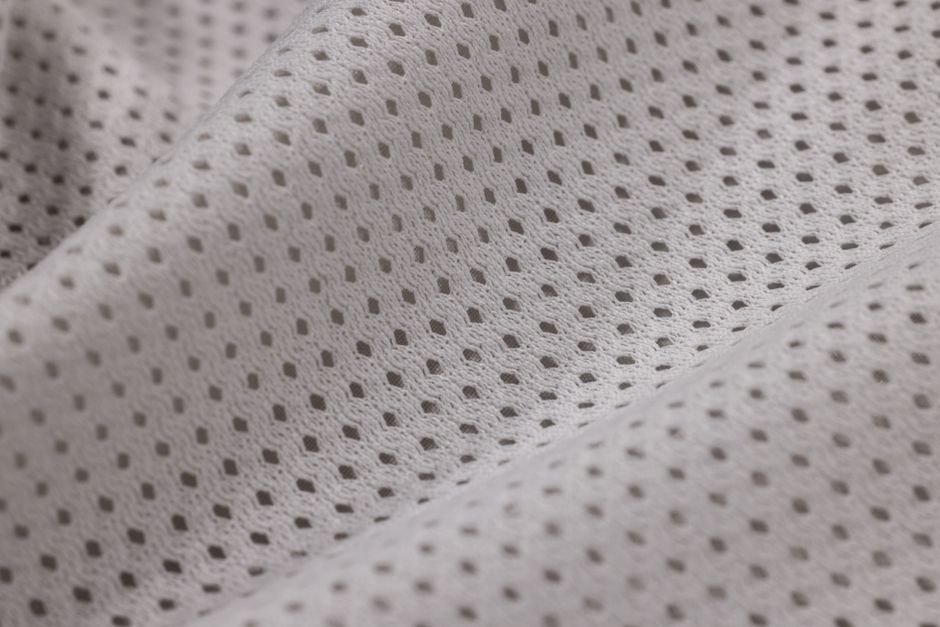
What Makes Athletic Wear Moisture-Wicking
Moisture-wicking fabric works by pulling sweat away from your skin through the structure of the fiber itself, then spreading it across a larger surface area on the outside of the fabric so it evaporates faster. It isn’t absorbing sweat the way cotton does — it’s moving it.
The Fiber Structure Behind How Moisture-Wicking Fabric Works
Most moisture-wicking fabric is synthetic — polyester or a polyester-spandex blend — engineered with a cross-section that isn’t a plain round fiber. Some are shaped with channels or grooves running along the length of the fiber, which move moisture through capillary action, the same effect that pulls water up a paper towel. Others use a two-layer construction: a hydrophobic layer against your skin that doesn’t hold water, and a more absorbent outer layer that pulls moisture through and spreads it out to dry.
Cotton does the opposite. Its fiber structure absorbs water into the fiber itself and holds it there, which is why a cotton shirt gets heavy and stays wet during a workout instead of drying as you go. That’s a fine trade-off for a t-shirt you wear around the house, but it’s a poor choice for anything with sustained sweat output.
Where the Marketing Gets Ahead of the Fabric
Not every shirt labeled “moisture-wicking” performs the same way, because there’s no single regulated test every brand runs before printing the term on a tag. Weave and knit density affect performance as much as fiber choice — a tightly knit fabric can trap heat even while it moves sweat, which defeats part of the purpose in hot conditions. A more open knit in the same fiber breathes better, similar to how waterproofing and breathability trade off against each other in outerwear.
Blend ratio matters too. A small percentage of spandex adds stretch without changing wicking performance much, but a heavier natural-fiber percentage — a cotton-poly blend marketed for casual wear — will wick less effectively than a pure technical synthetic, even under the same buzzword. If you’re comparing two shirts and only one lists a specific fiber technology by name rather than just the word “wicking,” that’s usually the one with more deliberate engineering behind it, similar to how specific insulation types perform differently from generic warmth claims in jackets.
The Outdoor Industry Association tracks how performance fabric technologies are tested and marketed across the apparel industry, if you want to go deeper than a hangtag claim: outdoorindustry.org.
For everyday workouts, the fiber content line matters more than any performance name printed across the chest. A high synthetic percentage in an open knit will outperform a heavily blended fabric with a more impressive-sounding label, no matter which brand is selling it.