Sustainable fashion brands
The fashion industry has a transparency problem. A label that says “conscious collection” or “eco-friendly line” can mean almost anything — or, in many cases, very little. For shoppers who want to actually reduce their environmental footprint and support brands that treat workers fairly, navigating that noise is genuinely difficult.
This guide cuts through it. Below, you will find a curated breakdown of the best sustainable fashion brands across different price points, a clear explanation of what sustainability actually means in this industry, how to identify the certifications that matter, and how to avoid being misled by brands that use environmental language as a marketing tool rather than a business commitment.
Why Fashion’s Environmental Problem Is Larger Than Most People Realize
Before getting into brands, the scale of the issue is worth understanding — not to be alarmist, but because the numbers explain why choosing where you shop genuinely matters.
The fashion industry is responsible for roughly 10% of global carbon emissions annually. That figure exceeds the combined output of all international flights and maritime shipping. The industry consumes approximately 141 billion cubic meters of water per year and contributes to around 20% of global industrial water pollution. Synthetic textiles — polyester accounts for 57% of all fiber produced globally — are responsible for 35% of the microplastics entering the world’s oceans through washing alone.
Perhaps most striking is the waste figure: an estimated 85% of all textiles end up in landfills or are incinerated each year. The United Nations has described the scale as equivalent to one garbage truck of clothing being dumped or burned every second.
These statistics are not meant to generate guilt about buying clothes. They exist to explain why the distinction between a genuinely sustainable fashion brand and a fast-fashion company using the word “green” in its marketing copy is not a trivial one.
What Actually Makes a Fashion Brand Sustainable
Sustainability in fashion is not a single quality — it is a combination of practices across materials, manufacturing, labor, and business model. A brand can use organic cotton and still run sweatshops. A brand can pay fair wages and still produce enormous volumes of unnecessary clothing. The most credible sustainable fashion brands address several of these areas simultaneously.
Materials and Fabric Choices
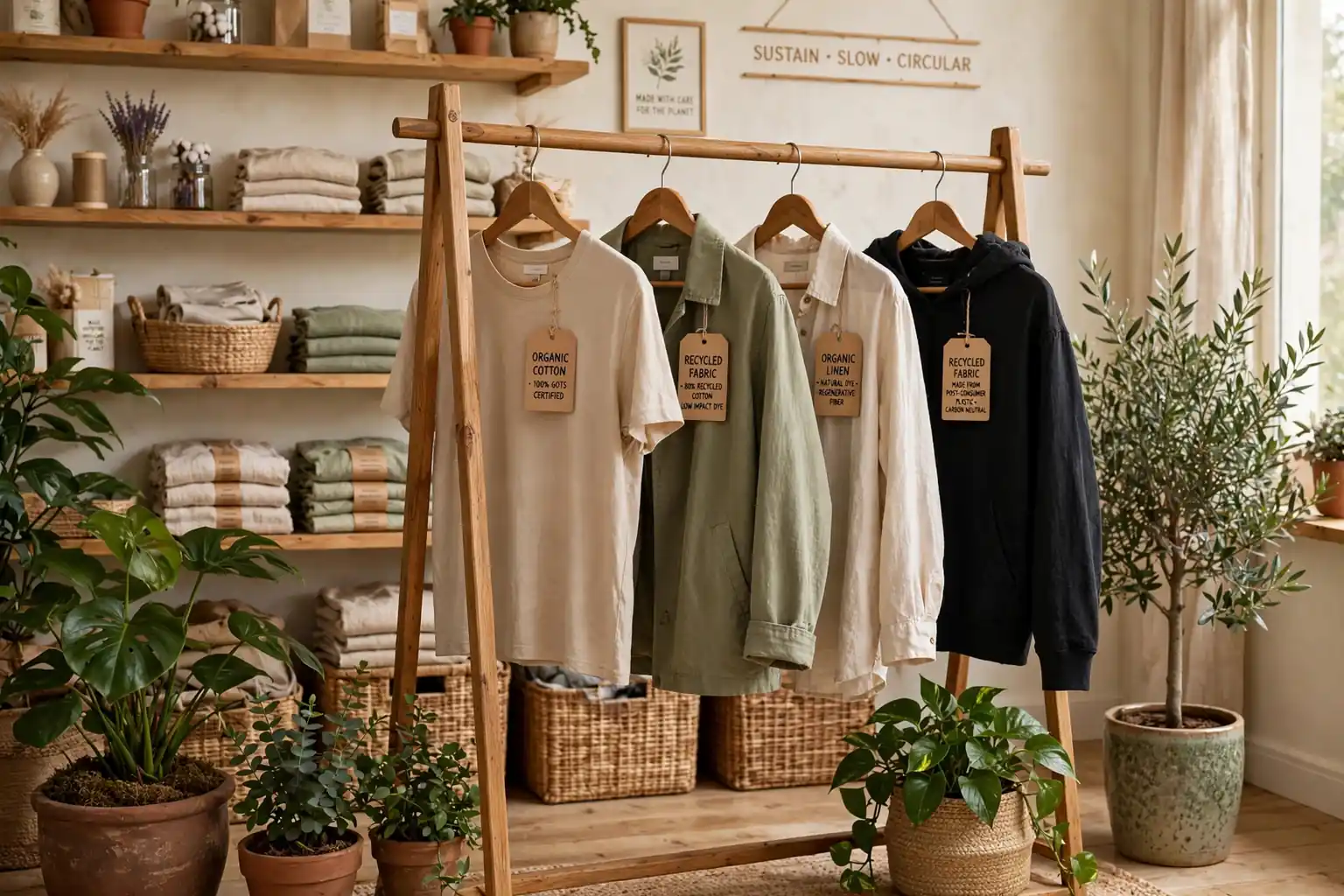
The fiber a garment is made from determines a significant portion of its environmental impact. Conventional cotton is water-intensive and relies heavily on pesticides. Virgin polyester is derived from fossil fuels and sheds microplastics with every wash. The more responsible alternatives include:
- Organic cotton: Grown without synthetic pesticides and with significantly lower water consumption than conventional cotton.
- Tencel (lyocell): A wood-pulp derived fiber produced in a closed-loop process that recaptures and reuses solvents, resulting in far lower chemical and water use.
- Recycled materials: Fabrics made from post-consumer plastic bottles, ocean-reclaimed nylon, or deadstock fabric that would otherwise be discarded.
- Regenerative natural fibers: Wool, linen, and hemp sourced from farms that restore rather than deplete soil health.
Ethical Labor and Supply Chain Transparency
A brand’s environmental claims mean considerably less if the workers producing its garments are underpaid, working in unsafe conditions, or part of an opaque supply chain the brand cannot or will not account for. Supply chain transparency — publishing factory lists, conducting third-party audits, and disclosing sourcing origins — is one of the clearest indicators that a brand takes labor conditions as seriously as its material choices.
Durability and Business Model
One of the least discussed but most important dimensions of sustainability is whether a brand’s business model depends on overproduction and disposability. Sustainable brands typically produce smaller volumes, create timeless rather than trend-driven designs, and offer repair programs or take-back schemes to extend the life of their garments.
The Certifications That Actually Mean Something
Third-party certifications are the most reliable tool consumers have for evaluating a brand’s sustainability claims. Not all certifications are equally rigorous, but the following are widely respected.
GOTS (Global Organic Textile Standard) is the most comprehensive certification for organic textiles. It covers the entire supply chain from fiber to finished product, banning harmful chemicals (including formaldehyde and heavy metals), requiring verified organic fiber content, and mandating strict social criteria for workers throughout production.
B Corp certification works differently. Rather than certifying a specific product, it assesses the entire company across five impact areas: workers, community, customers, environment, and governance. Brands must score a minimum of 80 points on the assessment and legally commit to considering the interests of all stakeholders. It is harder to obtain than most product-level certifications and generally reflects a more systemic commitment to ethical business practices.
Fair Trade certification focuses primarily on labor conditions and fair economic returns for producers. In fashion, it most commonly applies to cotton and other agricultural inputs, ensuring that farmers and workers in early supply chain stages receive prices that reflect the true cost of ethical production.
Bluesign is a chemical management standard that certifies that textiles have been produced using processes that are safe for workers, consumers, and the environment, with strict limits on water and energy consumption.
Best Sustainable Fashion Brands: From Affordable to Luxury
Affordable and Mid-Range Brands
Everlane built its following on what it calls “radical transparency” — publishing the cost breakdown of every garment alongside the retail price. Its product range centers on wardrobe basics: quality t-shirts, denim, and knitwear in organic cotton and other lower-impact materials. The brand is not B Corp certified, but its factory disclosure practices are notably more thorough than most at its price point.
Girlfriend Collective has become one of the most respected names in sustainable activewear. Its leggings and sports bras are made from recycled post-consumer plastic bottles and fishing nets, and the brand operates a take-back recycling program for worn-out pieces. For anyone building an active lifestyle wardrobe, it represents one of the more credible options at its price point.
Tentree plants ten trees for every item purchased — hence the name — and holds B Corp certification. Its product range includes casual basics and outerwear, primarily in organic and recycled materials. While the brand’s “trees planted” model has generated some discussion about additionality (whether those trees would have been planted anyway), the underlying business practices and certifications are solid.
OMNES is a B Corp certified women’s brand offering dresses, coats, and separates at accessible price points. It publishes a detailed impact report annually and uses a range of lower-impact fabrics including Tencel, recycled polyester, and deadstock materials.
Mid-Range to Premium Brands
Reformation occupies an interesting position in the sustainable fashion brands landscape: it has genuine environmental credibility alongside a distinctly trend-aware aesthetic that appeals to shoppers who want sustainability without sacrificing style. The brand measures the carbon, water, and waste footprint of every product through its “RefScale” tool and publishes quarterly sustainability reports. Its manufacturing facility in Los Angeles is certified by the Fair Labor Association, and it uses recycled and lower-impact fabrics extensively. It is not the cheapest option, but it offers a level of transparency that few brands at any price point match.
Eileen Fisher has been building slow fashion credentials since long before the term existed. The brand maps its supply chain from field to factory, uses a high proportion of organic, recycled, and regeneratively sourced fibers, and operates one of the fashion industry’s most robust take-back programs — accepting worn Eileen Fisher garments regardless of condition for cleaning, repair, and resale. The design philosophy is explicitly anti-trend: the brand makes seasonless, timeless pieces intended to be worn for years rather than replaced seasonally.
Veja has become the footwear reference point for sustainable fashion conversations. The French brand sources its materials — organic cotton canvas, Amazonian rubber soles, vegetable-tanned leather — through direct relationships with farming cooperatives in Brazil, paying significantly above market rates to support both producer livelihoods and local biodiversity. It spends no money on traditional advertising, reinvesting those funds into its supply chain instead. The model is genuinely unusual in an industry where marketing budgets routinely exceed production costs.
Luxury Sustainable Fashion Brands
Stella McCartney has occupied the sustainable luxury space longer than almost any other brand. From its founding, it has operated as a fully cruelty-free house — no leather, no fur, no feathers — while exploring innovative material alternatives including grape-waste leather and mycelium-based fabrics. The brand’s approach demonstrates that luxury aesthetics and ethical sourcing can coexist, even if the price point reflects the genuine cost of that commitment.
Patagonia technically sits outside the fashion category — it is an outdoor performance brand — but it has long been the most cited reference point for what a truly sustainable business model looks like. Its Worn Wear program encourages customers to repair rather than replace. In 2022, its founder transferred ownership to a purpose trust whose sole function is directing the company’s profits toward environmental causes. It remains the clearest example of sustainability as a structural commitment rather than a marketing strategy.
Gabriela Hearst represents the quieter end of sustainable luxury: small production runs, low-waste construction methods, and a focus on longevity over volume. The brand has shown at New York Fashion Week with genuinely carbon-neutral presentations — a first for any brand at that level — and its garments are designed to be worn across seasons and years rather than replaced.
How to Spot Greenwashing
Greenwashing refers to the practice of using environmental language in marketing without substantiating those claims with meaningful action or third-party verification. It is more prevalent than most shoppers realize and has become significantly more sophisticated as consumer awareness of sustainability issues has grown.
Some reliable indicators that a brand’s sustainability claims may be more marketing than substance:
- Vague language: “eco-friendly,” “green,” “conscious,” and “nature-inspired” are not certifications. They require no verification and can be applied to almost anything.
- A single “sustainable” collection alongside an otherwise unchanged business model that produces enormous volumes of conventionally made clothing.
- No published factory list, no supply chain disclosure, and no third-party audits.
- Sustainability claims focused entirely on packaging (recycled bags, paper tags) while the garments themselves are produced from conventional materials under unverified labor conditions.
Genuine sustainable fashion brands tend to volunteer information rather than bury it. If you have to dig through several pages of a website to find any specifics about where a garment is made or what it is made from, that absence is itself informative.
If you enjoy exploring how consumption habits connect to broader lifestyle choices, the real estate and housing facts section on FactBlaze offers some genuinely interesting perspectives on how where we live shapes how we consume.
Sustainable Fashion and the Secondhand Market
One point that often gets overlooked in discussions of sustainable fashion brands is that buying secondhand from any brand is, in almost every case, more sustainable than buying new from even the most ethical brand on the market. The most sustainable garment is one that already exists.
Platforms dedicated to pre-owned clothing — both luxury and everyday — have grown substantially in recent years. For shoppers on tighter budgets who want to reduce their environmental footprint without committing to premium sustainable brand price points, the secondhand market is the most direct path available.
This also applies to how you approach your existing wardrobe. Before buying anything new, considering what you already own and whether it serves your needs is the most honest form of sustainable consumption. Our guide to building a wardrobe based on versatile, long-lasting pieces covers how to make the most of what you have while still dressing with intention.
For the most current brand rankings, independent ratings, and ongoing industry news, Google’s search results for sustainable fashion brands aggregate a wide range of expert sources and updated brand assessments worth reviewing.
Frequently Asked Questions
What are the most affordable sustainable fashion brands?
Everlane, OMNES, Tentree, and Girlfriend Collective are frequently cited as accessible entry points into sustainable fashion. None of them match fast-fashion price points, but they offer meaningfully better value in terms of material quality, labor standards, and longevity relative to their cost.
What certifications should I look for when buying from sustainable fashion brands?
The most meaningful certifications are GOTS (Global Organic Textile Standard) for organic textiles, B Corp certification for overall business ethics, Fair Trade for labor and producer conditions, and Bluesign for chemical and manufacturing standards. Each covers different aspects of the supply chain, so the presence of multiple certifications is generally a stronger signal than any one alone.
How do I know if a brand is genuinely sustainable or just greenwashing?
Look for specificity. Truly sustainable brands publish factory lists, disclose material sourcing, provide third-party audit results, and hold recognized certifications. If a brand’s environmental claims are limited to vague adjectives and packaging changes with no supporting data, treat those claims with considerable skepticism.
Are luxury sustainable fashion brands worth the price?
The value proposition of sustainable luxury is primarily about cost-per-wear over time rather than initial affordability. A garment designed to last a decade and made under verified ethical conditions costs more upfront but often costs less overall than replacing lower-quality alternatives every one to two years. The calculus depends on your circumstances, but longevity is a genuine part of the sustainability case.
Is buying secondhand more sustainable than buying from sustainable brands?
In most cases, yes. Buying a pre-owned garment requires no new production, no new resources, and generates no new manufacturing emissions. Secondhand shopping is one of the most impactful changes an individual consumer can make, regardless of whether the brands available through resale platforms are themselves sustainable.
Conclusion
Sustainable fashion brands exist across a wide range of price points, aesthetics, and business models. What they share is a commitment to doing something differently from the fast-fashion default — prioritizing material quality, supply chain transparency, fair labor conditions, and long-term durability over the speed and volume that define conventional fashion production.
For shoppers, the practical implications are relatively clear. Look for certifications rather than marketing language. Prioritize brands that publish specifics over those that rely on vague environmental claims. Consider secondhand first. And when you do buy new, focus on pieces that will remain useful and wearable for years — the same principle that underpins both sustainable fashion and a well-curated wardrobe.
The industry is imperfect, the options are not always convenient, and the best choice available is not always the same as the ideal choice. But the gap between intentional consumption and habitual fast-fashion shopping is large enough that moving toward it matters, even if it happens gradually.