How to Tell If a Zipper Will Hold Up
Run the zipper up and down three times before you decide. A good zipper glides the entire length without catching, snagging fabric, or needing a tug to restart — if it hesitates anywhere on a brand-new item, that spot will fail first.
What to Check With Your Hands
Metal zippers generally outlast plastic-coil ones under heavy use, but the metal itself matters — brass and nickel-plated teeth resist corrosion better than painted or coated alternatives that can chip and rust. Coil zippers (made from a continuous plastic spiral rather than individual teeth) are lighter and quieter, and a well-made coil zipper can be just as durable as metal for everyday use like jackets and bags; it’s the thin, cheap coil zippers that split under strain.
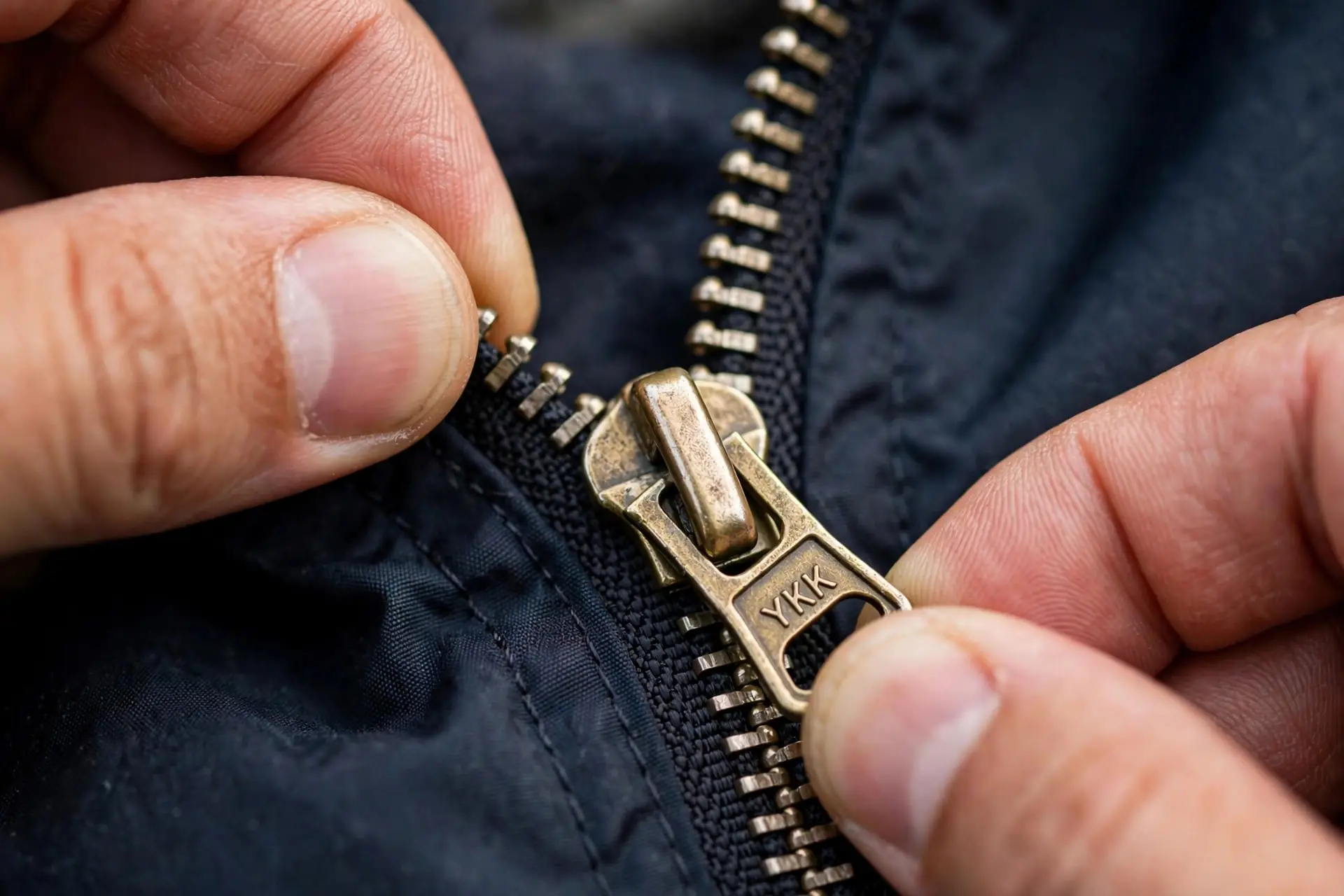
Pinch the zipper pull and wiggle it side to side. Excess play means the pull is loosely attached and likely to snap off with regular use. Then check the slider — the part that moves along the teeth — for smooth, even metal with no visible seams or rough edges where it was stamped.
Separating zippers, the kind used on jackets that open all the way at the bottom, put extra strain on a small plastic or metal insert pin that locks the two sides together. That insert is worth checking on its own: seat it fully before zipping up, and if it takes more than light pressure to align, the tolerances are loose and it will likely misalign again after a few uses.
Where Zippers Fail First
Almost every zipper failure starts at the bottom stop, the small metal or plastic piece that keeps the slider from running off the end. If that stop is loose, thin, or missing, the zipper will eventually separate no matter how good the teeth are. Check it by pulling the slider firmly to the bottom and seeing whether it holds.
The second common failure point is the tape — the fabric strip the teeth are sewn to. If the stitching along the tape is uneven or the tape itself is thin and see-through, the teeth will pull away from the fabric under tension well before the zipper mechanism itself wears out.
- Glide test: run it the full length three times, feeling for any catch.
- Pull test: wiggle the zipper pull for play; tug the slider against the bottom stop.
- Tape check: look for even stitching and tape thick enough that it doesn’t show light through it.
- Material match: metal for heavy daily use, quality coil for lighter jackets and bags.
Brands that use recognized zipper manufacturers, such as YKK, tend to be a safer bet than an unlabeled zipper, since those companies build to consistent tolerances across their product lines. If the zipper is on a leather bag rather than a fabric jacket, it’s also worth confirming the material itself first — see how to tell real leather from faux at a glance — since a great zipper sewn to a weak panel won’t help much. If you’re checking a jacket specifically, pair this with how down and synthetic insulation compare, since a jacket’s zipper takes more strain than its fill ever does.
A stiff zipper on a new item is a warning sign, not something that will break in. Skip it.
Why Zippers Fail
Zippers fail for a limited set of reasons, and learning to spot the warning signs takes seconds once you know what to look at. The slider, the small mechanism you pull, wears out faster than the teeth. Its internal dimensions loosen with use until it no longer presses the teeth together firmly, which causes the classic failure where the zipper splits open behind the slider. The teeth themselves rarely break on quality zippers. They separate because the slider stopped doing its job.
Tooth damage does happen, usually from impact or from forcing a jammed zipper. Missing or bent teeth near the bottom stop create a weak point where separation starts. Tape failure, where the fabric strip holding the teeth tears or pulls away from the garment, is a construction issue that no zipper quality can overcome. Understanding these failure modes tells you exactly what to inspect. The same evaluative eye that judges whether clothing is worth repairing starts with the zipper check.
The Slider Test
In the store, zip the garment fully, then gently pull the two sides apart just behind the slider. A good zipper holds firm. A worn or low quality slider lets the teeth separate with light pressure. Run the slider up and down several times. It should glide smoothly without catching, grinding, or requiring force. Catching on fabric is sometimes just a loose thread, but catching on teeth indicates misalignment that will worsen.
Look at the slider body itself. It should feel solid, with no wobble between the pull tab and the body. Cheap sliders use thin metal that deforms under normal use. Quality sliders from manufacturers like YKK, Riri, or Lampo have a reassuring heft. The brand is often stamped on the back of the slider. Its presence is a positive signal. Its absence on a garment that should have a quality zipper is a warning.
Tooth Types and What They Tell You
Metal teeth are the most durable option for heavy applications: jeans, boots, leather jackets, workwear. They handle stress and last for decades. Coil zippers, made from spiraled polyester, are lighter and more flexible, ideal for outdoor gear and luggage where the zipper must curve. Molded plastic teeth, the chunky individual elements, offer a middle ground of durability and water resistance. Each type suits different uses, and the right type for the application is itself a quality signal.
Check tooth alignment by sighting down the closed zipper. The teeth should interlock evenly with no gaps, twists, or sections where one side sits higher than the other. Run your finger along the closed zipper. It should feel uniform. Any irregularity you can feel will become a failure point under stress. For waterproof applications, check that the zipper has a proper storm flap or polyurethane coating, since the zipper itself is never fully waterproof without these additions.
Size Matters: Gauge and Application
Zipper gauge, the size of the teeth, should match the garment’s demands. A delicate dress with a massive chunky zipper is overbuilt but harmless. A heavy winter coat with a tiny dress zipper is a failure waiting to happen. The general rule is that the zipper should look proportional to the garment’s weight and stress. If it looks undersized, it is. Pay particular attention to stress points: the base of jacket zippers, the crotch of jeans, the corners of luggage. These areas need robust zippers, and skimping here is the most common cost cutting move.
Construction and Installation Quality
Even the best zipper fails if poorly installed. Check that the zipper tape is sewn securely with even stitching, no puckering, and adequate seam allowance. The tape should not be visible as a wrinkled strip alongside the teeth. At the top and bottom, look for proper stops: the small clamps that prevent the slider from running off. Missing or flimsy stops lead to the slider detaching, a common and annoying failure.
The fabric around the zipper matters too. A zipper sewn into flimsy fabric will tear the fabric before the zipper fails, which is arguably worse. Quality garments reinforce the zipper area with interfacing or additional layers. Gently tug the fabric on either side of the zipper. If the whole assembly distorts easily, the installation lacks the reinforcement needed for long term durability. For assessing the broader garment, collar fit on button down shirts shows the same attention to construction details. More clothing quality guides are at Factblaze.
How To Fix a Zipper That Keeps Splitting Open
A zipper that splits behind the slider almost always has a worn slider, not worn teeth. The slider presses the two rows of teeth together; when it loosens, the gap inside widens and the teeth separate behind it. The fix is the slider squeeze: with small pliers, gently pinch the slider’s top and bottom plates closer together, a fraction of a millimeter at a time. Test after each squeeze — over-squeezing jams it.
Squeeze both sides evenly and check your work. Close the zipper fully, then tug the fabric on either side of the closed teeth. If it holds, you are done — this two-minute fix rescues most “broken” zippers. If it still splits, squeeze a touch more. The sweet spot is narrow: too loose and it splits, too tight and the slider will not move.
When squeezing fails, replace the slider, not the whole zip. Sliders cost a dollar or two — note the size number stamped on the old one’s back and buy the same size. Slide the old one off the top (snip the top stop if needed), thread the new one on, and crimp a new top stop in place. The teeth are usually fine; replacing them means seam-ripping the whole zipper, a tailor’s job.
Skip the fix when teeth are missing or bent. A slider cannot mesh missing teeth, and bent metal teeth will chew up a new slider. That is the point where the whole zipper needs replacing.
Frequently Asked Questions
Can a worn zipper slider be fixed?
Often yes. Squeezing the slider gently with pliers can tighten its grip on the teeth temporarily. Replacement sliders in standard sizes cost a few dollars and can be installed without sewing by removing the top stop, sliding off the old slider, and fitting the new one. This is one of the highest value clothing repairs.
Why does my zipper keep splitting behind the slider?
The slider has worn loose and no longer presses the teeth together. This is the most common zipper failure and almost always a slider problem, not a teeth problem. Replace the slider before assuming the zipper is dead.
Are plastic zippers worse than metal?
Not inherently. Quality molded plastic zippers are extremely durable and resist corrosion, making them better for marine and outdoor use. Cheap plastic zippers are terrible. The material matters less than the manufacturing quality and correct sizing for the application.
How do I stop a zipper from catching on fabric?
Hold the fabric taut away from the teeth while zipping. If catching persists, check for loose threads near the zipper and trim them. A small amount of zipper lubricant or even graphite from a pencil on the teeth helps stubborn sliders glide. Chronic catching indicates misalignment that may need professional repair.
What is a two way zipper and is it more durable?
Two way zippers have sliders at both ends, allowing opening from the bottom, useful for sitting in long coats or accessing inner layers. They are not inherently more or less durable. The durability depends on the same factors: slider quality, tooth integrity, and installation. They do have twice as many sliders that can wear out.
Conclusion
A zipper’s durability is readable in seconds: test the slider’s grip, check tooth alignment, verify the gauge suits the garment, and inspect the installation quality. Brand stamps from established manufacturers are positive signals. The slider is the usual failure point and the easiest to replace, so do not discard a good garment over a worn slider. Learn these checks and you will stop being surprised by zipper failures, because you will have seen them coming from the fitting room. For zipper manufacturing standards, YKK’s technical resources detail the engineering behind quality fasteners.