What Pilling on a Sweater Means, and How to Fix It
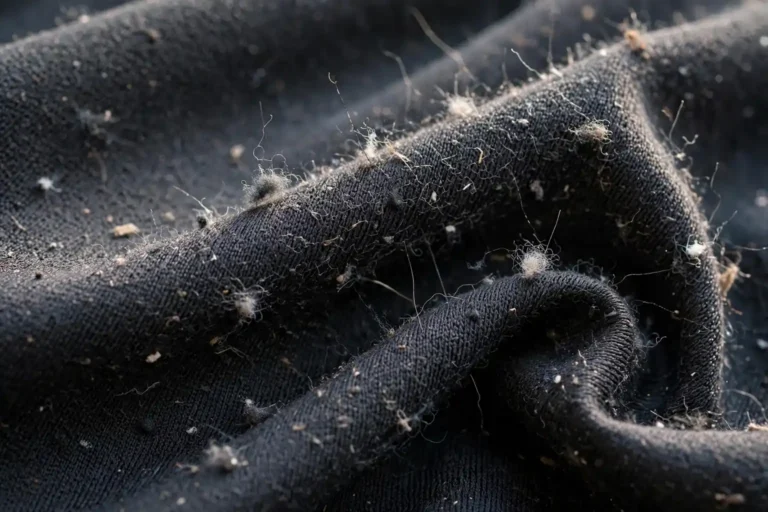
Those little fabric balls on a sweater’s surface are called pilling, and they form when short, loose fibers rub together and tangle into knots instead of shedding away cleanly. It’s a sign of friction, not necessarily a sign of a cheap sweater — even expensive knitwear pills if it rubs against a bag strap or seatbelt often enough.
Why Some Sweaters Pill and Others Don’t
Pilling comes down to fiber length and how tightly a yarn is spun. Short-staple fibers, common in cheaper acrylic and some cotton blends, work loose from the yarn easily and tangle on the surface. Long-staple fibers, like those in higher-grade merino or cashmere, are less prone to it because there’s less loose fiber to begin with — though loosely spun yarn made from good fiber can still pill if the twist isn’t tight enough to hold it in place.
Where the pilling shows up is a clue, too. Pilling under the arms, at the sides where a bag rubs, or across the lower back where a seatbelt sits is friction damage. Pilling spread evenly across the whole sweater usually points to the fiber or yarn construction itself, not how you’re wearing it.
Removing It Without Damaging the Knit
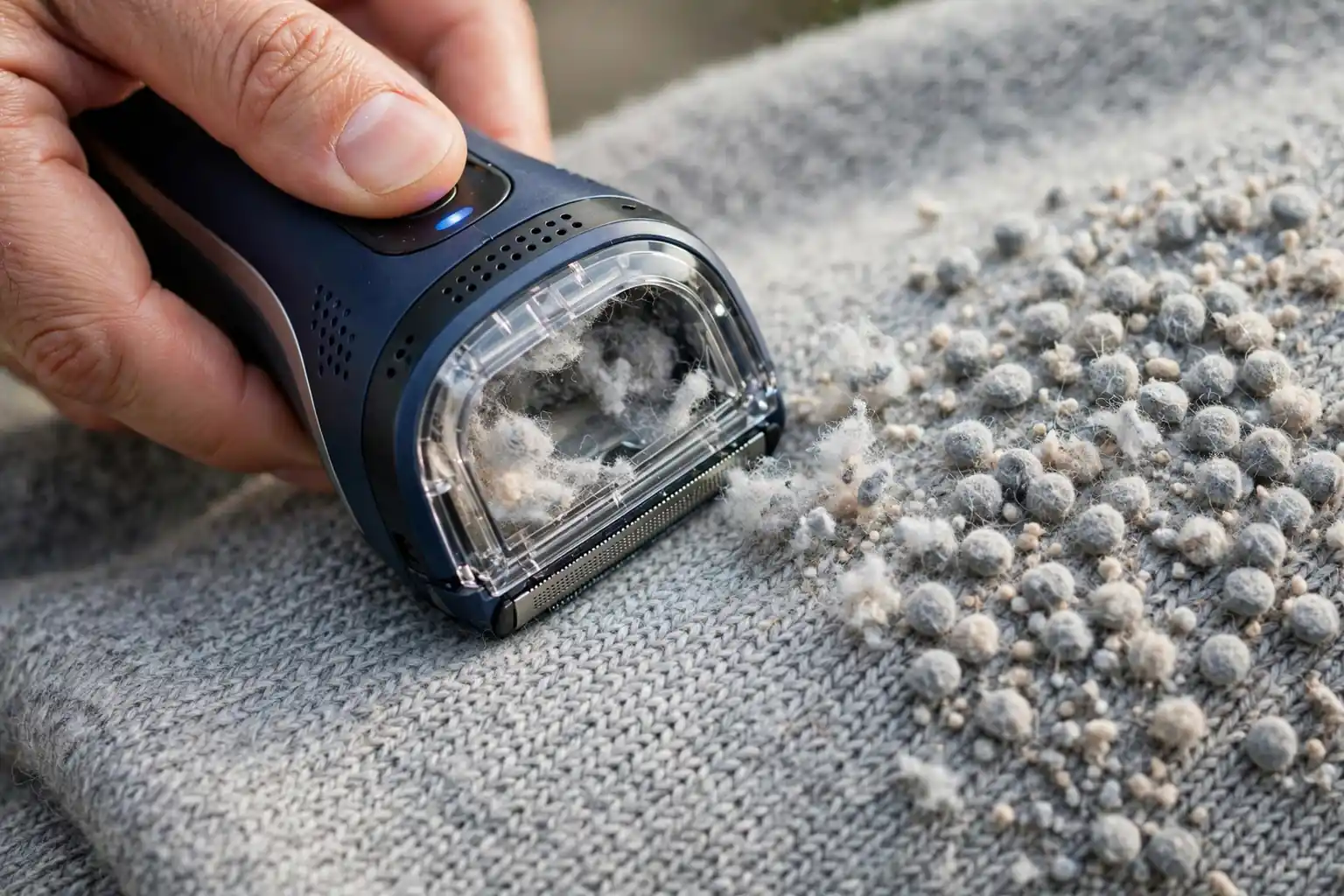
A fabric shaver or pilling comb removes existing pills without pulling on the knit the way scissors or a disposable razor can. Work in short, light strokes in one direction, keeping the fabric taut with your other hand, and stop as soon as the pills are gone rather than continuing to shave the surface. Going over the same spot repeatedly thins the fabric and can eventually wear a hole where the pilling was worst. A sweater comb, the older manual tool with fine teeth, does the same job more slowly but with less risk of catching and snagging a loose thread than a motorized shaver can.
Reducing How Often It Happens
Turning a sweater inside out before washing keeps the friction of the wash cycle against the inside of the garment instead of the visible surface. Hand washing or a gentle cycle in a mesh bag reduces the tumbling that causes pilling in the first place, and skipping the dryer avoids the heat and friction combination that’s especially hard on wool. Rotating sweaters instead of wearing the same one two days in a row also spreads out the wear that causes pilling under the arms and at the sides. It’s also normal for a new sweater to pill more in its first few wears than it ever will again — that initial round is usually just the short, loose fibers left over from manufacturing working their way out, and it tends to slow down once they’re gone.
Pilling resistance is something the textile industry tests for directly — the American Association of Textile Chemists and Colorists maintains standardized abrasion tests that manufacturers use to rate how a fabric will hold up. For your own closet, the practical version of that test is simpler: how you store a sweater between seasons and whether you know how wool behaves differently from other fibers will tell you more about pilling risk than the price tag did.
Those little balls of fuzz on your sweater have a name, a cause, and, fortunately, a fix. Pilling is one of the most common textile complaints, and also one of the most misunderstood. It is not always a sign of poor quality, it is often temporary, and it is almost always manageable.
What pilling actually is
Pilling happens when loose fibers on a fabric’s surface tangle together into small balls. Friction is the trigger: fabric rubbing against fabric, against bags, against seatbelts, against itself in the wash.
The three stages
First, fuzz forms as short or broken fibers migrate to the surface. Then the fuzz entangles into pills anchored by longer fibers. Finally, the pills may break off on their own through continued wear and washing. This lifecycle matters because it means early pilling often resolves itself. A new sweater that pills in the first weeks may stop once the loose surface fibers are gone.
Why some fabrics pill more
Short staple fibers pill more than long ones because short ends escape the yarn easily. Loosely twisted yarns shed fibers faster than tight ones. Knits pill more than wovens because their looped structure exposes more fiber ends. Synthetics are paradoxically persistent pillers: their strong fibers form pills that never break off, unlike natural fibers whose pills eventually wear away. Our cashmere vs wool comparison explains why cashmere’s short fine fibers make it the champion piller among natural fibers.
Is pilling a quality defect?
Sometimes, but less often than people assume.
When it is normal
Initial pilling on a new knit garment, especially in high-friction areas like underarms and sides, is normal and usually temporary. Even expensive cashmere pills at first. The test is whether it subsides after the first few wears and washes. If it does, the garment was shedding its loose surface fibers, which is a normal part of a knit settling in.
When it signals problems
Pilling that never stops, spreads across the whole garment, or appears on supposedly pill-resistant fabrics suggests short fibers, loose spinning, or poor yarn quality. Very cheap fast-fashion knits are engineered for price, not fiber length, and they pill relentlessly. If a garment looks worse after every wear with no plateau, the yarn itself is the problem. Learning to assess fabric before buying helps avoid these; our fabric test guide teaches hands-on evaluation skills that apply here too.
How to remove pills
Removing pills is safe and easy with the right tool. The wrong tool can damage the garment.
Electric fabric shavers
The best option for most people. A battery-powered fabric shaver with a protective mesh glides over the surface and trims pills without cutting the underlying knit. Use light pressure and keep the fabric taut. They cost little and handle everything from sweaters to upholstery. Empty the lint chamber frequently for best results.
Sweater combs
A fine-toothed manual comb designed for knits. Slower than electric shavers but gentler and more precise, good for delicate cashmere. Comb in one direction with the fabric flat. Avoid regular hair combs, which can snag and pull yarns.
What not to use
Disposable razors are the folk remedy, but they cut too aggressively and can slice yarns, creating holes. Pulling pills off by hand stretches and breaks the anchoring fibers, making future pilling worse. Lint rollers remove surface fuzz but cannot cut anchored pills. The Good Housekeeping fabric care guide demonstrates proper shaver technique.
Preventing pilling
You cannot eliminate pilling entirely, but you can reduce it substantially.
Washing habits
Turn knits inside out before washing to protect the visible face. Use gentle cycles, cold water, and mesh laundry bags. Avoid overloading the machine, which increases friction. Skip the dryer for knits: heat and tumbling are pilling accelerants. Air dry flat.
Wearing habits
Rotate garments so fibers recover between wears. Be mindful of friction points: bag straps, seatbelts, and rough outerwear all grind pills into existence. A smooth base layer under a knit reduces internal friction. For wool specifically, our wool vs cotton guide covers fiber-level durability differences.
Buying for low pill
Tightly knit garments, longer staple fibers, and worsted-spun yarns pill less. When shopping, feel for density and smoothness. Very soft, fuzzy knits out of the bag will pill; that softness comes from surface fibers that are already halfway to becoming pills.
Frequently Asked Questions
Will pilling eventually stop on its own?
Often yes, for natural fibers. The initial shed of loose fibers finishes, pills break off through wear, and the surface stabilizes. If pilling continues unchanged after a dozen wears, it is a yarn quality issue rather than normal break-in.
Does pilling mean my sweater is cheap?
Not necessarily. Even premium cashmere pills initially because its fibers are short and fine. Persistent, worsening pilling across the whole garment suggests low quality, but early localized pilling is normal at every price point.
Can you prevent pilling completely?
No. Any knit fabric under friction will pill to some degree. You can minimize it through fiber choice, tight knits, gentle washing, and rotation, but zero pilling is not a realistic expectation for knitted garments.
Is it safe to shave pills off cashmere?
Yes, with a proper fabric shaver or sweater comb used gently. Cashmere is delicate, so use light pressure and keep the fabric flat and taut. Done correctly, de-pilling actually improves the garment’s appearance and does not damage it.
Why do synthetics pill worse than wool?
Synthetic fibers are stronger than natural ones, so once pills form, they do not break off. Wool pills eventually wear away through continued friction. This is why a polyester sweater can look pilled forever while a wool sweater’s pilling resolves.
Conclusion
Pilling is a normal phase in a knit’s life, not a death sentence. Understand the lifecycle, remove pills with a proper shaver, wash gently, and buy tight knits with good fibers. Most sweaters settle down after the initial shed and go on to years of service. The ones that never stop pilling were telling you about their yarn quality from the start. For more textile and clothing guides, visit the Factblaze homepage.