What “Vegan Leather” Is Actually Made From
“Vegan leather” is a marketing term, not a material, and asking what is vegan leather made from gets you at least four different substances that age, smell, and hold up in completely different ways. Knowing which one is in your jacket or bag before you buy tells you far more than the label does.
What Is Vegan Leather Made From: PVC and Polyurethane
The majority of vegan leather on the market is a plastic coating, either PVC (polyvinyl chloride) or polyurethane (PU), applied over a woven or knit fabric backing. PU is the more common choice in mid-range and higher-end pieces because it’s thinner, more flexible, and doesn’t off-gas the way PVC can. PVC is cheaper, stiffer, and less breathable, and it’s the version most likely to crack or peel within a couple of years, especially if it’s folded repeatedly in the same spot, like a wallet or a bag’s handle.
Neither material biodegrades, since both are petroleum-based plastics, which matters if the appeal for you is environmental rather than about avoiding animal products. A well-made PU piece will usually outlast a poorly made PVC one, but real leather generally outlasts both, at the cost of being an animal product with its own environmental footprint from tanning and livestock.
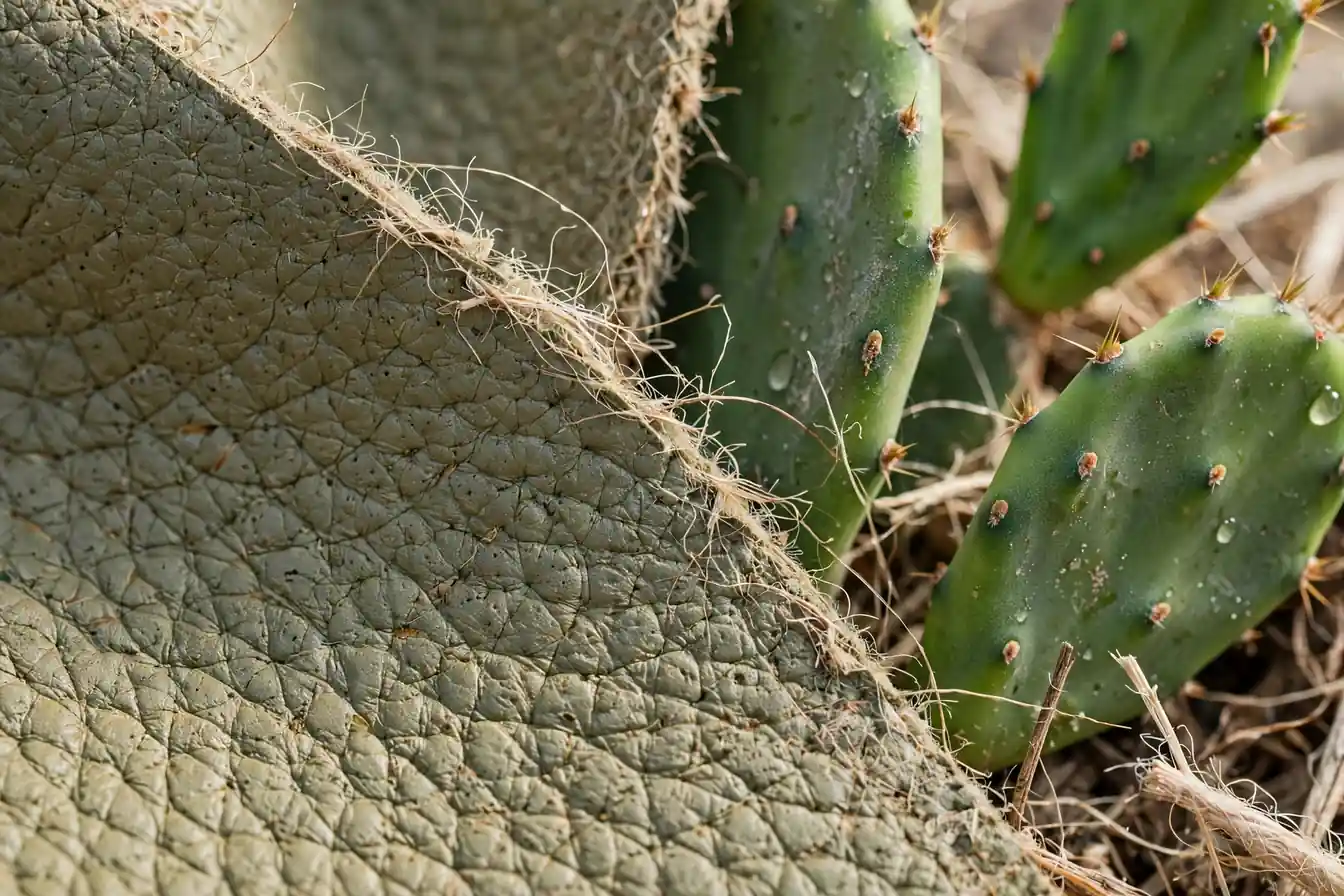
A smaller but growing segment uses plant fiber instead of plastic as the base material. Pineapple leaf fiber (marketed as Piñatex), cactus leather, apple peel leather, and mushroom-based mycelium leather all fall into this category. Most of these still use some polyurethane as a binder or coating to make the material durable and water-resistant, so “plant-based” rarely means plastic-free; check the material composition on the product page rather than assuming from the marketing name. These materials tend to cost more than standard PU and are usually found in smaller, design-forward brands rather than mass retailers.
Cork leather is the one plant-based option that’s genuinely close to plastic-free, made from the bark of cork oak trees, which regrows and doesn’t require cutting the tree down. It has a distinct grainy texture that reads differently from smooth leather substitutes and holds up well to daily handling, though it’s less common in clothing than in bags and small accessories. The Textile Exchange tracks and sets standards for these newer plant-based materials as the industry works out consistent labeling for them.
Care differs by material too. PU and PVC pieces should be wiped with a damp cloth and kept away from direct heat, which can cause the coating to crack or the backing fabric to separate from it. Plant-based and cork materials generally need less maintenance but shouldn’t be soaked, since the fiber base can absorb water even when the surface coating resists it.
If you’re comparing a vegan leather piece against the real thing, the same durability questions apply on both sides, covered in more detail in how to tell real leather from faux at a glance. And since most vegan leather is really a coated textile, the base fabric underneath behaves a lot like other blended materials discussed in what makes denim different from other cotton twill. Reading the composition label is the one habit that tells you more than any marketing name will.
Vegan leather is everywhere now, from fast-fashion jackets to luxury handbags, and the label covers a remarkable range of materials. Some are genuinely innovative plant-based textiles. Others are plastic with good marketing. Knowing what vegan leather is actually made from is the only way to judge what you are buying.
The plastic majority: PU and PVC
Most vegan leather on the market today is plastic. This is the open secret of the category.
Polyurethane (PU)
PU leather is a fabric base coated with polyurethane. It is the most common vegan leather by far. Quality varies enormously: good PU can look and feel convincing, while cheap PU peels and cracks within a year. PU is more flexible and breathable than PVC and generally the better plastic option. But it is still plastic, derived from fossil fuels, and it does not biodegrade.
PVC (polyvinyl chloride)
The cheaper, nastier plastic leather. PVC production involves chlorine chemistry and plasticizers, some of which are concerning enough that the EU restricts certain phthalates. PVC leather is stiff, does not breathe, and cracks with age. It is increasingly avoided by quality brands but still common at the lowest prices. If a product just says vegan leather with no material detail at a suspiciously low price, assume PVC. The Textile Exchange tracks material impacts across the textile industry including synthetics.
The plant-based innovators
A newer generation of materials tries to earn the vegan leather name more honestly.
Cactus, pineapple, and apple leather
Desserto (cactus), Piñatex (pineapple leaf fiber), and AppleSkin (apple waste from juice production) all use agricultural byproducts as a significant component. These are genuinely innovative and reduce waste streams. But read carefully: most still use PU or other polymers as binders and coatings, often 30-50% of the material. They are better than pure plastic but not plastic-free. Transparency varies by brand.
Mushroom leather (Mylo and similar)
Grown from mycelium, the root structure of fungi, mushroom leather is among the most promising alternatives. It can be grown to shape with minimal waste. Production is still scaling, so it appears mostly in limited editions and luxury collaborations rather than mass market goods. Watch this space; the technology is advancing fast.
Cork and other niche options
Cork fabric, made from oak bark, is durable, water resistant, and fully natural, though its distinctive look limits applications. Other experiments include coffee grounds, corn, and grape waste composites. Most remain niche but demonstrate the category’s creative range. Our real versus faux leather guide helps you compare these against traditional leather directly.
Vegan leather versus the environment
The ethical pitch is animal-free. The environmental picture is more complicated.
The plastic problem
Plastic vegan leather sheds microplastics, does not biodegrade, and comes from petroleum. A PVC jacket that lasts two years then landfills for centuries is hard to call sustainable regardless of its vegan status. Durability matters enormously here: a long-lasting PU product beats a disposable one environmentally.
Comparing to real leather
Real leather has serious environmental costs too: livestock emissions, deforestation for grazing, and toxic tannery chemicals, especially chrome tanning. Neither option is clean. Honest lifecycle analyses generally find that durable goods of either type beat disposable goods of either type. The most sustainable choice is usually buying less and keeping things longer, whatever the material. Shoppers weighing these trade-offs online should also watch for greenwashing; our guide to buying clothes online mistakes covers how to read past marketing claims.
How to evaluate a vegan leather product
How Long Vegan Leather Actually Lasts Vs. Real Leather
Most vegan leather is polyurethane (PU) or polyvinyl chloride (PVC) bonded to a fabric backing. Good PU pieces look convincing on day one, but the plastic coating is the weak link. With daily use, expect visible wear within one to two years: surface cracking at flex points, then peeling that exposes the fabric underneath. Cheap PVC goods can start flaking in under a year, especially in heat.
Real leather works the opposite way. Full grain leather develops a patina instead of peeling, and with basic conditioning it can last five to ten years or more. Even corrected grain leather, the budget end of real leather, usually outlasts PU by a factor of two or three. The breaking point is moisture and flexing: a real leather wallet flexed daily still holds together, while a PU wallet flexed daily sheds.
Care differs too. Vegan leather needs almost nothing, just a wipe with a damp cloth. Conditioners and oils do nothing for plastic and can stain it. Real leather needs conditioning every three to six months to stay supple, and it tolerates scratches that would permanently mark PU.
Newer plant based options like cactus or mushroom leather sit in between, with manufacturers claiming three to five years, but independent long term data is thin. Bottom line: buy vegan leather for style and ethics at a price you are comfortable replacing every couple of years. Buy real leather when you want the thing to outlive the trend.
Cut through the labeling with specific questions.
Ask what it is made of
Look for actual material names, not just vegan leather. PU, PVC, cactus, mycelium, each tells you something concrete. Brands proud of their materials name them. Brands hiding behind the generic term usually have a reason.
Assess quality signals
Feel the material: good vegan leather is supple without being flimsy. Check edges and stitching for clean finishing. Smell it: strong chemical odors suggest cheap PVC. Ask about the base fabric and coating thickness, which determine durability more than the marketing story.
Consider the use case
Plastic vegan leather suits items where durability demands are modest and animal-free status matters most. For hard-wearing goods like daily-carry bags or boots, either invest in the best plant-based options or accept that real leather’s longevity has practical value. Match the material to the job.
Frequently Asked Questions
Is vegan leather just plastic?
Mostly, yes. The majority of products labeled vegan leather are polyurethane or PVC. Plant-based alternatives exist and are growing, but they remain a minority of the market. Always check the specific material.
Is vegan leather better for the environment than real leather?
It depends on the specific materials and how long the product lasts. Plastic vegan leather avoids animal agriculture impacts but creates plastic pollution. Neither is clearly superior in all cases. Durability and consumption levels often matter more than the material choice itself.
How long does vegan leather last?
Quality PU can last several years with care. Cheap PU and PVC often peel or crack within one to two years. Plant-based options vary by type and are still proving long-term durability. Real leather generally outlasts all of them when maintained.
Can you tell vegan leather from real leather?
Sometimes easily, sometimes not. Good vegan leather fools at a glance, which is why our comparison guide exists. Edges, smell, grain regularity, and aging behavior are the reliable tells over time.
What is the most sustainable vegan leather?
Currently, options with high bio-based content and transparent supply chains: cactus, pineapple, and mushroom leathers from reputable producers. But the honest answer is that a long-lasting product of any material beats a disposable sustainable one.
Conclusion
Vegan leather is a label, not a material. It can mean innovative cactus textile or cheap PVC, and the difference matters enormously for quality, durability, and environmental impact. Read past the label to the actual composition, judge durability honestly, and buy for longevity whatever you choose. A well-made product you keep for years is the most sustainable option in any material. For more material guides, visit the Factblaze homepage.