
Common Mistakes People Make Storing Clothes Between Seasons
Clothes that come out of seasonal storage damaged almost always went in with one of a handful of avoidable mistakes: packed dirty, sealed in plastic, or crammed too tight for the fabric to sit undisturbed for months. None of these mistakes are obvious at the moment you’re packing a bin — they only show up in spring.
Packing Clothes Away Dirty
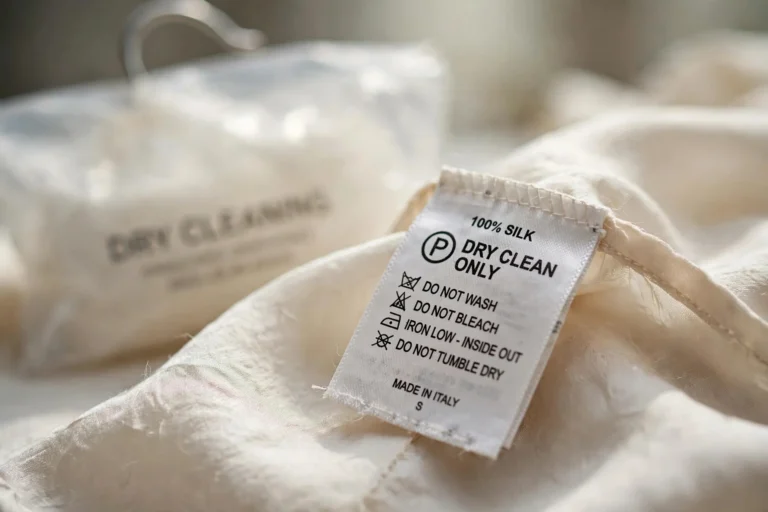
Invisible stains — sweat, food residue, body oils — oxidize over months in storage and turn into stains you can see, sometimes ones that never come out. Insects are drawn to those same residues, which means a stained sweater is more likely to attract moths than a clean one. Everything should be washed or dry cleaned before it goes into a bin, even items that look fine. If you’re unsure whether a piece needs professional cleaning or can be washed at home, it’s worth understanding what the care label is actually telling you before you decide.
Sealing Everything in Plastic
Plastic bins and vacuum-sealed bags feel protective, but natural fibers like wool and cotton need some airflow to avoid trapping the moisture that leads to mildew. A garment that goes in slightly damp, or that absorbs humidity over a season in a basement or garage, can come out with a smell that doesn’t wash out easily. Breathable cotton garment bags or bins with ventilation holes work better for natural fibers; airtight plastic is better reserved for synthetic fabrics that don’t need to breathe, where the differences between wool and cotton matter as much in storage as they do on your back.
Reaching for Mothballs Without Reading the Label
Mothballs work by releasing a pesticide vapor, and that vapor doesn’t stay politely inside the storage bin — it settles into fabric and lingers in a closed room. Overusing them, or using them in a poorly ventilated space, is a common mistake people don’t think of as a chemical safety issue. The EPA’s guidance on pesticide safety is worth a look before you use them at all; cedar blocks or lavender sachets handle mild moth deterrence for most households without the vapor exposure.
Cramming Bins Too Full
Compressed fabric develops set-in creases that are harder to steam out the longer they sit, and heavy items stacked on top of delicate ones can stretch or crush them out of shape over months. Fold structured pieces loosely, keep knits flat rather than hung, and leave enough room in a bin that nothing is under real pressure.
Storing Everything in the Same Place
A hot attic or a damp basement is hard on fabric regardless of how well you packed it — heat accelerates fiber breakdown, and humidity invites mildew. A closet shelf or under-bed storage at a stable room temperature protects clothes better than a more convenient but extreme location.
None of this takes much extra time when you’re already doing the seasonal swap. It just means doing the boring parts — washing, drying fully, ventilating — before the bin lid goes on.
Packing winter clothes away in spring feels like a chore you can rush, and that is exactly when the damage happens. The mistakes below are the ones that turn a favorite sweater musty, a good coat moth-eaten, or a crisp shirt yellow by the time the season rolls around again. None of them require special equipment to avoid, just a little patience before the bins go into the closet.
Mistake 1: Storing Clothes Dirty
This is the costliest mistake and the most common. Body oils, sweat, perfume, and food stains do not pause while clothes sit in storage; they oxidize, yellow, and set permanently over months. Worse, invisible food residue is exactly what attracts clothes moths and carpet beetles, which ignore truly clean fabric. The rule is absolute: everything gets washed or dry-cleaned before it goes away, even the sweater you “only wore once.” Pay attention to care labels rather than guessing, since the wrong wash temperature can felt wool or shrink knits. Make sure everything is bone dry before packing, because even slight dampness sealed in a bin becomes mildew within weeks.
Mistake 2: The Wrong Container
What clothes sit inside for six months matters enormously. The classic error is leaving garments in the thin plastic bags from the dry cleaner, which trap moisture and off-gas chemicals that yellow fabric. Vacuum-seal bags are another trap: they are fine for a bulky comforter you will use next month, but months of compression crushes the loft out of down, permanently creases wool, and stresses seams and embellishments.
The better choice is breathable and protective: sturdy plastic bins with lids for most things, or cotton garment bags and canvas storage boxes for items that need airflow like leather and wool. Line bins with clean cotton sheets or acid-free tissue rather than newspaper, whose ink transfers. Fold knits instead of hanging them, since months on a hanger stretch shoulders out of shape. Footwear has its own requirements, so before boots and dress shoes go away, read our guide to storing shoes so they keep their shape, because crushed toe boxes do not recover.
Mistake 3: Ignoring Where You Store
People carefully pack clothes and then slide the bins into the worst spot in the house: a hot attic, a damp basement, or a garage that swings between extremes. Heat accelerates fiber breakdown and yellowing, humidity invites mold and mildew, and direct sunlight fades colors through translucent bins. The ideal is boring: cool, dark, dry, and stable, like an interior closet or under a bed in a climate-controlled room.
If the only available space runs damp, add silica gel packets or a small dehumidifier nearby and check bins mid-season. Keep bins off concrete floors, which wick moisture, by setting them on pallets or shelving. And label every bin with contents and the date packed; the system that saves you is the one that keeps you from opening five bins to find one coat.
Fabrics That Punish Carelessness
Most everyday cotton and synthetics forgive a lot. A few fabrics do not, and they are usually the expensive ones.
Wool, Cashmere, and the Moth Problem
Protein fibers are moth food, and larvae do the damage, not the adult moths you see fluttering. Beyond the clean-first rule, store woolens with cedar blocks or lavender sachets, which repel rather than kill, and replace or sand the cedar yearly since the scent fades. For a serious infestation risk, seal items in a bag and freeze them for 72 hours, which kills eggs and larvae at every stage. If a favorite knit already shows surface wear from past seasons, here is what pilling on a sweater means and how to fix it before the garment goes back into rotation.
Leather, Suede, and Silk Need Air
Leather and suede should never go into sealed plastic; they need airflow to avoid mildew and drying out. Store them in breathable cotton garment bags, condition leather lightly before storage, and stuff bags and boots to hold their shape. Silk wants darkness, since light weakens and yellows it, plus acid-free tissue between folds to prevent crease lines from setting permanently.
Bringing Clothes Back Out the Right Way
Unpacking deserves the same care as packing. Air everything outdoors or near an open window for a few hours to clear the storage smell. Steam knits and structured pieces to release wrinkles and refresh fibers; a handheld steamer is gentler than ironing for most seasonal clothes. Inspect for moth damage, loose buttons, and weakened elastic before the season starts, since repairs are cheaper than replacements. Anything that smells musty despite airing should be washed again before wearing, not masked with fragrance.
Textile professionals think about this on a much longer timescale. The Smithsonian Institution’s conservation resources explain how museums store historic garments for decades: stable temperature and humidity, acid-free materials, minimal handling, and no light exposure. You do not need museum standards for a winter coat, but the principles scale down perfectly: clean, dry, dark, breathable, and undisturbed.
Frequently Asked Questions
Are mothballs safe to use in storage bins?
Traditional mothballs contain pesticides that are effective but release fumes you should not breathe regularly, and the smell lingers in fabric. Cedar, lavender, and airtight clean storage are safer everyday alternatives; reserve mothballs for sealed containers in ventilated spaces only.
How long can clothes stay in storage?
Indefinitely if they are clean, dry, and stored in stable conditions. Check bins once a season for moisture, pests, or odors, and refold knits yearly so creases do not become permanent.
Are vacuum bags ever okay?
For short-term compression of sturdy synthetics, yes. Avoid them for down, wool, cashmere, leather, and anything with structure or embellishment, and never leave natural fibers vacuum-sealed for a full season.
Do cedar blocks actually work?
Cedar repels moths with its scent but does not kill larvae already present, which is why cleaning first matters more. Sand blocks lightly each year to refresh the oils, and replace them when the scent is gone.
Can I store clothes in the garage?
Only as a last resort. Garages swing in temperature and humidity, admit pests and car fumes, and often flood. If you must, use sealed hard bins on shelving, add desiccant, and inspect mid-season.
Conclusion
Seasonal storage goes wrong in predictable ways: dirty clothes packed away, suffocating containers, bad locations, and delicate fabrics treated like t-shirts. Wash everything, choose breathable containers, pick a cool dark dry spot, and give wool and leather the extra step they need. Do that and your clothes will come back next season the way you left them. For more practical home and wardrobe guidance, visit Factblaze.