A Checklist for What to Do the Night Before a Flight
A calm flight morning gets decided the night before, not when the alarm goes off. Run through these while your bag is still open on the bed, when it’s easy to fix a gap instead of discovering it at security.
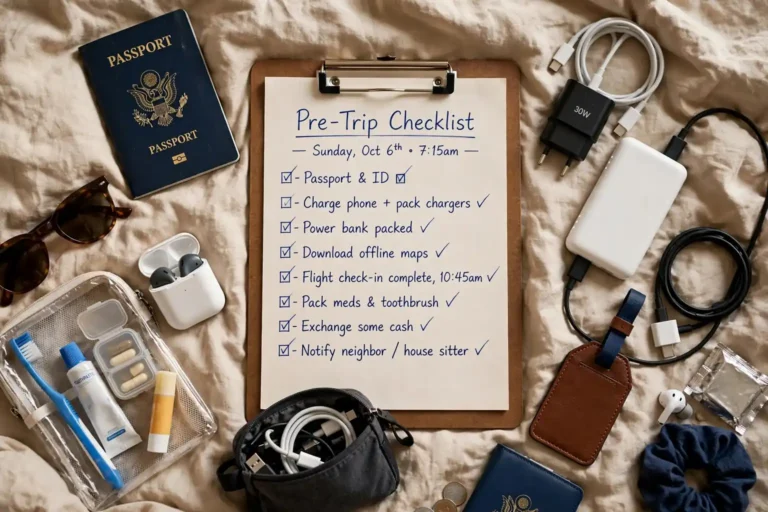
- Check in and screenshot your boarding pass. Online check-in usually opens 24 hours out — do it as soon as it’s available, and save a screenshot in case the app or airport wifi lets you down.
- Confirm your ID or passport is where you think it is. Not “somewhere in the house” — physically in the bag you’re carrying tomorrow.
- Weigh and measure your bags if you’re near a limit. A bathroom scale and a lift-and-guess is how people end up repacking at the counter.
- Charge everything, and pack the cables in your carry-on, not checked luggage. Phone, headphones, laptop, portable charger — a dead phone at a gate change is its own small disaster.
- Set out tomorrow’s outfit and layer for the plane, not the destination. Terminals and cabins run cold regardless of climate at the other end.
- Check the security rules for what’s in your bag. Liquids, laptops, and anything battery-powered are the usual snags, and the rules shift often enough that it’s worth a quick check even if you fly regularly.
The Logistics Nobody Remembers Until It’s Late
Set two alarms if your flight is early, and check your ride or transit option the night before rather than assuming a rideshare will be available at 4 a.m. If you’re driving yourself, know whether you’re using short-term or long-term parking, since guessing wrong at an airport garage costs real time. If you packed a carry-on for a longer trip, going over it once more the night before catches the items people tend to forget in the rush of a normal day.
What to Leave for the Morning
Not everything belongs on the night-before list. Anything refrigerated, anything you’ll actually use that morning like a toothbrush, and your final wallet-and-keys check should stay for the morning itself — packing them the night before just means unpacking them again. The goal isn’t to front-load every single task; it’s to clear out everything that doesn’t need same-day timing so the morning is short.
TSA’s security screening page is worth a quick check the night before any flight, especially if it’s been a while since you last flew or you’re carrying something unusual.
The flights that go smoothly aren’t the ones with no risk of delay — they’re the ones where the traveler already knows exactly what’s in their bag and where it is.
You already have the checklist itself. What follows is the reasoning behind it: why each item matters, what goes wrong when it is skipped, and the small upgrades that turn a good night-before routine into one that actually guarantees a calm morning. The night before a flight is not just preparation time; it is the last point where you control everything, and using it well is the difference between a smooth departure and a sprint through the terminal.
Lock Down Your Documents Before Anything Else
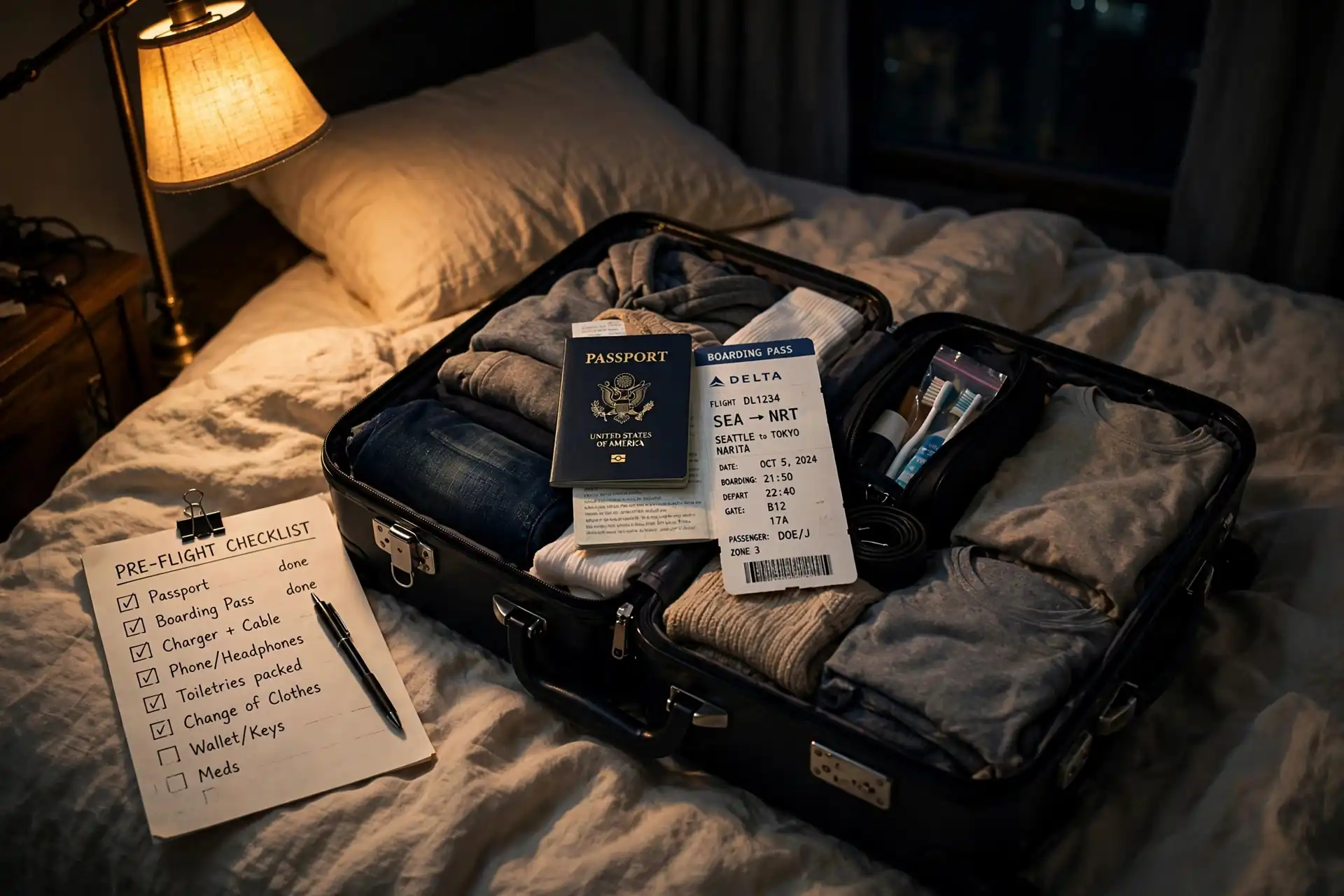
Documents are the one category where a mistake is unrecoverable at the airport. A forgotten passport cannot be fixed by buying a replacement at the terminal. So the night before, physically handle every document: passport, ID, boarding pass, visa if required, and any hotel or transfer confirmations. Do not just think about where they are; put them in your hands and then into the bag they will travel in.
Check the details while you have them out. Passport expiration dates catch people constantly, since many countries require six months of validity beyond your travel dates. Boarding passes should show the correct name spelling and flight details. If anything is wrong, the night before is when you can still fix it with a phone call; at 5 a.m. in a taxi, you cannot.
Make digital backups as well. Photograph or scan your passport, ID, and confirmations, and store them somewhere accessible offline, like your phone’s files or a secure notes app. If documents are lost or stolen during the trip, these copies dramatically speed up replacement. Keep the physical originals together in one dedicated pouch so there is exactly one place to check in the morning.
Pack With the Morning in Mind
Night-before packing is not just about getting everything in the bag; it is about choreographing the morning. Pack everything except what you will use overnight and in the morning: toiletries you need at night, the phone charger, and the clothes you will sleep in and wear to the airport. Everything else should be zipped and done.
Stage the morning items deliberately. Lay out your travel outfit, including shoes, socks, and layers. Put your keys, wallet, and phone charger in one visible spot. Place the bag by the door with the document pouch inside it. The goal is a morning where you get dressed, grab staged items, and leave, with zero decisions and zero searching.
Weigh and measure the bag if you are near airline limits. A bathroom scale works: weigh yourself with and without the bag. Discovering an overweight bag at home means you can repack calmly; discovering it at the check-in counter means paying the fee or performing an embarrassing reshuffle in public. This discipline connects to the broader packing strategy in our guide to aisle versus window seat thinking, where small advance decisions compound into a much better travel day.
Handle Money, Connectivity, and Power
Sort out money the night before. Get local currency if you need it for arrival, notify your bank of travel if your cards require it, and confirm you have at least two working payment methods. A single card is a single point of failure; travelers get stranded by declined cards more often than by anything dramatic. Keep a small amount of your home currency too, for the return.
Connectivity deserves the same advance attention. Download offline maps for your destination, save your hotel address and check-in details where you can reach them without data, and download entertainment for the flight. Airport Wi-Fi is unreliable and often insecure, so anything you need in the first hours should be available offline.
Charge everything to full overnight: phone, headphones, laptop, power bank, e-reader. Then pack the chargers and cables in your personal item, not in a checked bag. A dead phone at arrival with the charger in the hold is a modern travel nightmare that is entirely preventable. A small multi-port charger and one long cable cover most situations.
Confirm the Logistics Chain
The night before is when you verify every handoff in your journey. Check in for your flight if you have not already, and save the boarding pass. Confirm your ride to the airport: the taxi booking, the shuttle time, the friend who promised to drive, the parking reservation. Each of these is a link, and a broken link at 4 a.m. has no good fix.
Check the flight status before bed and set an alarm to check it again in the morning. Schedules change overnight, gates move, and knowing before you leave lets you adjust calmly. Sign up for the airline’s text or app notifications if you have not; they are the fastest source of delay and gate information.
Plan your airport arrival time honestly. The standard guidance is two hours for domestic and three for international, but adjust for your specific airport, the time of day, and whether you are checking bags. An early-morning flight from a small airport is different from a holiday-evening departure from a major hub. For international trips, this timing work starts much earlier; see our guide to the week before an international trip for the longer runway version of this planning.
Set Yourself Up Physically
The night before a flight is a bad night to shortchange sleep, even though it is the night everyone does. An early flight tempts you to stay up packing, but arriving sleep-deprived makes everything harder: security lines feel longer, delays feel personal, and your immune system takes a hit right before you enter a metal tube of recirculated air. Finish packing early enough to get a real night’s sleep.
Eat sensibly and hydrate. A heavy, unfamiliar dinner the night before an early flight is asking for trouble at altitude. Drink water through the evening; you will lose moisture in the dry cabin air, and starting hydrated helps. Limit alcohol, which disrupts sleep quality even when it helps you fall asleep, and go easy on caffeine after mid-afternoon if you need to sleep that night.
Prepare for the cabin while you are at it. Pack a water bottle to fill after security, and check the TSA’s current rules on food, liquids, and electronics at tsa.gov so your bag is already compliant before you reach the checkpoint.
Do a Final Home Sweep
Before bed, walk through the house with fresh eyes. Take out the trash and recycling, clear perishables from the fridge, unplug non-essential electronics, and turn down the thermostat or water heater if you will be gone a while.
Security basics: lock all doors and windows, set the alarm if you have one, and consider a light timer so the house does not sit dark. Tell a neighbor your dates, and stop the mail or arrange for it to be collected; an overflowing mailbox announces that nobody is home.
Leave yourself a note for your return: where you parked at the airport and anything you deliberately left undone. Future you, exhausted from travel, will appreciate the memo more than you expect.
Frequently Asked Questions
How early should I arrive at the airport?
The standard recommendation is two hours before domestic flights and three hours before international ones. Add time for peak travel periods, unfamiliar airports, checked bags, and long security lines. It is far better to wait at the gate than to run to it.
Should I check in online the night before?
Yes, whenever the airline allows it, usually 24 hours before departure. Online check-in lets you confirm your seat, catch schedule changes early, and skip the check-in counter if you are traveling with carry-on only. Save the boarding pass to your phone and keep a screenshot as backup.
What should I do if my flight is delayed overnight?
Check the airline’s app or notifications first, then contact the airline before heading to the airport; they may rebook you automatically. Know your rights regarding meals and accommodation, which vary by airline and region, and keep receipts for any expenses in case compensation applies.
Can I bring food through airport security?
Solid foods are generally allowed through security in most countries, though liquids, gels, and sauces follow the liquids rule. Check the TSA website for current specifics before packing. Bringing your own food is cheaper than airport prices and useful insurance against delays.
What is the most commonly forgotten item the night before a flight?
Phone chargers top most lists, followed by medications, travel pillows, and the documents pouch itself. The staging method, laying out everything in one visible spot the night before, exists specifically to defeat this category of mistake.
Conclusion
The night before a flight rewards a simple principle: handle at night everything that cannot be fixed in the morning. Documents verified and staged, bag packed and weighed, logistics confirmed, devices charged, home secured, and yourself rested. Do that, and the morning becomes a calm walk to the door instead of a scramble. For more travel preparation in the same practical style, Factblaze has checklists and guides for every stage of the trip.