Aisle vs Window Seat: How to Decide for a Long Flight
There’s no universally correct answer here — the right seat depends on whether you value freedom of movement or a stable place to rest, and those two things pull in opposite directions on a long flight.
The Case for the Aisle
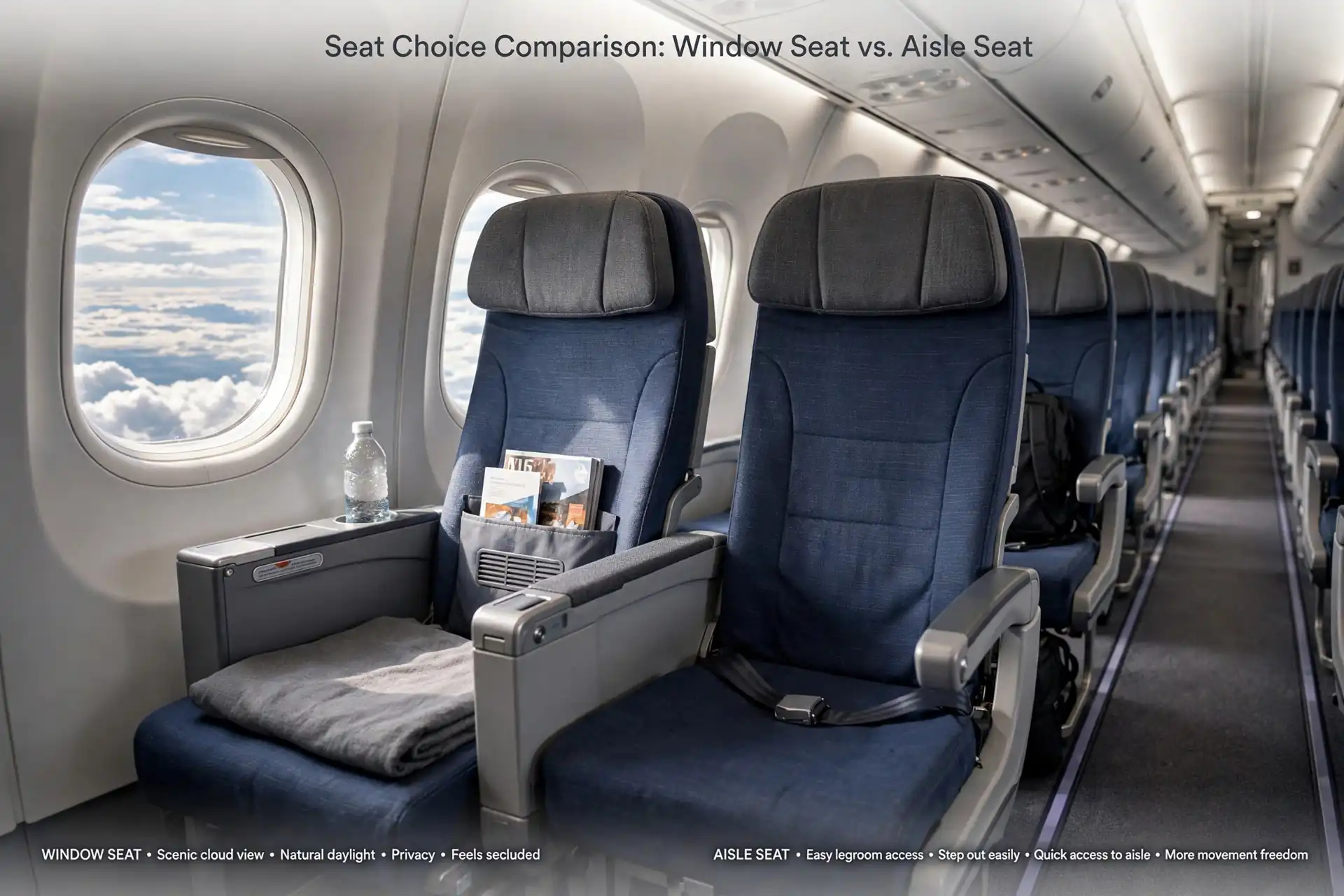
An aisle seat means you can get up without disturbing anyone, which matters more than people expect once a flight passes the four or five hour mark. Bathroom trips, stretching your legs, and reaching the overhead bin all become simple instead of an exercise in stepping over sleeping strangers. That last point matters more if you’re flying with only a carry-on — packing everything into one bag only stays convenient if you can actually get to the bin it’s stored in without waiting for two other passengers to move. The trade-off is that you’re the one being asked to move every time your row mates need out, and the aisle also puts you closer to cart traffic and foot traffic for the whole flight.
The Case for the Window
A window seat gives you a wall to lean against, which is the closest thing to real sleep most economy cabins offer. You control your own space more fully — no one climbing past you, and one side of your body is out of the aisle’s cold draft and constant movement. The cost is the reverse of the aisle’s benefit: getting up means asking someone else to move, so window seats reward people who plan to stay put and doze rather than move around.
What Tips the Decision
Flight length is the biggest factor. On anything under two hours, the difference barely registers. Past five or six hours, people who sleep easily on planes tend to prefer the window, while people who get restless or have a small bladder tend to regret it fast. Traveling with kids changes the math too — a window seat can keep a child from wandering the aisle, but it also means more of the flight spent unbuckling and shuffling past other passengers for bathroom runs.
Middle seats aside, the honest test is simple: think back to your last long flight and ask which annoyed you more, waiting to get up or being asked to let someone out. Book for that person next time, not for whichever seat map graphic looks nicer.
IATA, the international air transport industry body, publishes broader passenger and cabin data if you want more than personal preference to go on.
You already know the basic trade-off: the aisle gets you freedom of movement, the window gets you a wall to lean on and a view. What the simple version leaves out is how much your body type, your sleep habits, your bladder, and even the specific aircraft change the math. On a flight longer than six hours, the seat you pick shapes your comfort for an entire day of your life, so it is worth thinking through the details.
What the Aisle Really Gives You (and Takes Away)
The aisle seat’s biggest advantage is independence. You can stand up, stretch, and walk to the bathroom without negotiating with anyone, which matters enormously on a ten-hour flight when circulation and comfort depend on moving every couple of hours. If you drink water steadily, as you should on long flights, you will be making that trip regularly, and doing it without climbing over a sleeping stranger is a genuine quality-of-life upgrade.
The costs are real too. You are the person everyone else climbs over, which means interrupted sleep whenever your rowmates need the bathroom. The aisle armrest is prime real estate that the middle seat neighbor often claims. And you get the full cart-and-passenger traffic: beverage carts bumping your elbow, people brushing past, and no wall to lean against when you try to sleep.
Aisle seats also expose you to more light and movement from the cabin, which can make falling asleep harder for light sleepers. A good eye mask and noise-canceling headphones close most of that gap.
What the Window Really Gives You (and Takes Away)
The window seat gives you three things the aisle cannot: a wall to lean on, a view, and control over your light. Being able to rest your head against the fuselage is the closest most people get to real sleep in economy.
The price is entrapment. Every bathroom trip means waking one or two people, which creates a social pressure to stay seated that many travelers feel even when nobody minds. On very long flights this can mean hours of sitting still, which is exactly what you should not be doing. Dehydration creeps up faster when you are avoiding water to avoid the bathroom trip.
Temperature is another window-seat quirk. The fuselage wall runs cold, especially on overnight flights, so window passengers often need an extra layer. On the plus side, you control the shade, which matters on daytime flights when you want to sleep while the cabin is bright.
How Your Body and Habits Should Drive the Choice
Start with an honest assessment of how you sleep on planes. If you can sleep sitting upright with your head against a wall, the window is probably your seat. If you sleep in short stretches and wake easily, the aisle’s interruptions will frustrate you, but the ability to get up and walk when you are awake anyway is a real benefit. People who never sleep on planes at all often prefer the aisle simply because they will be up and moving regardless.
Consider your height and mobility. Taller passengers value the aisle’s extra legroom spillover and the freedom to stretch. Anyone with a medical reason to move regularly should default to the aisle without guilt; comfort is not a courtesy issue.
Time of day matters too. On overnight flights where the cabin goes dark and most people try to sleep, the window’s lean-and-rest advantage is at its peak. On daytime flights where everyone is awake and moving, the aisle’s freedom matters more because you will be getting up anyway. Match the seat to the flight, not just to your general preference.
Factor In the Aircraft and Seat Map
Not all aisles and windows are equal. Seat maps on sites like SeatGuru, or the airline’s own map during booking, show which seats have quirks: misaligned windows, limited recline near exits and bulkheads, extra legroom rows, and seats near galleys and lavatories that get noisy. A window seat with no actual window, which exists on many aircraft, is the worst of both worlds.
Cabin layout changes the calculus. On a 2-4-2 or 2-3-2 layout, the pair seats by the window mean you only ever climb over one person, softening the window’s main drawback. On a 3-4-3 widebody, the middle section’s aisle seats give you aisle freedom without a window neighbor at all, and the outer aisle seats still leave you exposed to the window passenger’s bathroom runs.
The Federal Aviation Administration’s passenger information at faa.gov covers cabin safety topics worth knowing regardless of seat, including brace positions and evacuation guidance. Safety briefings apply to every seat equally, but knowing where your nearest exits are is one more reason to glance at the seat map before you board. This kind of pre-flight homework pairs naturally with our guide to booking connecting flights, since your seat choice on each leg may need different logic.
The Middle Seat Question and Traveling With Others
Sometimes the choice is not aisle versus window but whether the middle is acceptable. For couples, booking the aisle and window of a three-seat row is a well-known play: the middle often stays empty on less-full flights, and if someone takes it, they will usually trade for the aisle or window happily.
Families with kids have different math. A parent in the middle between two children works well; a child in the aisle is a recipe for bumped elbows and escaping toddlers. Window seats keep curious kids entertained with the view and contained against the wall, which the whole row will appreciate.
If you are traveling solo and both aisle and window are taken in your preferred rows, take the aisle in the center section of a widebody over a middle seat anywhere. The hierarchy of economy comfort is real, and the difference between the top and bottom is worth caring about on a long flight.
How Seat Choice Connects to Arriving in Good Shape
Your seat decision is really a decision about how you will spend ten hours, and that spending shows up in how you feel at arrival. Aisle passengers who move regularly tend to arrive with less stiffness; window passengers who actually sleep tend to arrive more rested.
Whatever you choose, the in-flight habits matter as much as the seat. Drink water steadily, get up every two hours or so, and eat lightly rather than heavily. These small behaviors do more for your arrival condition than any seat upgrade, and they are free.
It is also worth thinking about how your seat affects your sleep schedule at the destination. If you need to sleep on the plane to function on arrival, protect that sleep with a window seat and full blackout gear. If you need to stay awake to adjust faster, an aisle seat with its ambient light and movement works in your favor. For more on the biology involved, see our explainer on what jet lag does to your body and how to work with it.
Frequently Asked Questions
Is the aisle or window seat better for sleeping?
Most travelers sleep better in the window seat because they can lean against the wall and are not disturbed by rowmates climbing over them. Bring a neck pillow and an eye mask either way, but the window’s wall support is the decisive advantage for sleep.
Which seat is best if I need the bathroom frequently?
The aisle, without question. You can get up as often as you need without waking anyone, which also means you will stay better hydrated since there is no social cost to drinking water.
Do window seats get colder than aisle seats?
Yes, typically. The fuselage wall conducts cold from outside, especially on long overnight flights. Window passengers should bring an extra layer or use the airline blanket, while aisle passengers deal more with cabin drafts from foot traffic.
Is it rude to climb over someone to use the bathroom from a window seat?
No, it is a normal part of flying, though doing it four times on one flight tests everyone’s patience. If you know you will need frequent trips, choose the aisle from the start rather than subjecting your row to it.
Should I pay extra for a preferred aisle or window seat?
On flights over six hours, paying a modest fee for your preferred seat is usually worth it, since you will live with the choice for a long time. Compare the fee against bulkhead or exit-row upgrades too, since extra legroom sometimes matters more than window versus aisle.
Conclusion
There is no universally right answer, only the right answer for your body, your flight, and your priorities. Frequent movers and light sleepers who value freedom belong in the aisle; dedicated sleepers who can settle against a wall belong at the window. Check the seat map, consider the time of day, and pack for the seat you chose. For more travel know-how in the same plain-spoken style, visit Factblaze and browse the travel section.