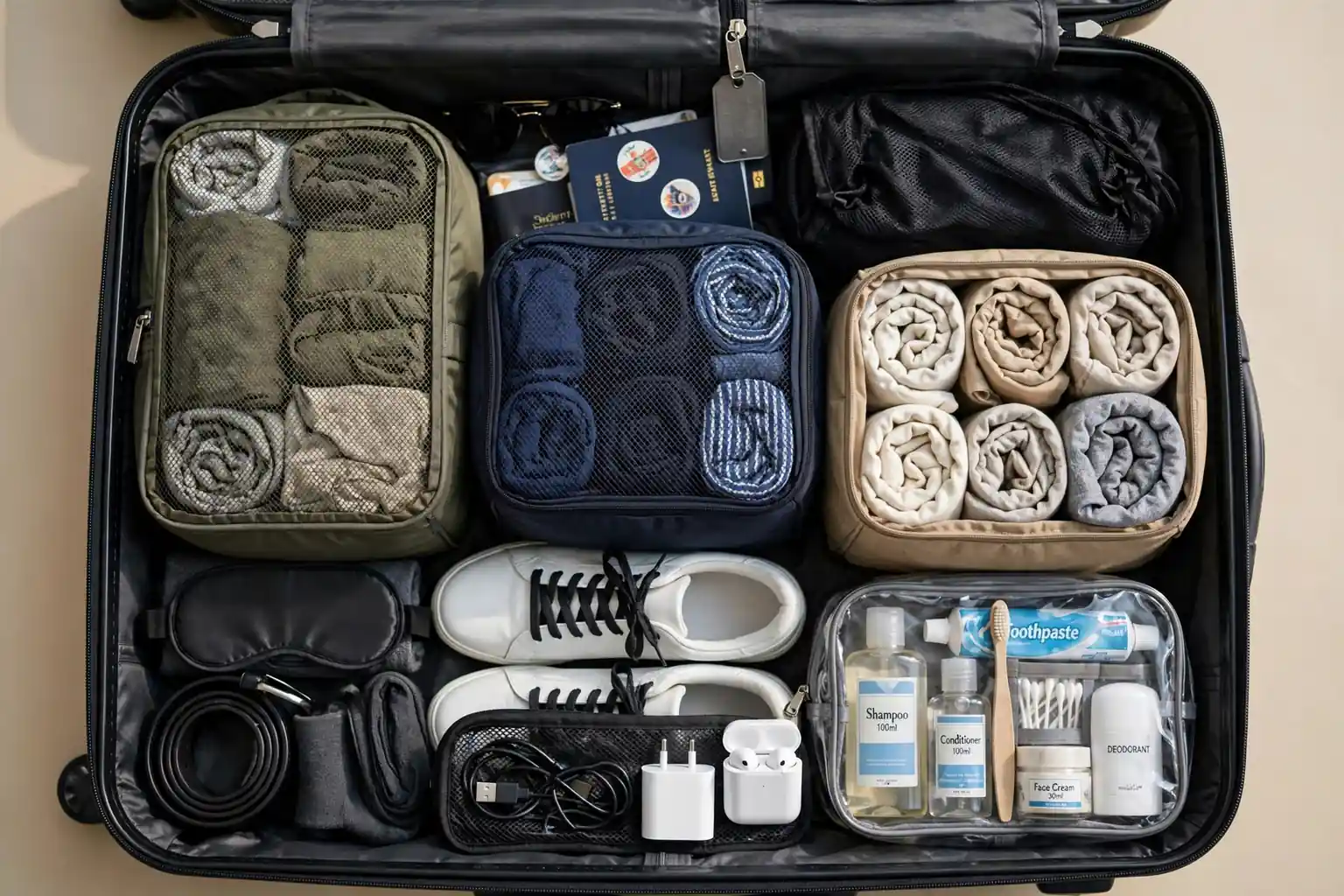
How to Pack a Carry-On for a Two-Week Trip
Packing a carry-on for two weeks comes down to a system, not a longer list: repeatable outfits, one laundry plan, and a fixed number of “just in case” items you actually enforce. Once you have the system, the length of the trip stops mattering as much.
Build a capsule, not a suitcase full of options
Pick one color story, say navy, gray, and one accent color, so every top works with every bottom. Aim for about five tops, two bottoms, one layer for warmth, and one pair of shoes beyond what you’re wearing on the plane. That’s enough combinations for two weeks without packing fourteen separate outfits.
Plan to do laundry once
A single midpoint laundry run, whether that’s a hotel sink, a laundromat, or a hostel machine, is what actually makes a carry-on work for a longer trip. Pack a small bar of travel detergent and a flat sink stopper, and treat washing everything around the midpoint as part of the plan rather than a backup option.
Roll for the suitcase, fold for the day bag
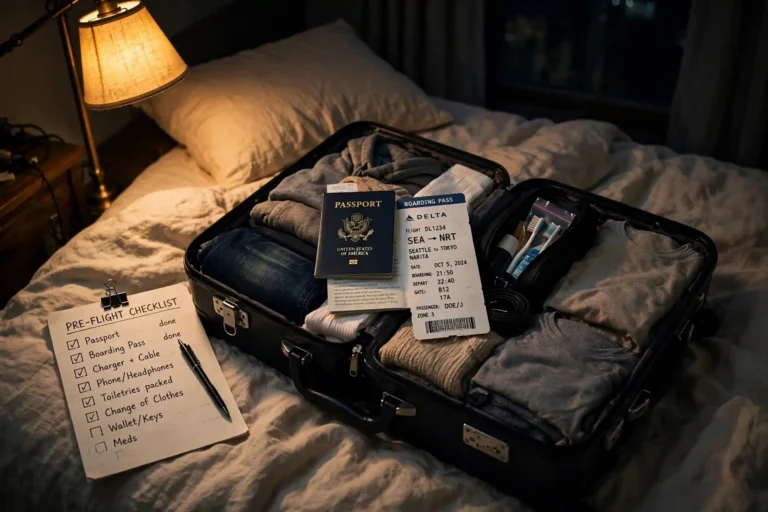
Rolling clothes tightly saves more space than folding and makes it easy to see everything you’ve packed at a glance. Use packing cubes to separate categories, like tops, bottoms, and underwear, so you’re not unpacking the whole bag to find one shirt. For the smaller bag you’ll actually carry around each day, a couple of folded items sit flatter and wrinkle less than rolled ones.
Set a hard limit on “just in case” items
- One pair of shoes beyond what’s on your feet, not three “just in case” options.
- A single small toiletry bag with solid or travel-size liquids that meet your airline’s carry-on rules.
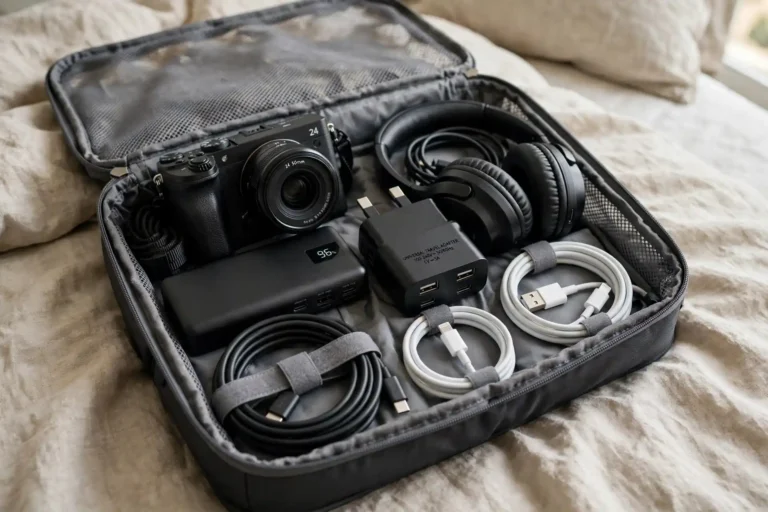
- One tech pouch: charger, adapter, headphones, and a portable battery, all in one place so you’re not digging for cables.
- A day bag that collapses flat, since you’ll want it once you land even if you didn’t need it while packing.
The single most useful thing to remember: pack a system you can repeat for two weeks, not two weeks’ worth of separate outfits. The suitcase should look almost the same on day one and day fourteen.
Before you pack, check the TSA’s current liquids rule and your airline’s own baggage page for size and weight limits, since these vary by carrier and change without much notice. If you’re deciding what goes in your personal item versus your carry-on, see our guide to personal item vs. carry-on, and for building the capsule itself, our five-piece wardrobe guide has more on picking a color story.
You already know the core idea: pack less, pack smarter, and make every item earn its place. The part most packing guides skip is the decision-making system behind it, the part that keeps you from standing in front of your suitcase at midnight repacking for the third time. Two weeks in a carry-on is entirely doable, but it rewards a method rather than enthusiasm. Here is the method.
Start With Laundry, Not With Clothes
The single decision that makes two weeks fit in a carry-on is how often you will do laundry. If you plan to wash clothes twice during the trip, you only need to pack for five to six days of outfits, not fourteen. That one realization cuts the clothing pile roughly in half, which is the entire battle.
Laundry on the road is easier than most people expect. Many hotels offer reasonably priced laundry service, laundromats are common in most travel destinations, and a sink wash with travel detergent handles underwear and light items in a pinch. Quick-dry fabrics make sink laundry genuinely practical: wash in the evening, dry by morning.
Build your wardrobe around this plan explicitly. Pack five or six tops, two or three bottoms, and enough underwear and socks for the stretch between washes, plus one warmer layer and one rain layer. Every item should work with every other item, which brings us to the color question that decides whether mix-and-match actually works.
Build a Capsule Wardrobe Around Three Colors
A capsule wardrobe sounds like fashion advice, but for carry-on packing it is pure logistics. Choose two neutrals, like navy and gray or black and tan, plus one accent color. Every top you pack should go with every bottom. If an item only works with one other item, it is dead weight; leave it home.
Fabric choice matters as much as color. Merino wool, synthetic blends, and wrinkle-resistant fabrics earn their place because they can be worn multiple times between washes without looking or smelling tired. A merino t-shirt can genuinely go three or four wears; a cotton one cannot. This is not about spending a fortune on travel clothing; it is about choosing the items you already own that perform best.
Lay out complete outfits before anything goes in the bag, and count them against your laundry plan. If you are washing twice, you need outfits for roughly five days plus what you wear on travel days. Anything beyond that is insurance you will not use. Be honest about the fancy dinner or the hiking day trip; pack for the trip you are actually taking, not the trip you imagine.
Master the Mechanics of the Bag Itself
How you pack matters nearly as much as what you pack. Rolling clothes saves space compared to folding for most casual fabrics and reduces hard creases. Packing cubes take this further: they compress soft items, keep categories separated, and let you pull out one cube without disturbing the rest of the bag. They are the closest thing to a packing cheat code that exists.
Use the structure of the bag deliberately. Heavy items like shoes and toiletry bags go at the bottom near the wheels, which keeps the bag stable and easy to roll. Fill dead space ruthlessly: socks and underwear inside shoes, chargers in the gaps between cubes, a belt coiled along the bag’s edge. Empty air is wasted capacity.
Wear your bulkiest items on travel days. The heavy jacket, the boots, the jeans: these travel on your body, not in your bag. This one habit can free up a quarter of your carry-on’s volume, and it costs nothing. Dress in layers for the flight and you will be comfortable regardless of cabin temperature too.
Handle Toiletries and Liquids Like a Professional
The liquids rule shapes your toiletry strategy more than anything else. The TSA’s 3-1-1 rule, one quart-sized bag, containers of 3.4 ounces or less, is the constraint to design around, and the TSA website has the current version of the rules if anything has changed since you last flew. Decant into small reusable bottles rather than packing full-size products; you will not use a full bottle of shampoo in two weeks.
Better yet, replace liquids with solids where you can. Bar shampoo, bar conditioner, and bar soap eliminate the liquids-bag problem for most of your routine, last longer than their liquid equivalents, and cannot leak. Solid deodorant, a safety razor with a removable blade packed correctly, and minimal cosmetics round out a kit that barely touches the 3-1-1 limit.
For everything else, ask what the destination provides. Hotels supply soap, shampoo, and often conditioner; buying sunscreen or contact solution at your destination is usually cheaper and easier than packing it. The goal is a toiletry kit that fits in one small pouch, not a bathroom cabinet in miniature. Electronics deserve their own system too; see our guide to packing electronics for a trip so cables and chargers do not eat your space.
Choose Shoes and Accessories Ruthlessly
Shoes are the hardest packing decision because they are bulky, heavy, and oddly shaped. The rule is three pairs maximum: one comfortable walking pair worn on travel days, one versatile casual pair, and one dressier or activity-specific pair if the trip genuinely requires it. Every additional pair costs disproportionate space.
Make the pairs multitask. A clean, minimal sneaker can cover walking, casual dinners, and travel days. If you need something dressier, look for the most versatile option that works with your whole capsule wardrobe. Specialty shoes for a single planned activity should be questioned hard; renting at the destination is often the better call.
Accessories follow the same logic. One scarf that works as a layer, a blanket on the plane, and a dress-up piece. One hat. Minimal jewelry in a small pouch. A packable day bag or tote that compresses flat for daily use at the destination. Each accessory should serve at least two purposes or stay home.
Know What Goes in the Carry-On Versus Your Personal Item
Your carry-on is not one bag; it is a two-bag system. The roller or backpack holds clothes and bulk, while the personal item holds everything you need during travel and everything you cannot afford to lose. Valuables, medications, documents, chargers, and a change of clothes go in the personal item, always.
This split matters because carry-ons sometimes get gate-checked on full flights. If your roller ends up in the hold, your personal item is your survival kit: entertainment, snacks, water bottle, medications, and the documents for your destination. Pack the personal item as if the carry-on might disappear, because occasionally it does.
The division also helps with the eternal question of what to carry on versus check. Even when you are traveling carry-on only, thinking in terms of “must have with me” versus “can go in the hold if forced” keeps your essentials in the right bag. Liquids, laptop, and anything fragile or irreplaceable never leave your side.
Frequently Asked Questions
Can you really fit two weeks of clothes in a carry-on?
Yes, with a laundry plan. Washing twice during the trip means packing for five to six days of outfits instead of fourteen. A capsule wardrobe in coordinating colors, quick-dry fabrics, and packing cubes make it comfortable rather than cramped.
How many pairs of shoes should I pack for two weeks?
Three at most: the walking pair you wear on travel days, one versatile casual pair, and one activity-specific or dressier pair if needed. Shoes are the bulkiest items you will pack, so each pair has to justify its volume.
What is the best way to pack toiletries for a long trip?
Decant liquids into small bottles under the 3-1-1 limit, switch to solid shampoo and soap bars where possible, and buy bulky items like sunscreen at your destination. Most hotels provide the basics, so do not duplicate what is already waiting for you.
Should I roll or fold my clothes?
Roll casual fabrics like t-shirts, knits, and jeans; it saves space and reduces creasing. Fold structured items like button-down shirts and blazers, or roll them loosely around a core. Packing cubes improve either method by compressing and organizing the result.
What should go in my personal item versus my carry-on?
The personal item gets valuables, medications, documents, electronics, chargers, snacks, and a change of clothes. The carry-on gets the bulk: the rest of your clothes, shoes, and toiletries. If your carry-on gets gate-checked, the personal item keeps you covered.
Conclusion
Two weeks in a carry-on comes down to a laundry plan, a capsule wardrobe, ruthless shoe discipline, and a two-bag system that protects your essentials. None of it requires special gear or extreme minimalism, just honest decisions made before you zip the bag. For more travel systems that actually work, Factblaze has the rest of the trip covered, from planning to packing to getting home.
Related Articles
- Carry-On vs Checked: A Packing Checklist for Long Trips
- How to Pack a Toiletry Bag That Meets Carry-On Rules
- A Checklist for the Week Before an International Trip