Common Mistakes People Make Booking Budget Airlines
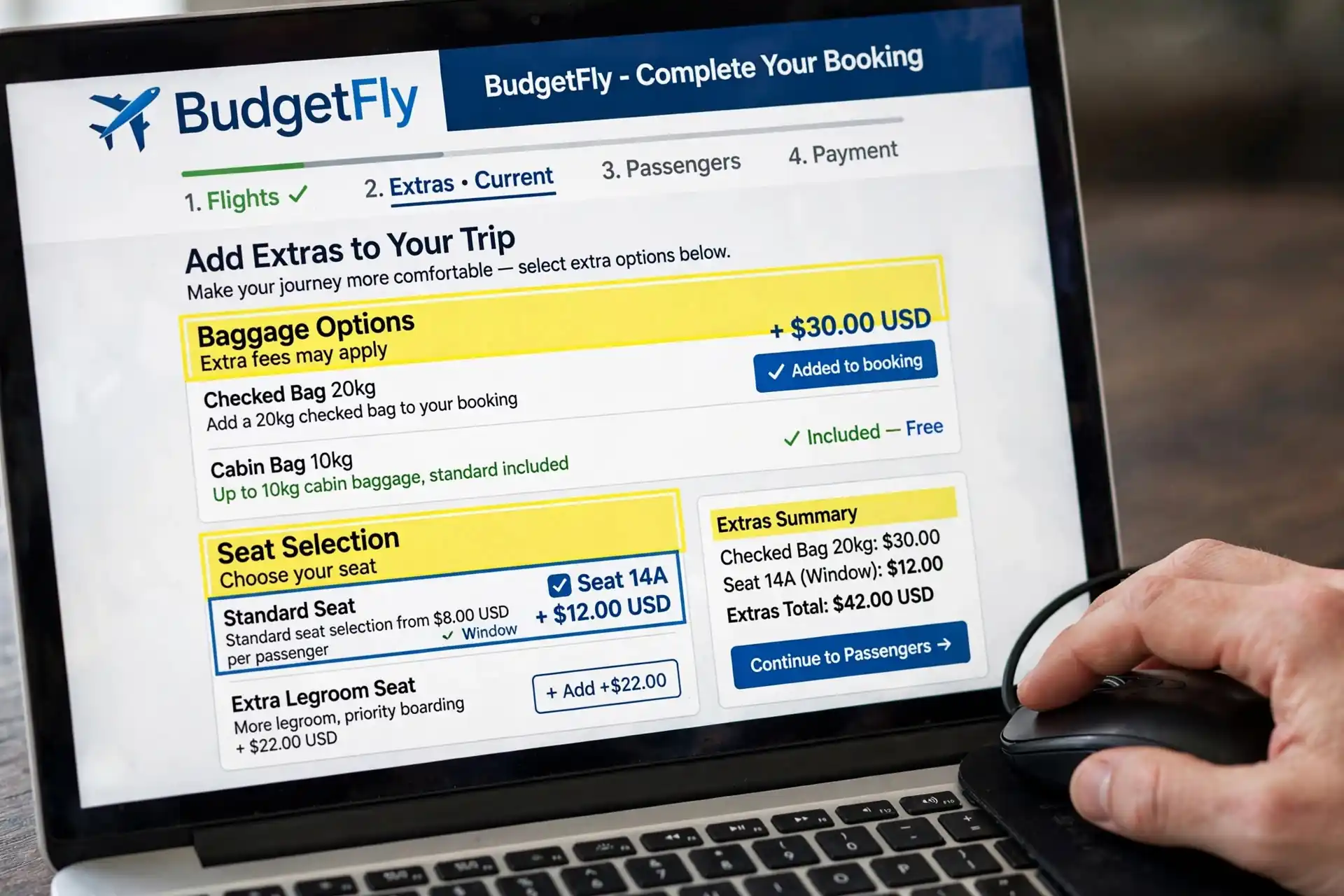
The biggest booking budget airlines mistakes happen after you see the base fare, when bags, seats, and check-in rules add costs the headline price never showed. The fare is only the ticket to board; nearly everything else is sold separately.
That model isn’t a trick in itself. It lets travelers with a small bag and flexible plans fly cheaply. The trouble starts when you book as if it were a full-service airline.
Assuming your usual bag counts as carry-on
Many low-cost carriers allow only a small personal item for free, something that fits under the seat. A standard wheeled carry-on often costs extra, and paying for it at the gate is typically far more expensive than adding it during booking. Measure your bag, including wheels and handles, against the airline’s stated dimensions, and weigh it if the carrier has a weight limit.
Comparing fares instead of total prices
A budget fare plus a bag, a seat, and a payment fee can land above what a traditional airline charges with those things included. Before you commit, price the trip the way you’ll really fly it. Add every extra you need on both carriers and compare the totals, not the starting numbers.
Skipping online check-in
Some budget airlines charge a fee to check in at the airport or print a boarding pass at the counter. Check in online within the window the airline sets, and save the boarding pass to your phone or print it at home. Set a reminder, since the window can close well before departure.
Booking a tight self-made connection
If you string two separate budget tickets together, the second airline has no obligation to you when the first flight runs late. Miss it and you’ll likely pay for a new ticket. The same timing logic from mistakes people make booking connecting flights applies here, with even less margin, because there’s no single booking to protect you.
Ignoring where the airport is
Low-cost carriers often use secondary airports farther from the city. A cheap fare can be cancelled out by a long taxi ride or a transfer that doesn’t run early in the morning. Check how you’ll get from the airport to where you’re staying, and what it costs, before you book.
Booking budget airlines mistakes with change and refund rules
The lowest fare classes are usually nonrefundable and may charge steep fees to change a name or date. If your plans aren’t firm, compare that risk against a slightly pricier, more flexible fare. If you’re flying within or from Europe, the EU’s official air passenger rights page explains what you’re owed when a flight is delayed or cancelled, which applies to budget carriers too.
Packing light is the simplest way to beat the fee structure. If you can fit everything in the free personal item, most of the add-ons stop mattering. For longer trips, the approach in how to pack a carry-on for a two-week trip gets you surprisingly far with one bag.
Fees and bag allowances change often, and they differ by route even within one airline. Check the rules on the airline’s own site the week you book, not a comparison page from last year.
Budget airlines sell the cheapest fares in the sky and make their money on everything else. Travelers who understand the business model fly cheap and happy. Those who do not end up paying legacy-carrier prices for a budget experience, wondering where the savings went. The mistakes are predictable and avoidable.
The baggage mistakes
Baggage is where budget airlines earn their margins, and where passengers lose the most money through inattention.
Not pre-booking bags
Checked and even cabin bags cost dramatically more at the airport than when booked online in advance. The price can double or triple at the counter. Always add bags during booking, when the prices are lowest. Measure and weigh your bags at home; budget carriers enforce limits strictly because enforcement is profitable. Our packing guide on what to carry on versus check helps you plan the split before you book.
Misunderstanding cabin bag rules
Many budget airlines include only a small personal item in the base fare. The full-size carry-on costs extra. Travelers accustomed to legacy carriers, where a carry-on is standard, get caught at the gate with an oversized bag and a steep fee. Read the fare’s baggage allowance specifically; do not assume.
Ignoring weight limits
Budget carriers weigh bags more often than legacy airlines. A bag one kilo over can trigger overweight fees that exceed the ticket price. Portable luggage scales cost little and pay for themselves on the first trip.
The booking mistakes
How and when you book changes the price significantly.
Booking through third parties
Third-party sites add their own fees and complicate changes. With budget airlines, whose customer service is already minimal, adding a middleman makes disruptions far worse. Book direct with the airline. If something goes wrong, you want a direct relationship, not a voucher from an intermediary. The U.S. Department of Transportation’s air consumer protection page outlines your rights regardless of where you book.
Not comparing the all-in price
A $39 fare plus $60 in bags, $25 for a seat, and $10 for water is not cheaper than a $99 legacy fare that includes everything. Always build the total: fare plus bags plus seat selection plus any extras you will actually use. Budget airlines win on truly light travel and lose as soon as you add services.
Ignoring the fine print on changes
Budget tickets are typically non-refundable and change fees can exceed the original fare. If your plans might shift, the cheap fare is a gamble. Travel insurance or a flexible fare from a legacy carrier may be cheaper than a forfeited budget ticket plus a last-minute replacement.
The airport mistakes
Budget airlines shift work to passengers. Unprepared travelers pay for the privilege.
Missing check-in deadlines
Online check-in is often mandatory, with airport check-in carrying a fee. Check in within the window, usually 24 to 48 hours before departure, and have your boarding pass ready. Some carriers charge for printing a boarding pass at the airport. Set a phone reminder; the fee for forgetting is insult added to injury.
Arriving late
Budget airlines close gates earlier and more rigidly than legacy carriers. There is no holding the plane. Arrive with more buffer than you think you need, especially at unfamiliar airports. If you are chasing points and perks to offset these hassles, our guide to travel credit card benefits beyond points covers how the right card can include trip protections.
Not eating beforehand
Nothing is free onboard, including water on some carriers. Eat before the flight and bring snacks and an empty water bottle to fill airside. Buying a meal onboard costs several times what it would elsewhere, assuming food is even available on your flight.
Seat and comfort mistakes
Budget seating is an additional revenue stream disguised as a choice.
Paying for seats unnecessarily
On short flights, random seat assignment is fine for solo travelers. Pay for seats only when sitting together matters, such as families with children, or when you need extra legroom for medical reasons. Do the math per flight rather than defaulting to paid selection.
Expecting legacy comfort
Seats are thinner, pitch is tighter, recline may not exist. This is the trade for the fare. Bring a neck pillow, download entertainment, and dress for the cabin temperature. Adjusting expectations prevents the resentment that ruins cheap trips.
Frequently Asked Questions
Are budget airlines actually cheaper?
For light travelers who book direct, pre-pay bags, and skip extras, yes, often dramatically. For travelers with checked bags, seat preferences, and inflexible plans, the all-in cost frequently matches or exceeds legacy carriers. Calculate your specific trip, not the advertised fare.
Why are budget airline fees so high at the airport?
It is deliberate pricing design. Low advance fees reward planners; punitive airport fees punish the unprepared and subsidize the low base fares. The airline’s profit depends on a share of passengers paying those fees.
Can I get a refund on a budget airline ticket?
Usually not, unless the airline cancels or significantly changes the flight. Budget fares are among the most restrictive. EU261 protections apply within Europe regardless of carrier, but outside that framework, assume the money is committed.
Do budget airlines have worse safety records?
No. Budget airlines operate under the same safety regulations and oversight as legacy carriers. Cost cutting happens in service and staffing models, not in maintenance or safety compliance. Safety records are comparable.
Should I join a budget airline’s loyalty program?
Only if you fly them regularly. Budget loyalty programs are generally less rewarding than legacy ones. Occasional flyers earn little and the points often expire. A general travel rewards card usually beats airline-specific loyalty for infrequent budget flyers.
Conclusion
Budget airlines are a tool, not a trap, for travelers who read the rules. Book direct, pre-pay everything, check in online, arrive early, and calculate the true all-in cost before celebrating the fare. Do that consistently and the savings are real, often hundreds per trip for a family. Skip those steps and you will fund someone else’s cheap ticket. For more travel strategy guides, visit the Factblaze homepage.