Sizing Mistakes to Avoid When Ordering Clothes Online
Most sizing mistakes when shopping online happen before you even open the size chart: people guess their size from memory instead of measuring, or they measure once and reuse that number for every brand. A tape measure and ten honest minutes prevent most returns.
Sizing Yourself for Online Orders: Measure, Don’t Guess
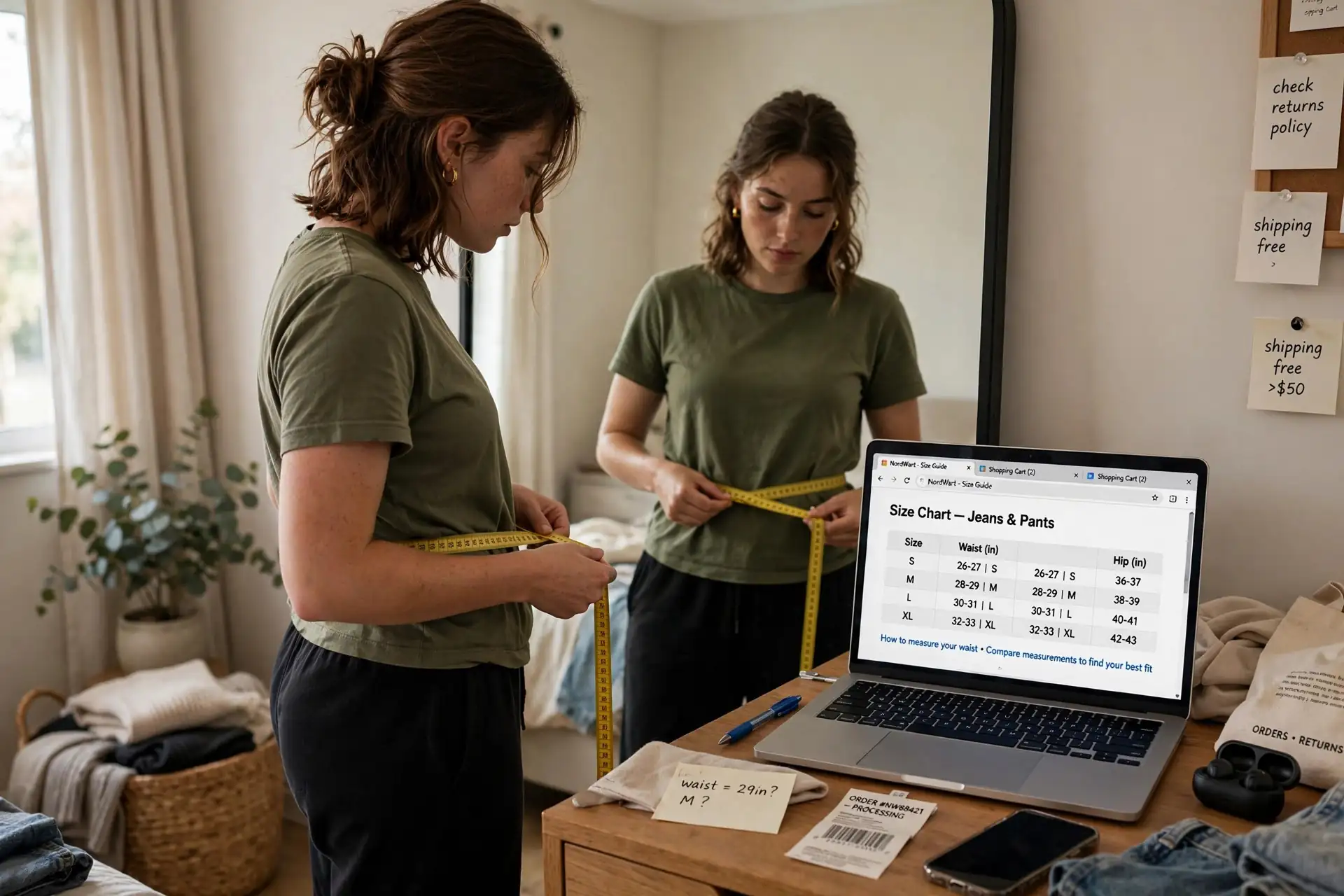
Clothing sizes aren’t standardized across brands, so the medium you wear in one shirt can fit like a small or a large in another. Sizing yourself for online orders means measuring your actual body, not recalling a number from a tag you bought two years ago in a different brand. Take three measurements at minimum: chest or bust at the fullest point, waist at the narrowest point, and hips at the widest point, wrapping the tape snug but not tight. Write the numbers down; don’t estimate them by eye.
A second common mistake is measuring over bulky clothing or in poor posture, which skews every number that follows. Measure in fitted clothing or underwear, standing naturally, and have someone else hold the tape level around your back if you can. A tape that dips or rides up adds inches you don’t actually have.
Ignoring the Brand’s Own Chart
Every retailer publishes its own size chart, and skipping it in favor of “I’m usually a medium” is where most mis-orders start. Cross-reference your measurements against that specific brand’s chart every time, even for a brand you’ve ordered from before, since charts change between seasons and product lines. If your measurements fall between two sizes, check the chart’s fit notes: a brand that lists a fitted cut usually means size up, while one described as oversized or relaxed usually means your normal size works fine.
Fabric content matters too: a rigid cotton or denim item with no stretch needs to be sized closer to your exact measurement, while anything with spandex or elastane has more give and can be sized to the chart’s lower end.
- Measure your body directly instead of trusting a size you remember from another brand.
- Check the specific item’s chart, not a general size guide, every time you order.
- Read the fabric content to judge how much stretch you’re working with.
- Check the return policy and whether return shipping is free before you order two sizes as a hedge.
That last point is worth planning around rather than treating as a backup. If a retailer charges for returns or only offers store credit, ordering two sizes to compare at home gets expensive fast; if returns are free, it’s often the most reliable way to solve a borderline sizing call. The Federal Trade Commission’s consumer guidance covers what a retailer owes you on returns and refunds when a listing’s claims turn out to be misleading.
Reviews with photos are also underused. Shoppers who mention their height, weight, and the size they ordered give you a far more useful comparison point than the chart alone, especially for fit issues like length or how something sits on the shoulders that a chest measurement won’t catch.
Getting sizing right online comes down to trusting a tape measure over memory and a specific chart over a general instinct, the same discipline that helps avoid other common mistakes people make buying clothes without trying them on. For items like bras where band and cup interact differently across brands, the same measure-first approach applies, detailed in how to choose a bra size when online charts disagree.
Measuring only once, or measuring wrong
The foundation of every sizing mistake is bad measurement. People measure over bulky clothing, pull the tape too tight or too loose, measure only the bust and guess the rest, or use measurements taken years ago as if bodies never change. Online size charts are precise instruments fed with sloppy inputs, and the output is predictably wrong.
Measure over the undergarments you will wear with the item, keep the tape level and snug without compressing, and measure all the dimensions the chart lists, not just the one you think matters. For tops that means bust, waist and sometimes shoulder width. For bottoms it means waist, hips and inseam. Skipping dimensions is guessing, and guessing is what returns are made of. Our guide to finding the right shoe width applies the same measure first principle to footwear.
Trusting the letter instead of the chart
A medium is not a medium. Vanity sizing, regional differences and brand specific grading mean the same letter covers wildly different measurements across brands. Someone who wears a medium in one store may need a small or large in another, and this is normal rather than a sign that their body is unusual.
The fix is simple but widely ignored: check the actual size chart for every brand, every time. Keep your measurements written down somewhere accessible and compare them to the chart’s numbers rather than to your memory of what size you usually wear. This single habit eliminates the majority of sizing errors.
Why charts differ so much
Brands design for different fit models, grade their patterns differently, and target different demographics. Fast fashion tends to run small, American heritage brands tend to run generous, and European brands use entirely different base measurements. None of this is standardized, so the chart is the only truth that matters.
Ignoring fabric and cut
Two garments with identical measurements can fit completely differently depending on fabric and cut. Stretch fabrics forgive measurement errors; rigid fabrics do not. A relaxed cut in your measured size may swim on you while a slim cut in the same size fits perfectly. The size chart tells you the garment’s dimensions, not how it wears.
Read the product description for fit notes. Phrases like runs small, oversized fit, or size down for a closer fit are data, not marketing fluff. They come from return patterns and customer feedback. Reviews are even better: filter for reviewers with similar measurements to yours and read what size they chose and how it fit.
Forgetting about proportions
Standard sizes assume standard proportions, and many bodies are not standard. Long torsos, broad shoulders, narrow hips, long arms: any of these can make an otherwise correct size fit badly. If you consistently have the same problem, such as sleeves always too short or waists always gaping, the issue is proportion rather than size.
Solutions include seeking brands known for your body type, using petite, tall or plus specific lines rather than sized up or down standard lines, and budgeting for simple tailoring. A twenty dollar hem or waist adjustment transforms an almost right garment into a perfect one. For items where fit is critical, this beats endless ordering and returning.
Not accounting for the item’s purpose
Fit needs vary by use. Workout clothes need room for movement; a blazer needs clean lines through the shoulder; a winter coat must accommodate layers underneath. Ordering your usual size without considering the item’s function leads to predictable disappointment.
Think about what you will wear under or with the item and factor that into the size choice. For layered pieces, consider sizing up. For items meant to be fitted, trust the chart even when the size letter surprises you. The Consumer Reports fitting guide offers practical advice on matching size choices to garment types.
Using size charts across international brands
International sizing adds another layer of confusion. US, UK, EU and Asian sizing systems all use different base measurements, and converting between them is approximate at best. A US medium might correspond to a EU large in one brand and a EU medium in another. When shopping international brands, always use that brand’s own chart in its native sizing system rather than relying on converted sizes.
Asian sizing in particular tends to run smaller than Western equivalents, which surprises many first time buyers. If you are between sizes on an international chart, check whether the brand notes its fit relative to Western sizing. When the product page includes model measurements and the size the model wears, compare those to your own numbers for a reality check. Our guide to buying clothes online mistakes covers the broader pitfalls of remote clothes shopping beyond just measurements.
How To Read a Size Chart Like a Pro
First, know which measurements you are looking at. Body measurements describe you — chest, waist, hips taken on your actual body. Garment measurements describe the item, taken flat on a table. A body-measurement chart tells you which size to pick; a garment-measurement chart tells you how the item will fit. Mixing them up is the most common online sizing mistake.
The numbers that matter most are chest for tops, waist for bottoms, hips for dresses and skirts. Measure with a soft tape, snug but not tight, over the underwear you will wear with the item. Chest goes around the fullest part; waist at your natural waistline, not where jeans sit; hips at the fullest point. Write the numbers down — guessing from memory is how wrong sizes happen.
Now compare, and watch the ease. If your chest is 40 inches and the garment chest is 42, those two inches of ease mean a comfortable fit; zero ease means skin-tight. Stretch fabrics need less ease than rigid ones. Between sizes, size up in rigid fabrics like denim and down in stretchy knits.
Read the fine print too. Check whether model measurements are listed — if the model is your height and wears a medium, that is a useful data point. Look for notes like “runs small,” and always check the return policy first. Free returns make experimenting with sizes risk-free.
Frequently Asked Questions
Should I order two sizes and return one?
When the fit is uncertain and returns are free, yes. It is the most reliable strategy for nailing fit on the first order. Just check the return window and keep tags on until you decide.
Why do I wear different sizes in different brands?
Because sizing is not standardized. Each brand uses its own fit model and grading. This is normal and expected, which is why checking each brand’s chart matters more than remembering your usual size.
How do I measure myself accurately alone?
Use a mirror to keep the tape level, measure over proper undergarments, and take each measurement twice. For hard to reach spots like shoulder width, asking someone to help is worth the trouble.
Do reviews actually help with sizing?
Yes, especially reviews from people who share their measurements and the size they ordered. Look for patterns across multiple reviews rather than trusting any single one.
When should I just get something tailored?
When the garment fits well in the hard to alter areas, like shoulders and hips, but needs adjustment in easy areas like hems and waists. Tailoring fixes proportions that no size can.
Conclusion
Accurate online sizing comes down to measuring properly, trusting charts over letters, reading fit notes and reviews, and accounting for fabric and purpose. Master these habits and your return rate will drop dramatically. For more practical buying guides, visit the Factblaze homepage.