Common Mistakes People Make During Car Rides With a Dog
The mistake that does the most damage is letting your dog ride loose. In a sudden stop, an unrestrained dog is thrown forward, hurting itself and anyone in front of it, and a frightened dog can bolt into traffic the moment a door opens after a collision.
Most other car rides with a dog mistakes are smaller, but they share a theme: they turn a minor incident into a serious one. These are the ones worth fixing first.
Clipping the seat belt tether to a collar
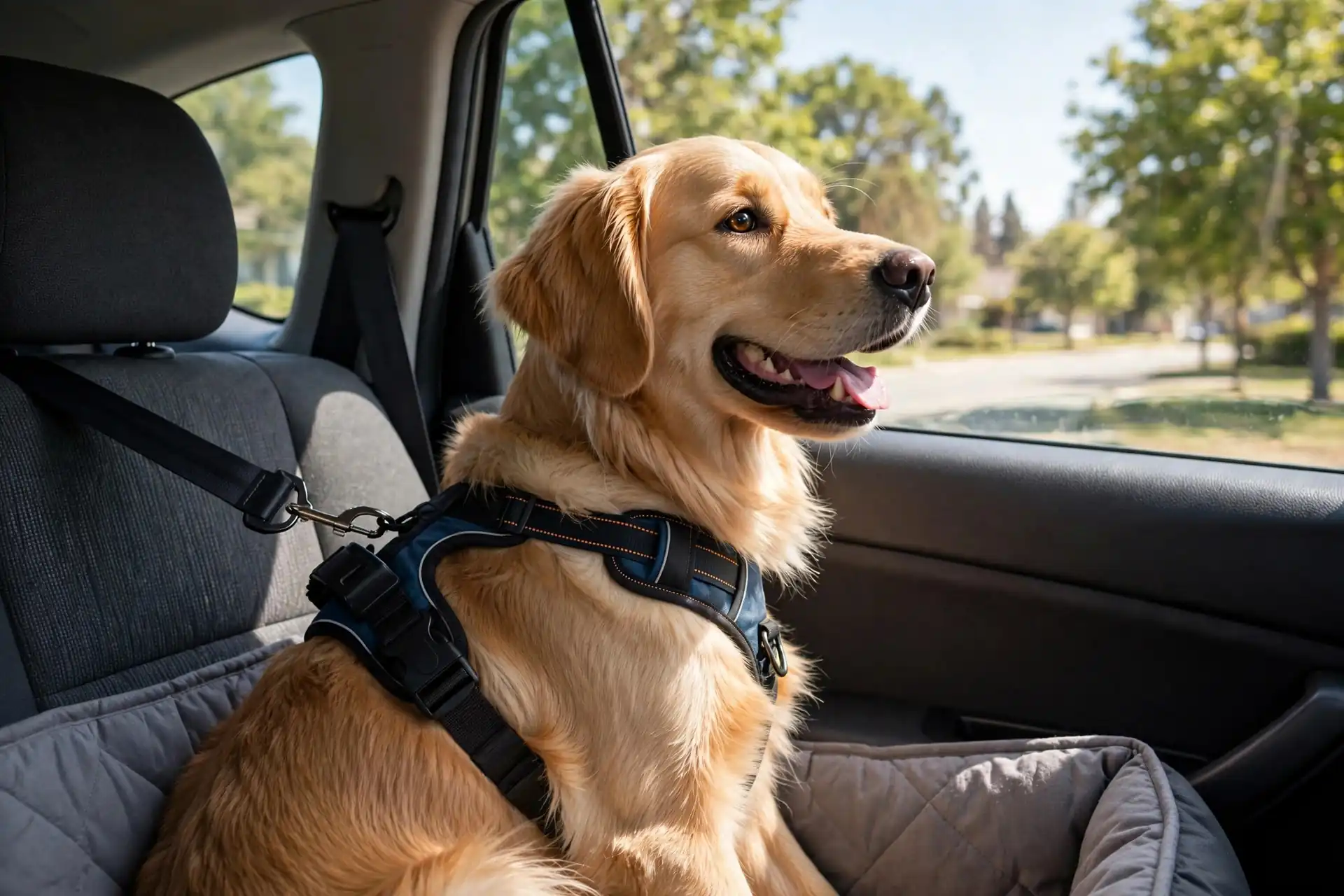
A tether attached to a collar puts all the force of a hard stop on your dog’s neck. If you use a seat belt tether, attach it to the back of a well-fitted harness, and keep it short enough that your dog can sit and lie down but can’t reach the front seats or slide into the footwell. A harness that slips or rubs won’t do its job, so it’s worth reading how to choose a dog harness that fits right before your next trip.
Not every harness is built for crash forces, either. A walking harness keeps a dog from wandering around the car; a travel harness is designed to hold in a collision. The Center for Pet Safety crash-tests travel harnesses, crates, and carriers and publishes the results, which is a better guide than packaging claims.
Letting your dog ride up front
Front airbags deploy with enough force to seriously injure a dog, even a big one. The back seat, or a crate strapped down in the cargo area so it can’t slide or tip, is the safer spot.
Heads out the window
It looks joyful, but grit, insects, and debris hit eyes and ears at road speed, and a dog who spots a squirrel may try to jump. Open the window enough for airflow and smells, not enough for a head.
Leaving your dog in a parked car
Cars heat up fast, even with the windows cracked and on days that feel mild to you, and a quick stop has a way of running long. If your dog can’t come inside with you, leave them at home. Heavy panting, thick drool, stumbling, or weakness are signs of heat distress; how to tell if a dog is overheating covers them in more detail, and the same signs apply in a car. A dog showing them needs to get out of the heat and to a vet right away.
Car rides with a dog: mistakes in the small prep
- No ID. A current tag and up-to-date microchip details matter most when a door opens somewhere unfamiliar.
- Opening the door before the leash is on. Clip the leash first, every time, then release the restraint.
- No water on long drives. Bring a bowl and offer it at each stop.
- A big meal right before leaving. A lighter meal a few hours earlier tends to sit better with dogs prone to car sickness.
Car sickness deserves its own note. Drooling, lip-licking, and vomiting on every trip is something to raise with your vet rather than push through, because they can talk you through options. Short, upbeat practice trips that end somewhere fun also help anxious dogs relax about the car itself.
Before your next drive, check two things: where the restraint clips on, and whether the leash goes on before the door opens.
Skipping restraint and why it matters
The most common mistake is also the most consequential: letting the dog ride unrestrained. A loose dog in a moving car is a projectile in a sudden stop, a distraction to the driver, and an escape risk the moment a door opens. At even moderate speeds, an unrestrained dog can be thrown with enough force to injure both itself and human passengers. Beyond the physics, many regions now have laws about animal restraint in vehicles, and an unrestrained pet can complicate insurance claims after an accident.
Restraint does not have to mean discomfort. Crash tested harnesses that clip into the seatbelt, secured crates, and vehicle barriers for larger cars all keep the dog safe while letting it settle. The key is introducing the system before the trip, not five minutes before departure. If your dog has never worn a car harness, our guide to choosing a dog harness that fits right covers the fitting details that make the difference between a harness the dog tolerates and one it fights.
Feeding and watering mistakes
A big meal right before a drive is a classic error. Dogs prone to motion sickness do worse on full stomachs, and even dogs that travel well can get uncomfortable when a heavy meal sloshes around on winding roads. Feed a light meal three to four hours before departure, then offer small amounts of water during rest stops rather than letting the dog gulp a huge bowl at once.
On the other end, some owners forget water entirely on short trips. Even a thirty minute drive on a warm day can dehydrate a panting dog. Keep a spill resistant travel bowl and offer water at every stop. Avoid letting the dog drink from roadside puddles or streams, which can carry bacteria and parasites.
Temperature and ventilation errors
Leaving a dog in a parked car is the mistake everyone has heard about and some people still make. Interior temperatures can climb to lethal levels in minutes even on mild days, and cracking the windows does almost nothing to slow it. If the dog cannot come with you at a stop, one person stays with the car or the errand waits.
While driving, ventilation needs more thought than most owners give it. Dogs cool themselves by panting, which requires airflow. Air conditioning on a low steady setting works well. What does not work is blasting cold air directly at a crated dog or, at the other extreme, driving with all windows sealed on a warm day because you assume the dog is fine. Watch for heavy panting, drooling or restlessness, which signal the dog is overheating.
Letting the dog hang out the window
Dogs love it, and it looks joyful, but a dog with its head fully out of a moving window risks eye injuries from debris, ear damage from wind pressure, and the nightmare scenario of spotting something interesting and jumping. A window cracked a few inches for sniffing air is a reasonable compromise. The full head out posture at speed is not worth the risk, however happy the dog looks doing it.
Skipping breaks on longer drives
Humans push through to make time; dogs should not be asked to. Plan stops every two to three hours for water, a short walk and a bathroom break. Puppies, seniors and dogs with medical conditions may need more frequent stops. Breaks also let an anxious dog decompress, since continuous motion and engine noise are stressful for some animals even when they appear calm.
Choose rest stops thoughtfully. Busy highway service areas with heavy truck traffic and off leash dogs are stressful and risky. Quieter stops with grassy areas away from the road are better. Keep the leash on from the moment the car door opens until it closes again. Parking lots are where most travel escapes happen, usually because someone assumed the dog would stay put for just a second. If you are planning a longer journey with your dog, our guide to traveling with a pet by plane covers the additional preparation air travel demands.
Ignoring anxiety and motion sickness
Some dogs experience real distress in cars: drooling, whining, trembling, vomiting or panicked pacing. Owners often misread this as bad behavior and scold the dog, which makes the anxiety worse. Motion sickness in particular is a physiological problem, not disobedience, and it is common in puppies whose balance systems are still developing.
For mild cases, gradual desensitization works: short positive car sessions that build up over weeks, paired with treats and calm departures. For persistent problems, talk to your veterinarian before a long trip. There are safe anti nausea medications for dogs, but dosing and suitability need professional guidance. The American Veterinary Medical Association’s pet travel guidance is a reliable reference for what is normal and when to seek help.
Signs your dog is stressed rather than misbehaving
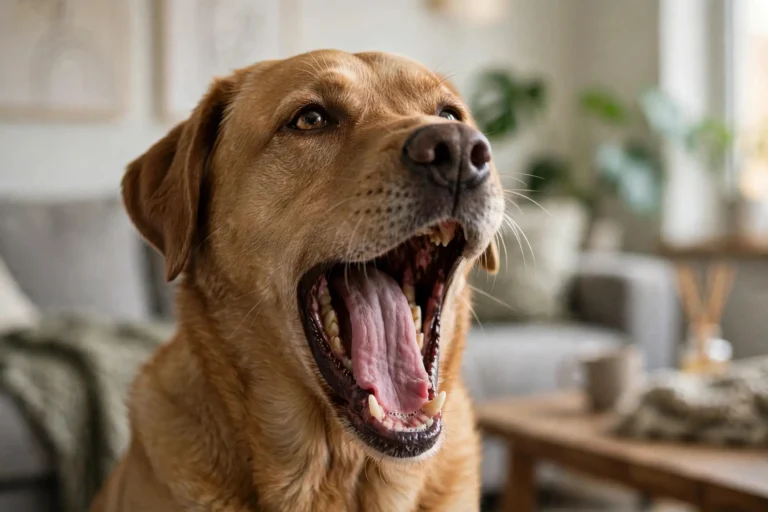
Yawning repeatedly, lip licking, tucked tail, refusing treats it would normally take, and scanning the environment restlessly are stress signals, not defiance. A dog showing these signs needs shorter trips and positive conditioning, not correction.
Poor crate and space setup
A crate that slides around the trunk helps nobody. Any crate in the car should be secured so it cannot shift in a turn or stop, sized so the dog can stand, turn and lie down, and ventilated on multiple sides. Wire crates offer airflow but little protection in a crash; sturdier travel crates cost more but protect better. Whatever you use, the dog should be comfortable in it at home first. A crate that only appears on travel day becomes a source of dread.
For dogs riding on seats, a hammock style seat cover protects upholstery and gives the dog stable footing, which reduces anxiety. Loose items in the car are another overlooked hazard: anything on the back seat becomes a projectile too, so secure luggage and keep heavy objects in the trunk.
The Safest Way To Secure a Dog in the Car
Crash-tested harnesses are the best-studied option. Look for harnesses certified by the Center for Pet Safety, which crash-tests products at 30 mph with weighted dog dummies. A certified harness connects to the seatbelt and keeps the dog on the seat in a collision. Non-certified harnesses may hold during normal driving but can fail or snap in a real crash — certification is the whole point.
A sturdy crate is the other strong choice, especially for smaller dogs. A hard-sided crate placed in the cargo area or strapped into the back seat contains the dog and prevents it from becoming a projectile. Wire crates can collapse in a crash, so a crash-rated or solid plastic crate is safer. The crate should be just big enough for the dog to stand, turn, and lie down — extra room means extra distance to be thrown.
Barriers, the metal grilles between the cargo area and the seats, are the weakest option. They keep the dog out of the front seat but do nothing to restrain the dog itself. In a hard stop, an unsecured dog behind a barrier still slams into the barrier or the car walls.
Whatever you choose, secure it in the back seat or cargo area, never the front. An airbag deploying on a dog causes serious injury. Practice short trips first so the dog accepts the setup before a long drive.
Frequently Asked Questions
Is it illegal to drive with an unrestrained dog?
It depends where you are. Many U.S. states and several countries have laws requiring pets to be restrained in vehicles or penalizing distracted driving that an loose animal can cause. Even where it is not explicitly illegal, it can affect fault and insurance after an accident.
How often should I stop on a long drive with my dog?
Every two to three hours is the standard guidance. Offer water, a short walk and a bathroom break each time. Puppies, older dogs and dogs with health issues may need stops every hour or two.
Can I give my dog motion sickness medicine?
There are veterinary approved options, but do not use human medications or guess at doses. Talk to your vet before the trip about your dog’s symptoms and history so they can recommend something safe and effective.
Should my dog ride in the front seat?
No. The front seat puts the dog near the airbag, which can seriously injure or kill a dog in a deployment, and it maximizes driver distraction. The back seat or cargo area with proper restraint is always the better choice.
How do I calm my dog’s car anxiety?
Start with very short, positive car sessions paired with treats, and build duration gradually over weeks. Keep departures low key, maintain ventilation and a comfortable temperature, and consider a familiar blanket or toy. For severe anxiety, ask your veterinarian about behavioral strategies or short term calming aids.
Conclusion
Most car ride mistakes come from treating the dog as cargo rather than as a passenger with needs. Restrain the dog properly, manage food, water and temperature, stop regularly, and take anxiety seriously instead of punishing it. Do those things and car travel becomes something your dog tolerates or even enjoys. For more practical pet care guides, visit the Factblaze homepage and browse our animal care articles.