A Checklist for Traveling With a Pet by Plane
Start with two sources: your airline’s pet policy and the official import rules for your destination. A traveling with a pet by plane checklist works best when you build it backward from those, instead of assuming the rules match your last trip or a friend’s.
Requirements vary more than most people expect: between airlines, between aircraft on the same route, between countries, and sometimes between the season you book and the season you fly.
Weeks ahead: the traveling with a pet by plane checklist
- Airline policy, in writing. Confirm whether your pet can fly in the cabin, as checked baggage, or only as cargo, along with size and weight limits, breed restrictions, and how many animals are allowed per flight. Cabin spots are limited, so reserve your pet’s place when you book your own seat.
- Destination rules from the official source. International trips can involve microchipping, vaccination records, health certificates, and waiting periods, and the order these happen in can matter. Check the destination government’s own website; the European Commission’s pet movement page is one example of what an official source looks like. Your own country’s rules for coming home count too. If you’re also sorting out your own paperwork, finding official visa information walks through the same official-source habit.
- A vet appointment timed to the paperwork. Some health certificates must be issued within a set window before travel. Ask your vet about timing, and whether your pet is fit to fly at all. Snub-nosed breeds, very young or elderly animals, and pets with heart or breathing conditions face higher risks in the air.
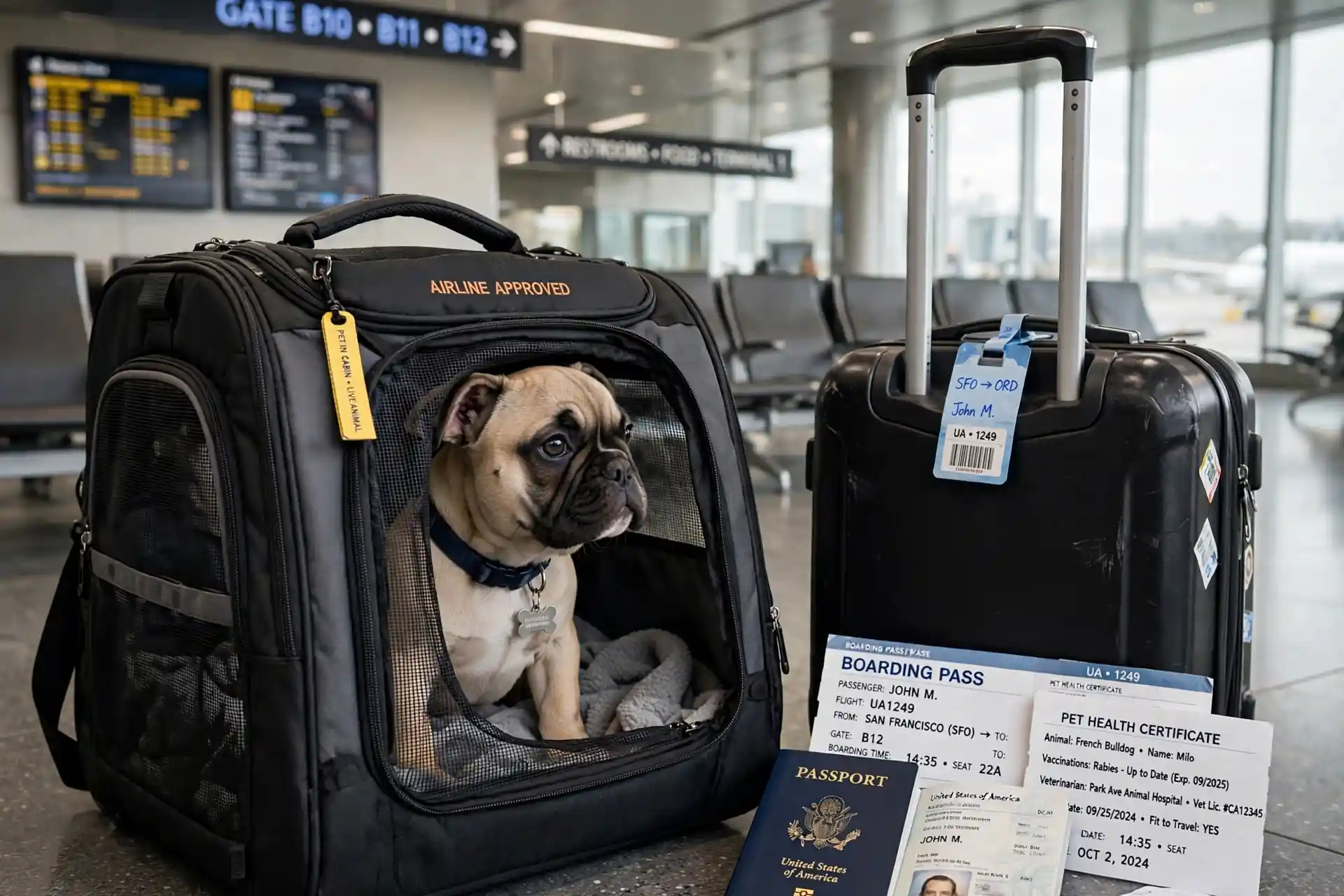
- The right carrier. It needs to meet the airline’s dimensions, fit under the seat in front of you for cabin travel, and let your pet stand and turn around. Choosing the right carrier for a nervous cat covers ventilation and comfort points that apply to small dogs too.
- Carrier practice. Leave it open at home with familiar bedding inside, then build up to short car rides in it.
- ID. Microchip details current, a tag on the collar, and your contact information taped to the carrier.
The day of the flight
Feed a light meal a few hours before departure rather than right before you leave. Offer water until you head out. Give a dog a good walk before the airport, and use the pet relief area once you’re through.
Pack a small kit: absorbent pads, a spare leash, a bag of food, copies of every document, and your vet’s phone number. Keep the originals in your hand luggage, never in a checked bag.
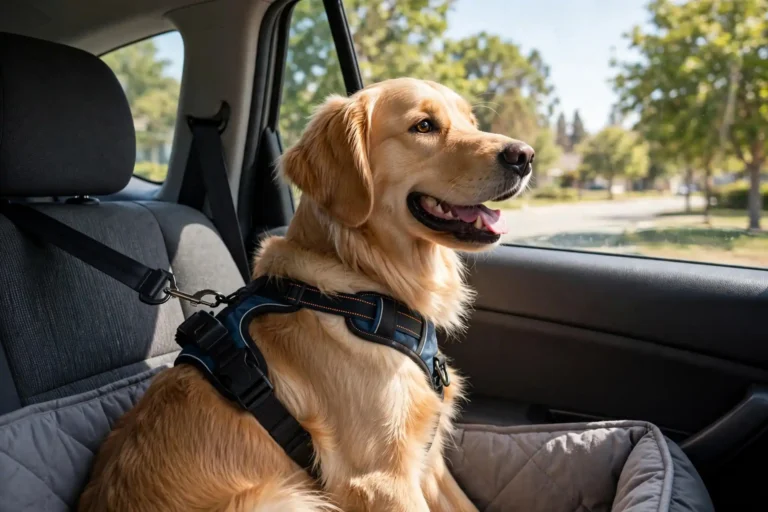
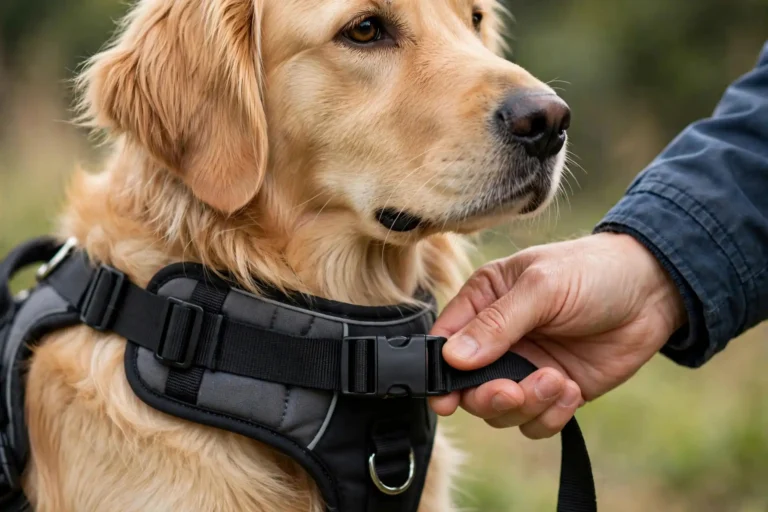
At security you’ll often be asked to carry your pet through while the empty carrier is screened, so a snug harness and leash make that moment much less risky.
Don’t give your pet any sedative or calming product unless your vet has recommended it for this specific trip. Sedation can affect breathing and balance at altitude, which is why many vets and airlines advise against it.
After landing, watch for anything beyond ordinary tiredness. Labored breathing, collapse, or repeated vomiting after a flight means going to a vet straight away.
Paperwork is where most trips fall apart, not the flight itself. Get the rules in writing, early, and keep copies on you.
Airline Rules: The Paperwork That Grounds Pets
Flying with a pet involves more documentation than most first timers expect, and requirements vary by airline, route, and destination. Start with your airline’s specific pet policy, found on their website under special assistance or traveling with pets. Key variables include whether pets are allowed in cabin at all, maximum carrier dimensions for under seat storage, breed restrictions, and temperature embargoes that block pet travel during hot or cold months. Brachycephalic breeds like bulldogs and Persian cats face the strictest rules because their breathing difficulties make air travel genuinely riskier.
Health documentation is non negotiable. Domestic flights typically require a health certificate issued by a licensed veterinarian within ten days of travel. International travel adds vaccination records, sometimes titers tests, microchip verification, and import permits with timelines stretching months. Some countries require quarantine on arrival. Research your destination’s requirements through official government sources, not forums, and start early. A missing document discovered at check in means your pet does not fly, with no refund for anyone’s ticket. If this is your pet’s first major trip, a first vet visit checklist covers the health baseline your vet needs before signing any travel certificate.
Choosing Between Cabin and Cargo
In cabin travel is less stressful for the animal and gives you control, but it comes with tight constraints. The carrier must fit under the seat, the pet must stay inside for the entire flight, and most airlines cap the number of pets per cabin, so book the pet reservation early. Fees run seventy five to two hundred dollars each way domestically. Cargo travel suits larger animals but introduces real risks: temperature extremes on the tarmac, handling stress, and the small but documented incidence of injury or death. Direct flights are strongly preferable for cargo pets because every connection multiplies handling and waiting time.
The Right Carrier and How to Prepare It
The carrier is the single most important purchase. For cabin travel, get a soft sided carrier that fits your specific airline’s under seat dimensions, which vary by aircraft. Measure, do not guess. For cargo, you need an IATA compliant hard sided crate with ventilation on multiple sides, a secure locking door, and enough room for the animal to stand, turn, and lie down. Buy it weeks ahead and make it familiar. Feed meals inside it, leave treats in it, let the pet nap in it voluntarily. A carrier introduced the night before becomes a trap. One introduced over three weeks becomes a den.
Label everything. Attach your contact information, the destination address, and a photo of your pet to the carrier exterior. Include a familiar smelling blanket or worn t shirt inside, but skip bulky bedding that reduces ventilation space. Freeze water in the attached dish the night before so it melts gradually instead of spilling during handling. For nervous animals, ask your vet about mild calming options well before travel day. Never sedate a pet for flight without explicit veterinary guidance, since sedation affects breathing and balance at altitude in ways that can be dangerous.
Exercise and Feeding on Travel Day
A tired pet travels better. Give your dog a long walk or vigorous play session before heading to the airport. Feed a light meal four to six hours before departure rather than a full meal right before, which reduces nausea risk. Offer water up until you leave for the airport. At the airport, use pet relief areas, which most major airports now provide post security. Know where yours is before you need it. Arrive early. Rushing amplifies your stress, and animals read your tension precisely.
At the Airport and In the Air
Check in at the counter, not a kiosk, when traveling with a pet. Staff need to verify documents and the carrier, and this takes time. Keep your pet calm and contained through security, where you will carry the animal through the metal detector while the empty carrier goes through X ray. Never put a pet through the X ray machine. Once past security, find a quiet corner away from foot traffic. Let the animal acclimate rather than forcing interaction.
During the flight, keep the carrier under the seat and resist opening it. The cabin is pressurized and temperature controlled, so your pet is physically safe. Your job is to be a calm presence. Talk quietly if it helps, but do not fuss excessively, which signals that something is wrong. For cargo pets, confirm with the crew that your animal is aboard before takeoff on connections. Flight attendants can verify with ground crew. On arrival, go directly to the oversized baggage or designated pet pickup area. Delays happen, so stay patient and keep your phone charged for airline updates. Seasoned travelers who fly with animals regularly often pair this with smart packing strategies so pet supplies and personal gear stay organized under pressure. More travel logistics are covered at Factblaze.
What To Do If Your Flight Gets Cancelled With a Pet
A cancelled flight is stressful for anyone. With a pet in tow, you have fewer options and a ticking clock, so move fast and work in this order.
First, call the airline’s dedicated pet desk, not the general rebooking line. Most major carriers have one — American, Delta, and United all do — and those agents know which aircraft have pet-friendly cargo holds and which flights still have cabin pet spots open. Get rebooked through them so your pet’s reservation moves with your ticket instead of falling through the cracks.
If you are stuck overnight, book a pet-friendly hotel before you do anything else. Airport hotels fill up fast during mass cancellations, and only a handful allow animals. Pull up a map, filter for pet-friendly, and call to confirm the pet policy before you book — online listings are sometimes wrong.
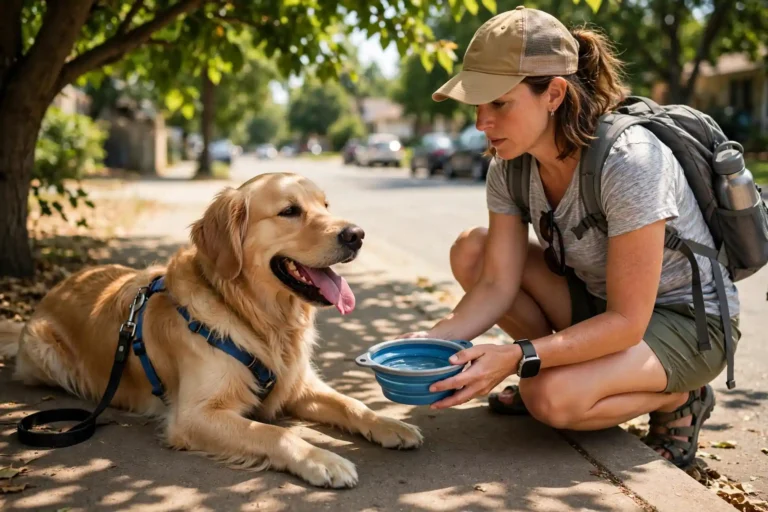
While you wait, handle the basics: a water bowl, a potty break outside the terminal, and a stretch of the carrier if your pet rides in-cabin. Keep at least one spare day’s worth of food in your carry-on, because checked bags often don’t make it to you during a cancellation. A collapsible water bowl and a zip-lock of kibble weigh almost nothing and turn a crisis into a minor inconvenience.
Frequently Asked Questions
How much does it cost to fly with a pet?
In cabin fees run seventy five to two hundred dollars each way on domestic flights. Cargo fees vary by animal size and route, typically two hundred to over a thousand dollars internationally. Add the vet visit for the health certificate, the carrier purchase, and any destination import fees. Budget several hundred dollars minimum for a domestic trip with a pet.
Can I bring my pet as an emotional support animal to avoid fees?
U.S. airlines no longer recognize emotional support animals as a special category following Department of Transportation rule changes. Only trained service dogs fly free. Pets must travel under standard pet policies with applicable fees. Attempting to misrepresent a pet as a service animal can result in denied boarding and penalties.
What if my pet cries during the flight?
Some vocalization is normal, especially during takeoff. Preparation minimizes it: a familiar carrier, prior conditioning, exercise beforehand, and your calm demeanor. If your pet is extremely anxious despite preparation, discuss options with your vet well in advance. Most pets settle within the first hour once the cabin environment becomes routine.
Are some dog breeds banned from flying?
Many airlines restrict or ban brachycephalic breeds including bulldogs, pugs, and Boston terriers, plus Persian and Himalayan cats, due to elevated respiratory risk. Some airlines ban them from cargo entirely while allowing cabin travel. Check your specific airline’s restricted breed list before booking anything.
Do I need a pet passport for international travel?
The European Union uses an actual pet passport system for dogs, cats, and ferrets. Other destinations require varying combinations of health certificates, vaccination records, microchips, and import permits. The USDA APHIS website lists country specific requirements. Start this process months ahead for strict destinations like Australia, Japan, or the UK.
Conclusion
Flying with a pet is entirely manageable when you treat it as a logistics project rather than an afterthought. Research requirements early, invest in the right carrier, condition your animal to it over weeks, and build buffer time into every stage of travel day. The pets who struggle are usually the ones whose owners skipped preparation. Do the work upfront and the flight becomes just another part of the adventure you share. For official international pet travel requirements, the USDA’s pet travel resources are the authoritative starting point.