Common Mistakes People Make Choosing a Dog Walker
Handing a house key and a leash to someone is a bigger decision than most people treat it as. A dog walker has unsupervised access to a home and full responsibility for a dog’s safety for the length of every visit, and a rushed hiring decision is the most common way that goes wrong.
Picking on price alone
The cheapest quote in a neighborhood is often cheap because it skips insurance, bonding, or background checks, not because the walker is doing anyone a favor. A legitimate dog walking business, whether an individual or a company, should carry liability insurance and be able to show proof of it without hesitation. This matters more than it sounds: if a walker is injured on a client’s property, or a dog is injured, hurt by another animal, or gets loose during a walk, insurance is what determines who’s covering the cost.
Not asking about group size and route
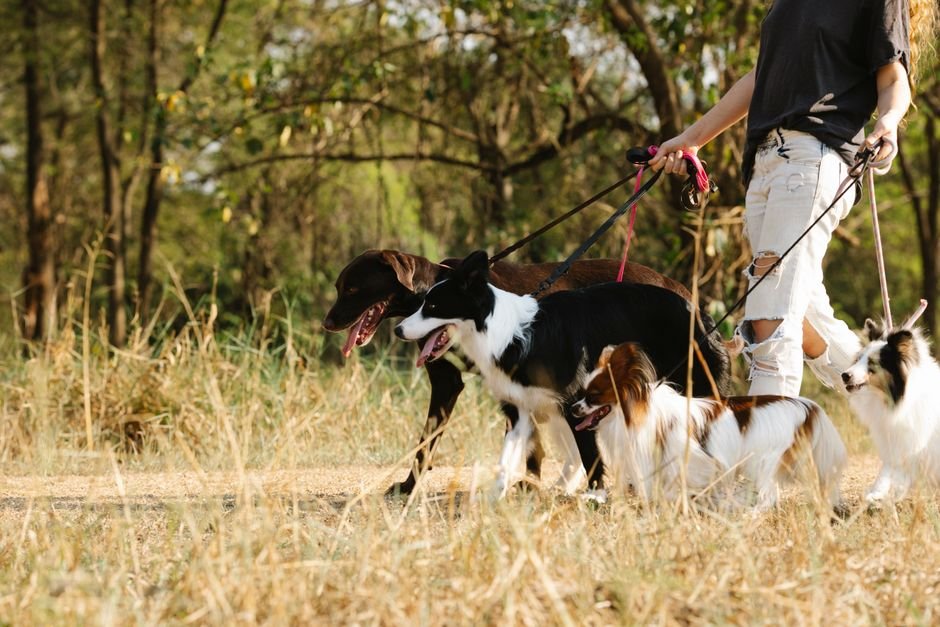
Many walkers offer group walks to fit more dogs into a day, and there’s nothing wrong with that model on its own, but a group of six or eight unfamiliar dogs on one leash setup is a different service than a private one-on-one walk, with a different level of individual attention and a higher chance of a dog fight or a spooked dog pulling loose. Ask directly how many dogs are walked together, whether dogs are matched for size and temperament, and what route they take, including whether it avoids busy roads.
- Ask for proof of insurance and, if the walker uses a house key, how keys are stored and tracked
- Ask how many dogs are walked in a group and how they’re matched
- Ask what happens in an emergency, including which vet they’d use and how quickly you’d be contacted
- Request a paid trial walk with GPS tracking or photo updates before committing to a regular schedule
- Check reviews for mentions of missed visits or unclear communication, not just star ratings
Skipping a trial run is another common mistake. A single paid trial walk, ideally one that includes GPS tracking or a photo sent partway through, shows more about a walker’s reliability than any conversation does. It’s a small cost that catches a mismatch before a dog’s regular routine depends on it.
Some owners also skip the meet-and-greet, assuming any experienced walker will be fine with any dog. Dogs vary enormously in what they need from a walk, and the kind of walking equipment covered in choosing between a slip lead and a regular collar only works if a walker is actually using the setup a dog is trained on. A short in-person meeting lets a walker see how a dog reacts to a leash, other dogs, and being handled by someone new, and gives an owner a chance to flag anything specific, like a dog that pulls hard or gets anxious around bikes.
Heat and weather deserve a direct conversation too. Ask how a walker handles a hot afternoon walk and whether they’ll shorten or reschedule a visit rather than pushing through, since the signs covered in how to tell if a dog is overheating on a walk aren’t always obvious to someone unfamiliar with a particular dog.
A written contract or service agreement, even a short one, that spells out cancellation policy, emergency contacts, and payment terms protects both sides and is worth insisting on before the first regular visit, according to guidance the American Kennel Club gives to owners hiring pet care help. A walker who resists putting basic terms in writing is worth reconsidering regardless of how good the references sound.