
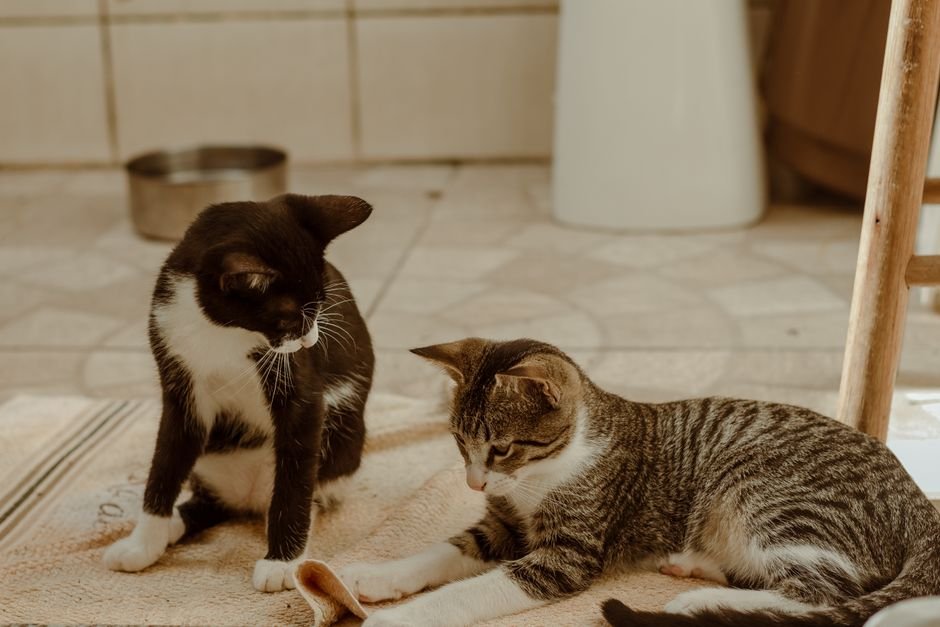
How to Tell If Two Cats Are Actually Playing or Fighting
Play between cats stays loose and silent, with soft paws, relaxed bodies, and frequent pauses where both cats reset or switch roles. A real fight is louder, stiffer, and more one-sided — hissing, growling, flattened ears, and a cat that’s clearly trying to get away rather than taking a turn. Watching the whole sequence, not just one moment of tangled fur, is what settles the question.
Signs It’s Play
Play involves rolling, chasing, and swatting with claws mostly retracted, and it typically pauses on its own every 30 seconds or so, with both cats calm enough to walk away or start again. Ears stay forward or neutral, tails are relaxed or flicking loosely rather than puffed, and bite pressure is light enough to leave no mark. If you separate two cats mid-tussle and one immediately goes back for more, that’s a strong sign it was mutual.
Signs It’s a Fight
A real fight sounds different before it looks different — growling, yowling, or hissing usually starts the exchange. Ears pin flat against the head, pupils dilate, and fur along the spine and tail puffs out. One cat is typically trying to flee or hide rather than re-engage, and claws stay out through contact, which can draw blood. Bite marks around the neck or head, or a cat that hides for hours afterward, point to a genuine conflict rather than rough play that got loud for a second. A fight also tends to end abruptly, with one cat bolting from the room, rather than winding down gradually the way play sessions usually do.
What to Do in the Moment
Never grab or reach between two cats mid-fight — redirected aggression sends plenty of owners to urgent care every year, and a startled cat can’t tell the difference between a threat and a hand. A loud noise, a thrown pillow, or spraying water toward (not directly at) the cats is a safer way to break contact. Once they’ve separated, give both cats their own space for a while rather than forcing them back together immediately; a stressed cat needs time to settle before another introduction attempt goes any better.
Reading the Broader Relationship
Two cats that fight repeatedly over the same resource — a food bowl, a litter box, a favorite window perch — are telling you something about resource competition, not just personality clash. Adding a second bowl, box, or perch in a separate location often resolves it faster than any amount of supervision. Tail position adds another layer of information here; our guide to reading a cat’s tail position covers the signals worth watching during any interaction, not just rough ones. If you’re introducing a new cat to an established pet, the same behavioral cues apply, and our piece on introducing a new cat to a resident dog covers a related version of this same reading process.
If fights are frequent, drawing blood, or escalating rather than settling with more resources and separate space, it’s worth a conversation with your vet or a certified cat behavior consultant — the Cornell Feline Health Center’s resources are a solid reference point. Not every hiss means real trouble, but a pattern of one-sided aggression is worth taking seriously before it becomes the household norm.