How to Choose a Seat for a Flight With a Connection
Sit as close to the front of the plane as you can, on the aisle, on the side of the cabin nearest the exit door. When choosing a seat for a connecting flight with a short layover, those two details can put you off the plane several minutes ahead of the people in row 30, and on a tight transfer those minutes matter more than legroom.
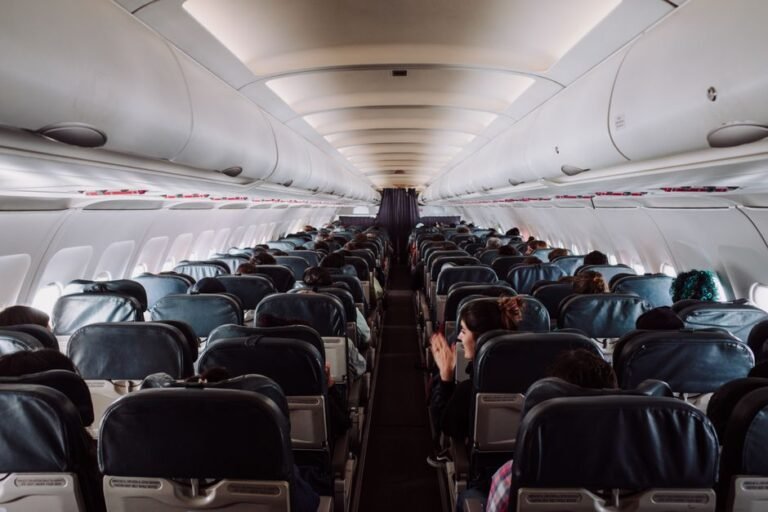
Deplaning happens row by row from the front. On a full narrow-body jet, the last rows can wait ten minutes or more before they even reach the aisle. If your connection is under an hour, that wait comes straight out of your walking time.
What to look for on the seat map
Start with the rows just behind any premium cabin. They are often sold as standard economy, and on many airlines they cost little or nothing extra when you select them early. If the only front seats left are middles, an aisle seat a few rows further back is usually the better trade, because you can stand and grab your bag the moment the seatbelt sign goes off.
Check which side the boarding door is on. On most single-aisle aircraft, passengers exit through the front left door, so a left-side aisle seat puts you in the stream first. Exit rows are a mixed bag here: they can be well forward on some planes and over the wing on others, so look at the row number rather than assuming.
Your carry-on matters as much as your seat. A bag stored in a bin six rows behind you means walking against the flow of people to get it. Ask to put it in a bin at or ahead of your row, and if you board late on a full flight, expect it to end up wherever there is space. Packing light enough to fit things under the seat in front of you removes the problem entirely.
When choosing a seat for a connecting flight doesn’t need to be strategic
If your layover is two hours or more, front-of-cabin seating buys you very little. At that point it makes more sense to choose for comfort on the longer leg, which is the trade-off laid out in aisle vs window seat for a long flight. A window on a red-eye can be worth far more than being first off a plane when you have hours to spare.
The seat also can’t fix a connection that was too short to begin with. If you are regularly sprinting between gates, the real issue is usually at booking, and mistakes people make booking connecting flights covers the layover lengths and terminal changes that cause most missed connections.
A few more habits help on a tight transfer. Check the arrival gate and your departure gate in the airline’s app while you taxi in, so you know which direction to walk before the door opens. Keep your boarding pass for the second flight on your phone, not buried in a bag. And if a delay makes the connection look impossible, tell a flight attendant before landing; sometimes the crew can let connecting passengers off first or pass the information to the gate team.
For broader context on what drives delays and airport logistics, the FAA’s traveler resources are a reasonable place to look.
Pick your seat on the day you book, not at check-in. By then, the front rows are usually gone.