Common Mistakes People Make During Car Rides With a Dog
The mistake that does the most damage is letting your dog ride loose. In a sudden stop, an unrestrained dog is thrown forward, hurting itself and anyone in front of it, and a frightened dog can bolt into traffic the moment a door opens after a collision.
Most other car rides with a dog mistakes are smaller, but they share a theme: they turn a minor incident into a serious one. These are the ones worth fixing first.
Clipping the seat belt tether to a collar
A tether attached to a collar puts all the force of a hard stop on your dog’s neck. If you use a seat belt tether, attach it to the back of a well-fitted harness, and keep it short enough that your dog can sit and lie down but can’t reach the front seats or slide into the footwell. A harness that slips or rubs won’t do its job, so it’s worth reading how to choose a dog harness that fits right before your next trip.
Not every harness is built for crash forces, either. A walking harness keeps a dog from wandering around the car; a travel harness is designed to hold in a collision. The Center for Pet Safety crash-tests travel harnesses, crates, and carriers and publishes the results, which is a better guide than packaging claims.
Letting your dog ride up front
Front airbags deploy with enough force to seriously injure a dog, even a big one. The back seat, or a crate strapped down in the cargo area so it can’t slide or tip, is the safer spot.
Heads out the window
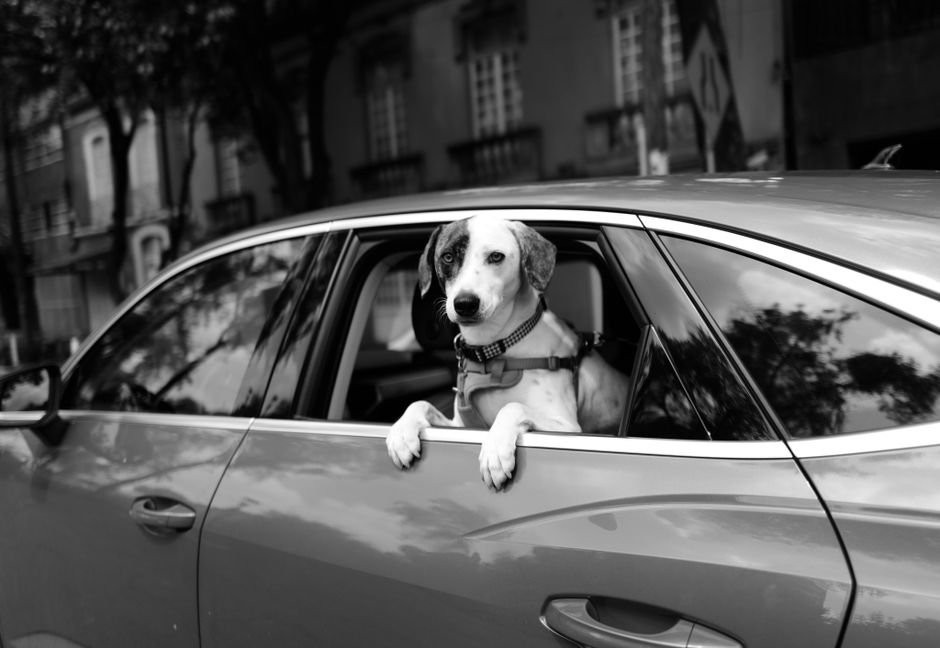
It looks joyful, but grit, insects, and debris hit eyes and ears at road speed, and a dog who spots a squirrel may try to jump. Open the window enough for airflow and smells, not enough for a head.
Leaving your dog in a parked car
Cars heat up fast, even with the windows cracked and on days that feel mild to you, and a quick stop has a way of running long. If your dog can’t come inside with you, leave them at home. Heavy panting, thick drool, stumbling, or weakness are signs of heat distress; how to tell if a dog is overheating covers them in more detail, and the same signs apply in a car. A dog showing them needs to get out of the heat and to a vet right away.
Car rides with a dog: mistakes in the small prep
- No ID. A current tag and up-to-date microchip details matter most when a door opens somewhere unfamiliar.
- Opening the door before the leash is on. Clip the leash first, every time, then release the restraint.
- No water on long drives. Bring a bowl and offer it at each stop.
- A big meal right before leaving. A lighter meal a few hours earlier tends to sit better with dogs prone to car sickness.
Car sickness deserves its own note. Drooling, lip-licking, and vomiting on every trip is something to raise with your vet rather than push through, because they can talk you through options. Short, upbeat practice trips that end somewhere fun also help anxious dogs relax about the car itself.
Before your next drive, check two things: where the restraint clips on, and whether the leash goes on before the door opens.