How to train a puppy to stop biting
A new puppy in the house is one of the more joyful experiences a family can have, right up until the moment those needle-sharp teeth find your hands, ankles, or clothing and refuse to let go. Puppy biting — sometimes called mouthing or nipping — is one of the most common reasons new dog owners find themselves frantically searching for answers at midnight. The good news is that it is entirely normal, it is temporary, and it can be addressed effectively if you understand what is driving it and apply the right techniques consistently.
This guide covers everything you need to know: why puppies bite, what bite inhibition actually means and why it matters, the specific methods that work, the approaches that do not, breed-specific considerations, and what to watch for that signals a more serious issue requiring professional help.
Why Puppies Bite in the First Place
Understanding the motivation behind the behavior is the first step toward changing it. Puppies do not bite because they are bad dogs or because there is something wrong with them. They bite because their mouths are their primary tool for exploring the world, and because biting is the central language of puppy social play.
Before joining your home, your puppy spent weeks with its littermates doing exactly this — biting, wrestling, and chasing. When a bite was too hard, the bitten puppy would yelp and stop playing. Over time, each puppy in the litter learned through this feedback system that gentle play continues and rough play ends. That process is what animal behaviorists call bite inhibition, and it is one of the most important lessons a young dog ever learns.
There are several specific reasons a puppy may be biting more intensely at any given moment:
Teething. Between roughly three and six months of age, puppies lose their 28 baby teeth and grow 42 permanent adult teeth. The process is uncomfortable, and chewing and mouthing provide relief for sore, inflamed gums. The biting often intensifies during this window and usually tapers off significantly once the permanent teeth are fully in, typically by six to seven months.
Overtiredness. Puppies need between 16 and 18 hours of sleep per day. When they are exhausted but overstimulated, they lose whatever impulse control they have developed and their biting becomes more frequent and harder to redirect. Many experienced trainers refer to this state as “shark mode” — a recognizable escalation in nipping that signals the puppy needs enforced rest rather than more play.
Excitement and overstimulation. Jumping and biting often occur together when a puppy is highly aroused — during greetings, before a walk, or during play that has gone on too long without a break.
Attention seeking. A puppy that has learned that biting produces a reaction — even a negative one — may use it deliberately to initiate interaction. This is why the type of response you give to biting matters enormously.
What Bite Inhibition Means and Why It Matters
Bite inhibition refers specifically to a dog’s learned ability to control the pressure of its jaw. It is not the same as teaching a dog never to bite — it is teaching a dog that human skin is sensitive and that biting hard causes all the good things (play, attention, companionship) to stop immediately.
Why does this distinction matter? Because a dog that has never learned to moderate bite pressure is genuinely more dangerous as an adult if it ever bites out of pain or fear. A dog with well-developed bite inhibition that bites in a stressful situation is far more likely to cause a minor injury than a serious one. The goal of puppy training is not just to stop the behavior in the short term — it is to ensure that if biting ever occurs in an adult dog, the outcome is as safe as possible.
This is why many professional trainers recommend a two-phase approach: first teach the puppy to bite more softly, then teach it to stop biting on people altogether.
How to Train a Puppy to Stop Biting: Step-by-Step Methods
The Yelp and Withdraw Method
This technique directly mimics what littermates do to teach bite inhibition, which is why it tends to produce results relatively quickly in young puppies.
When your puppy bites you hard during play, immediately emit a high-pitched, sharp sound — “Ouch!” or a short yelp — and freeze all movement. Stop interacting entirely. Do not push the puppy away, do not continue playing, and do not make the situation more exciting. After a pause of around ten to twenty seconds, you can resume play if the puppy has calmed down. If the biting immediately resumes, the puppy may need a longer break.
This works because it replicates the feedback the puppy was receiving from its littermates. The message is simple: biting too hard ends the interaction. Repeat this consistently every single time, and the puppy begins to self-regulate.
A note of caution: some puppies become more excited by the yelp sound rather than less, particularly in high-arousal situations. If you notice that your yelp is escalating the behavior rather than interrupting it, skip the sound and move straight to the withdrawal.
Redirecting to an Appropriate Toy
Redirection is arguably the most practical technique for day-to-day management, particularly with puppies that are mouthing rather than biting with significant pressure.
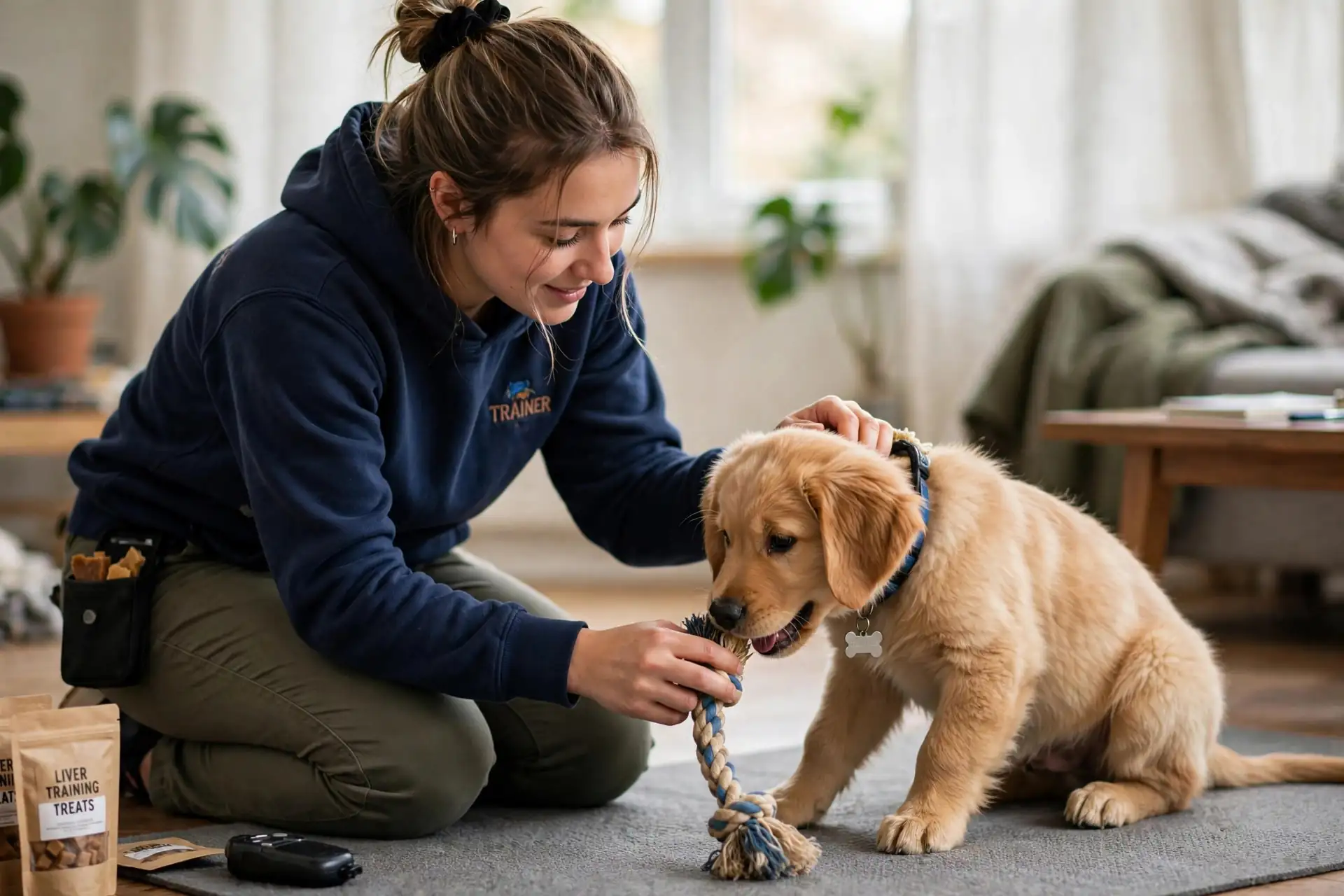
Keep a toy within reach at all times during play and interaction. The moment your puppy moves to mouth your hands, feet, or clothing, calmly offer the toy instead. When the puppy bites the toy, praise it. The goal is to create a consistent association between “something I want to chew” and “the toy, not the person.”
Using longer toys — rope toys, tug toys — is particularly helpful because they keep the puppy’s mouth further from your hands and reduce the chance of accidental contact. Avoid using your hands for wrestling or rough play, as this teaches the puppy that human limbs are legitimate play targets.
Time-Outs
When biting continues despite the yelp-and-withdraw approach and redirection is not working, the puppy is likely in that overtired, overstimulated state where it cannot self-regulate. The appropriate response is a brief, calm time-out.
This does not mean scolding or punishment. It means calmly placing the puppy in a safe, quiet area — a crate, a puppy pen, or a gated room — for a short period, typically five to ten minutes. The objective is to lower the puppy’s arousal level and break the cycle of escalating excitement. Once calm, the puppy can rejoin the household.
Over time, this teaches the puppy that certain behaviors result in the removal of social access, which is a meaningful consequence for a social animal.
Managing the Environment and Schedule
A significant proportion of puppy biting problems are rooted in management failures rather than training failures. A puppy that does not get enough sleep, physical exercise appropriate to its age, or mental stimulation will be a more bitey puppy — full stop.
Establish a predictable daily routine that includes structured nap times. If your puppy’s biting tends to escalate at particular times of day — late afternoon is very common — that window is almost certainly a signal that the puppy is overtired and needs rest rather than more engagement.
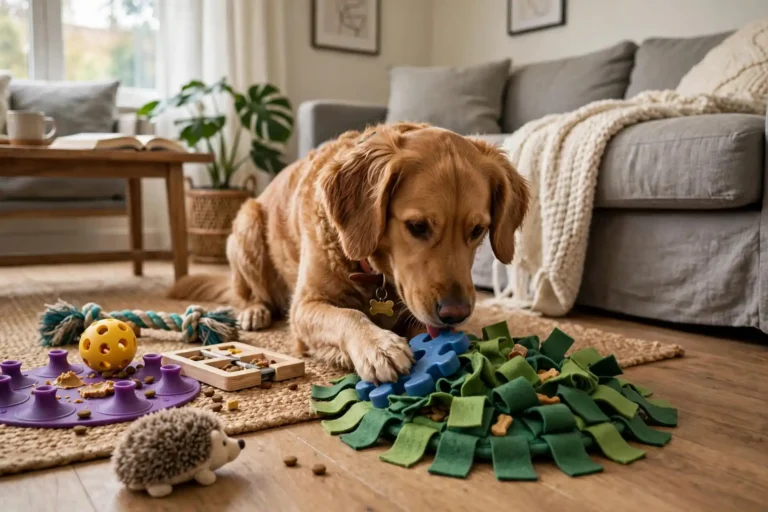
For teething puppies, provide appropriate chew items: durable rubber toys designed for heavy chewing, frozen chew toys that soothe sore gums, or even ice cubes wrapped in a cloth. These provide the oral satisfaction the puppy is seeking through a channel that does not involve your hands.
The Role of Positive Reinforcement
All of the techniques above work best when paired with deliberate reinforcement of calm, gentle behavior. When your puppy sits quietly near you without mouthing, praise it. When it takes a toy from your hand gently rather than grabbing, reward it. When it settles into rest without initiating play, acknowledge that.
Positive reinforcement is not just about treats — it is about making sure the puppy understands clearly what you want it to do, not just what you do not want it to do. Many training failures happen because owners focus entirely on interrupting unwanted behavior without giving the puppy an equal amount of information about what appropriate behavior looks like.
Breed-Specific Considerations
How to Train a Lab or Golden Retriever Puppy to Stop Biting
Both Labrador and Golden Retriever puppies are intensely oral. These are working breeds historically bred to carry objects in their mouths, and mouthing is deeply natural to them. This does not make them harder to train — it makes consistent redirection particularly effective. Always have a toy available during play. Labs and Goldens are generally highly food-motivated and respond well to positive reinforcement. The combination of redirection and immediate reward for taking a toy rather than a hand tends to produce faster results in these breeds.
How to Train a German Shepherd Puppy to Stop Biting
German Shepherd puppies are intelligent, high-energy, and can bite with more pressure than many other breeds at the same age. Their play drive is strong. The yelp-and-withdraw method works well for many Shepherd puppies, but the most important factor is ensuring adequate physical exercise and mental stimulation. A bored German Shepherd puppy is a destructive and bitey German Shepherd puppy. Structured training sessions also serve as mental exercise and begin building the impulse control this breed needs.
How to Train a Pitbull or Rottweiler Puppy to Stop Biting
The fundamental techniques are the same, but the stakes of getting it right are higher given the potential strength of these breeds as adults. Early, consistent bite inhibition training is not optional for puppies of these breeds — it is essential. Avoid any rough play that encourages grabbing or tug-of-war with your body parts. If biting seems fearful, territorial, or is accompanied by growling and stiff body posture rather than loose, playful energy, consult a professional trainer immediately rather than waiting.
How to Train a Beagle or Shih Tzu Puppy to Stop Biting
Beagle puppies tend to be mouthy and persistent, driven by their tracking instincts and high curiosity. Consistency and patient repetition of the yelp-and-redirect method usually produces good results. Shih Tzus are smaller and their biting tends to be less physically intense, but the same principles apply. Because they are companion breeds highly oriented toward human attention, the withdrawal of interaction is often a particularly effective consequence.
What Not to Do When Training a Puppy to Stop Biting
Several common responses to puppy biting are actively counterproductive, and it is worth being explicit about what to avoid.
Physical punishment. Hitting, tapping the nose, or scruffing a puppy in response to biting can create fear and anxiety, undermine your relationship with the dog, and — particularly in high-drive breeds — can actually escalate rather than reduce aggressive behavior.
Yelling or high-energy reactions. An energetic, loud response to biting can be interpreted by an excited puppy as engagement rather than correction. The puppy sees your reaction as the interaction continuing, not ending.
Inconsistency. If some household members allow mouthing and others do not, the puppy will not learn that the behavior is unacceptable — it will simply learn that different rules apply to different people. Everyone in the household must respond the same way, every time.
Allowing it sometimes. Many people allow mild mouthing when the puppy is small because it does not hurt yet, then become frustrated when the same behavior continues as the puppy grows larger and stronger. The puppy has no way of knowing that the rules changed.
How to Train a Puppy to Stop Biting and Nipping During Jumping
Jumping and biting often occur together as part of the same excited greeting behavior. The most effective approach is to remove the reward for jumping — your attention and eye contact — by turning away completely the moment your puppy’s feet leave the ground. When all four paws are on the floor, engage immediately with calm attention or a treat. This teaches the puppy that jumping results in the loss of what it wants and four-on-the-floor produces it.
If your puppy is jumping and biting simultaneously, the time-out approach — briefly and calmly removing the puppy from the situation — is often more effective than trying to address both behaviors at once in the moment.
When to Get Professional Help
Puppy biting is expected to diminish significantly by the time permanent teeth are fully in at around six to seven months. If biting is still occurring with significant frequency or pressure after this point, something is not working and it is worth seeking professional input rather than continuing with the same approach.
Consult a certified professional dog trainer or veterinary behaviorist if:
- The biting is accompanied by growling, stiff body posture, or prolonged hard staring — these are signals of a more serious behavioral concern rather than normal play mouthing.
- The puppy is guarding resources (food, toys, sleeping areas) with growling or snapping.
- You or any family member has been broken-skin bitten during what seemed like play.
- The behavior has not improved meaningfully despite weeks of consistent application of the techniques above.
For families navigating both a new puppy and young children, the additional guidance on creating a safe, structured environment for both can be found in our detailed breakdown of the best dog breeds for families, which also covers temperament evaluation and choosing a breed that genuinely fits your household.
Frequently Asked Questions
How long does it take to train a puppy to stop biting?
With consistent application of the methods above — every member of the household responding the same way, every time — most puppies show meaningful improvement within two to four weeks. Biting typically reduces significantly once the teething phase ends at around six to seven months. Puppies that are still biting with full puppy intensity beyond that point warrant a professional consultation.
How do I train a puppy to stop biting my hands specifically?
Never use your hands for rough play or wrestling. When the puppy moves to mouth your hands, immediately offer a toy as a substitute and reward the puppy when it bites the toy. If the puppy persists, withdraw your hands, fold your arms, and remove your attention entirely for ten to twenty seconds. Consistency across every interaction is what produces the change.
Why is my puppy biting me and not my toys?
Usually because mouthing a person produces a more interesting response than mouthing a toy. Your reaction — whether you yelp, move, or try to extract yourself — is more engaging than a stationary toy. Try making the toy more interesting through movement: drag it along the ground, make it bounce and skitter. The goal is to make the toy the more exciting option, not to simply present it as an alternative.
Does puppy biting mean my dog is aggressive?
In the vast majority of cases, no. Normal puppy mouthing and nipping are part of play behavior and have a loose, bouncy quality. Genuine aggression looks different: stiff body posture, hard sustained eye contact, growling that escalates rather than occurring during play, and biting that does not stop when play stops. If you are unsure which you are dealing with, consult a professional rather than waiting.
How do I train a beagle or golden retriever puppy to stop biting specifically?
The core methods are the same for all breeds: the yelp-and-withdraw approach, consistent redirection to toys, and time-outs for overstimulated puppies. Golden Retrievers and Labradors respond particularly well to toy redirection and positive reinforcement because of their retrieving instincts and food motivation. Beagles benefit from redirection plus consistent routine, as their curiosity-driven mouthing tends to respond well to having an appropriate outlet provided.
Conclusion
Training a puppy to stop biting is not a single conversation — it is a consistent pattern of responses repeated across hundreds of interactions over several weeks. The underlying principles are straightforward: teach the puppy that biting too hard ends all the good things, provide appropriate alternatives, manage the environment to prevent the worst biting sessions before they start, and ensure every person in the household is responding the same way.
Most puppies, with patient and consistent handling, move through the biting phase without it becoming a lasting problem. The ones who do not are almost always in households where the rules were unclear, inconsistently applied, or where the puppy’s underlying needs for sleep, exercise, and mental stimulation were not being met.
Start early, stay consistent, and give it time. It gets better.
For more pet care insights, lifestyle tips, and practical guides, visit FactBlaze. Whether you are curious about styling your wardrobe with intention or building a life that genuinely works for both you and your animals, we cover the topics that matter in day-to-day living.
For additional training resources, breed-specific guides, and up-to-date professional recommendations, Google’s search results for puppy biting training are a useful starting point for finding certified trainers and veterinary
behaviorist resources in your area.