A Checklist for a First Vet Visit With a New Pet
A first vet visit goes smoothest when you show up with your pet’s history, a list of questions, and the pet itself secured safely for the trip — sounds obvious, but it’s the detail people forget under time pressure that causes the most delay once you’re in the exam room. Here’s what to have ready so nothing gets missed.
Before You Leave the House
Bring any prior medical records if your pet has seen another vet, including vaccination history, and a list of any medications or supplements currently in use. Write down your pet’s normal eating, drinking, and bathroom habits beforehand — it’s easy to blank on these details when a vet asks in the moment. If you adopted from a shelter or rescue, bring their paperwork too, since it often includes vaccination and deworming dates the new clinic will want on file.
Getting There Safely
Cats and small dogs should travel in a secure carrier, not loose in the car or carried in arms through a parking lot next to unfamiliar dogs. Larger dogs need a well-fitted leash and collar or harness — this is not the visit to test out new gear for the first time, since an anxious pet is more likely to slip out of something unfamiliar. If your pet gets carsick or panics in the car, ask the clinic in advance about options; some will let you wait in the car until it’s your turn. A blanket or towel with a familiar smell in the carrier can also take the edge off a first ride for a nervous animal.
What Actually Happens in the Room
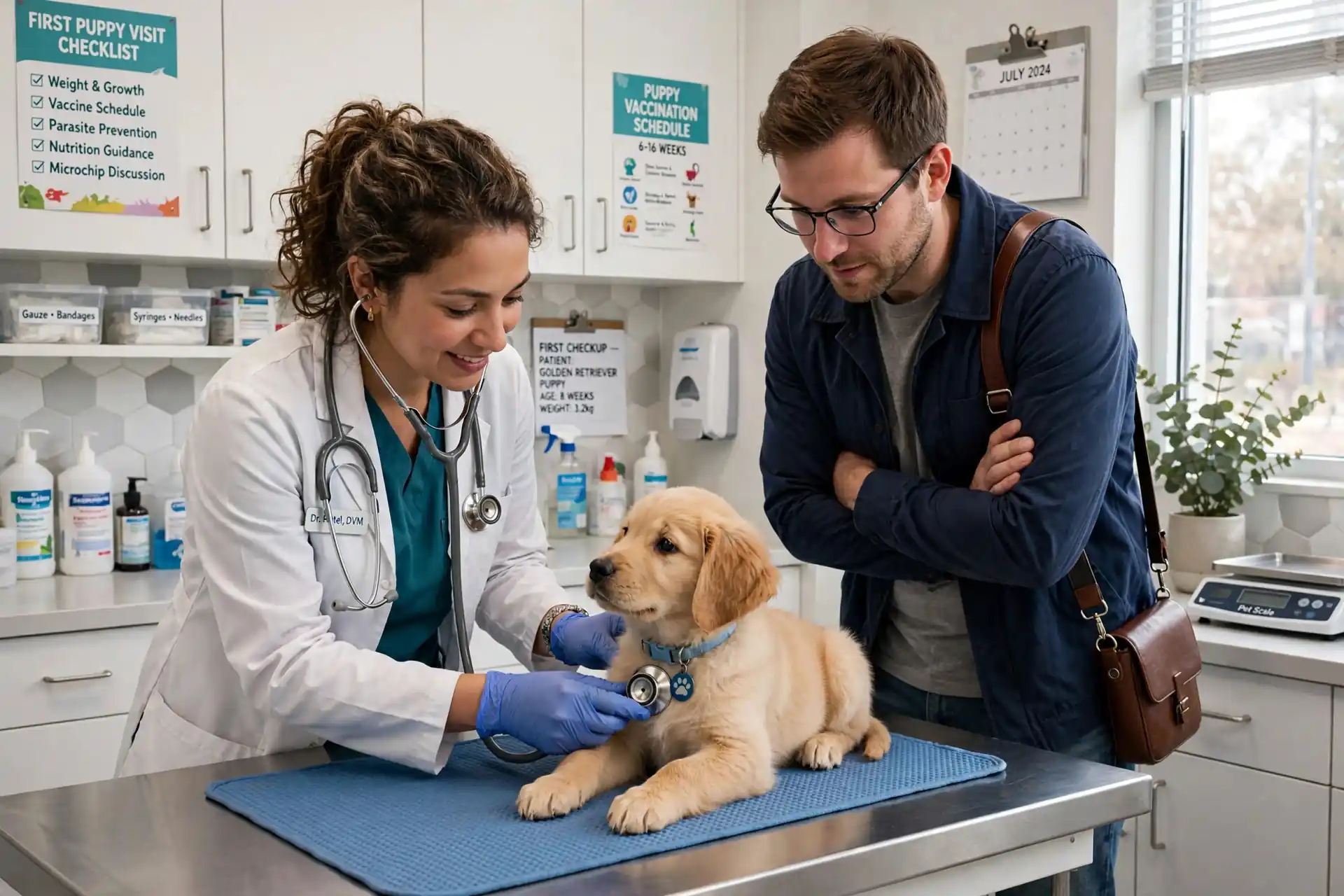
Expect the visit to run longer than a routine follow-up later on, since a first exam usually covers the full body, a weight and body condition check, a look at teeth and ears, and a conversation about diet, exercise, and any behavior questions you bring up. The vet or a technician will likely ask about your pet’s background — where they came from, any known health history, and how they’ve been eating and behaving since you brought them home. Answering honestly, including about things that feel minor, gives the vet a more complete picture than waiting to see if a small issue turns into a bigger one.
Questions Worth Asking
- What vaccinations and preventive care does my pet need now, and on what schedule going forward?
- What’s a normal weight and body condition for this breed and age?
- Are there breed-specific or age-specific health issues I should watch for?
- What symptoms should send me back in sooner rather than waiting?
- How do I reach the clinic after hours if something comes up?
Expect a full physical exam, a discussion of diet and exercise, and likely a vaccination or two depending on your pet’s age and history. If you’re settling a new puppy in alongside this first visit, our guides on puppy-proofing a home and setting up a calm first night cover the rest of the adjustment period. The ASPCA’s general pet care resources are a reasonable place to read more before the appointment.
One thing worth doing regardless of species: ask the clinic what a routine visit costs versus what to expect for common follow-ups, so a second appointment isn’t a financial surprise.
Why the First Vet Visit Sets the Tone
The first veterinary visit does more for your new pet than any single appointment afterward. It establishes a health baseline, catches congenital issues while they are most treatable, sets the vaccination schedule, and begins the socialization process that determines whether your pet views the vet as routine or terrifying for life. Pets that have positive early vet experiences are measurably easier to handle in later medical situations, which matters enormously in emergencies when cooperation saves time.
Timing matters. Schedule the visit within the first week of bringing your pet home, even if the shelter or breeder provided recent records. Those records are a starting point, not a substitute for your own vet’s assessment. Bring every document you received: vaccination history, deworming records, microchip information, and any known health notes. Your vet needs the complete picture to avoid duplicate vaccinations or missed boosters. If you are still settling the new arrival in, setting up a calm first night helps the pet arrive at the appointment rested rather than frazzled.
What to Bring and Prepare
Bring a list of questions. New pet owners always have them, and they evaporate under the mild stress of the appointment. Write down concerns about diet, behavior, house training, and anything you have observed. Bring a stool sample if instructed when booking, since parasite screening is standard and a fresh sample saves a return trip. For cats, use a secure carrier. For dogs, a leash and a hungry stomach: treats make the visit positive, and a slightly hungry dog is more treat motivated.
Do not bathe the pet right before the visit unless instructed. Natural coat condition tells the vet things. Note any symptoms you have seen, even minor ones: sneezing, soft stool, scratching, appetite quirks. What seems trivial to you may be diagnostically useful. Also bring your ID and payment method sorted beforehand so checkout does not become its own stress event.
What Happens During the Examination
A first visit typically includes a full nose to tail physical exam: weight, temperature, eyes, ears, mouth and teeth, heart and lungs, abdomen palpation, skin and coat assessment, and joint mobility. The vet is building a reference record of your pet’s normal, which makes future deviations detectable. Expect discussion of vaccination schedules tailored to your pet’s age, lifestyle, and local disease risks. Indoor cats and hiking dogs get different protocols for good reason.
Parasite screening and prevention is the other major component. Fecal tests, blood work for heartworm in dogs, and flea and tick prevention planning are standard. Your vet will recommend products suited to your region and pet. This is also when microchipping usually happens if not already done, plus registration of the chip, which is the step people forget. An unregistered chip is nearly useless. Spay and neuter timing will be discussed with breed and age specific guidance rather than one size rules.
Behavioral Baseline and Socialization
Good vets assess temperament during the first visit, noting how the pet handles restraint, novel people, and the clinic environment. This baseline helps distinguish future behavioral changes from lifelong traits. Ask about socialization windows, which are narrow and critical: puppies have a primary socialization period ending around fourteen weeks, kittens similar. The vet can guide safe exposure practices that build confidence without risking disease before vaccinations complete. Early positive handling at the clinic, treats from staff, calm restraint, pays dividends for years.
Questions Worth Asking
Use the appointment as an education session. Ask about appropriate diet for your pet’s age and size, including portion guidance, since pet obesity is the most common preventable health problem vets see. Ask about exercise needs, dental care routines, and grooming requirements specific to the breed. Ask what emergency signs should trigger an immediate visit versus a next day call. Having this triage knowledge before you need it prevents both dangerous delays and panicked midnight drives for minor issues.
Discuss pet insurance while the pet is young and healthy, since pre existing conditions are excluded and premiums are lowest early. Ask about the clinic’s emergency protocols: who to call after hours, which emergency hospital they recommend. Save these numbers in your phone before you leave. For ongoing health monitoring at home, learning how to recognize pain in pets helps you catch problems between visits. More pet care resources are at Factblaze.
What to Bring to the First Vet Visit
Bring every piece of paper the pet came with. Adoption paperwork, vaccination records, deworming history, and the previous vet’s contact info all go in a folder. The vet needs to know exactly which shots were given and when, because an undocumented vaccine is a vaccine that has to be repeated. If you bought from a breeder, bring the health certificate too.
Bring a fresh stool sample, collected within twelve hours of the visit and kept in a sealed bag or container in the fridge. It sounds unpleasant, but the fecal test screens for parasites that a physical exam cannot find, and many new pets carry them silently. A tablespoon sized sample is plenty.
Bring the pet secured the way the clinic expects. Cats and small animals go in a carrier, not in your arms; a stressed cat in a strange waiting room full of dogs is an escape risk. Dogs go on a short, non retractable leash with a collar or harness that cannot slip off. Bring a familiar blanket or toy as well; a known smell lowers stress measurably.
Bring a written list of what you have noticed: appetite, water intake, energy level, litter box or bathroom habits, and anything odd. Memory fails in the exam room. Write it the night before, and note the brand of food you are feeding. The vet will ask, and the exact name matters more than you think.
Frequently Asked Questions
How soon should a new pet see a vet?
Within the first week of coming home, regardless of prior records from shelters or breeders. This establishes your vet’s own baseline and catches anything missed. For very young puppies and kittens, follow the vaccination series schedule your vet sets, typically every three to four weeks until sixteen weeks.
What if my pet is terrified at the vet?
Tell the staff. Fear Free certified clinics use low stress handling techniques, and most vets will adjust their approach for anxious animals. Practice happy visits where you stop by just for treats and weighing. Never punish fear. A terrified pet needs patience and gradual desensitization, not flooding.
How much does a first vet visit cost?
Expect seventy five to two hundred fifty dollars depending on location and what is included. Vaccinations, tests, and preventive medications add to the exam fee. Ask for an estimate when booking so there are no surprises. This is the wrong appointment to economize on, since missed early issues cost far more later.
Should I feed my pet before the visit?
A slightly hungry pet is more treat motivated, which helps create positive associations. Unless the vet instructed fasting for blood work, feed a light meal a few hours before rather than a full meal right before. Bring high value treats the pet loves.
What records should I keep from the visit?
Keep the vaccination certificate, test results, microchip number and registration confirmation, weight record, and any prescribed medication instructions. Photograph everything and store digitally as backup. These records are required for boarding, travel, and any future vet.
Conclusion
The first vet visit is an investment that pays off across your pet’s entire life: a health baseline, a vaccination plan, parasite prevention, behavioral guidance, and the beginning of a positive clinic relationship. Prepare with documents and questions, keep the experience calm and treat filled, and leave with emergency knowledge and a prevention plan. The hour you spend now prevents countless harder hours later. For authoritative pet health information, the American Veterinary Medical Association provides owner resources covering every stage of pet care.