Common Mistakes People Make With Leash Training a Puppy
The most common mistake in leash training a puppy is pulling back the instant the leash goes tight. That triggers a puppy’s opposition reflex — the instinct to lean harder into pressure, not away from it — so a tug-of-war starts on walk one and gets harder to unlearn every day after.
Fighting the Leash Instead of Rewarding Slack
A leash that goes tight should be the signal to stop walking, not to pull back. Standing still until the puppy loosens the leash on their own, then continuing forward, teaches that a loose leash is what keeps the walk moving. It’s slower at first — some early walks turn into a series of stop-and-go five-foot stretches — but it builds the habit without a fight.
Walks That Are Too Long for a Puppy’s Attention Span
A young puppy can’t hold focus for a twenty-minute structured walk any more than a toddler can sit through a long meeting. Training sessions of five to ten minutes, several times a day, teach loose-leash walking far faster than one long walk where the puppy checks out halfway through and starts pulling out of boredom rather than excitement.
Skipping Rewards Once the Leash Is On
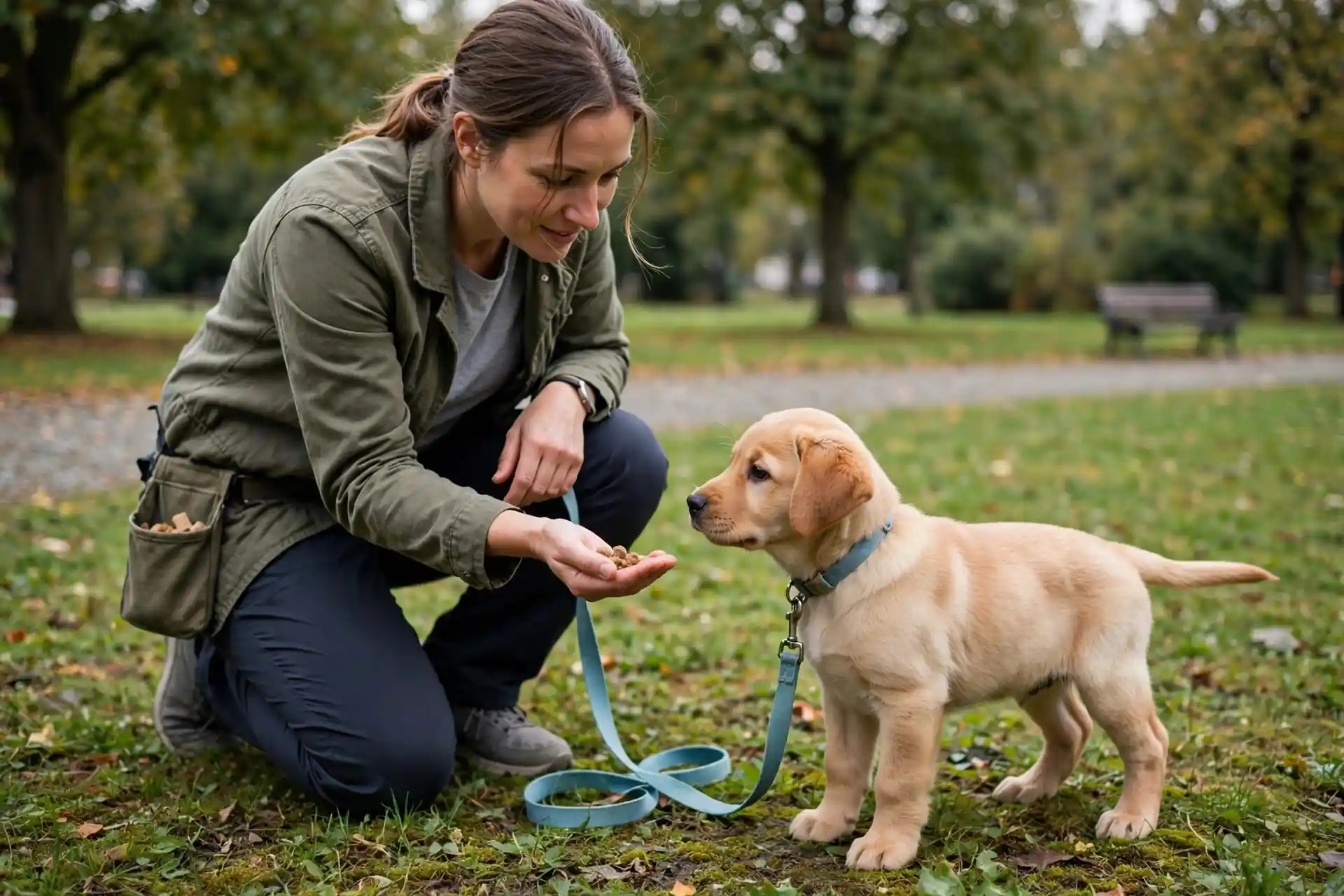
Treats tend to disappear the moment the leash comes out, as if the leash itself should be reward enough. Puppies learn fastest when walking next to you is reinforced constantly at first — a small treat every few steps of loose-leash walking, then gradually stretching the distance between rewards as the habit sets in.
Starting in a High-Distraction Environment
Leash manners that work perfectly in the living room can fall apart completely on a sidewalk full of smells, squirrels, and other dogs. Building the skill indoors or in the backyard first, then moving to a quiet street, and only later to a busier route, keeps the puppy set up to succeed instead of practicing pulling in an environment that’s too hard from day one.
Consistency between family members matters as much as the method — what positive reinforcement training looks like day to day applies directly here, since a puppy who gets rewarded for loose-leash walking by one person and handled differently by another never fully learns which behavior works.
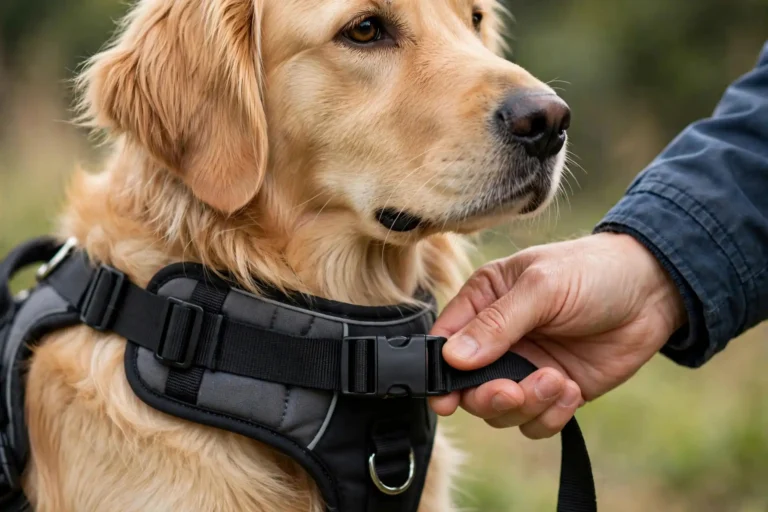
The equipment matters too. A well-fitted harness distributes pressure across the chest instead of the neck, and our guide to choosing between a slip lead and a regular collar covers the trade-offs for different stages of training.
For more background on positive, reward-based training methods, the AKC’s training resources are a good reference.
Expecting Progress Too Fast
Loose-leash walking is one of the slower skills to build, and comparing a ten-week-old puppy’s progress to a well-mannered adult dog on the same street sets everyone up for frustration. Regression is normal, too — a puppy who was walking nicely last week might pull again this week as they go through a growth spurt or a fear period. That’s not a training failure; it’s a reason to shorten the sessions and go back to easier distractions for a while, not a sign the method stopped working.
Puppies don’t learn to walk nicely from a single good session — they learn from a hundred short, boring, consistent ones.
Leash training looks simple until you are being dragged down the sidewalk by twelve weeks of enthusiasm. The mistakes owners make are remarkably consistent, and they almost all share a root cause: expecting the puppy to understand the assignment before anyone has taught it. Loose-leash walking is a trained skill, not a natural behavior.
The equipment mistakes
Gear choices shape every walk before training even begins.
Wrong collar or harness fit
A collar that slips over the head or a harness the puppy steps out of teaches the puppy that escaping gear works. Fit equipment snugly: two fingers under a collar, a harness that does not rotate or gap. For strong pullers, a front-clip harness redirects momentum without the neck pressure of a collar. Avoid retractable leashes for training entirely; the constant tension teaches pulling, and the thin cord is a safety hazard. Our guide to dog park safety explains why equipment choices matter even more in high-distraction environments.
Leash too long or too short
A six-foot leash is the training standard for good reason: enough room for the puppy to explore and earn rewards, short enough to manage. Very short leashes create constant tension that teaches the puppy to pull against pressure. Very long lines are for recall practice in open areas, not sidewalk training.
The timing mistakes
When you train matters as much as how.
Training when the puppy is over-threshold
A puppy that is frantic, overtired, or overstimulated cannot learn. The classic error is starting leash training on an exciting walk when the puppy is already at maximum arousal. Train in boring environments first: indoors, then the yard, then a quiet street. Only add distractions the puppy can handle. Short sessions of five minutes beat one exhausting half hour. The AKC puppy training resources emphasize this graduated approach.
Inconsistent criteria
Rewarding loose leash sometimes but letting pulling slide other times teaches the puppy that pulling sometimes works, which is the most powerful reinforcement schedule for persistence. Decide your criteria and enforce them every walk. Everyone who walks the puppy must follow the same rules; one family member who lets the puppy drag them undoes everyone else’s work.
Training only on walks
Walks are the final exam, not the classroom. Practice leash skills indoors where distractions are minimal, rewarding attention and position. A puppy that cannot walk nicely in the living room will not do it past the neighbor’s barking dog. Build the skill where it is easy, then generalize gradually.
The technique mistakes
Common handling errors that sabotage progress.
Pulling back
When the puppy pulls forward and you pull back, you have started a tug-of-war the puppy will win through sheer persistence. Opposition reflex means dogs naturally push against pressure. Instead, stop moving when the leash tightens (be a tree) or change direction. Forward movement becomes the reward for a loose leash. This feels slower initially but produces faster long-term results than any amount of yanking.
Luring forever
Treat lures teach the initial position beautifully, then become a crutch. If the puppy only walks nicely while staring at a treat in your hand, you have trained treat-staring, not loose-leash walking. Fade lures quickly into unpredictable rewards: sometimes a treat, sometimes praise, sometimes permission to sniff. Variable reinforcement builds durable behavior. For reading whether your puppy is actually learning versus just performing, our dog body language guide teaches the stress signals that indicate training pressure is too high.
Punishing pulling
Leash jerks, choke chains, and scolding suppress pulling through fear and pain. They do not teach the puppy what to do instead, and they poison the walk experience. A puppy punished for pulling learns that walks are stressful, which creates more behavior problems. Positive methods are not just kinder; they produce more reliable results because the puppy understands the actual goal.
The expectation mistakes
Unrealistic timelines cause more training abandonment than any technique error.
Expecting adult behavior from a puppy
A twelve-week-old puppy has the attention span of a goldfish and the impulse control to match. Expecting sustained heeling is developmentally inappropriate. Reward approximations: a few steps of loose leash from a young puppy is excellent. Build duration gradually over months, not days.
Skipping socialization for training
Some owners drill obedience while neglecting the socialization window that closes around 14-16 weeks. A puppy that heels perfectly but fears the world is not well trained. Balance leash skills with positive exposure to people, dogs, sounds, and environments during the critical period.
The First 7 Days of Leash Training, Step by Step
Days one and two stay indoors. Clip the leash to the collar or harness and let it drag around the living room while you supervise — never leave a dragging leash unattended. The goal is simple: the leash becomes boring background furniture, not something scary. Treat calm behavior around it. If the puppy chews the leash, redirect to a toy; do not yank it away.
Days three and four, pick up the leash. Walk around the house keeping it loose. The instant the puppy walks near you without pulling, mark it with a “yes” and a treat. If the puppy pulls, stop dead — become a tree. The lesson is mechanical: pulling stops the walk, slack keeps it going. Keep sessions to five minutes, two or three times a day.
Days five and six move to the yard or a quiet hallway. New smells will test everything learned indoors — expect a reset. Reward every few steps of loose-leash walking at first, then stretch the distance between treats. Practice turns and stops: when you stop, the puppy should stop too. Lure with a treat at first, then fade it.
Day seven is the first real walk — short and boring on purpose. Pick a quiet street, keep it under ten minutes, and let the puppy sniff. Sniffing is not misbehavior; it is how puppies process a new place. End on a win: nice loose walking, a treat, and home. Distance and distraction-proofing come in week two.
Frequently Asked Questions
How long does leash training take?
Weeks for basics, months for reliability. Most puppies learn the concept within a few weeks of consistent practice but need months of reinforcement before loose-leash walking is habitual, especially around distractions. Regression during adolescence is normal.
Should puppies wear collars or harnesses?
Harnesses are generally safer for training puppies because they avoid neck pressure when the puppy pulls, which it will. Use a well-fitted front-clip harness for training. Collars are fine for ID tags. Avoid choke, prong, and shock collars, especially on puppies.
Why does my puppy pull more with some people?
Because those people allow it. Dogs discriminate beautifully between handlers with different rules. Consistency across all walkers is essential; the puppy will always default to whatever the most permissive handler allows.
Is it too late to train an older puppy?
No. Older puppies and adult dogs learn loose-leash walking fine; they just have more rehearsed pulling history to overcome. The same methods apply, though progress may be slower initially as old habits fade.
Should I use treats on every walk forever?
No. Use frequent rewards to build the behavior, then transition to intermittent reinforcement: occasional treats, real-life rewards like sniffing and greeting, and praise. The goal is a habit maintained by the walk itself being rewarding, with treats as occasional bonuses.
Conclusion
Leash training fails when owners expect understanding before teaching, train in overwhelming environments, or fight physics with pulling. It succeeds with the boring fundamentals: right equipment, calm environments, consistent criteria, and rewards for the behavior you want. Be patient with the puppy timeline and the loose leash will come. More dog training guides on the Factblaze homepage.