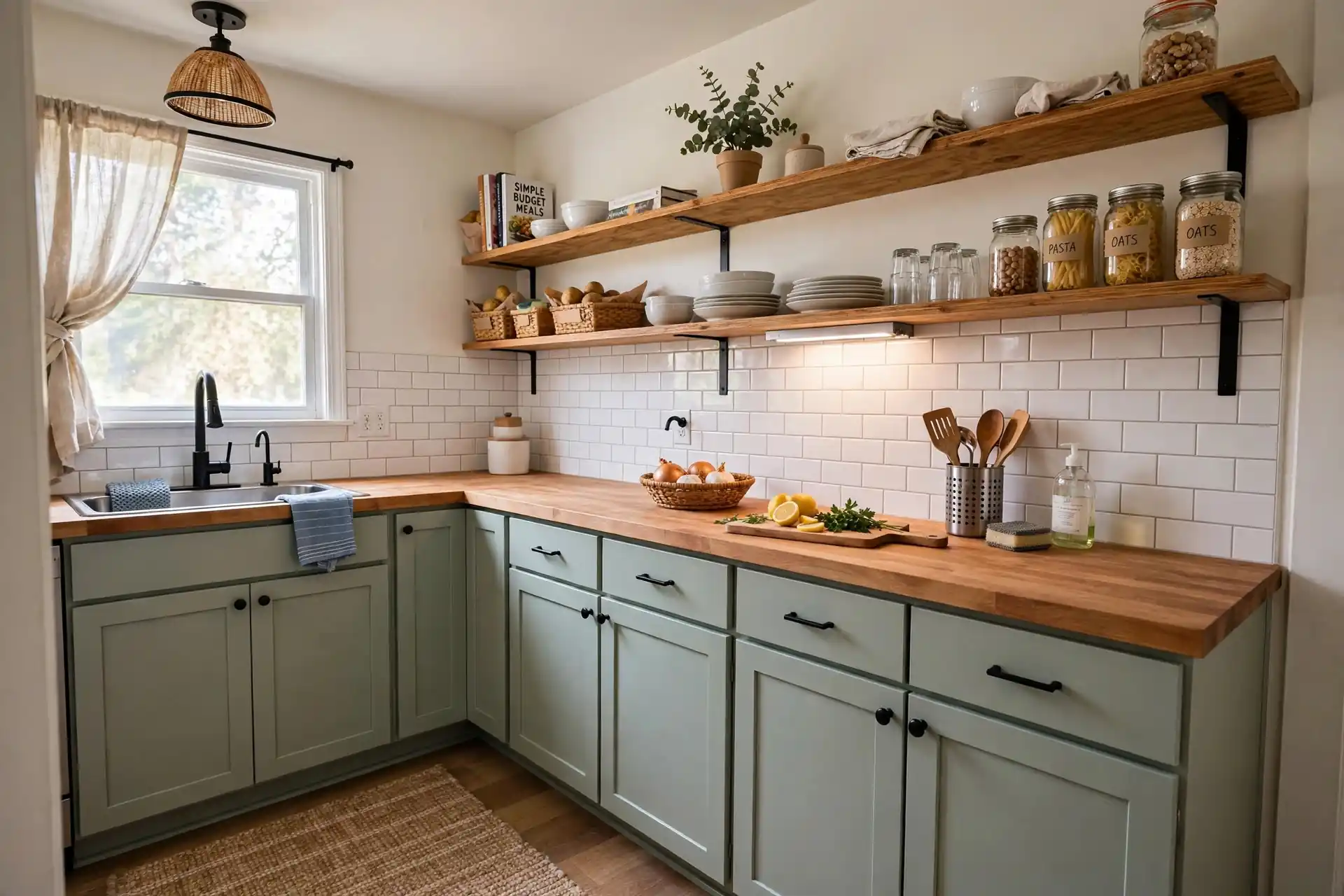
Kitchen remodel ideas on a budget
The kitchen is the room that sells a house and anchors a home, which is why it also tends to be the room where remodeling budgets spiral out of control the fastest. A full-scale kitchen renovation with custom cabinetry, stone countertops, new flooring, and reconfigured plumbing can easily exceed $50,000 to $100,000 in many US markets. For most homeowners, that number is not realistic — and frankly, it is not necessary.
The updates that make the biggest visual difference in a kitchen are almost never the most expensive ones. Painting cabinets, replacing hardware, improving lighting, refreshing the backsplash, and making thoughtful use of vertical storage can transform a tired kitchen into something that feels genuinely modern and functional, often for a fraction of what a full renovation would cost.
This guide covers the most effective budget-friendly kitchen remodel ideas for 2025, with specific attention to small kitchen spaces, DIY approaches, and which updates offer the best return on investment if you plan to sell.
Before You Start: The One Rule That Saves the Most Money
The single most reliable way to keep a kitchen remodel on budget is to keep the existing layout. Every time plumbing or electrical infrastructure moves — relocating a sink, shifting the range to a new wall, adding an island that requires new gas lines — costs accelerate dramatically. Labor alone for those structural changes often exceeds the total cost of a comprehensive cosmetic remodel.
Work with what you have. Your sink, stove, refrigerator, and dishwasher should stay where they are. The goal of a budget kitchen remodel is to change how the space looks and feels, not how it is structurally configured. With that constraint in place, what you can accomplish is surprising.
Cabinet Updates: The Highest-Impact Change You Can Make
Paint Your Cabinets Instead of Replacing Them
If your existing cabinets are structurally sound — the boxes are solid, the doors hang correctly, and there is no significant water damage — painting them is one of the best kitchen remodel ideas on a budget available. New cabinets represent 30 to 40 percent of the average kitchen renovation cost. Painting the existing ones accomplishes roughly 80 percent of the visual transformation at 5 to 10 percent of that price.
The results depend almost entirely on preparation. Cabinets that are cleaned thoroughly, lightly sanded, and primed before painting hold their finish for years. Skipping preparation is what produces the peeling and chipping that gives painted cabinets a bad reputation. Use a cabinet-specific enamel or alkyd paint rather than standard wall paint, and apply thin coats with a foam roller to minimize brush strokes.
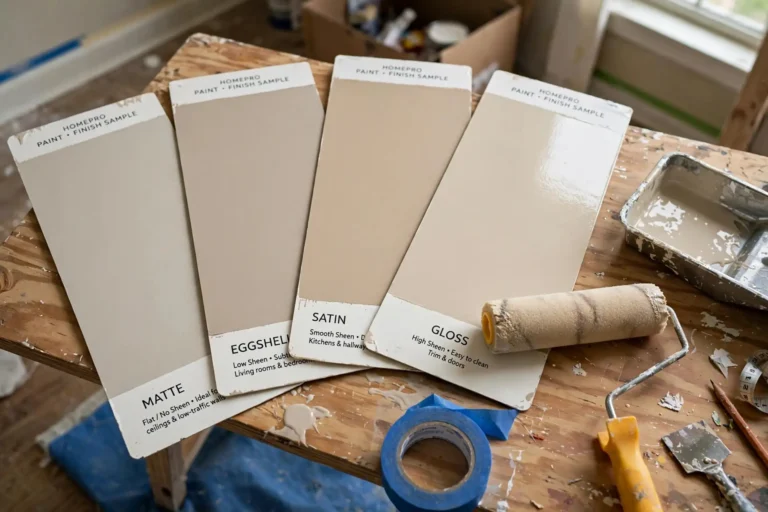
For color selection in 2025, the shift is away from stark white and cool gray toward warmer neutrals — taupe, mushroom, and soft beige for the main kitchen palette — and toward nature-inspired tones like sage green, olive, and muted terracotta for a more distinctive look. These colors work particularly well in small kitchens because they read as warm and considered rather than cold or clinical.
Replace Cabinet Hardware
Cabinet hardware is the jewelry of a kitchen, and replacing outdated knobs and pulls is genuinely one of the fastest small kitchen remodel ideas on a budget. The hardware itself typically costs between $2 and $15 per piece, installation requires nothing beyond a screwdriver, and the visual shift is immediate.
Current hardware trends in 2025 favor matte black for a clean, contemporary look; brushed brass or unlacquered brass for warmth and a slightly elevated, collected feel; and brushed nickel for a timeless, neutral finish. Mixing two metal finishes — brass cabinet pulls with a matte black faucet, for example — is a trend being executed well in modern kitchen design when the metals are distinct enough to read as intentional rather than mismatched.
Consider Cabinet Door Refacing
For homeowners who want the look of new cabinets without the full replacement cost, refacing is a middle path worth understanding. Refacing involves replacing only the door fronts and drawer faces while keeping the existing cabinet boxes. It typically costs 40 to 60 percent less than a full cabinet replacement. This approach works best when the existing cabinet layout and box condition are acceptable but the style of the doors is dated.
Countertops on a Budget
Butcher Block
Butcher block is one of the most consistently well-regarded budget-friendly countertop options, partly because it actually looks good — warm, natural, and at home in a wide range of kitchen aesthetics from farmhouse to modern. It costs significantly less per square foot than quartz or granite, it can be DIY-installed in many situations, and it can be sanded and re-oiled if it sustains surface damage, which extends its usable life considerably.
It requires more maintenance than stone surfaces — periodic oiling, careful management of standing water, and avoiding harsh chemicals — but for a kitchen that is used regularly and cared for attentively, it is a genuinely practical and attractive choice.
Laminate Countertop Resurfacing
If your existing laminate countertops are in reasonable condition but visually dated, specialized countertop refinishing kits can dramatically change their appearance without replacement. These kits typically involve cleaning, a bonding coat, a decorative stone-effect topcoat, and a protective sealant. The results vary depending on application quality and how heavily the surface is used, but they represent a very low-cost interim option while budgeting toward a longer-term upgrade.
Mid-Range Quartz as the ROI Investment
If there is one area where spending more makes sense in a kitchen remodel on a budget, it is the countertop. Quality quartz countertops are consistently ranked as one of the top return-on-investment upgrades in kitchen renovation research. They are durable, non-porous, require minimal maintenance, and are a genuine selling point for buyers. If the budget allows for a single upgrade beyond the strictly cosmetic, the countertop is usually the right place to put that money.
The Backsplash: A Small Area, Big Visual Impact
Peel-and-Stick Tiles
The backsplash occupies a relatively small surface area in most kitchens, but it is highly visible and has an outsized effect on the overall aesthetic. Peel-and-stick tile has improved dramatically in recent years — current options convincingly replicate the look of ceramic subway tile, zellige, marble mosaic, and cement tile at a fraction of the cost and without requiring tile adhesive, grout, or professional installation.
This is one of the most accessible DIY kitchen remodel ideas on a budget for renters as well as homeowners, since most peel-and-stick tile is removable without wall damage. The surface needs to be clean, smooth, and free of old grease before application for the adhesive to hold properly.
Traditional Tile on a Budget
If you prefer real tile for durability or prefer the look, classic white subway tile remains one of the most cost-effective choices per square foot and is widely available at hardware stores. The grout color makes a significant difference: white grout for a traditional, seamless look; dark gray or charcoal grout for a more modern, graphic quality that is currently very popular.
Lighting: The Most Underrated Budget Kitchen Update
Lighting does more to make a small kitchen feel open, clean, and upscale than almost any other single change. Most budget kitchen remodels overlook it, which is a missed opportunity.
Under-Cabinet LED Strips
Under-cabinet lighting eliminates the shadows that make lower counter areas feel dingy and cramped, which is a particular issue in small kitchens. LED strip lights are inexpensive, energy-efficient, and widely available in plug-in or hardwired formats. Many current options are adhesive-backed and require no electrical work, making this a genuinely simple DIY installation that produces a noticeably premium result.
Replace Outdated Overhead Fixtures
Swapping a dated flush-mount fixture for a modern pendant light or a clustered pendant grouping over a kitchen island or peninsula can completely change the character of a kitchen. This is one of the areas where a modest investment — a quality pendant in the $80 to $200 range — produces a visual impact that feels significantly more expensive than it is.
For small kitchens with low ceilings, flush-mount or semi-flush fixtures in updated designs are a better choice than pendants, which can overwhelm a compact space.
Flooring: Affordable Options That Look Expensive
Luxury Vinyl Plank
Luxury vinyl plank (LVP) is the most practical budget flooring option for kitchens. It is 100 percent waterproof, significantly more durable than standard laminate, installs as a floating floor that does not require adhesive or professional installation in most applications, and is available in a wide range of finishes that replicate wood and stone convincingly.
Current color trends in kitchen flooring have moved away from cool gray toward warmer wood tones — honey oak, chestnut, and light natural finishes — which complement the warmer overall color palette dominating kitchen design in 2025.
Painted or Updated Tile
If your existing tile floor is in good condition but visually dated, tile paint specifically designed for floors can update it without removal. For kitchens with sound, neutral-toned tile that is simply unfashionable, painting is a legitimate budget strategy. It requires proper preparation and sealing and will not last as long as replacement, but for a short-term improvement or a rental property update, it is a practical option.
Open Shelving and Vertical Storage
Making Small Kitchens Feel Larger
In a small kitchen, removing one or two upper cabinet units and replacing them with open shelving is one of the most effective visual transformations available. The wall reads as more open, the space feels less boxed-in, and the ceiling appears higher. Floating shelves in natural oak, black-finished steel brackets with wood shelves, or clean-lined painted MDF all work well at accessible price points.
The practical trade-off is that open shelves require more deliberate organization — what you keep on them is always visible — and they accumulate dust faster than closed cabinets. For everyday items used regularly, this is usually manageable.
Vertical Storage for Maximum Function
Using the full vertical height of a kitchen — hooks on the inside of cabinet doors, magnetic knife strips on walls, hanging pot racks above islands, and tall pantry pull-outs — creates significant storage without adding floor space. In a small kitchen remodel on a budget, this kind of functional optimization can make a kitchen that felt cramped genuinely comfortable to work in without changing a single structural element.
Simple Remodel Ideas With Maximum Return
For homeowners planning to sell within a few years, the most relevant question is not just what looks good but what returns value. According to renovation cost-versus-value research, a minor kitchen remodel — defined as replacing cabinet fronts and hardware, refreshing countertops, installing a new sink and faucet, and updating a mid-range appliance — consistently returns a high proportion of its cost at resale, often outperforming more expensive major kitchen renovations on a percentage basis.
The principle is counterintuitive but consistent: a dramatically improved but not over-improved kitchen in a standard neighborhood adds more market value per dollar spent than a luxury kitchen renovation. Spending $8,000 to $15,000 on targeted cosmetic updates will typically produce a larger return-on-investment than spending $60,000 on a full gut renovation, particularly in mid-range markets.
For those balancing home improvement decisions with other lifestyle investments, the same principle of intentional prioritization applies across other areas — whether deciding between fast fashion and affordable, quality pieces that last or choosing what to invest in for the long term rather than what simply looks appealing in the short term.
Color Palette and Aesthetic Trends for 2025 Kitchen Remodels
The dominant visual shift in kitchen design for 2025 is away from the all-white, cool-gray aesthetic that dominated the previous decade toward warmer, more textured interiors. Mushroom, greige, warm white, and soft taupe are the new neutrals. Earthy accents — sage green cabinetry, terracotta tile details, brass hardware, and natural wood elements — bring warmth and personality without committing to anything that will feel dated in three years.
For small kitchens specifically, the airy, light kitchen aesthetic that creates a sense of openness remains highly relevant. This does not have to mean white — warm beige or pale sage on cabinets with natural wood open shelving and warm-toned LED lighting creates a space that feels both open and inviting rather than sterile.
How to Budget and Prioritize Your Kitchen Remodel
Before committing to a sequence of updates, a simple approach to budgeting works well: rank every planned change by its visual impact relative to its cost, then execute in order. Painting cabinets and replacing hardware typically sit at the top of this list — highest impact, lowest cost. New flooring or countertops sit in the middle. Structural changes like moving a wall or relocating plumbing sit at the bottom — reserved for situations where they are genuinely necessary rather than simply desirable.
Working in phases is legitimate if the budget does not allow everything at once. Start with the most transformative, most affordable changes. Live with the result for six months before proceeding. You may find that the early phases accomplish more than expected, allowing remaining budget to go further in later stages.
For inspiration on planning home spaces and lifestyle decisions with a similar intentional approach — choosing quality over volume and prioritizing what actually adds lasting value — FactBlaze’s broader content on home, lifestyle, and pets covers topics that share this philosophy.
For current pricing, contractor ratings, and project-specific guides in your area, Google’s search results for kitchen remodel ideas on a budget surface local contractor reviews, cost estimators, and community renovation forums worth consulting.
Frequently Asked Questions
What is the cheapest way to remodel a kitchen?
Painting existing cabinets, replacing hardware, updating lighting, and installing a peel-and-stick backsplash are consistently the most cost-effective kitchen remodel updates available. When combined, these four changes can transform the appearance of a kitchen for $500 to $3,000 in a DIY scenario, depending on kitchen size and material choices. Keeping the existing layout — no plumbing or electrical moves — is the single decision that keeps a remodel affordable at any scale.
How much does a small kitchen remodel cost on a budget?
A cosmetic refresh of a small kitchen — covering cabinet painting, new hardware, backsplash tile, lighting updates, and minor countertop improvements — typically runs $2,000 to $10,000 depending on how much work is DIY versus professionally installed. A mid-range remodel that includes new stock cabinets, countertops, and appliances generally costs $15,000 to $30,000. Full gut renovations with custom elements start significantly higher.
What are the best DIY kitchen remodel ideas on a budget?
Cabinet painting, hardware replacement, under-cabinet LED lighting, peel-and-stick backsplash, and floating shelf installation are all straightforward DIY projects that require minimal specialized skill and produce strong visual results. Luxury vinyl plank flooring with a click-lock installation system is also well within DIY capability for most homeowners.
What kitchen updates add the most home value?
Minor kitchen remodels — replacing cabinet fronts, countertops, and a mid-range appliance while retaining the existing layout — consistently show strong return on investment at resale. Quality countertops (particularly mid-range quartz), updated fixtures, and improved lighting are widely cited by real estate professionals as the updates most noticed and valued by buyers. Over-renovating relative to the neighborhood typically does not produce proportional value returns.
How do I make a small kitchen feel bigger without renovating?
Remove upper cabinet doors or replace one or two upper units with open shelving to reduce the visual weight on the walls. Use lighter colors on cabinets and walls to reflect available light. Install under-cabinet LED strips to eliminate shadows. Keep countertops as clear as possible by using vertical storage — hooks, racks, and magnetic strips — for items that would otherwise occupy surface space. A large-format mirror or glass-front upper cabinet doors can also make a small kitchen feel more open.
Conclusion
A budget kitchen remodel is not a compromise — it is a different set of priorities. The highest-impact changes are almost always cosmetic rather than structural: the color of the cabinets, the quality of the hardware, the character of the lighting, the texture of the backsplash. Getting these elements right produces a kitchen that looks and feels genuinely transformed without the budget, timeline, or disruption of a full renovation.
The most important decision is the first one: keep the layout, work with the existing structure, and invest in changes that are visual rather than architectural. From that foundation, a thoughtfully executed sequence of budget updates — starting with cabinets, hardware, and lighting — will take a kitchen much further than most homeowners expect before they begin.