What Bra Band Size Determines That Cup Size Doesn’t
Band size controls support; cup size only controls volume. Most fit problems — straps digging in, the band riding up in back, underwires poking — trace back to a band that’s wrong, even when the cup looks like a perfect match.
What the Band Does
The band should provide roughly 80 percent of a bra’s support, wrapping snugly around the ribcage on the loosest hook. If the band is too big, the weight shifts onto the shoulder straps, which is why straps that dig in are usually a band problem, not a strap problem. A correctly sized band sits level all the way around — not riding up in back — and you should be able to fit two fingers under it comfortably, not zero and not four.
Because band and cup are linked in most sizing systems, going down a band size while keeping the same cup letter actually makes the cup smaller too, not just the band tighter. That’s why “sister sizes” — a 34C and a 36B, for example — hold roughly the same cup volume despite different labels. Understanding that relationship is the fastest way to fix a bra that feels loose in the band but fine in the cup: size down the band and up the cup letter to keep volume the same.
Why Charts Disagree
Different brands measure the band differently — some add several inches to the underbust measurement before rounding to a size, others don’t — which is why the same body can come out as a 34 at one retailer and a 36 at another. Cup volume calculations vary even more between brands, so a C cup at one label can fit closer to a D at another. This is part of why online sizing charts often disagree with each other even when you enter the same measurements twice. It’s the same pattern behind most mistakes people make buying clothes online — sizing charts are the most common trap.
The most reliable fix is trying on more than one size at a time rather than trusting a single calculator result. Start with the band that sits level and snug on the loosest hook, then adjust the cup letter until there’s no gapping or spilling at the top edge.
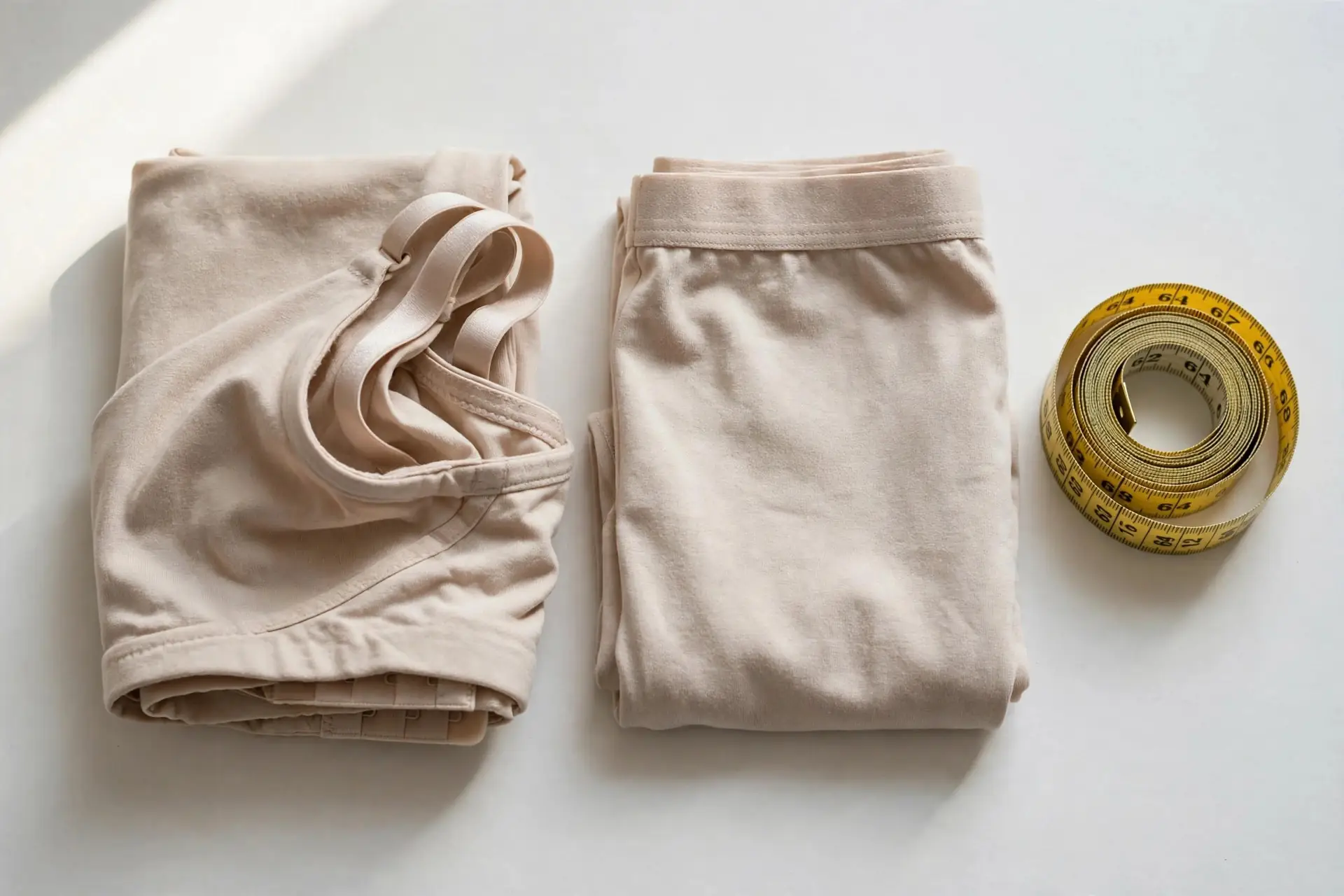
To get a rough band measurement at home, wrap a soft tape directly under the bust, snug but not tight, while wearing a non-padded bra. Round to the nearest whole number, and if it lands between sizes, size down rather than up — a band stretches slightly with wear, while a band that’s already loose only gets looser.
Signs the Band Is Wrong, Not the Cup
- The band rides up in the back over the course of a day.
- You’re already on the tightest hook and it’s still loose.
- Shoulder straps leave marks even when tightened correctly.
- The center point between the cups doesn’t sit flat against your sternum.
Retailers that publish detailed fit guides, like ThirdLove’s sizing reference, are useful for cross-checking a measurement against sister sizes before you buy. If the band still doesn’t feel right after adjusting hooks and sister sizes, the issue is usually the brand’s cut, not your measurements — try a different maker before assuming the number is wrong.
The Band Does the Supporting, Not the Cups
This is the single most misunderstood fact in bra fitting: approximately eighty percent of support comes from the band, not the cups or straps. The band anchors around the ribcage and provides the lift. The cups simply contain. The straps fine tune. When the band is too loose, the entire support structure fails regardless of cup size, and the straps get forced into doing work they were never designed for, which is why so many people experience painful shoulder digging.
The band should fit snugly on the loosest hook when new, sitting level around the body parallel to the floor. If it rides up the back, it is too big. If you can pull it more than two inches from your body, it is too big. The common fitting error is wearing a band two to four inches too large and compensating with a smaller cup letter, which brings us to the sizing confusion that online size charts make worse by disagreeing with each other.
Why Cup Letters Are Meaningless Alone
A D cup is not a fixed size. Cup size is always relative to band size, representing the difference between bust and underbust measurements. A 32D, 34D, and 38D are completely different volumes. This is why someone can wear a D cup and be smaller busted than someone in a B cup with a larger band. The letter only has meaning attached to its number. Sister sizes formalize this: a 34C holds roughly the same cup volume as a 32D or 36B, with the band providing the fit difference. Understanding this relationship is what unlocks correct fitting.
What the Band Actually Determines
Band size determines where the bra sits on your body and how the support distributes. A correct band stays put during movement, does not ride up when you raise your arms, and allows the center gore, the piece between the cups, to sit flat against the sternum. When the band is right, the cups can do their containing job without gaping or spilling, because the foundation is stable.
The band also determines comfort more than any other element. A too tight band causes the bulging and discomfort people blame on bras generally. A too loose band causes the bra to shift, requiring constant adjustment. The correctly fitted band feels snug and secure without restricting breathing. It should feel like a firm handshake, not a squeeze. Most people who think they hate underwire actually hate their band size, since a correct band keeps the wire positioned properly instead of pressing into tissue.
The Measurement Method That Works
Measure your underbust snugly with a soft tape, keeping it level and breathing normally. This number, rounded to the nearest even number, is your starting band size. Many traditional fitting guides add four inches to this measurement, a relic from the era of non stretch fabrics that no longer applies to modern materials. Ignore the plus four method. Start with your actual underbust measurement and adjust based on fit.
Then measure your fullest bust point while wearing an unpadded bra. The difference between bust and underbust, in inches, suggests the cup: one inch is an A, two a B, three a C, and so on. But treat this as a starting point for trying sizes, not a final answer. Breast shape, tissue density, and root width all affect which specific bras fit, which is why trying sister sizes around your calculated size is essential.
Signs Your Band Is Wrong
Band riding up the back is the clearest signal of too large a band. Straps falling off shoulders usually indicates the same root cause, since a loose band shifts the whole bra’s geometry. If you are on the tightest hook of a relatively new bra, the band has stretched beyond usefulness or was too big initially. Conversely, if the band leaves deep red marks that persist for hours, causes difficulty breathing, or the underwire digs into the ribcage, the band is too small.
Cup symptoms often trace back to band issues. Quad boob, tissue spilling over the cup top, frequently means the cups are too small, but it can also mean the band is so loose the cups cannot sit in the right position. Gaping at the top of cups can mean too large a cup or a band so tight it distorts the cup shape. Always reassess band first when troubleshooting fit problems. For navigating the broader sizing landscape, choosing a bra size when charts disagree covers the practical shopping strategy. More fit and clothing guides are at Factblaze.
Sister Sizes Explained: When To Go Up a Band
Cup size is not a fixed volume; it is a ratio to the band. A D cup on a 32 band holds less than a D cup on a 36 band. Sister sizes are the sizes that hold the same cup volume on different bands: 32D, 34C, and 36B are sisters. Go up one band size and down one cup letter, and the cups stay the same while the band gets looser.
Going up a band solves one specific problem: a band that digs, rides, or leaves deep marks while the cups fit well. If your 32D cups are perfect but the band feels like a vise, a 34C gives you the same cup with breathing room. This is the correct fix when the band is the only complaint.
It creates new problems when the cups were not right to begin with. Sister sizing up from a 34B with gaping cups gives you a 36A with the same gaping cups on a looser band that rides up your back. A band that rides up is simply too big, and no sister size fixes a band doing the cups’ job of support.
The rule: change one variable at a time. If the band hurts, sister up. If the cups gape or spill, the cup is wrong and the band size is not the fix. And never sister size more than one step in either direction; beyond that the proportions stop matching your body and everything fits a little wrong.
Frequently Asked Questions
Why do I wear a different size in different brands?
There is no universal standardization in bra manufacturing. Each brand uses its own fit model and grading, so a 34C in one brand may fit like a 32D or 36B in another. This is normal and expected. Always try on, or order multiple sizes when shopping online, and judge by fit rather than the label.
How often should I get refitted?
After significant weight changes, pregnancy, or every couple of years as a check. Breasts change with age, hormones, and fitness, and the size you wore at twenty five may not serve at thirty five. Also refit whenever your current bras consistently show fit problems despite being the right labeled size.
Can a bra band stretch out permanently?
Yes. Elastic degrades with wear, heat, and time. A bra worn regularly lasts six to twelve months before the band loses meaningful support. Rotating between several bras, hand washing, and air drying extend this. When you need the tightest hook on a bra that used to fit on the loosest, it is worn out.
Does a tighter band mean more support?
Only up to the correct size. A properly snug band supports optimally. Going tighter than correct causes discomfort, tissue displacement, and the bra shifting to find relief. Support comes from correct fit, not from maximum tightness.
What is the center gore supposed to do?
In most bra styles, the center gore should sit flat against the sternum between the breasts. If it floats away from the body, the cups are likely too small or the band too large. Some very full busted people will never achieve full gore contact, which is fine as long as everything else fits well.
Conclusion
The band is the foundation of bra support, determining position, stability, and comfort. Fit it snugly on the loosest hook, level around the body, and let the cups and straps do their secondary jobs from that stable base. Understand that cup letters are relative, ignore the outdated plus four method, and troubleshoot fit problems by checking band first. Getting this right transforms daily comfort more than any other single clothing adjustment. For professional fitting guidance, HerRoom’s fitting resources offer detailed measurement and troubleshooting guides.