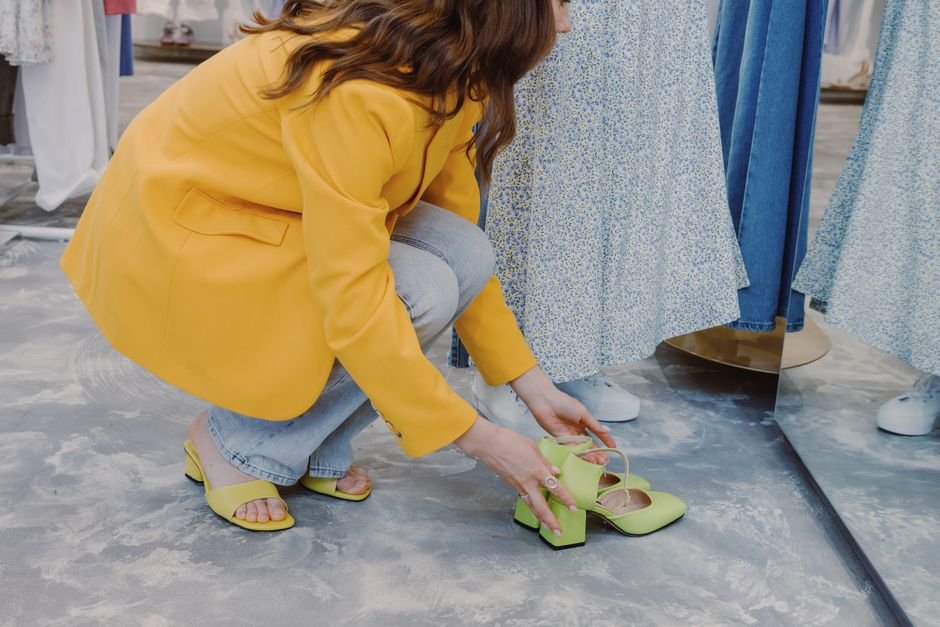
A Checklist for Finding the Right Shoe Width
A shoe can be the correct length and still be the wrong shoe if the width is off, and most people never check width at all because sizing charts push length first. If your foot’s widest point spills over the insole or slides side to side inside the shoe, the length is right and the width isn’t.
Finding the Right Shoe Width: Signs Yours Is Wrong
Finding the right shoe width starts with recognizing what a bad fit actually looks and feels like, since it rarely announces itself as clearly as a shoe that’s too short. Run through this before buying or returning a pair:
- The widest part of your foot bulges over the edge of the insole when you stand on it.
- Your foot slides side to side inside the shoe when you walk, even with the laces tightened.
- You get pinching or a hot spot on the outside of your pinky toe or the inside of your big toe joint.
- The shoe’s upper creases in unusual diagonal folds instead of straight across the toe box.
- You size up in length just to get more width, leaving extra room at the toe.
That last one is the most common workaround and the least reliable. Sizing up for width means the shoe is now too long, which causes its own problems: your foot slides forward inside the shoe on every step, especially downhill, which creates blisters at the heel and jams your toes into the front on descents.
Measuring Width at Home
Stand on a piece of paper with your full weight on that foot and trace around it, including the widest point across the ball of your foot. Measure that width in inches or centimeters, then compare it against the brand’s width chart if one exists. Not every brand publishes a width chart, but many running and walking shoe brands do, labeled with letters from A (narrow) through E or EE (wide) for men’s sizing, with a similar but shifted scale for women’s.
Measure both feet, since most people have one foot slightly wider or longer than the other; fit to the wider foot rather than averaging the two. Material matters too: a stiff leather dress shoe in a standard width feels tighter than a knit sneaker in the same labeled width, since knit and mesh uppers stretch while structured leather doesn’t give much. If you’re between a standard and wide size in a rigid material, size up in width rather than counting on the shoe to stretch.
Time of day affects the measurement too. Feet swell over the course of a day, more so if you’ve been standing or it’s hot out, so measuring or trying shoes on in the evening gives you a more realistic sense of fit than a morning measurement.
The same measure-first habit applies to other sizing calls made from a screen rather than a fitting room, covered in common mistakes people make buying clothes online.
The American Podiatric Medical Association notes that a poor width fit is one of the more common causes of everyday foot pain that people mistake for a length problem, which is worth remembering before assuming a shoe just needs breaking in. Getting the width checklist right the first time also protects footwear you’ve already broken in properly, the same way storing shoes correctly keeps their shape between wears.