What Makes a Scarf Actually Warm Versus Just Decorative
The difference between a warm scarf and a decorative one comes down to fiber and knit density, not how heavy it looks or what it costs. A loosely knit acrylic scarf can look bulky and still do almost nothing in a real wind, while a thin, tightly woven wool scarf can outperform it in freezing temperatures.
Warm vs Decorative Scarf: Why Fiber Decides More Than Thickness
Wool, especially merino or a denser sheep’s wool, insulates well because the fiber itself traps tiny pockets of air and continues to insulate even when slightly damp from snow or breath condensation. Cashmere does something similar with less bulk, which is part of why it’s prized for cold-weather pieces, the same reasoning behind how cashmere compares to wool in a sweater. Acrylic and other synthetics can feel soft and look substantial, but they don’t hold heat the same way and tend to let wind cut straight through a loose knit.
Weave and Knit Density Matter as Much as Material
A scarf’s construction determines how much wind actually gets blocked:
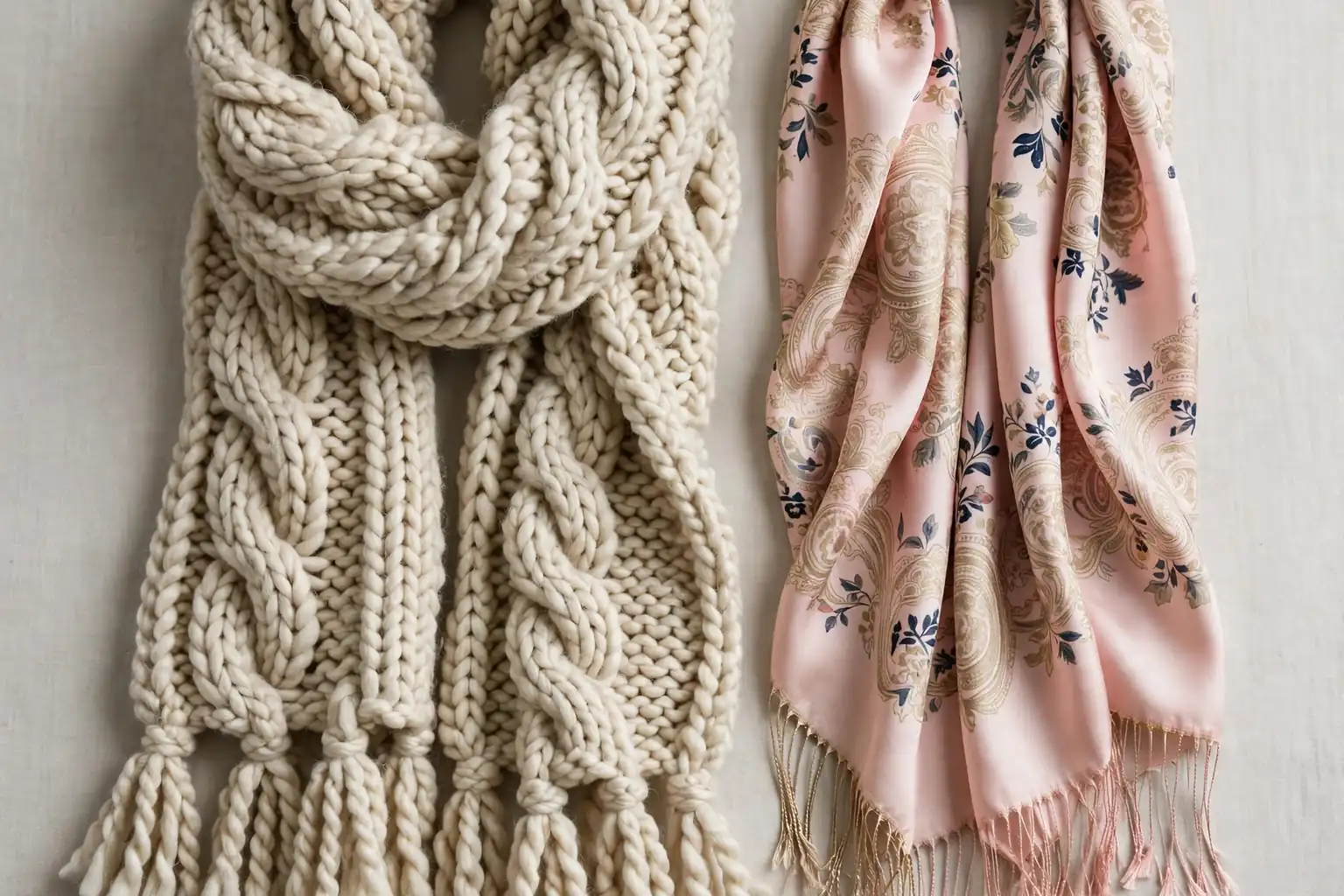
- Tight knits and dense weaves — trap air and resist wind, better for genuine cold.
- Open, lacy knits — look elegant and layer well indoors but let wind straight through outside.
- Woven wool or cashmere blends — usually sit in between, warm enough for daily cold without the bulk of a heavy cable knit.
A scarf’s job also depends on how you wear it. A scarf looped once and left loose around the neck does far less than one wrapped snugly enough to seal the gap between your coat collar and your chin, where a lot of body heat otherwise escapes.
Alpaca and mohair are less common but insulate similarly to wool, often with a slightly fuzzier texture that traps additional air near the skin.
Care labels on wool and cashmere pieces reflect fiber content standards set by groups like the International Wool Textile Organisation, and that same fiber percentage is worth checking before assuming a scarf marketed as “wool blend” performs like a piece made mostly from wool. A blend that’s mostly acrylic with a small percentage of wool for texture will behave closer to acrylic in the cold.
Size and Wrap Style Matter Too
Size plays a secondary role. A scarf too short to wrap at least once and tuck stays put worse in wind and leaves gaps at the collar no matter how warm the material is. Oversized blanket scarves look dramatic but often end up loosely draped rather than sealed against the neck, which undercuts the fiber’s insulating potential. Infinity scarves and snoods, which loop rather than tie, tend to seal the neck gap more reliably than a long scarf you have to tuck by hand, simply because there’s no loose end to come undone over the course of a day outside.
If you only own one winter scarf and want it to do real work, prioritize a tightly woven or densely knit wool or cashmere piece over a larger, looser one. Save the decorative, open-knit scarves for indoor wear or mild days, where warmth was never really the point.
Some scarves genuinely protect you from winter. Others are neck jewelry that happens to be shaped like winter gear. Telling them apart before you buy saves you from shivering through January in a beautiful but useless accessory. Warmth in a scarf comes down to a handful of physical factors, and they are all checkable.
Fiber: the foundation of warmth
What the scarf is made of determines most of its insulating ability.
Warm fibers
Wool, cashmere, and alpaca insulate well because their fibers trap air and manage moisture. A dense wool scarf in a cold wind is genuinely protective. Thicker yarns and tighter knits multiply the effect. Our cashmere vs wool comparison breaks down how these fibers differ in warmth, durability, and price, and the same principles apply to scarves.
Decorative fibers
Silk, lightweight cotton, rayon, and thin polyester scarves provide minimal insulation. They are designed for drape, pattern, and style. A silk scarf is lovely against the neck in autumn but it is not winter equipment. Acrylic can go either way: thick acrylic knits insulate reasonably, thin fashion acrylic does not.
Reading the label
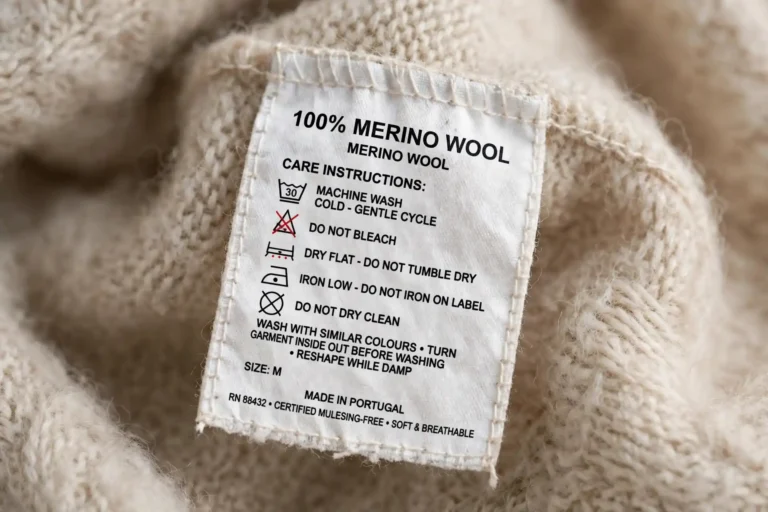
Check fiber percentages, not just the marketing name. A scarf sold as wool that is 20% wool and 80% acrylic behaves like acrylic. For real warmth, look for high percentages of insulating fibers. When labels use vague terms, our guide to what merino wool means on a care label teaches the label-reading skills that transfer directly to scarf shopping.
Weight, density, and size
Fiber is not everything. Construction determines how much of the fiber’s potential you actually get.
The heft test
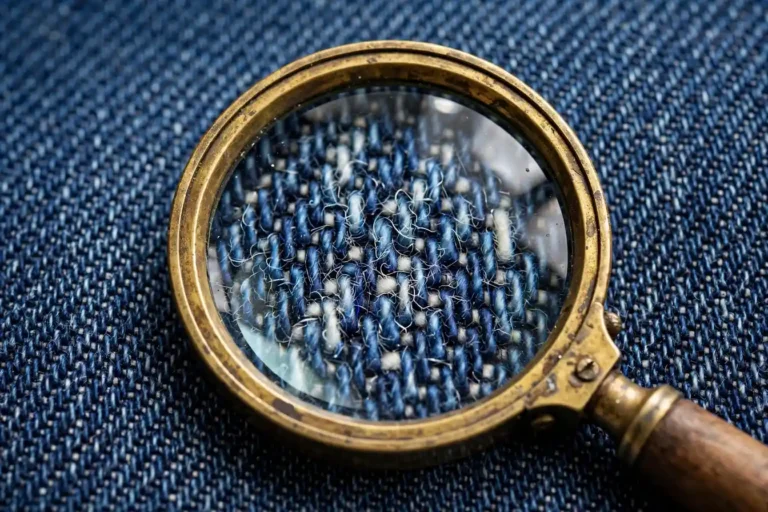
Pick the scarf up. A warm winter scarf has noticeable weight. Hold it up to light: if you can see through the knit easily, wind will pass through it just as easily. Dense, substantial fabric blocks wind, and wind blocking is half of perceived warmth. Thin, airy scarves, however pretty, are decorative by physics.
Dimensions matter
A scarf too short or narrow cannot be wrapped enough times to seal out cold. Real winter scarves are generously sized, long enough to loop twice around the neck with ends to tuck into a coat. A short fashion scarf worn for looks leaves the neck exposed no matter what it is made of.
Knit structure
Chunky cable knits, double-layered scarves, and tightly woven fabrics all outperform loose open knits in warmth. Texture that looks cozy usually is cozy, because the same loft that creates visual depth traps insulating air.
Design intent: reading the product
Manufacturers usually signal which job a scarf is meant to do.
Clues it is decorative
Emphasis on print, pattern, or designer branding over material details. Very lightweight fabric. Fringe and delicate edges that would not survive harsh weather. Styling in product photos with open coats or indoors. These are fashion pieces, and there is nothing wrong with that as long as you know.
Clues it is functional
Detailed fiber content front and center. Substantial dimensions listed. Terms like thermal, expedition, or heavyweight. Styling in product photos with winter coats in actual cold. The REI scarf buying guide offers a good overview of how outdoor retailers categorize warmth levels.
Getting both: the versatile scarf
You do not always have to choose. Some scarves genuinely do both jobs.
What to look for
Medium-weight wool or wool-blend scarves in classic patterns hit the sweet spot: warm enough for real winter days, refined enough for the office. Dark, solid colors and subtle patterns dress up well. A well-chosen medium scarf covers more of the year than either a wispy fashion piece or a giant expedition wrap.
Layering strategy
In deep cold, a thin decorative scarf can layer under a warm one, or a silk scarf can serve as a wind-blocking inner layer beneath wool. Matching scarf strategy to the day’s actual temperature beats owning one scarf for all winter.
Caring for a warm scarf
A good winter scarf is an investment worth protecting. Wool and cashmere scarves should be aired between wears rather than washed after every use; wool’s natural odor resistance means it stays fresh far longer than you might expect. When washing becomes necessary, use cool water and a gentle wool detergent, then dry flat to preserve the loft that provides the insulation. Store folded with cedar or lavender to deter moths, and never hang a heavy knit scarf by its ends for long periods, as gravity will stretch it out of shape. A well-kept wool scarf easily lasts a decade of winters.
How To Tie a Scarf So It Actually Traps Warmth
The goal is sealing the gap between your chin and your coat collar — that is where body heat escapes. The simplest warm wrap is the loop-through: fold the scarf in half, drape the folded end around your neck, pull the loose ends through the loop, and snug it under your chin. Tuck the ends inside your coat and zip up over them. No air gap, no heat loss.
For real cold, use the double wrap. Wrap the scarf fully around your neck twice, then tuck one end down through the wraps at your throat and let the other hang inside your coat. The double layer forms a thick insulated ring, and the tucked end locks out drafts. This needs a scarf at least 70 inches long; a short scarf cannot make the second turn comfortably.
The European loop adds wind protection. After the basic loop-through, twist the folded loop once before pulling the ends through — the twist makes a knot that sits tighter against your neck. Push the knot slightly to one side so it does not press on your throat, and pull your coat collar up over it. The twist stops the scarf loosening as you move.
What does not work is anything draped. A scarf hanging open down your chest looks fine in photos but leaves the whole neck exposed. If you want the draped look, wear it over the warm wrap, not instead of it — style on top, seal underneath.
Frequently Asked Questions
Can a thin scarf ever be warm?
Rarely on its own. Thin scarves lack the loft to trap insulating air and the density to block wind. They can contribute as part of a layered system, but a single thin scarf is decorative regardless of fiber.
Is cashmere always warmer than wool in scarves?
Not necessarily. A thick wool scarf outperforms a thin cashmere one. Cashmere’s advantage is warmth at low weight and bulk. For maximum warmth regardless of bulk, dense wool usually wins per dollar by a wide margin.
How long should a winter scarf be?
Long enough to wrap around your neck at least twice with ends remaining to tuck in, typically 70 inches or more. Shorter scarves work for style but cannot seal out cold effectively.
Do infinity scarves keep you warm?
They can, if made from warm fibers in substantial knits. The loop design actually seals well since there are no ends for wind to catch. But the same rule applies: thin fashion infinity scarves are decorative.
How do I make a decorative scarf warmer?
Layer it over a thin thermal neck gaiter, which does the insulating work invisibly. Or wear it primarily as the visible outer layer over a genuinely warm scarf. There is no shame in the combo.
Conclusion
A warm scarf is heavy, dense, generously sized, and made mostly of insulating fiber. A decorative scarf is light, airy, and sold on looks. Most scarves announce which they are if you pick them up, hold them to the light, and read the label. Buy the warm one for winter, the pretty one for style, and stop expecting one scarf to do both jobs in a blizzard. More everyday buying guides await on the Factblaze homepage.