How to Read a Dog’s Tail Wag Beyond Just “Happy”
Not always happy: a wag means a dog is emotionally engaged, and whether that feeling is friendly, nervous, or tense shows up in the tail’s height, speed, and stiffness. Read those three together with the rest of the body and you get a far clearer picture than the wag alone gives you.
Working out what different dog tail wags mean starts with knowing your own dog’s neutral tail. A beagle’s relaxed tail sits high; a greyhound’s hangs low and curves slightly between the legs. Watch your dog when it’s calm at home, and judge everything else against that baseline.
Height
A tail carried around its natural resting position usually means a relaxed dog. Held higher than normal, it signals alertness or arousal, which could be excitement about a ball or tension about another dog. Held low or tucked, it points to worry, fear, or an attempt to appease.
Tail shape changes the reading as well. Dogs with tightly curled tails, such as pugs and Akitas, carry them high almost all the time, so on those dogs a raised tail says very little on its own.
Speed and sweep
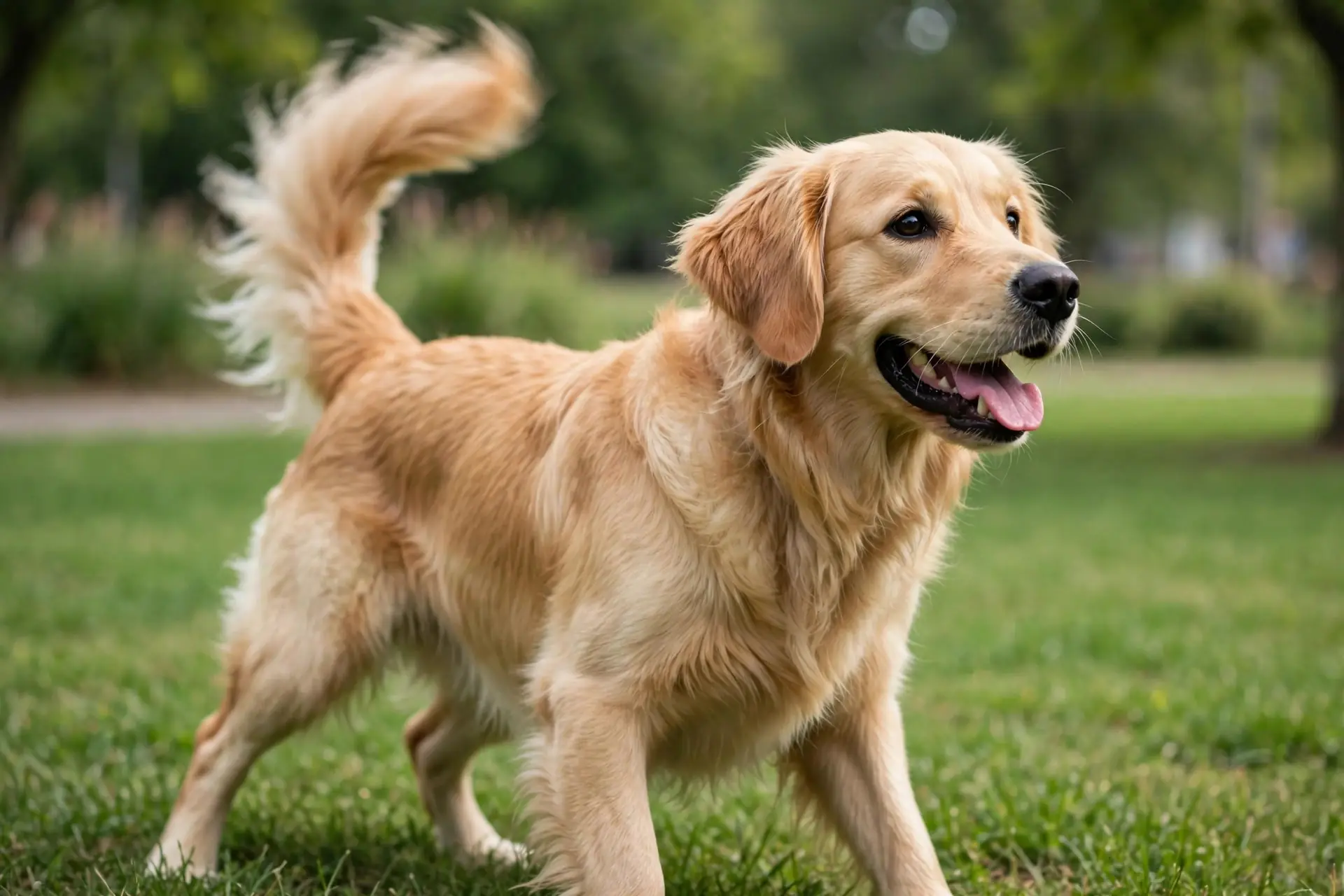
A loose, wide wag that swings the hips along with it is the friendly wag most people picture. A fast, small, twitchy wag, especially with the tail held high, looks more like a vibration and often shows up in a dog that is on edge. A slow wag at half-height can mean uncertainty, as if the dog is still deciding how it feels about what’s in front of it. A loose, circular wag, sometimes called a helicopter wag, is usually the most wholehearted greeting a dog gives, often saved for favorite people.
Stiffness
This is where people most often get caught out. A stiff, upright tail moving in short, tight arcs can come right before a snap, even though it’s technically wagging. It tends to arrive with other signs: a still body, a closed mouth, a hard stare. The guide to dog body language warning signs before a bite covers that cluster in more detail.
Direction
Researchers in Italy reported in 2007 that dogs tended to wag a little more to the right when they saw their owner and more to the left when facing an unfamiliar, imposing dog. It’s an interesting finding, but the difference is subtle and hard to spot in real time, so height and stiffness are more useful clues day to day.
What different dog tail wags mean in context
A tail is one signal among many. A loose, wiggly body, soft eyes, and an open mouth back up a friendly wag. Whale eye, pinned ears, or freezing in place override it. Small stress signals count too, and what a dog’s yawning signals in different contexts explains why a yawn in the vet’s waiting room isn’t about being tired.
Docked tails and naturally short ones make all of this harder, so owners of those dogs have to lean more on ears, face, and posture. For a broader overview of canine behavior, the American Kennel Club’s expert advice library is a useful reference.
Don’t let a wag alone decide whether to approach a dog you don’t know. Ask the owner first, then let the dog choose to come to you.
The Tail as an Emotional Barometer
A dog’s tail is one of the most expressive parts of its body, but the popular reading, wagging means happy, misses most of what the tail communicates. The tail functions as a barometer of emotional arousal and valence: how intensely the dog feels, and whether the feeling is positive or negative. A wag tells you the dog is activated. It does not tell you the activation is friendly. Dogs wag when greeting beloved owners, when uncertain about strangers, when aroused before a confrontation, and when anxious. Context and mechanics distinguish these completely different states.
Two mechanical features carry the most information: wag direction and tail position. Research on canine lateralization has found that dogs tend to wag more to the right when experiencing positive emotions and more to the left when experiencing negative ones, reflecting the brain hemisphere driving the response. This asymmetry is subtle and not something to judge in a single glance, but it illustrates that wagging encodes real emotional data. Tail position is easier to read reliably. A tail held high signals confidence and arousal. A tail at neutral height suggests relaxation. A tucked tail signals fear or submission. The same wagging motion means entirely different things at different heights. Learning to read the full picture matters for anyone spending time around dogs, and warning signs before a bite are essential knowledge for interpreting the tense end of the spectrum.
Speed, Amplitude, and Stiffness
How the tail moves matters as much as where it sits. A broad, loose, sweeping wag involving the whole rear end is the classic friendly signal. A fast, short, stiff wag with the tail held high indicates high arousal that may tip toward confrontation, especially combined with a rigid body. A slow, tentative wag suggests uncertainty. The whole body helicopter wag, where the tail circles loosely, is almost always joyful. Learn to feel the difference between loose and stiff. Loose bodies are comfortable bodies. Stiff bodies are deciding something.
Common Wag Scenarios Decoded
The greeting wag is what most people picture: medium height, broad sweep, loose body, often with wiggling and soft eyes. This is genuine social pleasure. The uncertain wag appears with strangers or in new situations: lower tail, slower wag, body slightly crouched. The dog is gathering information, not committing. Give it space and let it approach. The aroused wag shows up before play, before a chase, or before conflict: high tail, fast wag, forward posture. This is excitement without a verdict yet. Watch what follows.
The appeasement wag is widely misread. A dog that has been scolded may wag low and fast while crouching, licking lips, or showing the whites of its eyes. This is not happiness or guilt. It is a de escalation signal, an attempt to defuse perceived social tension. Responding with more scolding because the dog “looks guilty” punishes the very signal meant to restore peace. Recognizing appeasement for what it is changes how you handle training setbacks entirely.
Breed Differences in Tail Language
Tail anatomy varies enormously, and reading must adjust. Breeds with docked tails, curled tails like pugs and huskies, or naturally low carried tails like greyhounds express the same emotions through smaller movements. A greyhound’s “high” tail may barely reach horizontal. A husky’s curled tail tightens its curl with arousal rather than raising. Learn your own dog’s neutral baseline first, then read deviations from it. Comparing across breeds without this calibration causes constant misreading.
What the Tail Tells You About Other Dogs
Reading other people’s dogs is a safety skill. At parks or on walks, scan approaching dogs for the combination of high stiff tail, hard stare, and forward weight. That dog is aroused and potentially confrontational, regardless of whether its tail is moving. A dog with a neutral or low loose tail and soft body language is far safer to greet. Teach children this distinction early, because children naturally approach every wagging dog as friendly.
Your own dog’s tail also narrates its social experience. Watch how the tail changes across a park visit: starting high and stiff with new dogs, loosening as play establishes, possibly tucking if overwhelmed. This running commentary tells you when to intervene, when to let play continue, and when your dog has had enough. Owners who read tails well rarely need to break up conflicts because they leave before tension peaks. For understanding the rest of the canine communication system, what dog yawning signals in different contexts adds another layer to the picture. More pet behavior guides are at Factblaze.
Tail Wagging Plus Body Language: Reading the Whole Dog
A tail never tells the whole story by itself. Pair the wag with the dog’s ears, eyes, posture, and mouth. A wide, loose wag with a wiggly body and soft eyes is friendly. That same wag speed with stiff legs, a high still body, and hard staring eyes means the dog is aroused and deciding what to do next — not an invitation to pet.
Hackles, the raised fur along the shoulders and back, signal strong arousal whether the emotion is fear, excitement, or aggression. A wagging tail plus raised hackles means the dog is intensely worked up, and you should give it space regardless of which emotion you think it is. Weight distribution matters too: a dog leaning forward is engaged, while a dog leaning back with its tail tucked low is trying to avoid something.
The most common misread is assuming every wag means happiness. Dogs wag during conflict, guarding, and fear. Another frequent mistake is reading only the tail on breeds with curled or docked tails, where tail language is limited — with those dogs, the body carries even more of the message. Context fills in the rest: a wag at the dog park means something different from a wag at the vet’s office.
Watch dogs in combination for a week and you will start seeing patterns. The tail is one sentence in a paragraph — read the whole dog.
Frequently Asked Questions
Does a wagging tail always mean a friendly dog?
No. Wagging indicates emotional arousal, not friendliness specifically. Dogs wag when happy, uncertain, aroused, anxious, and before aggression. Read the tail’s height, speed, and stiffness together with the whole body. A loose, broad wag is friendly. A high, fast, stiff wag warrants caution.
Why does my dog wag its tail while sleeping?
Dogs dream much like humans do, cycling through sleep stages including REM. Tail wagging during sleep usually accompanies dream activity, possibly reliving daytime experiences. It is normal and not a cause for concern unless accompanied by signs of distress or seizure like rigidity and unresponsiveness.
Can dogs control their tail wagging?
Partially. Wagging has both voluntary and involuntary components, similar to human facial expressions. Dogs can suppress or exaggerate wags in social contexts, but the underlying emotional arousal leaks through in subtle ways. This is why the whole body reading matters more than the tail alone.
What does it mean when a dog’s tail stops wagging suddenly?
A sudden freeze often signals a shift in attention or emotional state: the dog has noticed something and is deciding how to respond. In social situations, freezing can precede a reaction, so it deserves your attention. In calm contexts, it may just be a moment of focus. Context decides the meaning.
Do puppies wag differently from adult dogs?
Puppies begin wagging around three to four weeks old, and their wags tend to be broader, looser, and less differentiated than adults’. As dogs mature and gain social experience, their tail language becomes more nuanced. Senior dogs may wag less vigorously due to stiffness, which is physical rather than emotional.
Conclusion
The tail is a precision instrument, not a happiness meter. Height shows confidence, speed shows arousal, looseness shows comfort, and direction may even hint at emotional valence. Read these together with posture, eyes, and ears, calibrate for breed anatomy, and you will understand dogs far better than the wagging means happy myth allows. That understanding makes every interaction safer and richer, for you and for them. For science based guidance on canine communication, the American Veterinary Society of Animal Behavior offers position statements grounded in behavioral research.