How to Make Your Dog Comfortable Wearing a Muzzle
Dogs get comfortable in a muzzle when they learn, through lots of short and rewarding practice at home, that the muzzle predicts good things. Done well, it stops being a sign that something scary is coming and becomes just another piece of gear, like a harness.
That matters because a muzzle first seen in an exam room, put on in a hurry while your dog is already stressed, makes every later visit harder. Dog muzzle training for vet visits works best when it starts weeks before you need it, and it’s worthwhile even for dogs who have never bitten anyone, since any dog in pain can snap.
Choosing a muzzle your dog can live in
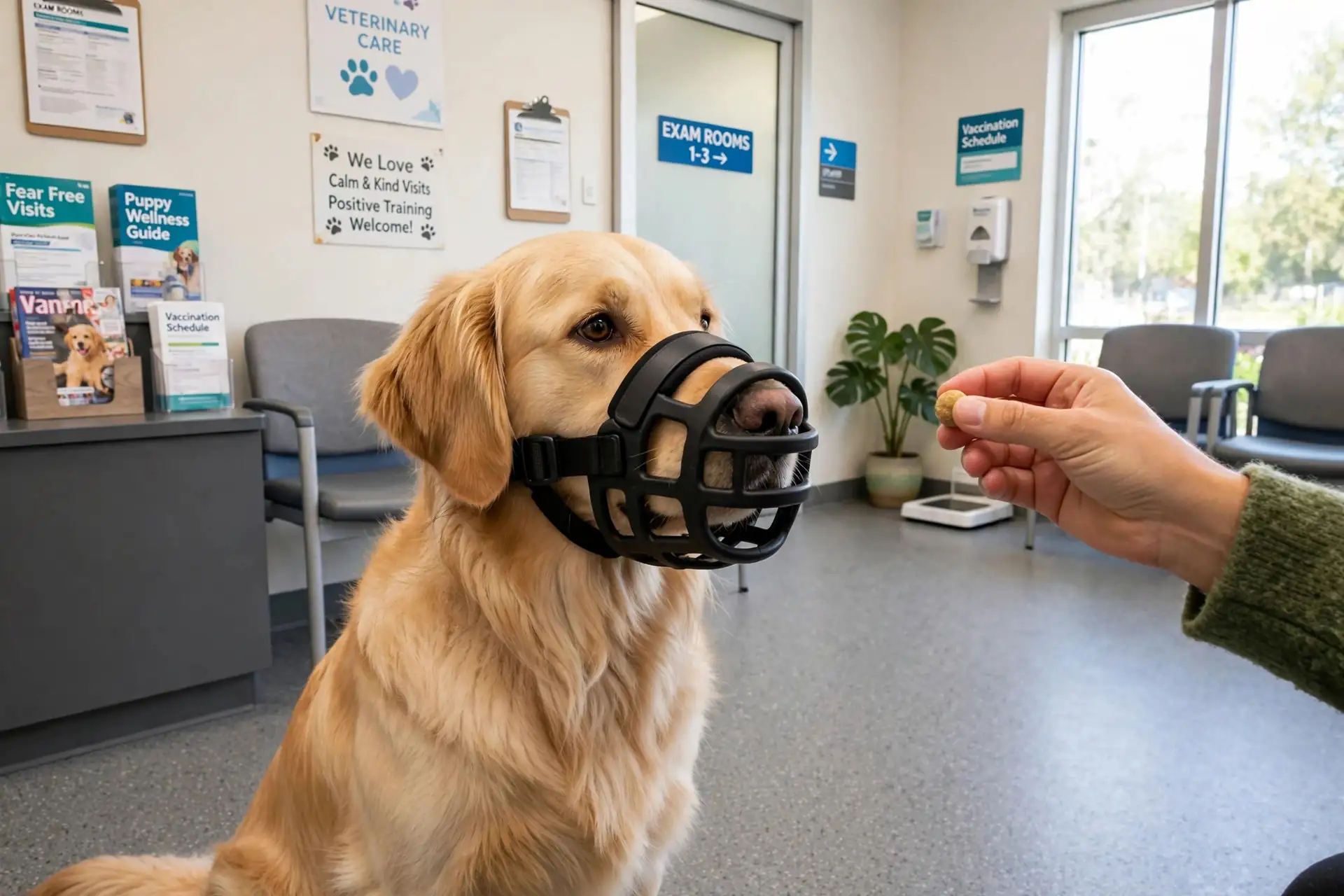
A basket muzzle lets a dog pant, drink, and take food rewards, which is exactly what training needs. Look for one long enough that it doesn’t press on the nose and roomy enough that your dog can open their mouth fully to pant. Fabric sleeve muzzles that hold the mouth closed are meant for very brief handling only; they aren’t suitable for training or a long wait, because a dog that can’t pant can overheat.
Your vet team can usually help with sizing if you’re unsure.
Dog muzzle training for vet visits, step by step
This is ordinary positive reinforcement training applied to one object. Keep sessions to a few minutes, use food your dog loves, and stop while they’re still keen. Only move on when your dog is relaxed and eager at the current step.
- Show the muzzle, reward, and put it away. Repeat until your dog brightens when it appears.
- Hold the muzzle with a reward at the front of the basket so your dog chooses to push their nose in.
- Gradually ask for a longer nose-in before the reward arrives.
- Fasten the strap for a second, feed through the basket, then unclip. Build the time up slowly.
- Pair wearing it with everyday good things: a short walk, a sniffing game, the minutes before dinner.
- Practice gentle handling while it’s on, like touching paws and ears, or stepping onto a bathroom scale.
Signs you’re moving too fast
Pawing at the muzzle, rubbing the face on the floor, freezing, turning away, lip-licking, or whale eye (the whites of the eyes showing) all mean go back a step. The signals described in a dog’s warning signs before a bite are the same ones to watch for here.
Never force the muzzle on during practice, and never use it as a punishment. Either one teaches your dog the muzzle means trouble, which undoes the work.
On the day
Bring the muzzle and plenty of favorite rewards, and put it on in the car park or a quiet corner before stress builds, not in the exam room. Tell the staff your dog is muzzle trained; many clinics welcome it, because it lets them work calmly and gently. Clinics that use low-stress handling approaches often have extra suggestions, and Fear Free Happy Homes has owner resources on preparing a pet for vet visits.
Keep it in the routine
Pull the muzzle out for a minute or two every week or so, even when no appointment is coming up. A muzzle that only appears before vet visits soon becomes a predictor of vet visits.
A muzzle isn’t a label that your dog is dangerous. It’s closer to a seatbelt: dull, sensible, and best put on before anything happens.
Why muzzle training matters before you need it
Most dogs meet a muzzle for the first time at the vet, when they are already stressed, in pain, or frightened. That is the worst possible introduction. A dog that has never worn a muzzle will panic at the sensation, fight the restraint, and associate the muzzle with the worst moments of its life. The result is a dog that is harder to handle at exactly the moment when calm handling matters most.
Muzzle training done in advance changes this completely. A dog that has learned to associate the muzzle with treats and relaxed practice will accept it the way it accepts a collar: as a neutral fact of life. Veterinary visits become smoother, staff can work safely, and the dog experiences less stress. Training takes weeks, not minutes, which is why starting now matters even if your next vet visit is months away.
Choosing the right muzzle type
Not all muzzles are equal, and the wrong type can make training harder. Basket muzzles, usually made of plastic, wire or silicone, are the gold standard for vet visits. They allow the dog to pant, drink and take treats, which means the dog can be rewarded while wearing it and will not overheat. This breathability is essential for any muzzle worn longer than a few minutes.
Fabric sleeve muzzles that hold the mouth shut are only suitable for very brief use, since they prevent panting. They have their place in emergencies but are poor choices for training or for vet visits where the dog may wait in the muzzle. Measure your dog’s snout carefully and follow the manufacturer’s sizing guide; a muzzle that is too tight causes distress and one that is too loose can be pawed off. If your dog is also learning to accept handling, our guide to common mistakes trimming a dog’s nails at home covers similar desensitization principles.
The training progression
Effective muzzle training follows a gradual sequence where each step is easy before the next begins. Rushing is the main reason training fails.
Step one: the muzzle predicts treats
Present the muzzle, let the dog sniff it, then treat. Repeat until the dog sees the muzzle and looks happy. Do not try to put it on yet. This stage builds the core association: muzzle equals good things.
Step two: nose in the muzzle voluntarily
Smear peanut butter or squeeze cheese inside the muzzle and let the dog push its nose in to lick it out. Do not fasten anything. The dog should be choosing to put its face in, repeatedly and happily. Sessions should be short, a few minutes at most, ending while the dog still wants more.
Step three: brief fastening with rewards
Once the dog eagerly shoves its nose into the muzzle, fasten it for a few seconds, treat generously through the basket, then remove it. Gradually extend the duration over many sessions. If the dog paws at the muzzle or freezes, you advanced too fast; drop back a step.
Step four: real life practice
Practice with the muzzle on during calm activities: short walks, hanging out in the living room, brief car rides. The goal is a dog that barely notices the muzzle because wearing it has always been paired with normal pleasant life, not just vet visits.
Common training mistakes
Forcing the muzzle on is the biggest error. One bad forced experience can undo weeks of positive work, because fear memories form fast and fade slowly. If the dog struggles, the session went too far; end calmly and try an easier step next time.
Another mistake is training only right before a vet visit. The dog quickly learns that muzzle practice predicts the scary place, which poisons the association. Train during neutral times so the muzzle means nothing in particular. Inconsistent sessions are a third problem; a few minutes most days beats an occasional long session.
What to tell your vet
Let the clinic know in advance that your dog is muzzle trained. Staff will appreciate it, and they can plan to use your muzzle rather than reaching for a clinic one the dog has never worn. Bring the muzzle to every visit even if you expect it will not be needed; having it ready avoids a scramble if the dog becomes painful or frightened during examination.
If your dog has a bite history or severe handling anxiety, discuss this openly when booking. Vets would far rather know in advance and prepare than be surprised. The AVMA’s pet owner resources include guidance on preparing anxious pets for veterinary care that complements muzzle training well. For the first visit specifically, our checklist for a first vet visit with a new pet covers what to bring and what to expect.
Frequently Asked Questions
How long does muzzle training take?
Most dogs reach comfortable acceptance in two to six weeks of short daily sessions. Fearful or previously traumatized dogs may take longer. There is no prize for speed; a solid slow training beats a rushed fragile one.
Will a muzzle make my dog more aggressive?
No. A properly introduced muzzle does not change temperament. Dogs do not become aggressive because of equipment; they become aggressive from fear, pain or poor handling, which good training actually reduces.
Can my dog pant and drink with a muzzle on?
With a properly fitted basket muzzle, yes. This is why basket muzzles are recommended over fabric sleeves for anything beyond momentary use. Always ensure the fit allows full panting.
Should I muzzle my dog at the vet even if it has never bitten?
Many clinics muzzle as a precaution with fearful dogs, and a trained dog accepts this calmly. Discuss with your vet; the decision depends on your dog’s stress level and the procedures planned.
My dog panics when I bring out the muzzle. What now?
Go back to the very first step: muzzle present, treats appear, no contact required. Rebuild the positive association from scratch at the dog’s pace. If panic is severe, consider working with a certified professional dog trainer experienced in desensitization.
Conclusion
A muzzle trained dog is a safer, calmer patient, and the training itself deepens your dog’s trust in you. Start early, go slowly, keep every session positive, and you will have a dog that accepts the muzzle as calmly as its collar. For more dog care guides, visit the Factblaze homepage.
Related Articles
- What Makes a Dog Park Safe to Visit
- What Makes a Dog Bed Worth the Cost
- A Checklist for a First Vet Visit With a New Pet
More pet guides worth reading
- Common mistakes when leash training a puppy
- What makes a dog bed worth the cost
- What separation anxiety in dogs looks like
- What enrichment toys do for a bored dog
- Slip lead vs. regular collar for walks
- Wet vs. dry food for picky eaters
- How to tell if a puppy is teething versus just chewing
- Common mistakes people make during car rides with a dog