A Checklist for the First 24 Hours in a New City
Common day-one mistakes worth avoiding
Most rough first days come down to a handful of avoidable errors. The biggest one is over-scheduling: landing at noon, then booking a 3 p.m. walking tour, a 6 p.m. dinner reservation, and a sunset viewpoint on top of it. Flights land late, immigration lines crawl, and tired travelers move slowly. Give arrival day one loose plan at most, and treat everything else as a bonus.
Money mistakes come next. The exchange counters and the “convenient” ATM in the arrivals hall usually offer the worst rates of the entire trip, and the dynamic currency conversion prompt — “would you like to pay in your home currency?” — quietly adds a markup every time it appears. Walk past them all, withdraw a modest amount from a bank-run ATM in town, and always choose to be charged in the local currency.
Transport is the other classic trap. The drivers who approach you inside the terminal offering a cheap taxi ride are almost never the cheap option, and unlicensed rides are where most arrival-day scams happen. Decide your route before you walk outside, use the official taxi rank or the city’s main ride-hailing app, and agree on the price or confirm the meter is running before the car moves.
Finally, don’t neglect the basics: eat a real meal, drink more water than feels necessary, and avoid planning anything that requires sharp thinking. Dehydration and an empty stomach make every small problem feel twice as big, and a tired brain is a gullible one. The landmarks will still be there tomorrow.
A sample first-day schedule
If you like structure, here is a simple rhythm that works for a typical afternoon arrival. Shift it earlier or later to match your landing time — the order matters more than the exact hours.
Hours 0–1: get out of the airport. Clear immigration, collect your bag, get your phone working, and head straight to the transport option you chose in advance. Resist the souvenir shops and the exchange counters; you can do all of that in town, for less.
Hours 1–2: check in and drop your bags. Confirm your room, stash your passport and backup card in the safe, and change into comfortable clothes. Plug in your phone and a power bank so everything is charging while you’re out.
Hours 2–4: walk the neighborhood loop. Do the ten-minute orientation walk from the checklist above: pharmacy, grocery store, transit stop, somewhere to eat. Buy water, snacks, and anything you forgot — this is also when you pick up a transit card if you still need one. If you ran through a week-before checklist for an international trip before leaving, most of this is already handled and the walk is just confirmation.
Evening: eat early and stay out in the light. Have dinner at a normal local hour rather than when your body thinks it’s dinnertime back home. A gentle evening walk in daylight does more for jet lag than any supplement. Then go to bed at a reasonable local time, even if you don’t feel sleepy yet — lying in a dark, quiet room still helps your body clock shift.
Before sleep: set up tomorrow. Lay out what you need for the morning, check the transit route to your first stop, and set two alarms — your phone plus a backup. Five minutes of prep tonight buys you a calm morning.
Pack a day-one bag you can grab and go
What To Do If You Arrive and Nothing Goes as Planned
Your flight landed, and everything is already wrong. Don’t try to fix it all at once. Run a first-hour triage in this order: connectivity, shelter, money.
No SIM and no wifi means you can’t fix anything else, so this comes first. Most international airports have free wifi — connect long enough to message your hotel and download an offline map. If the airport sells local SIMs, buy one at the arrivals kiosk; it takes ten minutes and solves every communication problem for the rest of the trip. An eSIM bought before departure is even better, but don’t beat yourself up if you skipped it.
If your booking fell through or the hotel is unreachable, don’t wander the city looking for alternatives. Open a booking app, filter for places within walking distance of where you are right now, and book one night — just one. You can find something better tomorrow with a clear head. Hostels and airport hotels are your fastest options.
If transit is closed or the taxi line is a mile long, sit down somewhere safe and visible — an airport cafe, a hotel lobby — and wait 30 minutes. Night buses start, crowds thin, and app-based rides get cheaper. Rushing into an unmarked taxi at 2 a.m. in an unfamiliar city is how bad stories start.
Give yourself permission to lose the first day. A calm recovery beats a frantic one every time.
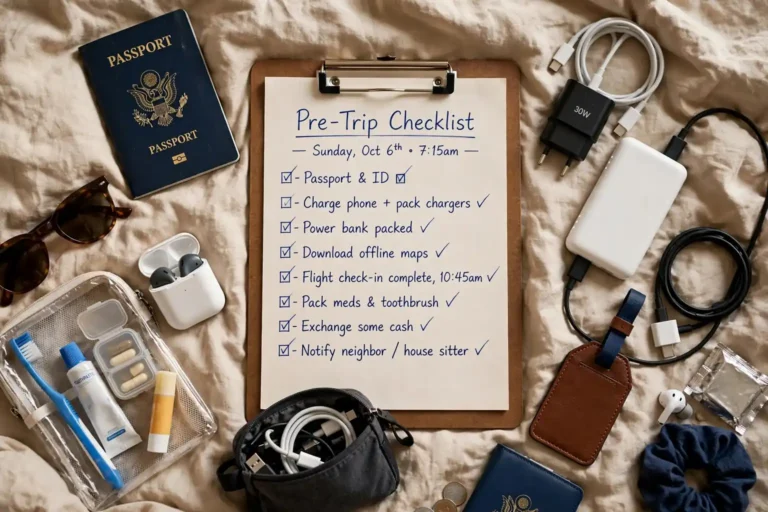
Your first day goes much smoother when everything you need before check-in lives in one small bag: phone and charger, a power bank, your passport and a pen, an offline copy of your accommodation booking, a water bottle, snacks, basic toiletries, a change of shirt, and any medication. That way a delayed room, a long immigration line, or a wrong turn on the metro never turns into a crisis. Our guide to packing a carry-on for a two-week trip covers the same idea in more detail — the day-one kit is just the first layer of it.
Keep your valuables split up: one card and some cash in your wallet, a backup card and emergency cash somewhere separate. If your main wallet goes missing on day one, the trip continues. If everything was in it, the trip stops while you sort out replacements.
Frequently Asked Questions
Should I buy a local SIM card at the airport?
Usually yes, if you need plenty of data or will be in the country for more than a few days. Airport kiosks are convenient and the prices are often reasonable, though a shop in town can be cheaper. If your phone supports eSIM, buying and installing one before you fly is even easier — you land already connected.
How much cash should I carry on the first day?
Enough for a taxi or transit fare, a meal, and small purchases — in most cities that’s the equivalent of $40 to $60. You don’t need a week’s worth of cash on day one. ATMs in town offer better rates than the airport, and cards are accepted in more places than ever.
Is it safe to walk around on my first evening?
In most visitor-friendly cities, yes. Stick to well-lit, busy streets near your accommodation, keep your phone and wallet secure, and trust your instincts. Ask your hotel or host which nearby streets to prefer and which to skip after dark — locals give the best advice in one sentence.
What if my flight arrives very late at night?
Pre-book your transfer so a driver or hotel shuttle is waiting — late-night arrivals are the worst time to figure out transport on the spot. Let your accommodation know your arrival time so check-in goes smoothly, and move the neighborhood walk and errands to the next morning. Eat something, hydrate, and sleep; day one starts when you wake up.
One last tip: take a photo of your hotel’s business card, or of the address written in the local script, and keep it in an easily reachable album on your phone. If your battery dies, your data runs out, or you simply can’t explain where you’re staying, that photo is your way home. It takes ten seconds and has rescued more trips than any app.