How to Choose Luggage That Will Survive Checked Baggage
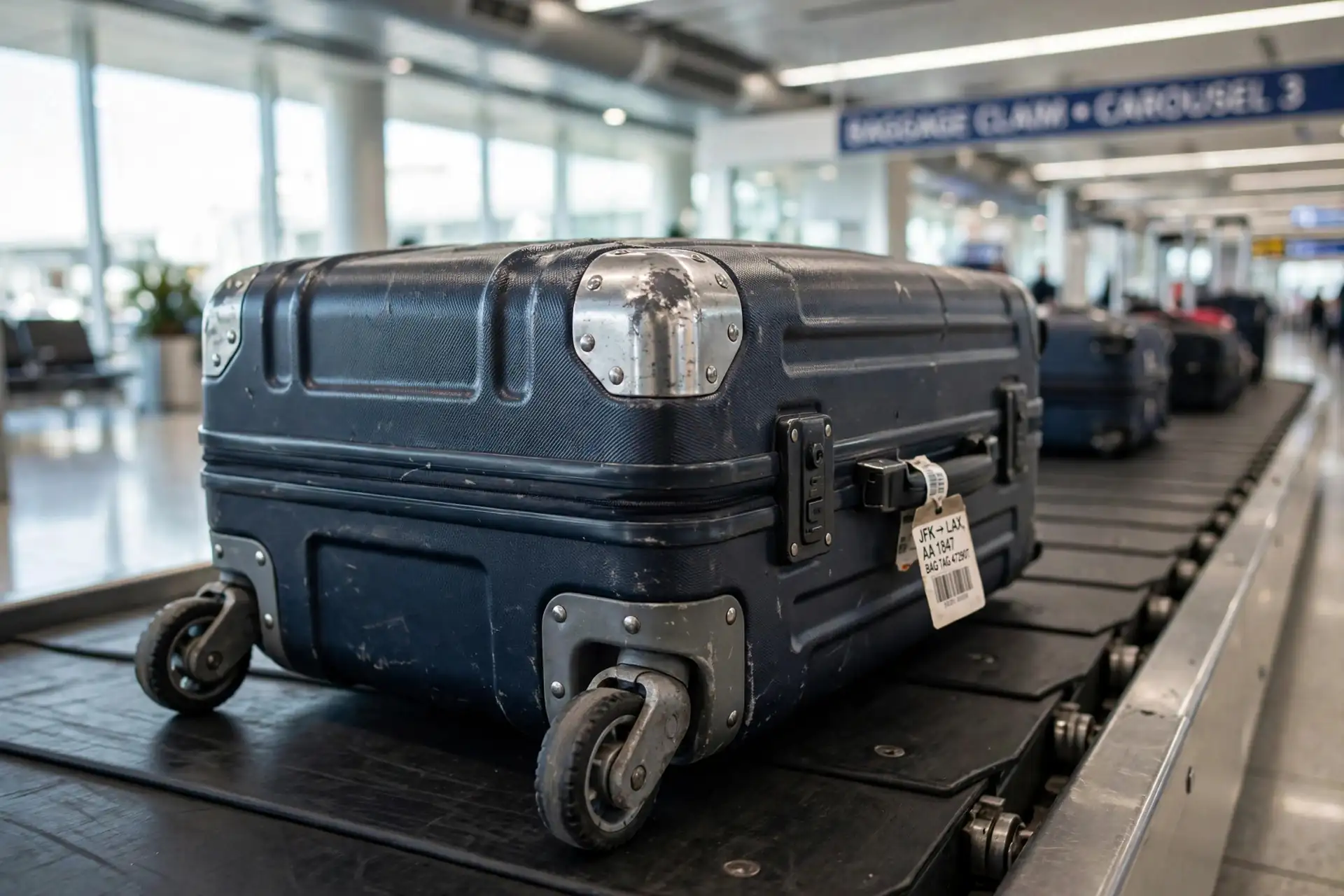
The bags that survive checked baggage are the ones with recessed or replaceable wheels, a telescoping handle that locks without wobble, and a shell or fabric that flexes instead of cracking. Brand name and price matter less than those three parts, because they are where durable checked luggage almost always fails first.
Baggage handling is rough in predictable ways. Bags are dropped onto belts, stacked under heavier cases, pushed down chutes, and pulled by whatever part sticks out. Anything that protrudes takes the hits, so shop by weak points rather than by looks.
Start with the wheels and handle
Wheels break more than anything else. Spinner cases with four exposed wheels roll beautifully through an airport, but each wheel sits on a small post that can snap when the bag lands on a corner. Two-wheel rollers with wheels set into the frame give up some convenience and gain a lot of toughness. If you prefer spinners, look for wheels that sit partly recessed and can be unscrewed and replaced; some makers sell replacement sets, which turns a broken wheel into a ten-minute fix instead of a new bag.
Next, extend the handle in the shop and shake it. A little play is normal. A handle that rattles side to side or sticks halfway will only get worse after a few trips through a conveyor system.
Hard shell or soft side for durable checked luggage
Neither wins outright. Polycarbonate shells flex under impact and spring back, which is why they dominate the checked-bag market. Cheaper ABS shells are easier on the wallet but more prone to cracking, especially in a cold cargo hold. High-denier or ballistic nylon softside bags shrug off scuffs, give a little when overpacked, and rarely split, though a sharp edge on a belt can tear them.
A few details separate a bag that lasts from one that doesn’t:
- Zippers: chunky coil or chain zippers that don’t strain when the bag is full.
- Corners: rubber or reinforced corner guards on hard cases.
- Carry handles: at least two, top and side, anchored through the frame rather than stitched only to fabric.
- Feet: small feet on the side so the case doesn’t drag on its shell when laid flat.
- Warranty: written cover for airline damage, not just manufacturing defects.
That last point tells you how much a brand trusts its own product. Read the fine print, because many “lifetime” warranties exclude handling damage entirely.
What to do when a bag comes back damaged
Even a well-built case can get crushed. Photograph it at the carousel and report the damage to the airline before you leave the baggage hall, since claim windows for damaged bags are short. If you’re flying within or from the EU, the EU’s official air passenger rights page explains the time limits and what compensation covers.
A tough bag lets you pack more freely, but weight still counts: overweight fees are one of the easiest charges to trip over, as covered in common mistakes people make booking budget airlines. And if you can manage without checking a bag at all, packing a carry-on for a two-week trip is more doable than it sounds.
Before you buy, flip the bag over and look at the wheels. If they look like an afterthought, they’ll be the first thing to go.
What Checked Baggage Actually Endures
Checked luggage lives a harder life than most owners imagine. It is thrown, stacked under hundreds of pounds of other bags, dragged across tarmac, exposed to rain on open carts, and squeezed through sorting machinery. Airline baggage handling is not gentle by design. It is optimized for speed at enormous scale. A bag that survives this environment for years needs to be engineered for abuse, not just styled for the terminal.
The failure points are predictable: wheels that shear off on curbs, handles that jam or snap under load, zippers that burst when the bag is overpacked, and shells that crack on impact. Each of these has a construction solution, and learning to recognize the solutions is what separates luggage that lasts a decade from luggage that dies on its third trip. The same durability thinking behind buying a coat to last ten winters applies here: pay for engineering once rather than replacing repeatedly.
Hard Shell vs Soft Sided for Checked Bags
Hard shell cases, typically polycarbonate or polypropylene, resist impact and water brilliantly. They protect fragile contents and shrug off rain on the tarmac. Their weaknesses are cracking under extreme impact, limited expandability, and scuffing that bothers the aesthetically sensitive. Soft sided bags, usually ballistic nylon or polyester, absorb impact by flexing, offer exterior pockets for access, and often expand. Their weaknesses are water penetration and less protection for fragile items.
For checked baggage specifically, hard shell has the edge for most travelers because impact and water are the dominant threats in the hold. Choose polycarbonate over ABS for the best impact resistance. If you prefer soft sided, look for high denier ballistic nylon, ideally 1680D, with water resistant coating. Either way, avoid the cheapest options in both categories, where the materials are too thin to provide the advertised protection.
Wheels, Handles, and Zippers: The Mechanical Trinity
Wheels fail first on most luggage. Spinner wheels, the four wheel design, maneuver beautifully in terminals but protrude vulnerably and snap off on curbs and stairs. Two wheel rollers recess their wheels into the body, sacrificing some maneuverability for major durability gains. For checked bags that you will not be rolling far, two wheels are the tougher choice. Whatever the design, look for wheels that are replaceable: screwed on rather than riveted, with replacements available from the manufacturer. Sealed bearings roll smoother and last longer than bushings.
The telescoping handle should extend and retract smoothly with a confident lock at full extension. Wiggle it side to side. Excessive play indicates loose tolerances that will worsen. The handle tubes should feel substantial, ideally aluminum rather than thin steel or plastic. Check that the handle recesses fully flush, since a partially protruding handle is a snagging target for machinery. Zippers on checked bags take enormous stress. Look for large gauge coil zippers from YKK or equivalent, and consider bags with lockable zipper pulls that can be secured with a TSA lock.
Seams, Corners, and Reinforcement
Corners take the worst impacts, so check for reinforced corner guards on hard shells and double layered fabric with bumper protection on soft bags. Seams should be straight, tight, and ideally double stitched or bound. Grab the bag by one handle and lift it loaded. The structure should feel rigid and unified, not flexing and twisting. A bag that feels flimsy empty will feel disastrous loaded and thrown.
Size, Weight, and Airline Realities
Know your airlines’ size and weight limits before buying, since oversized bags incur fees that quickly exceed any luggage savings. Most airlines cap checked bags at 62 linear inches and 50 pounds for standard economy. Weigh your packed bag on a bathroom scale before the airport. A luggage scale costs ten dollars and prevents fifty dollar overweight fees.
Consider the empty weight of the bag itself. A fourteen pound empty suitcase leaves only thirty six pounds for contents before overweight fees. Lightweight construction matters more than most buyers realize. The sweet spot is a bag light enough to maximize packing allowance while substantial enough to protect contents. Ultra light bags achieve their weight by thinning materials, so verify durability has not been sacrificed. For organizing what goes inside efficiently, packing a carry on for two weeks teaches compression principles that apply to checked bags too. More travel gear advice is at Factblaze.
Frequently Asked Questions
Are expensive suitcases worth it?
Up to a point. The jump from a fifty dollar bag to a two hundred dollar bag buys dramatically better wheels, handles, zippers, and materials. Beyond three hundred dollars, you are often paying for brand, marginal weight savings, or design. Focus on the mechanical components rather than price as a quality proxy.
Should I get a TSA lock for checked luggage?
Yes. TSA agents will cut non compliant locks for inspection, damaging the bag. TSA accepted locks can be opened with a master key and relocked. They deter casual theft while allowing legitimate inspection. Lock the bag for every checked flight.
How do I protect fragile items in checked luggage?
Center them surrounded by soft clothing on all sides, away from the bag’s walls. Hard shell cases protect better than soft. For truly fragile or valuable items, carry on is always safer than any checked arrangement. Consider shipping irreplaceable items separately.
What is the most durable luggage material?
Polycarbonate for hard shells offers the best impact resistance to weight ratio. For soft bags, 1680 denier ballistic nylon is the durability standard. Aluminum is extremely tough but heavy and expensive. Avoid thin ABS plastic, which cracks readily.
How long should good luggage last?
Quality checked luggage should survive five to ten years of regular travel. Wheels and handles may need replacement within that span, which is why replaceable components matter. If a bag fails structurally in under three years of normal use, it was not well made.
Conclusion
Durable checked luggage comes from prioritizing the mechanical components: replaceable quality wheels, a solid telescoping handle, large gauge zippers, reinforced corners, and honest materials. Match hard or soft shell to your priorities, respect airline size and weight limits, and remember that the empty weight of the bag is part of its cost. Buy the engineering once and the bag becomes a background detail of travel rather than a recurring expense. For independent luggage testing, Wirecutter’s luggage reviews evaluate durability through structured testing.
Related Articles
- How to Choose a Travel Adapter That Works Everywhere
- Carry-On vs Checked: A Packing Checklist for Long Trips
- Common Mistakes People Make Estimating a Daily Travel Budget
A good bag is only half the job — pair it with the ultimate vacation packing list to make sure every pocket earns its place.