How to Pack a Toiletry Bag That Meets Carry-On Rules
The carry-on toiletry bag rules in brief
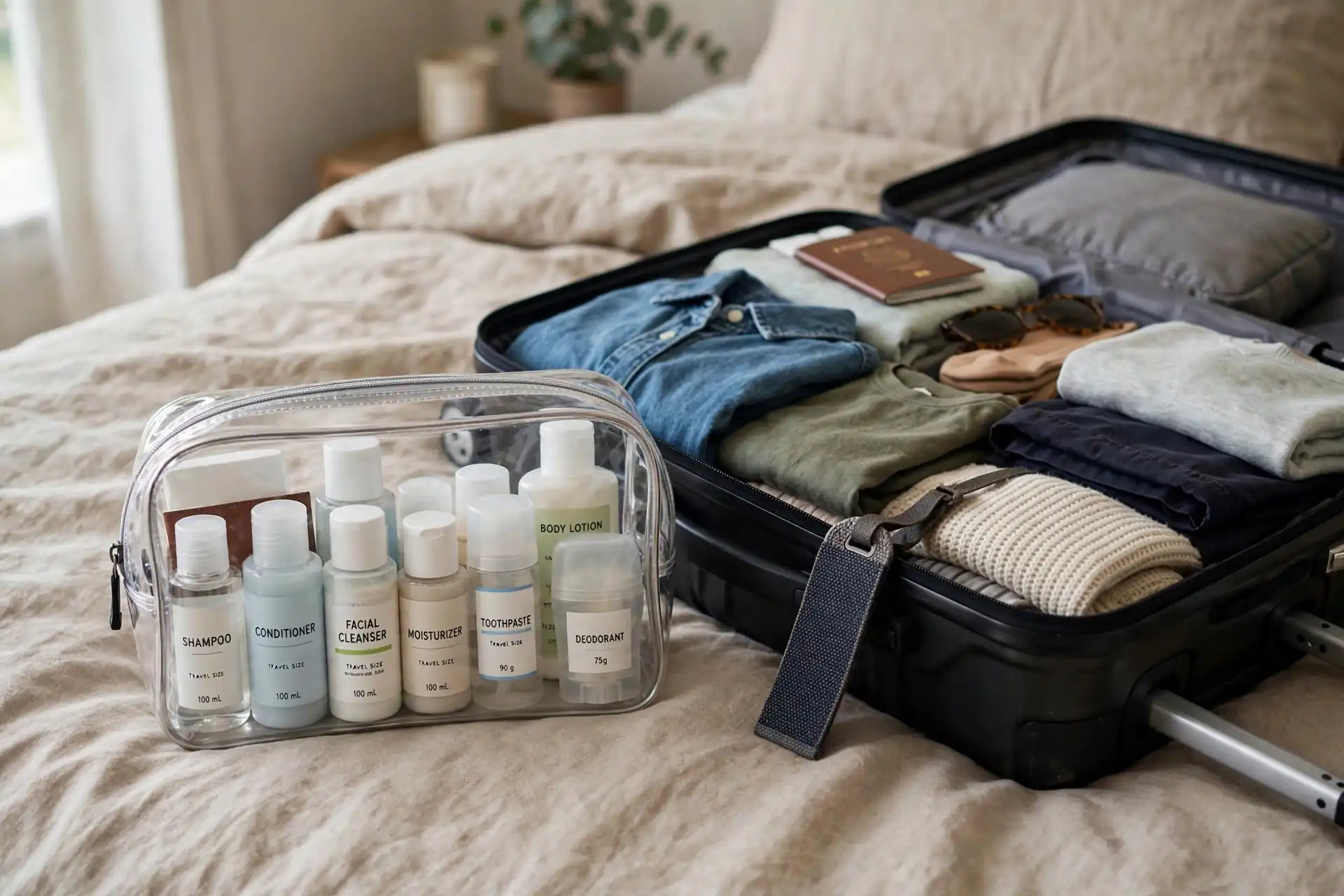
For U.S. flights, carry-on toiletry bag rules are short and strict: each liquid, gel, cream, or aerosol must be in a container of 3.4 ounces (100 milliliters) or less, all of those containers must fit in one quart-sized bag, and that bag should come out of your carry-on at screening. Get those right and your bag is far less likely to be pulled aside.
This reflects the TSA liquids rule as of September 2026. Other countries set their own limits, and some airports with newer scanners handle liquids differently, so check the screening authority for every airport you’ll depart from, including the flight home.
Container size is what counts
The limit applies to the size printed on the container, not how much is left inside. A half-empty 6-ounce bottle of sunscreen still gets confiscated. Buy travel-size versions or decant into refillable bottles that are clearly marked with their capacity.
People are often surprised by what counts as a liquid. Toothpaste, mascara, lip gloss, hair gel, peanut butter, and deodorant sticks in gel form all fall under the rule. If you can spread it, pump it, spray it, or pour it, assume it counts.
Choosing the bag itself
A clear, flat, zippered bag works better than a zip-top freezer bag that splits after two trips. Look for one that meets the quart size without bulging, since an overstuffed bag that won’t close is a common reason for a secondary check. Pack it last, near the top or in an outside pocket, so it comes out in one motion at the checkpoint.
Cutting down what goes in it
Space in that one bag disappears fast. Solid toiletries free up room because they don’t count as liquids: bar shampoo, bar soap, solid conditioner, powder foundation, and toothpaste tablets all skip the bag entirely. Multi-use products help too, like a tinted moisturizer with sunscreen.
Ask what you truly need before you land. Hotels often supply soap and shampoo, and most destinations sell basics if you run out. The larger versions can go in checked luggage if you’re checking a bag anyway.
Things that are handled differently
Medications, infant formula, and breast milk are exempt from the quantity limits in the U.S., but you should tell the officer at the start of screening and expect extra checks. Keep these separate from your toiletry bag so they don’t hold up the rest of your screening.
Duty-free liquids bought abroad have their own conditions when you connect through the U.S., including a sealed, tamper-evident bag and a receipt. Leave the seal intact until you reach your final destination.
A quick pre-flight check
Lay everything out the night before and check each label for its size. It’s a two-minute job that fits neatly into a night-before-a-flight checklist. If you’re fitting a longer trip into one bag, how to pack a carry-on for a two-week trip covers the rest of the layout.
Security officers have the final say on any item. When something is borderline, pack it in checked luggage or leave it at home rather than arguing about it at the belt.
The humble toiletry bag is where packing theory meets security-line reality. A well-packed one sails through screening and covers a week of grooming. A badly packed one gets confiscated item by item while the line builds behind you. The rules are specific, the exceptions matter, and a little strategy goes a long way.
Mastering the 3-1-1 rule
The TSA’s liquid rule governs what flies in the cabin. Understanding it precisely prevents most toiletry casualties.
What counts as a liquid
More than you think. Gels, creams, pastes, aerosols, and roll-ons all count. Toothpaste, deodorant gel, sunscreen, and liquid foundation are all subject to the limit. Stick deodorant, solid perfume, powder, and bar soap are not. When in doubt about a semi-solid, assume it counts. The TSA’s official liquids rule page is the definitive reference and worth bookmarking before any trip.
The container math
Each container must be 3.4 ounces (100ml) or less, all containers must fit in one quart-size clear resealable bag, one bag per passenger. Note it is container size, not contents: a half-empty 6-ounce bottle is prohibited. Decant into travel-size containers rather than bringing full sizes. Our broader packing guide on what to carry on versus check explains how toiletries fit into the overall luggage strategy.
Common 3-1-1 failures
The usual victims: full-size shampoo, large sunscreen bottles, full toothpaste tubes, and aerosol dry shampoo over the limit. Also watch for items people forget are liquids: contact solution, liquid makeup, and gel hand sanitizer. Lay everything out against the quart bag before packing; if it does not fit comfortably, something must go in checked luggage.
Building the bag: what to include
A complete travel toiletry kit covers hygiene, grooming, and minor contingencies without dead weight.
The core kit
Toothbrush and travel toothpaste, deodorant, shampoo and conditioner in travel sizes or solid bars, soap or body wash, moisturizer, sunscreen, lip balm, razor and small shaving cream, hairbrush or comb, and any daily personal care items. Solid toiletries, shampoo bars, conditioner bars, solid deodorant, earn their place by escaping liquid limits entirely.
Just-in-case items
A few adhesive bandages, pain reliever packets, antacid tablets, tweezers, nail clippers, and a small sewing kit. These weigh almost nothing and rescue trips regularly. Contact lens wearers should pack solution within liquid limits plus a spare pair of lenses or glasses.
What to leave home
Full-size anything, duplicate products, the entire skincare shelf, and tools like full-size scissors. Be ruthless: most trips need a fraction of the home routine. If you are flying budget airlines with tight baggage rules, every ounce matters, as our article on booking budget airline mistakes explains.
Choosing and organizing the bag itself
The bag matters almost as much as its contents.
Bag features that help
A hanging hook is the single most useful feature, turning any bathroom into an organized station. Clear or mesh compartments let you find things without unpacking. Water-resistant lining contains leaks. Size the bag to your actual kit; an oversized bag invites overpacking.
The leak problem
Pressure changes make bottles leak. Squeeze air out before closing, seal caps with a small square of plastic wrap, and store bottles upright in a sealed pouch within the bag. Double-bag anything you would hate to have explode: one leak can ruin everything it touches.
Security-line readiness
Keep the quart bag of liquids accessible at the top of your carry-on or in an outer pocket. In many airports you will still need to remove it for screening. Having it ready avoids the frantic repacking shuffle at the belt.
International variations
Liquid rules are broadly similar worldwide but not identical.
Key differences
Most countries follow a version of the 100ml rule, but bag sizes, enforcement strictness, and exceptions vary. Some airports have relaxed rules with newer scanning technology; others enforce strictly. Duty-free liquids have their own sealed-bag system. Check the specific airports on your itinerary rather than assuming US rules apply everywhere.
Medications and special items
Prescription liquids, baby formula, and breast milk are generally exempt from the 3-1-1 limits but may require separate screening. Declare them proactively. Carry documentation for anything unusual.
Replacing items at your destination
One underused strategy is simply buying bulky toiletries on arrival. Sunscreen, full-size shampoo, and similar items are available everywhere and often cheaper than the hassle of packing them. This works best for longer stays where the per-day cost of a local purchase beats the packing space it saves. For short trips, travel sizes remain more economical. Either way, planning which items to bring versus buy is part of smart toiletry strategy, not an afterthought.
Frequently Asked Questions
Can I bring a razor in my carry-on?
Disposable razors and cartridge razors are allowed. Safety razors with removable blades are not; the blades must go in checked luggage. Electric razors are fine in carry-ons.
Are solid toiletries really exempt from liquid rules?
Yes. Bar soap, shampoo bars, solid deodorant, and powder products do not count toward the 3-1-1 limit. This is why experienced travelers increasingly go solid: it frees the quart bag for the few liquids they truly need.
What if my toiletry bag is too big for the quart bag rule?
Only the liquids need to fit in the quart-size bag. Non-liquid toiletries can go elsewhere in your carry-on. If your liquids genuinely exceed one quart bag, the overflow must go in checked luggage.
Can I bring sunscreen in my carry-on?
Yes, in containers of 3.4 ounces or less within your quart bag. Full-size sunscreen bottles must be checked. Solid sunscreen sticks are exempt from liquid limits and popular with frequent travelers.
Do I need to take toiletries out at security?
In the US, the quart bag of liquids typically still needs separate screening, though this varies by airport and scanner technology. Keep it accessible. Laptops and large electronics have separate rules.
Conclusion
A carry-on toiletry bag is a solved problem: travel sizes or solids, everything within 3-1-1, organized in a hanging bag with leak protection, liquids accessible for screening. The travelers who breeze through security are not lucky; they packed to the rule instead of around it. For more travel packing guides, visit the Factblaze homepage.