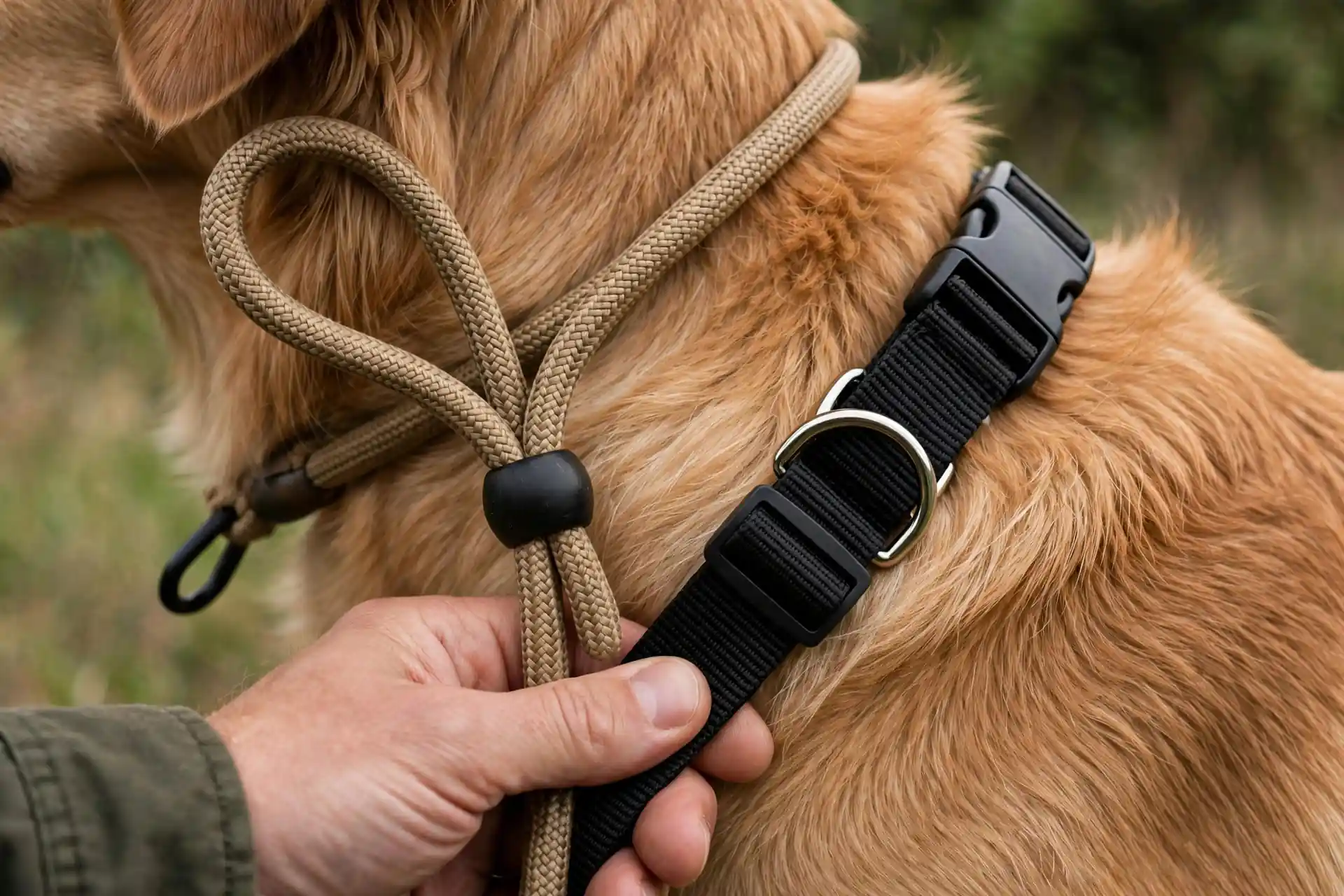
Choosing Between a Slip Lead and a Regular Collar for Walks
A slip lead is a single loop of leash and collar in one piece that tightens when a dog pulls and loosens the moment they stop, which makes it useful for short, controlled situations rather than everyday walking. A flat buckle collar holds a fixed size and doesn’t tighten at all, so it suits a dog who already walks on a loose leash without needing much correction. Which one belongs on your dog depends less on preference and more on how much pulling you’re managing.
What a Slip Lead Is Built For
Vets, groomers, and shelters reach for slip leads because they go on fast and stay secure on a dog whose size or temperament is unfamiliar. The loop tightens around the neck under tension, which gives a handler quick control without buckles or clips to fumble. That same tightening action is why a slip lead is a poor choice to leave on unsupervised: if the loop snags on furniture or a fence, it won’t release on its own. Some trainers also use a slip lead as a short-term tool for teaching loose-leash walking, but it works alongside consistent handling, not instead of it.
Where a Regular Collar Fits Better
A flat collar is the right choice for daily wear. It holds ID tags, doesn’t change size depending on how hard your dog pulls, and is easy for anyone in the household to clip a leash onto without training. The trade-off is that a flat collar puts no correction into play at all — if your dog pulls hard, the collar just moves with them, which can strain the neck over time on a dog that hasn’t learned to walk politely yet.
Fit and Safety Basics
- A flat collar should allow two fingers between the collar and the neck, snug but not tight.
- A slip lead sits high behind the ears, not resting on the throat, so it tightens quickly and releases quickly.
- Never leave a slip lead on a dog who isn’t actively being walked or handled.
- Check leash hardware and stitching for wear every few months, regardless of which style you use.
- Measure your dog’s neck before buying either one — sizing charts vary enough between brands that “medium” from one maker can be “large” from another.
Material matters too. A slip lead made from slick nylon rope tightens and releases more smoothly than one made from stiffer material, which matters if you’re using it for quick, repeated corrections rather than a single hold. A flat collar in leather or thick webbing tends to hold its shape longer than a thin fabric one, especially on a dog that swims or gets muddy often.
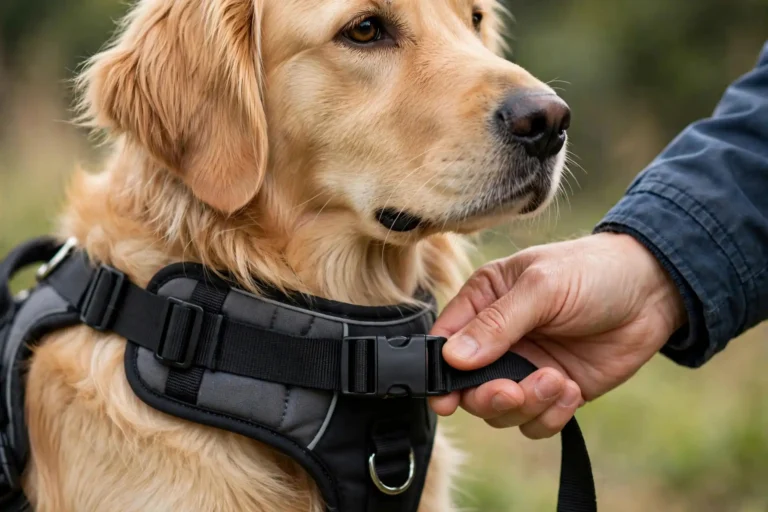
A well-fitted harness is worth considering too, especially for a dog that pulls hard or has a narrow neck prone to slipping collars — see our guide on choosing a dog harness that fits right. Whichever tool you pick, how you respond to pulling in the moment matters more than the equipment itself; our piece on positive reinforcement training day to day covers what consistent handling actually looks like. For more on loose-leash walking technique specifically, the American Kennel Club’s training resources are a solid starting point.
If your dog frequently backs out of a flat collar, that’s a fit problem worth solving directly — a properly sized collar or a well-fitted harness — rather than a reason to keep a slip lead on as a permanent fix.
How each tool works
A slip lead is a single loop of rope or nylon that functions as both collar and leash. It tightens when the dog pulls and loosens when the dog stops pulling. The entire mechanism is just friction and gravity, which is why slip leads rarely break but also why they demand a skilled hand. A regular collar and leash are two separate pieces: the collar sits at a fixed size around the neck, and the leash clips to it. This mechanical difference drives every practical distinction between them.
Slip leads are standard equipment in veterinary clinics, shelters and dog shows because they go on and off in seconds and fit any dog. Regular collars are the everyday default for most pet owners because they are familiar, comfortable for the dog, and carry ID tags. Neither is universally better; they solve different problems.
Control and training implications
The slip lead’s tightening action provides automatic feedback: pulling makes the loop snug, releasing makes it comfortable. Used correctly with light guidance, this teaches many dogs to stop pulling quickly. Used incorrectly, with harsh yanks or constant tension, it becomes a choking device that frightens the dog and can injure the trachea, especially in small breeds and breeds prone to tracheal collapse. The damage is not always obvious immediately; repeated pressure on the trachea can cause a chronic cough that appears weeks later and gets misattributed to illness.
A regular flat collar provides no automatic feedback, which makes it neutral for training: it neither rewards nor corrects. For basic obedience work this neutrality is fine, since the training comes from you rather than the equipment. But for a strong determined puller, a flat collar allows the dog to lean into the pressure indefinitely, which can also injure the neck over time. Our guide to choosing a dog harness that fits right covers the third option many trainers prefer for pullers.
Which dogs suit each option
Slip leads suit trained dogs that walk politely and situations needing quick on off, like vet visits. They are poor choices for persistent pullers, brachycephalic breeds, tiny dogs, and any dog with neck or trachea issues. Flat collars suit everyday wear and ID carrying for most dogs but are not training tools by themselves.
Safety considerations
The main safety concern with slip leads is misuse. A slip lead left on an unsupervised dog can tighten dangerously if it catches on something. Dogs should never wear slip leads in crates, during play with other dogs, or tied up alone. This applies doubly in cars: a slip lead is not a restraint system, and a sudden stop can injure a dog wearing one. Some slip leads include a stop that limits how tight the loop can go; this feature significantly improves safety and is worth seeking out.
Flat collars have their own risks. A loose flat collar can slip over the head if the dog pulls backward, which is how many escapes happen. The collar should be snug enough that you can fit two fingers underneath but not so loose that it slides. Breakaway collars exist for dogs that might get caught on branches or fences, though they are not suitable for leash walking.
Everyday practicality
For daily walks with an average dog, the flat collar and leash wins on simplicity and comfort. The dog wears the collar all day, tags stay on, and walks need no setup. Slip leads require the dog to be naked necked otherwise, meaning tags need a separate collar anyway, which somewhat defeats the minimalism.
Slip leads shine in transitional situations: taking an unfamiliar dog from kennel to exercise yard, quick vet office moves, or as a backup in the car. Rescue volunteers and shelter staff reach for slip leads constantly because they work on any dog instantly with no fitting required. Many owners keep one as a spare even if they walk daily on a flat collar. They pack small, fit any dog in an emergency, and work when you need equipment fast.
What trainers generally recommend
Most professional trainers suggest learning loose leash walking on a flat collar or harness, using training rather than equipment pressure to teach the behavior. Slip leads have legitimate uses but are not ideal learning tools for beginners, since timing and lightness matter enormously and novices tend toward too much pressure. If you are drawn to a slip lead for a pulling dog, a few sessions with a trainer on proper technique will prevent the common mistakes.
The American Kennel Club’s collar guide walks through the full range of collar types and their appropriate uses, which helps put slip leads in context among martingales, head halters and other options. For dogs that pull strongly, professional guidance helps; our guide to choosing a dog walker explains what handling standards to expect.
Frequently Asked Questions
Are slip leads cruel?
Not inherently. Used with light hands on an appropriate dog, they are a neutral communication tool. Used harshly or on the wrong dog, they can cause pain and injury. The tool matters less than the technique and the dog.
Can my dog wear a slip lead all day?
No. Slip leads are for supervised walking and handling only. They should come off for crating, unsupervised time and play, since the loop can tighten dangerously if caught.
Will a slip lead stop my dog pulling?
It may reduce pulling through feedback, but lasting change comes from training. Many dogs pull on slip leads just as they do on flat collars if the underlying behavior is not addressed.
What is the stop on a slip lead?
A small tab or toggle that limits how far the loop can tighten. It prevents the lead from choking the dog even under full tension and is an important safety feature to look for.
Should puppies use slip leads?
Generally no for everyday walking. Puppies are learning and need patient training on forgiving equipment. A flat collar or well fitted harness is the better starting point for young dogs.
Conclusion
Choose the slip lead for quick handling of trained dogs and transitional situations; choose the flat collar for everyday comfort and simplicity. Match the tool to the dog and the moment, learn proper technique, and prioritize training over equipment. For more dog care guides, visit the Factblaze homepage.
Related Articles
- Choosing Between Wet and Dry Food Textures for Picky Eaters
- Common Mistakes People Make Choosing a Dog Walker
- Choosing the Right Carrier for a Nervous Cat