How to Read a Dog’s Tail Wag Beyond Just “Happy”
Not always happy: a wag means a dog is emotionally engaged, and whether that feeling is friendly, nervous, or tense shows up in the tail’s height, speed, and stiffness. Read those three together with the rest of the body and you get a far clearer picture than the wag alone gives you.
Working out what different dog tail wags mean starts with knowing your own dog’s neutral tail. A beagle’s relaxed tail sits high; a greyhound’s hangs low and curves slightly between the legs. Watch your dog when it’s calm at home, and judge everything else against that baseline.
Height
A tail carried around its natural resting position usually means a relaxed dog. Held higher than normal, it signals alertness or arousal, which could be excitement about a ball or tension about another dog. Held low or tucked, it points to worry, fear, or an attempt to appease.
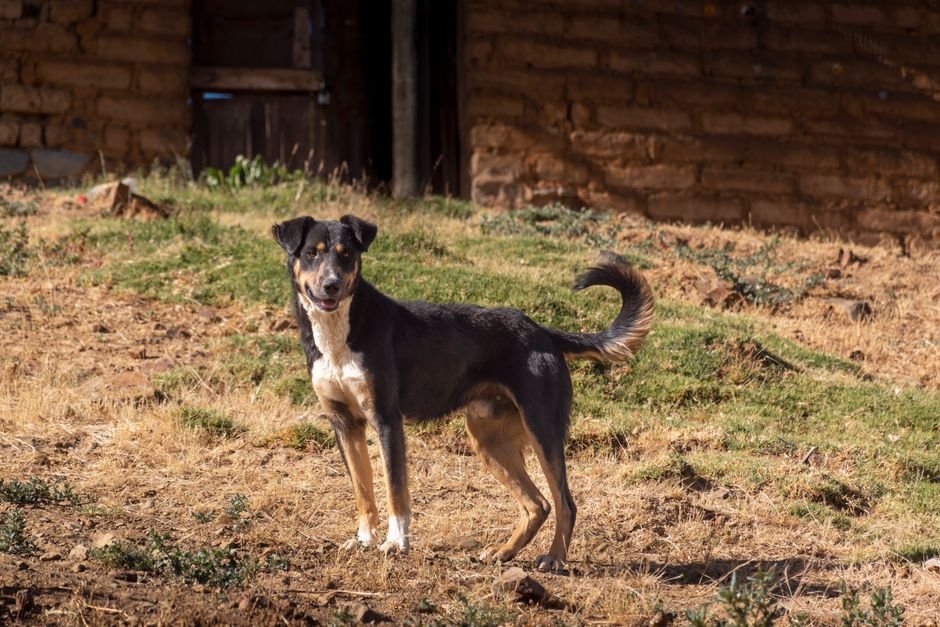
Tail shape changes the reading as well. Dogs with tightly curled tails, such as pugs and Akitas, carry them high almost all the time, so on those dogs a raised tail says very little on its own.
Speed and sweep
A loose, wide wag that swings the hips along with it is the friendly wag most people picture. A fast, small, twitchy wag, especially with the tail held high, looks more like a vibration and often shows up in a dog that is on edge. A slow wag at half-height can mean uncertainty, as if the dog is still deciding how it feels about what’s in front of it. A loose, circular wag, sometimes called a helicopter wag, is usually the most wholehearted greeting a dog gives, often saved for favorite people.
Stiffness
This is where people most often get caught out. A stiff, upright tail moving in short, tight arcs can come right before a snap, even though it’s technically wagging. It tends to arrive with other signs: a still body, a closed mouth, a hard stare. The guide to dog body language warning signs before a bite covers that cluster in more detail.
Direction
Researchers in Italy reported in 2007 that dogs tended to wag a little more to the right when they saw their owner and more to the left when facing an unfamiliar, imposing dog. It’s an interesting finding, but the difference is subtle and hard to spot in real time, so height and stiffness are more useful clues day to day.
What different dog tail wags mean in context
A tail is one signal among many. A loose, wiggly body, soft eyes, and an open mouth back up a friendly wag. Whale eye, pinned ears, or freezing in place override it. Small stress signals count too, and what a dog’s yawning signals in different contexts explains why a yawn in the vet’s waiting room isn’t about being tired.
Docked tails and naturally short ones make all of this harder, so owners of those dogs have to lean more on ears, face, and posture. For a broader overview of canine behavior, the American Kennel Club’s expert advice library is a useful reference.
Don’t let a wag alone decide whether to approach a dog you don’t know. Ask the owner first, then let the dog choose to come to you.