Foods That Are Genuinely Dangerous for Dogs
Some human foods are toxic to dogs, and the reason isn’t always obvious from the ingredient list. A handful of items sitting in most kitchens can cause serious illness in a dog, and knowing what they are is the easiest way to prevent an emergency.
Foods that are toxic to dogs
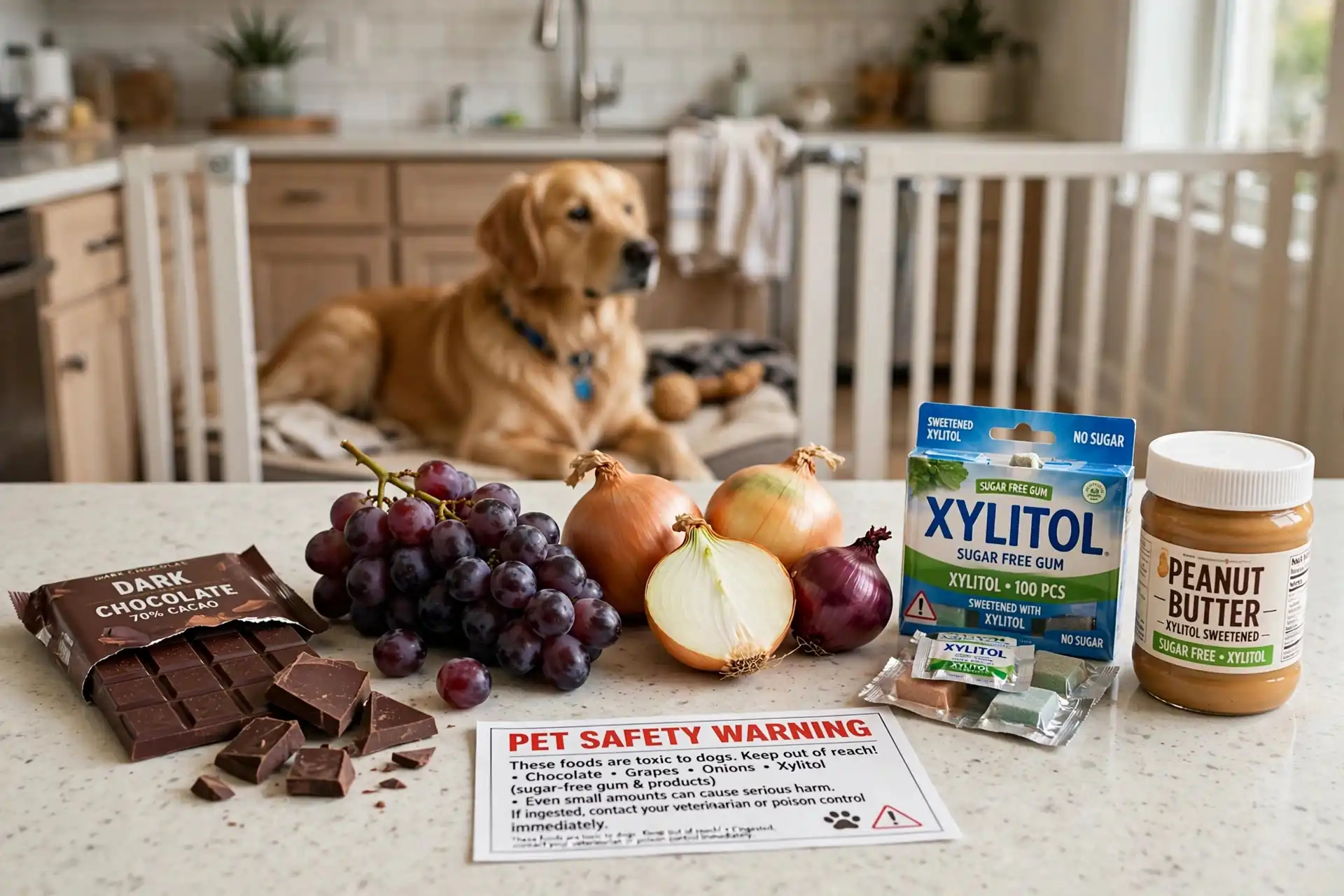
Chocolate contains theobromine, which dogs process far more slowly than people do. Darker, more concentrated chocolate is more dangerous than milk chocolate, but none of it is safe to offer on purpose.
Grapes and raisins can cause sudden kidney failure in some dogs, and vets still don’t fully understand why some dogs react and others don’t. Because there’s no way to predict which dog will be affected, the safest approach is to avoid them entirely.
Onions, garlic, leeks, and chives, whether cooked, raw, or powdered, damage a dog’s red blood cells over time. A single serving of a dish that’s heavy on any of these can be enough to cause problems, especially in smaller dogs.
Xylitol, a sugar substitute found in sugar-free gum, some peanut butters, and baked goods, causes a rapid and dangerous drop in blood sugar in dogs. Check the label on sugar-free products before sharing them, since it isn’t always obvious it’s in there.
Macadamia nuts, alcohol, caffeine, and raw bread dough round out the list of everyday items that cause real harm.
What the symptoms actually look like
Vomiting, diarrhea, unusual lethargy, tremors, disorientation, a racing heart, or seizures after your dog has gotten into something are reasons to treat it as an emergency, not a wait-and-see situation. Dogs can seem fine for a few hours after eating something toxic and then decline quickly, so don’t take the absence of symptoms right now as reassurance.
What to actually do if it happens
Call your vet or an animal poison control hotline right away, and have the packaging or a description of what was eaten, and roughly how much, ready to give them. They can tell you whether the amount and your dog’s size mean this needs an emergency visit, and time matters more than almost anything else here. Don’t try to manage it at home based on advice you find online, including this article; the point of this list is to get you to call, not to treat it yourself.
Keeping it out of reach in the first place
- Store chocolate, gum, and sugar-free baking supplies in a cabinet your dog can’t open, not just up on a counter.
- Keep the trash lidded or in a cabinet, since a lot of exposures happen from food scraps rather than the pantry.
- Ask guests and kids not to share table food, since accidental treats are one of the most common ways this happens.
- Save your vet’s number and a poison control hotline number somewhere you can find fast, not just search for in the moment.
The single most useful thing to remember: if your dog eats something on this list, call for professional guidance right away rather than waiting to see what happens.
For a full, regularly updated list, the ASPCA Animal Poison Control database is the most reliable source. For more on getting ready for a pet emergency, see our emergency vet checklist and our guide to pet-proofing your home.
Why Some Foods Are Dangerous and Others Are Just Rumored
The internet is full of lists claiming dozens of human foods will kill your dog, and most of those lists mix genuine emergencies with mild stomach upset and pure myth. This confusion is dangerous in both directions. Owners who think everything is toxic become anxious and restrictive without cause. Owners who assume the warnings are exaggerated may dismiss the few items that truly are life threatening. The goal here is precision: which foods can actually kill or seriously harm a dog, why, and what to do.
A critical distinction runs through all of this. Toxicity depends on dose, dog size, and the specific compound. A single grape is unlikely to harm a large Labrador but could threaten a tiny Chihuahua. Chocolate danger scales with cocoa content and body weight. The foods below are organized by genuine risk level, not internet popularity. When in doubt about any ingestion, the correct move is always calling your vet or animal poison control immediately rather than waiting for symptoms. For general health vigilance, recognizing pain signals in pets helps you spot trouble early across species.
Xylitol: The Most Urgent Threat
Xylitol, a sugar alcohol sweetener found in sugar free gum, peanut butter, baked goods, and increasingly in medications and dental products, is the most acutely dangerous common substance for dogs. Even small amounts trigger a massive insulin release, causing hypoglycemia within thirty minutes, followed by potential liver failure. A single piece of xylitol gum can kill a small dog. Check peanut butter labels specifically, since some brands now include xylitol. If ingestion is suspected, this is an immediate emergency vet visit. Do not wait for symptoms.
Chocolate, Grapes, and Other Serious Toxins
Chocolate toxicity comes from theobromine and caffeine. Dark chocolate and baking chocolate are the most dangerous due to high theobromine concentration. Milk chocolate requires larger quantities to cause harm. A useful rule: the darker the chocolate, the smaller the dangerous dose. Symptoms progress from vomiting and restlessness to tremors, seizures, and cardiac failure. Do not induce vomiting without veterinary guidance, but do call immediately with the chocolate type, amount, and your dog’s weight.
Grapes and raisins cause acute kidney failure through a mechanism researchers still do not fully understand, which makes them particularly frightening. There is no established safe dose. Some dogs eat grapes without apparent effect while others develop fatal kidney failure from a handful. Given the unpredictability and the severity, treat all grape and raisin ingestion as an emergency. Macadamia nuts cause weakness, vomiting, and tremors, usually not fatal but seriously unpleasant. Onions and garlic damage red blood cells, with the effect accumulating over repeated small exposures, which means the scraps habit matters more than a single incident.
Alcohol, Caffeine, and Raw Dough
Alcohol affects dogs far more severely than humans due to their smaller size and different metabolism. Even small amounts can cause dangerous drops in blood pressure and blood sugar. Raw bread dough is a double threat: the yeast ferments in the warm stomach, producing alcohol, while the dough expands and can cause bloat. Both require veterinary attention. Caffeine from coffee grounds, energy drinks, or medications causes the same stimulant toxicity as chocolate’s caffeine component, with restlessness progressing to dangerous heart rhythms.
Commonly Feared Foods That Are Lower Risk
Not everything on internet lists deserves panic. Citrus causes mild stomach upset but is rarely dangerous. Tomatoes are fine in ripe form; only the green parts contain meaningful solanine. Avocado flesh is low risk, though the pit is a choking and obstruction hazard. Dairy causes digestive upset in lactose intolerant dogs but is not toxic. Nutmeg is dangerous only in large quantities no dog would voluntarily eat. The pattern is that dose and context determine danger far more than the scary list format suggests.
Bones deserve special mention. Cooked bones splinter and can perforate the digestive tract, making them genuinely dangerous. Raw bones are a debated topic among vets, with risks of bacterial contamination and tooth fractures balanced against proponents’ claims. This is a conversation to have with your own vet rather than resolving via internet consensus. For safe alternatives to risky treats, homemade dog treat recipes let you control every ingredient. More pet safety resources are at Factblaze.
Frequently Asked Questions
What should I do if my dog eats chocolate?
Call your vet or animal poison control immediately with three facts: the type of chocolate, the estimated amount, and your dog’s weight. Do not wait for symptoms and do not induce vomiting unless instructed. Time matters enormously with theobromine toxicity.
Are grapes really that dangerous for dogs?
Yes. Grapes and raisins can cause acute kidney failure, and there is no known safe threshold because sensitivity varies unpredictably between dogs. Any ingestion warrants an immediate vet call. Do not adopt a wait and see approach with grapes.
Can dogs eat peanut butter?
Usually yes, but check the label for xylitol first. Choose peanut butter with minimal ingredients: peanuts and salt. Avoid products with xylitol, excessive sugar, or chocolate. Natural peanut butter is the safest choice.
How much onion is dangerous for a dog?
Toxicity can occur at around 0.5 percent of body weight in onions, but the damage accumulates, so repeated small amounts matter. A single small piece is unlikely to cause crisis in a large dog, but regular table scraps containing onion are genuinely risky. Garlic is more potent per gram than onion.
What is the animal poison control number?
In the United States, the ASPCA Animal Poison Control Center is reachable at (888) 426-4435. There is a consultation fee. Keep this number saved in your phone before you need it. Your vet’s emergency number should be saved alongside it.
Conclusion
The genuinely dangerous foods for dogs are a short list: xylitol, chocolate, grapes and raisins, macadamia nuts, onions and garlic, alcohol, and raw dough. Learn these specifically rather than memorizing long scary lists. Check labels for xylitol, keep the emergency numbers saved, and call immediately on any suspected ingestion rather than monitoring at home. Precision beats panic. For authoritative toxicology information, the ASPCA’s Animal Poison Control resources maintain the definitive database of pet toxins.