How to Tell If a Cat Is Actually in Pain
A cat in pain rarely cries out — they go quiet instead. The signs a cat is in pain are mostly things owners read as “she’s just tired” or “he’s getting lazy in his old age,” when the real explanation is discomfort your cat is working hard to hide.
Behavior Changes That Are Easy to Miss
Cats hide pain as a survival instinct left over from being both predator and prey — looking vulnerable in the wild invites trouble, so the signals are subtle by design. A cat skipping meals, hiding more than usual, avoiding jumping onto furniture they used to reach easily, or grooming less, leading to a dull or unkempt coat, are all common early signs. A previously social cat who starts avoiding contact, or a standoffish cat who suddenly wants constant lap time, can both be signaling discomfort — the direction of the change matters less than the fact that it happened at all.
Physical Signs Worth Watching For
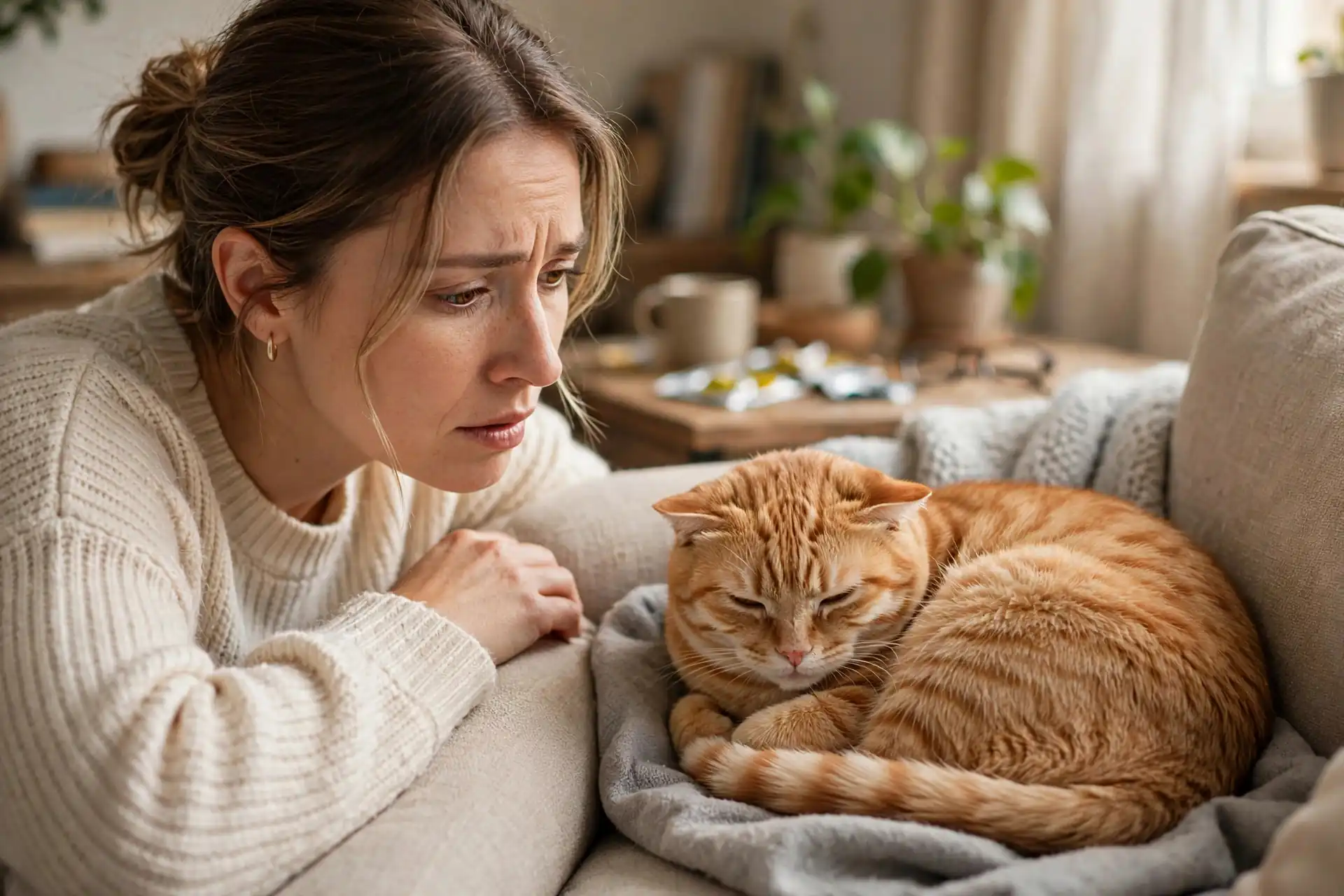
A hunched posture with the head held low, squinted or partially closed eyes, and a tucked tail are classic pain postures in cats. Limping is obvious, but a more subtle version — a slight hesitation before jumping, or favoring one side while sitting — is just as meaningful and often noticed first. Excessive licking or biting at one spot on the body can point to localized pain rather than a skin issue alone.
Vocal and Litter Box Changes
A cat that becomes unusually vocal, especially with a lower or more insistent-sounding meow, may be trying to communicate discomfort. Straining in the litter box, crying while urinating, or going outside the box entirely can point to painful conditions like a urinary blockage — this combination is one of the few that counts as a genuine emergency, especially in male cats, because a blocked bladder can become life-threatening within a day.
What to Do Next
None of these signs point to a specific diagnosis on their own, and that’s exactly why they call for a vet rather than a guess at home. A cat showing several of these changes together, or any cat straining to urinate, not eating for more than 24 hours, or hiding and unresponsive, needs to see a veterinarian promptly rather than being watched for a few more days.
If it’s been a while since your cat’s last checkup, our checklist for a first vet visit covers what to bring and what to expect. Reading about what a cat’s purring communicates is also useful context — cats purr when stressed or in pain, not only when content, which trips people up when they use purring as a sign everything is fine.
For general guidance on recognizing pain and illness in cats, the Cornell Feline Health Center is a trustworthy resource.
Cats are built to mask pain until it’s severe. Taking quiet, subtle changes seriously, instead of waiting for obvious ones, is often what catches a problem early enough to matter.
If you have read this far, you already know the basics: cats rarely announce that something hurts. What follows goes deeper into the subtle patterns, the day-to-day observations, and the small note-taking habits that help you tell ordinary cat behavior apart from a cat that is quietly coping with pain. None of this replaces a veterinary exam, but it will make you a far better witness for the one professional who can diagnose your cat.
Why Cats Are So Good at Hiding Pain
Cats evolved as both predator and prey, and in the wild an animal that shows weakness becomes a target. That instinct did not disappear when cats moved onto our sofas. A cat in pain will usually keep eating, keep moving, and keep up appearances until the discomfort passes the point where instinct can mask it. This is why obvious signs, like limping or crying out, often mean the problem has been building for a while.
Chronic pain is the sneakiest kind. Arthritis is common in cats over ten, yet many owners mistake its signs for simple aging: a cat that stops jumping onto the counter, sleeps more, or plays less. Acute pain is easier to connect to a cause, like an injury or a recent procedure, but even then cats may only show it in brief moments, such as flinching when a sore spot is touched and then acting normal again a minute later.
Behavioral Changes Worth Noticing
Behavior is usually where pain shows up first, well before anything looks physically wrong. The trick is knowing your cat’s personal normal. A cat that has always been aloof is not suddenly suspicious for hiding; a social cat that starts spending the day under the bed is telling you something changed.
Shifts in Eating and Drinking
Dental pain is one of the most underdiagnosed sources of suffering in cats. Watch for a cat that approaches the bowl eagerly and then walks away, chews only on one side, drops kibble, or switches from dry food to only licking wet food. Nausea and abdominal pain can also shrink appetite, while some painful conditions, especially those involving the mouth or throat, make a cat drink more water to compensate for eating less.
Litter Box Habits
A cat that suddenly avoids the litter box is often assumed to be misbehaving, but pain is a frequent cause. Arthritic cats may struggle to climb over high box walls. A urinary tract problem can make urination painful, and the cat then associates the box itself with that pain and goes elsewhere nearby. Straining, crying in the box, or producing only small amounts are all reasons to call the vet promptly rather than switching litter brands.
Withdrawal, Irritability, and Nighttime Noise
Pain shortens patience. A cat that used to enjoy lap time may start leaving when petted, or may swat when touched in a particular spot. Play drive drops, grooming of hard-to-reach areas stops, and the cat may choose isolation over company. New vocalizing belongs on the same list, especially restlessness or yowling after dark. If the noise happens mostly at night, read our guide on why a cat cries at night, since nighttime crying has several causes besides pain, from cognitive changes in seniors to simple boredom, and the context helps your vet sort it out.
Physical Signs You Can Spot at Home
Once you suspect something, a calm hands-off look can confirm it. Watch your cat when they do not know you are watching; cats perform wellness when they feel observed.
Posture and Movement
A painful cat often sits hunched, with the head lowered, the abdomen tucked, and the paws folded tightly under the body, sometimes called the meatloaf position. Reluctance to jump up or down, hesitation at stairs, stiffness after a nap that eases with movement, and a shortened stride are classic mobility clues. After surgery or injury, guarding is common: the cat holds one leg slightly off the ground or turns away when you reach toward a particular area.
The Face Tells a Story
Researchers have developed a feline grimace scale based on ear position, orbital tightening, muzzle tension, whisker position, and head position, and studies found it reliably tracks pain in cats. You do not need the formal scale to use the idea: squinted eyes, ears rotated outward or flattened, a tense muzzle, and whiskers pulled back or bunched forward all suggest discomfort. A normally bright-eyed cat with a dull, half-closed stare deserves attention.
Grooming Changes
Pain changes grooming in two opposite directions. Some cats overgroom one spot, licking a sore joint, a healing wound, or an irritated belly until the fur thins. Others stop grooming altogether because twisting to reach their back or side hurts, leaving the coat dull, matted, or flaky, especially along the spine and hindquarters. Either extreme, persisting more than a day or two, is worth mentioning to your vet.
Sounds That Signal Discomfort
Most cats are not dramatic vocalizers about pain, which makes new sounds meaningful. Growling or hissing when lifted, yelping when a paw is handled, or a new habit of meowing before jumping down all point to something specific. Purring deserves special attention because of the myth that it always means happiness. Cats also purr when frightened, stressed, and in pain, possibly as a self-soothing mechanism. To interpret it correctly, learn what a cat’s purring communicates in different contexts, because a cat that purrs while hunched and withdrawn is sending a very different message from one purring on your lap at bedtime.
When to Call the Vet Instead of Waiting
The Feline Grimace Scale: What Vets Look At
Cats hide pain — it’s a survival instinct — so vets use a validated tool called the Feline Grimace Scale to read what cats won’t show. You can learn to use it too. It scores five facial features, each rated 0 (not present), 1 (moderate), or 2 (obvious). A total of 4 or more out of 10 suggests pain.
First, the ears: a comfortable cat’s ears point forward and slightly outward. In pain, they flatten and rotate outward, ending up lower on the head. Second, the eyes: look for squinting. A cat in pain narrows its eyes into a partial or full squint even in normal light, while a relaxed cat’s eyes are round and open.
Third, the muzzle: tension around the mouth and nose. A painful cat’s muzzle looks pinched and tight, with the whiskers pulled back flat against the cheeks. In a relaxed cat, the muzzle is loose and the whiskers fan naturally outward.
Fourth, the whiskers themselves: stiff, straight, and swept back means discomfort; loose and curved means ease. Fifth, head position: a painful cat often holds its head below the shoulder line or presses it against a surface, while a comfortable cat holds it level.
Score your cat when it is resting calmly, not right after play or a scare. If the total reaches 4, call your vet and describe what you saw — the scale gives you concrete observations instead of a vague “she seems off.”
Some signs should not wait for observation: not eating for more than 24 hours, labored or open-mouth breathing, crying out when touched, sudden inability to use the back legs, or a visibly swollen or bleeding area. For subtler signs, keep a short pain diary for a few days: note appetite, litter box use, activity, hiding, and anything that triggers a reaction. A dated list of specifics helps your vet enormously. Background reading helps too; the feline health resources at Cornell University College of Veterinary Medicine explain how veterinarians assess pain and what modern pain management looks like. And the most important rule: never give a cat human painkillers, and never try to diagnose the cause yourself. Only your veterinarian can determine what is wrong, so if something feels off, ask your veterinarian rather than waiting to see.
Frequently Asked Questions
Do cats purr when they are in pain?
Yes, they can. Purring is a multi-purpose behavior used for contentment, stress relief, and self-soothing, so a cat in pain may purr while also showing hunched posture, withdrawal, or appetite loss. Judge the purr by the company it keeps, not by itself.
How can I tell arthritis apart from normal aging?
Aging alone does not cause pain, so stiffness, reluctance to jump, and reduced play point to something treatable rather than inevitable. Many arthritic cats improve noticeably with veterinary pain management, which is why these signs are worth reporting instead of accepting.
Is it safe to give my cat any human pain medication?
No. Common human painkillers, including acetaminophen and ibuprofen, are toxic to cats even in small amounts. If your cat seems painful, ask your veterinarian about feline-safe options instead.
My cat hides under the bed. Is that always a sign of pain?
Not always. Some cats are simply shy, and hiding can follow stress, a new pet, or loud guests. It becomes a pain signal when it is new, persistent, and paired with other changes like appetite loss, litter box avoidance, or flinching when touched.
What information should I bring to the vet visit?
Bring specifics: when the change started, what exactly changed, what makes it better or worse, appetite and litter box notes, and any video of the behavior. Video of a limp or a hunched posture is especially useful because cats often act fine in the clinic.
Conclusion
Telling whether a cat is actually in pain comes down to knowing their normal, watching for quiet changes in behavior, posture, face, grooming, and sound, and writing down what you see. Cats will not tell you in words, but they tell you constantly in patterns, and an observant owner who brings clear notes to the vet gives their cat the best possible chance at relief. For more everyday pet guidance, visit Factblaze, and when in doubt about any symptom, ask your veterinarian.