Indoor vs Outdoor Cats: Weighing the Trade-Offs Honestly
Indoor cats live longer than outdoor cats, usually by several years, because they aren’t exposed to traffic, predators, disease, and fights with other animals. That statistic settles the debate for a lot of owners, but it doesn’t make the decision simple for every cat or every household.
What Indoor Life Protects Against
Cars are the biggest killer of outdoor cats in most areas, followed by attacks from dogs, coyotes, and other cats defending territory. Outdoor cats also pick up parasites and infectious diseases like FeLV and FIV far more often, since those spread through fighting and close contact with unowned cats. None of this means an outdoor cat is guaranteed a short, hard life — plenty live full ones — but the odds shift noticeably once a cat has regular access to a road or other animals.
What Gets Lost Indoors
The counterargument isn’t nothing. Outdoor access gives a cat constant novelty: new smells, prey to stalk, territory to patrol, sun to move in and out of. Some cats adapt to indoor life without issue; others, especially ones that grew up outside, get visibly bored or frustrated, and that can show up as destructive scratching, overeating, or picking fights with other pets in the house. Watching how a cat holds its tail and body day to day is a decent way to gauge whether it’s actually settled indoors or just tolerating it.
A Middle Ground Exists
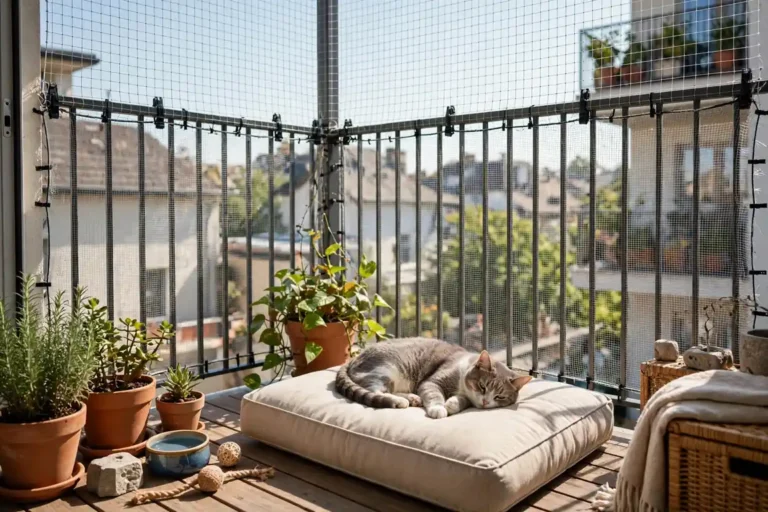
Catios, harness walks, and supervised yard time give a cat real outdoor stimulation without the traffic and disease exposure of unsupervised roaming. Screened porches work well for this too, and even a window perch with a regular rotation of new toys covers more of a cat’s behavioral needs than owners tend to expect. Cats kept fully indoors also need more deliberate enrichment than an owner might assume — scheduled play sessions, scratching posts in more than one room, and food puzzles instead of a bowl that just appears twice a day. If a formerly outdoor cat is moving inside for the first time, expect an adjustment period, and double-check things like litter box placement, since a cat used to going outside may need extra encouragement to treat a box as the obvious option.
What This Comes Down To
Age, health, temperament, and where you live all matter more than a blanket rule. A senior cat with no outdoor history has little to gain from being let outside for the first time; a young, high-energy cat raised outdoors may struggle indoors without real effort from the owner to compensate. The ASPCA’s cat care resources are a solid starting point if you’re weighing this for a specific cat rather than cats in general.
There’s no version of this decision that’s risk-free either way — it’s a trade between the physical dangers of the outdoors and the very real welfare cost of an under-stimulated indoor cat. Pick the risk you can manage, not the one that sounds better.
Few pet debates run hotter than this one, and both sides have genuine points. The overview above lays out the basic trade-offs. Below is the fuller picture: what the risks actually look like, what indoor life needs to be genuinely good, and the middle-ground options that did not exist a generation ago.
The Safety Case for Indoors, Stated Plainly
The argument for keeping cats indoors rests on a straightforward observation: the outdoors contains hazards a cat cannot reason about. Traffic is the biggest one. Cats do not understand cars, and even quiet suburban streets produce casualties. Beyond roads, outdoor cats face fights with other cats and wildlife, parasites, infectious diseases like feline leukemia, and the simple risk of getting lost, trapped, or taken in by someone who assumes the cat is a stray.
Veterinary organizations have weighed in clearly on this. The American Association of Feline Practitioners, whose owner resources live at catvets.com, recommends keeping cats indoors or providing safe outdoor access, and most veterinarians you ask will say the same. Indoor cats also tend to need fewer emergency vet visits across their lives. None of this means outdoor cats cannot live long lives. Many do. It means the odds tilt, on average, toward the indoor cat.
There is also a neighborhood dimension that honest discussion should include. Free-roaming cats hunt, and in areas with vulnerable bird and small-mammal populations, that predation adds up across a neighborhood of outdoor cats. Keeping a cat indoors, or supervising its outdoor time, is also a courtesy to the local ecosystem and to neighbors who garden.
What Outdoor Access Gives a Cat
The case for the outdoors is about quality of life, not safety, and it deserves a fair hearing. Cats evolved as hunters, and the outdoor world is the richest possible environment for their senses: changing scents on the wind, birds to watch, textures underfoot, sun and weather. An outdoor cat exercises more naturally and expresses the full range of feline behavior without human stage-management.
Some cats make their preference unmistakable. The cat that yowls at the door for hours, darts out at every opening, and seems restless despite toys and attention is telling you something about its temperament. Bold, high-energy cats, especially young ones and certain breeds, often struggle most with purely indoor life. For these cats, the question is not whether outdoor access has value. It clearly does. The question is how to provide that value without the full set of risks.
“Outdoors” also covers a wide range. A rural barn cat on acres of farmland faces a different risk profile than an apartment cat next to a six-lane road. Your street, your predators, and your traffic are the relevant facts.
Making Indoor Life Genuinely Good
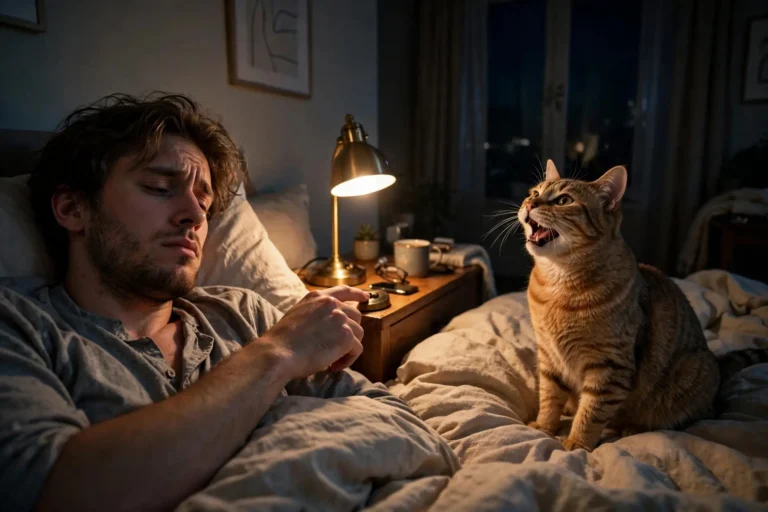
Here is where the indoor argument often falls short in practice: “keep the cat inside” is not a complete plan. A cat staring at four walls with a food bowl and a single toy is not living well, and a bored indoor cat develops the problems people blame on indoor life, like obesity, destructive scratching, and attention-seeking behavior at 3 a.m. Indoor works when the environment is genuinely enriched.
Vertical space and scratching
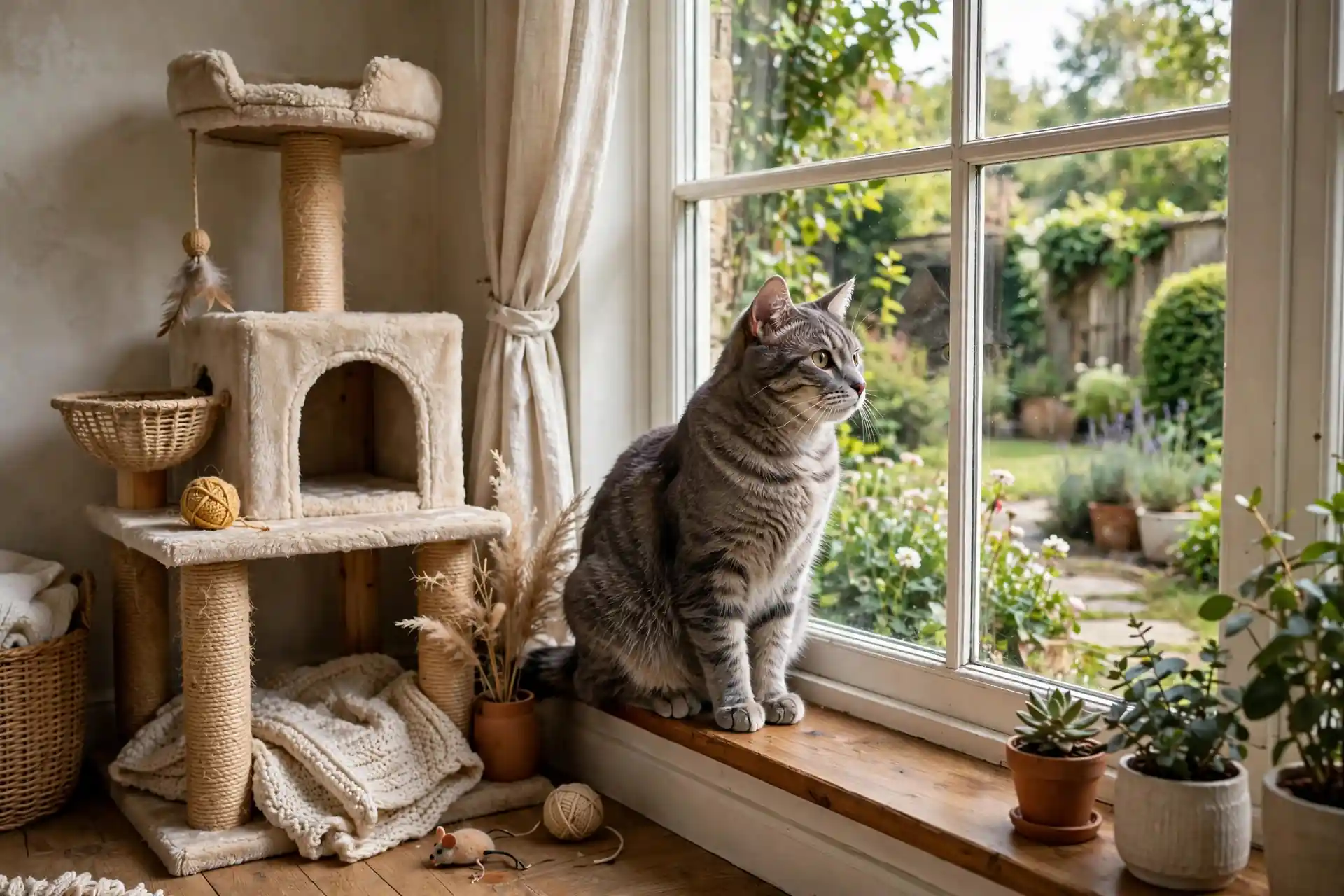
Cats think vertically. A tall cat tree near a window, shelves or perches that create a climbing route, and a sturdy scratching post in the rooms where the family spends time cover the core needs. Scratching is not misbehavior to eliminate. It is stretching, claw maintenance, and scent marking. Give it an approved outlet and protect the furniture by placement, not punishment.
Play that mimics hunting
A laser pointer waved randomly is not hunting. A wand toy dragged around corners, paused, and allowed to be “caught” is. The most satisfying play sessions follow the real sequence: stalk, chase, pounce, catch, and then a small meal, which mirrors the hunt-eat-groom-sleep cycle. Ten to fifteen minutes twice a day transforms most indoor cats. Puzzle feeders extend the same idea to mealtimes, making the cat work for food the way it would outdoors.
Windows, scents, and novelty
A window perch with a view of birds or street activity is television for cats. Rotating toys rather than leaving all of them out keeps novelty alive. Occasional new scents, a cardboard box, a paper bag, fresh catnip, cost nothing and reset a bored cat’s interest in its territory. And learn to recognize contentment when you see it. A slow-blinking, kneading cat is a cat whose needs are met, and understanding what a cat’s purring communicates helps you read whether your enrichment efforts are actually landing.
The Middle Ground: Supervised Outdoor Time
The most useful development in this debate is the growing menu of options between “locked inside” and “roaming free.” These give cats real outdoor experience while keeping the risks managed, and they suit exactly the bold, restless cats that struggle most with indoor-only life.
Catios, enclosed patios or window-box extensions, are the gold standard. They provide fresh air, sun, birdwatching, and weather with zero traffic risk and no hunting impact. They range from small window units to elaborate backyard structures, and many owners build them from simple framing and wire mesh over a weekend.
Leash training is the other major option, and it works better than most people expect if started with patience. Use a well-fitted harness, never a collar, and let the cat set the pace and direction on early outings. Some cats take to it in days. Others need weeks of indoor harness practice first.
Deciding for Your Cat and Your Situation
The honest answer is that the right choice depends on the cat, the home, and the location together. A shy senior cat in a city apartment is an easy indoor case. A bold young cat on a quiet rural property with a catio is an easy supervised-outdoor case. Most real situations fall somewhere between, and the decision can evolve. Keep watching the cat itself as you decide: our guide to reading a cat’s tail position helps you tell whether your cat is thriving or merely coping with the arrangement you chose.
Whatever you choose, cover the non-negotiables for both lifestyles: spay or neuter, core vaccinations, parasite prevention, and a microchip with current registration. Outdoor and indoor-outdoor cats need feline leukemia vaccination in particular, so discuss the right vaccine schedule with your veterinarian. And if your cat’s behavior changes suddenly, appetite, litter habits, energy level, that warrants a vet visit before any lifestyle theorizing.
Frequently Asked Questions
Do indoor cats get depressed?
Cats do not experience depression exactly as humans do, but they do suffer from boredom and frustration in under-stimulating environments, which shows up as overeating, over-grooming, aggression, or lethargy. These are signs the environment needs work, not proof that indoor life is inherently wrong. Well-enriched indoor cats are typically calm and content.
Is it cruel to keep a formerly outdoor cat inside?
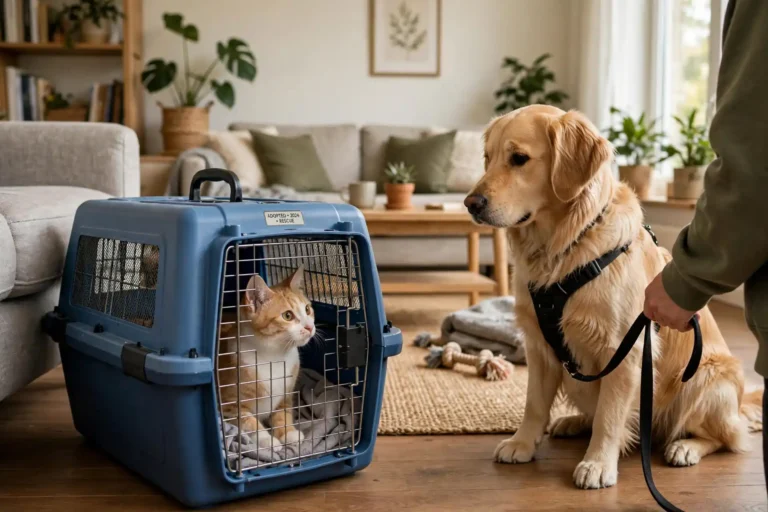
It is an adjustment, not cruelty, provided you replace what the outdoors provided: stimulation, exercise, and novelty. Expect a transition period of protest, sometimes weeks, and meet it with extra play and enrichment rather than giving in on a bad night. Most cats settle into the new routine.
At what age can a kitten go outside?
Most veterinarians suggest waiting until the kitten is at least six months old, fully vaccinated, and spayed or neutered before any unsupervised outdoor access. Even then, supervised outings first let you gauge the kitten’s judgment and recall before granting real freedom. Ask your veterinarian about timing for your specific kitten.
Do outdoor cats really live shorter lives?
On average, studies and veterinary experience point to shorter average lifespans for free-roaming outdoor cats, driven by traffic, disease, fights, and other hazards. Averages hide wide variation, though. A careful owner in a low-risk area can have an outdoor cat live a long life, and a neglected indoor cat can fare poorly. Lifestyle is one factor among many.
Will a catio satisfy a cat that loves roaming?
For many cats, yes, especially when combined with interactive play. A catio provides the sensory highlights of outdoors, scents, sun, birds, weather, without the risks. The most wide-ranging roamers may still want leash walks for variety, but most owners report the door-darting behavior fades once the catio becomes part of the routine.
Conclusion
The indoor-versus-outdoor question has no universal winner, only trade-offs to weigh honestly: safety and longevity against freedom and stimulation, shaped by your cat’s temperament, your location, and what you can realistically provide. The good news is that the middle ground keeps getting better. Enrichment has never been better understood, and catios and leash training give bold cats real outdoor life without the worst risks. Pick the option you can sustain, cover the veterinary basics, and pay attention to what your cat tells you. For more cat behavior and care guides, explore the pet section here on Factblaze.