What a Cat’s Purring Actually Communicates
A purring cat isn’t necessarily a happy cat, and treating purring as a simple contentment signal means missing real distress. Cats purr when they’re relaxed on a lap, but they also purr while injured, in labor, and even while dying — what does cat purring mean depends entirely on the rest of the body language around it.
What Does Cat Purring Mean in Different Situations
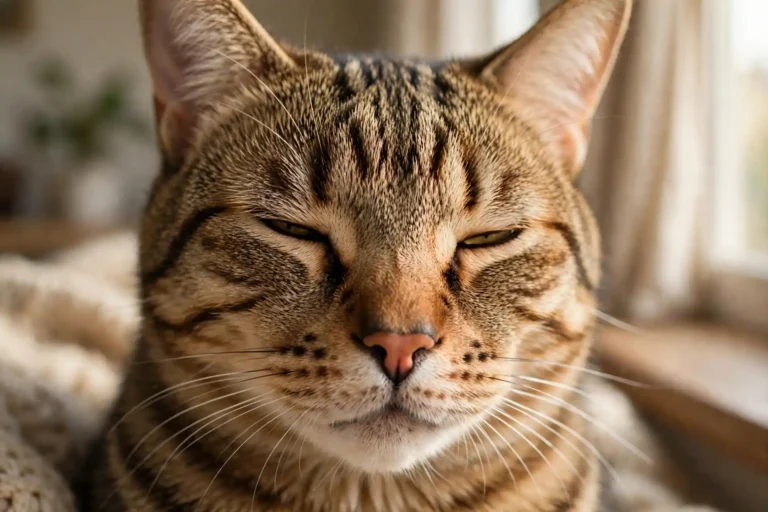
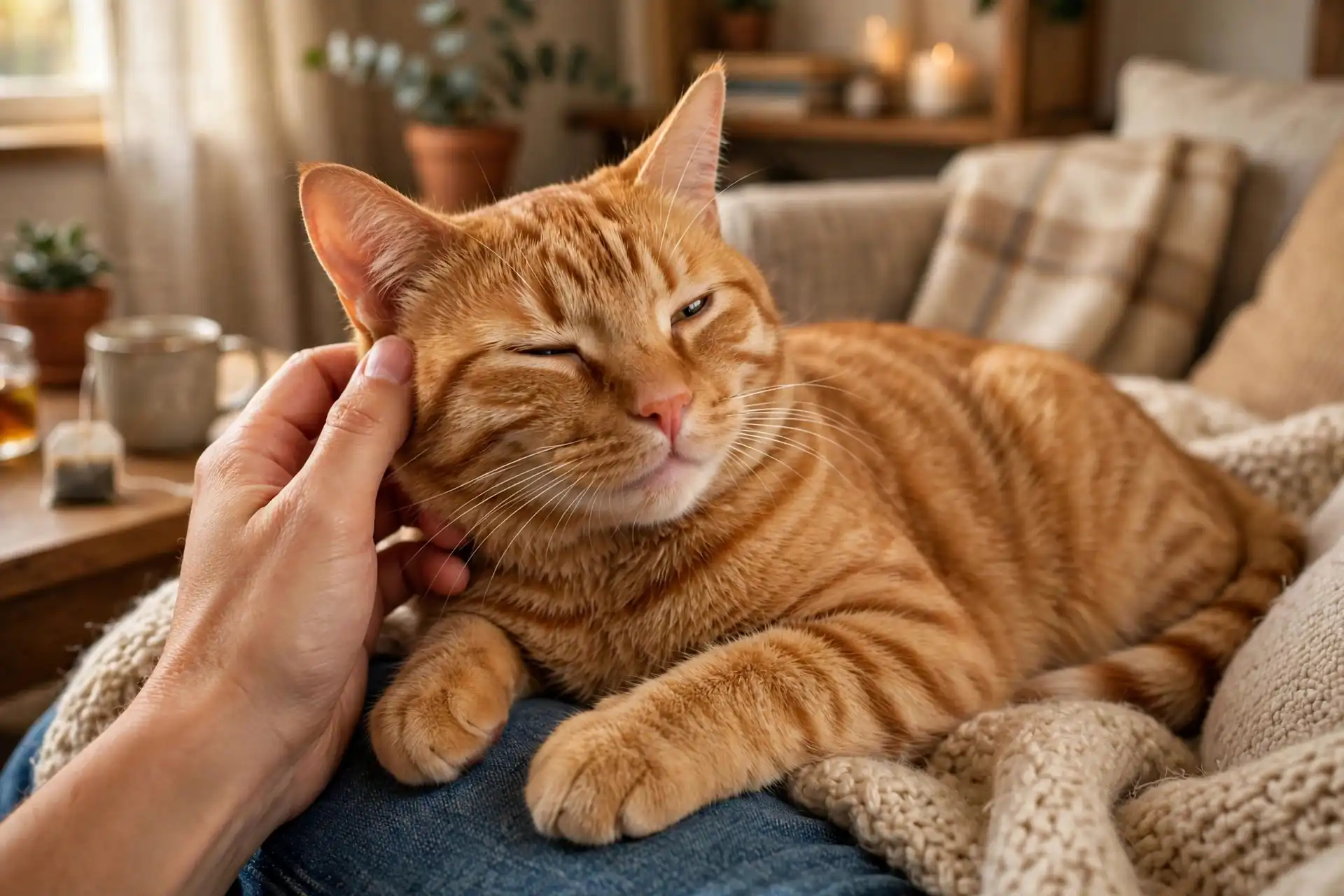
The clearest read comes from combining purring with everything else the cat is doing. A cat purring with half-closed eyes, a loose body, and slow blinks is genuinely relaxed. A cat purring while tensed up, crouched low, or pulling away from touch is usually self-soothing through something uncomfortable, not enjoying it. The sound itself doesn’t change much between the two states, which is exactly why context matters more than the purr alone.
Why Cats Purr When They’re Hurt
Purring sits in a low frequency range that some researchers link to tissue and bone repair, which may explain why injured or recovering cats purr more, not less. It’s plausible purring works as a low-cost way for an animal to soothe itself during stress, similar to how a person might hum or rock. That’s a reasonable theory, not a settled fact, but it fits what most cat owners eventually notice: a purring cat at the vet’s office is very often a stressed cat, not a relaxed one.
Kittens purr almost from birth, often while nursing, which suggests the earliest function of purring is bonding and reassurance between kitten and mother rather than pleasure on its own.
Reading the Rest of the Cat
Tail position tells you more than the purr does in ambiguous situations. A relaxed, slightly curved tail alongside purring usually confirms contentment, while a tucked or thrashing tail alongside purring is a much stronger sign of stress. It’s worth learning to read a cat’s tail position as a second data point rather than relying on sound alone.
If a cat is purring constantly, seems withdrawn, or is purring alongside other changes like reduced appetite or hiding, that combination is worth a vet visit rather than an assumption that everything is fine. Stress shows up in other places too — a cat under strain will often avoid the litter box or change how it uses one, which is worth checking alongside any change in purring. Purring is a cat’s most flexible tool, not a single-purpose one, and the Cornell Feline Health Center is a good source if you want to go deeper on feline behavior generally. The next time a cat purrs on your lap, it’s worth a quick glance at the rest of the body before assuming it’s a compliment.
Everyone knows cats purr when they’re happy. That’s also the single most oversimplified claim in all of pet behavior. Purring shows up in kittens barely a day old, in cats that are injured, in cats that are dying — and yes, in cats that are blissfully content. The purr is a multipurpose tool, and understanding its different jobs changes how you read your cat.
How Purring Actually Works
A purr is produced by rapid, rhythmic contraction of the laryngeal muscles — the muscles around the voice box — combined with the diaphragm, at a rate of about 25 to 150 vibrations per second. The brain sends a repetitive neural signal to these muscles, and the cat breathes in and out while they twitch, producing the continuous rumble. Cats can purr while inhaling and exhaling, which is why the sound never pauses.
Not all cats can purr, interestingly. The big cats — lions, tigers, leopards — can roar but can’t truly purr, while small cats can purr but can’t roar. The difference lies in a small bone in the throat called the hyoid. Domestic cats, cheetahs, and cougars have a fully ossified hyoid that enables purring; roaring cats have a flexible one. Your housecat’s purr is a small-cat privilege.
Purring as Communication: The Social Purr
Kittens are born blind and deaf, and they can’t meow loudly enough for a mother to hear over distance — but they can purr within days of birth. The mother purrs back. Researchers believe this is the original function of purring: a close-range homing signal between mother and kittens, a way of saying “I’m here, I’m okay” when the kitten can’t see or hear anything else.
Adult cats repurposed that infant signal for their relationship with humans. The relaxed, rhythmic purr of a cat on your lap is essentially the adult version of the kitten-to-mother signal: comfort, affiliation, “all is well.” It’s a social purr, and it may be the reason domestic cats purr more often than their wild counterparts — they’ve kept a kitten behavior into adulthood because humans respond to it so well.
The Solicitation Purr: Purring With an Agenda
Not all social purring is pure contentment. Researchers at the University of Sussex identified a distinct “solicitation purr” — a purr with a high-frequency cry embedded in it, similar in pitch to a human baby’s cry. Cats use it when they want something, most famously food. Owners respond to it more urgently than to a normal purr, often without realizing why. If your cat’s purr has an insistent, almost whiny edge at breakfast time, you’re hearing a deliberate request, not just happiness.
Purring as Self-Soothing: The Calming Purr
Cats purr when they’re frightened, in pain, or at the vet — situations with no happiness in them at all. The leading explanation is that purring is self-soothing: a behavior the cat uses to calm itself, the way a person might hum or rock when anxious. The rhythmic vibration may have a genuine physiological calming effect, lowering stress hormones and steadying the nervous system.
This is why a purring cat at the vet isn’t necessarily a relaxed cat. Context is the decoder. A purr combined with a tense body, flattened ears, or hiding is a stress purr. A purr combined with kneading, half-closed eyes, and a loose body is a contentment purr. Same sound, opposite meanings — the body language around it tells you which.
The Healing Hypothesis
Here’s where purring gets genuinely strange. Purr frequencies fall in the 25–150 Hz range, and some research suggests that vibrations in this range may promote bone density and tissue healing — frequencies used in some human medical therapies for bone repair. The hypothesis is that cats, which spend long hours resting, evolved purring partly as a low-energy maintenance mechanism for their bones and muscles.
It’s an appealing idea, but it remains a hypothesis, not an established fact. No veterinarian will tell you purring replaces treatment. Still, it may partly explain why cats purr when injured or ill — and why cats famously seem to recover from injuries that would sideline other animals. The science is suggestive rather than conclusive, and honest sources will tell you that.
What Purring Tells You About Your Relationship
Because the social purr is rooted in the kitten-mother bond, a cat that purrs with you is, in a real sense, treating you as family. Cats don’t generally purr for strangers or in neutral company the way they do for their person. The lap purr, the greeting purr at the door, the purr that starts before you’ve even touched the cat — these are affiliation signals, and they’re selective.
Pay attention to changes. A cat that suddenly purrs much more — or stops purring — is communicating a change in state. Increased purring with hiding or appetite loss can indicate the cat is self-soothing pain or illness. Decreased purring in a normally purry cat can indicate the same. Either change, if it persists, is worth mentioning to your veterinarian. And purring pairs with other signals: reading a cat’s tail position alongside the purr gives you a far more reliable read than either signal alone.
The Nighttime Purr and Other Contexts
Some cats purr loudly at night, on the bed, while the owner is trying to sleep. This is usually the social purr doing its job — the cat is settled, content, and affiliating. It’s endearing at 9 p.m. and less so at 3 a.m. But nighttime vocal behavior worth distinguishing from purring is actual crying or yowling, which can signal very different needs. If your cat is vocal at night in ways that worry you, it’s worth understanding why cats cry at night, because a yowl is not a purr and shouldn’t be treated like one.
Cats also purr during grooming, while nursing, when greeting other cats they like, and sometimes when they’re about to be fed — anticipation purring. Each context shades the meaning slightly, but the pattern holds: purring marks moments of social closeness, self-regulation, or both.
How to Tell a Happy Purr From a Stressed Purr
Start with the body. A happy purr comes with a relaxed posture: soft half-closed eyes, kneading paws, an upright or gently swaying tail, and a body leaning into your hand. A stressed purr looks completely different — the body is tense, the ears are flattened or rotated back, the tail may be tucked or twitching, and the cat may be crouching low. The purr is the same sound; the body tells you which one it is.
Listen to the purr itself. Contented purring tends to be steady, rhythmic, and medium-volume, often with a higher pitch. Stress purring can be louder and more urgent, sometimes with an odd whine or cry woven in — researchers call that higher-frequency component a solicitation purr. It is subtle, but you can learn to hear it.
Context is the tiebreaker. A purr during chin scratches on a sunny windowsill is easy to read. A purr at the vet’s office, in a carrier, or right after a loud noise deserves skepticism — cats purr in those situations to self-soothe, not because they are enjoying themselves. A cat that starts purring while being held by a stranger is often signaling discomfort.
When in doubt, offer the cat a choice. Stop petting and see if the cat stays or moves closer. A happy cat asks for more; a stressed cat uses the pause to leave.
Frequently Asked Questions
Do cats only purr when happy?
No — that’s the myth this whole topic exists to correct. Cats purr when content, but also when frightened, in pain, hungry, or asking for something. The purr itself is neutral; the context gives it meaning.
Can cats control their purring?
Mostly it’s involuntary, triggered by emotional state via the brain’s neural oscillator — but the solicitation purr shows cats can modulate it, embedding a cry-like sound when they want a response. It’s less like a deliberate word and more like a tone of voice.
Is it true that purring heals bones?
The frequencies of purring overlap with frequencies studied for bone and tissue healing, which is suggestive but not proven in cats. Cornell’s veterinary resources treat it as an interesting hypothesis, not a medical fact. Don’t skip the vet because the cat is purring.
Why does my cat purr and bite at the same time?
Overstimulation. The cat was enjoying the petting (purr), reached its limit, and is now telling you to stop (bite). The purr doesn’t cancel the bite — watch for the tail thumping or skin twitching that usually precedes it.
My cat never purrs. Is something wrong?
Not necessarily. Some cats purr so quietly you can only feel it, not hear it, and some simply purr rarely. If the cat is otherwise healthy, eating, and behaving normally, a quiet purrer is just a quiet purrer. If purring stops suddenly in a cat that used to purr loudly, mention it to your vet.
Conclusion
Purring is a kitten’s first language, a self-soothing mechanism, a social bond, and occasionally a calculated request for dinner — sometimes all in the same afternoon. The sound alone tells you little; the body and the moment tell you everything. Listen to the whole cat, and the purr becomes one of the clearest windows into how it feels. For more feline behavior decoded, visit Factblaze.