Choosing the Right Carrier for a Nervous Cat
The right carrier for a nervous cat is less about brand and more about how it opens. A carrier that only comes apart from a single hatch on top forces you to push a resisting cat through one narrow opening, and a cat remembers that fight the next time the carrier appears — which means the carrier itself becomes the thing they’re afraid of, long before the car ride even starts.
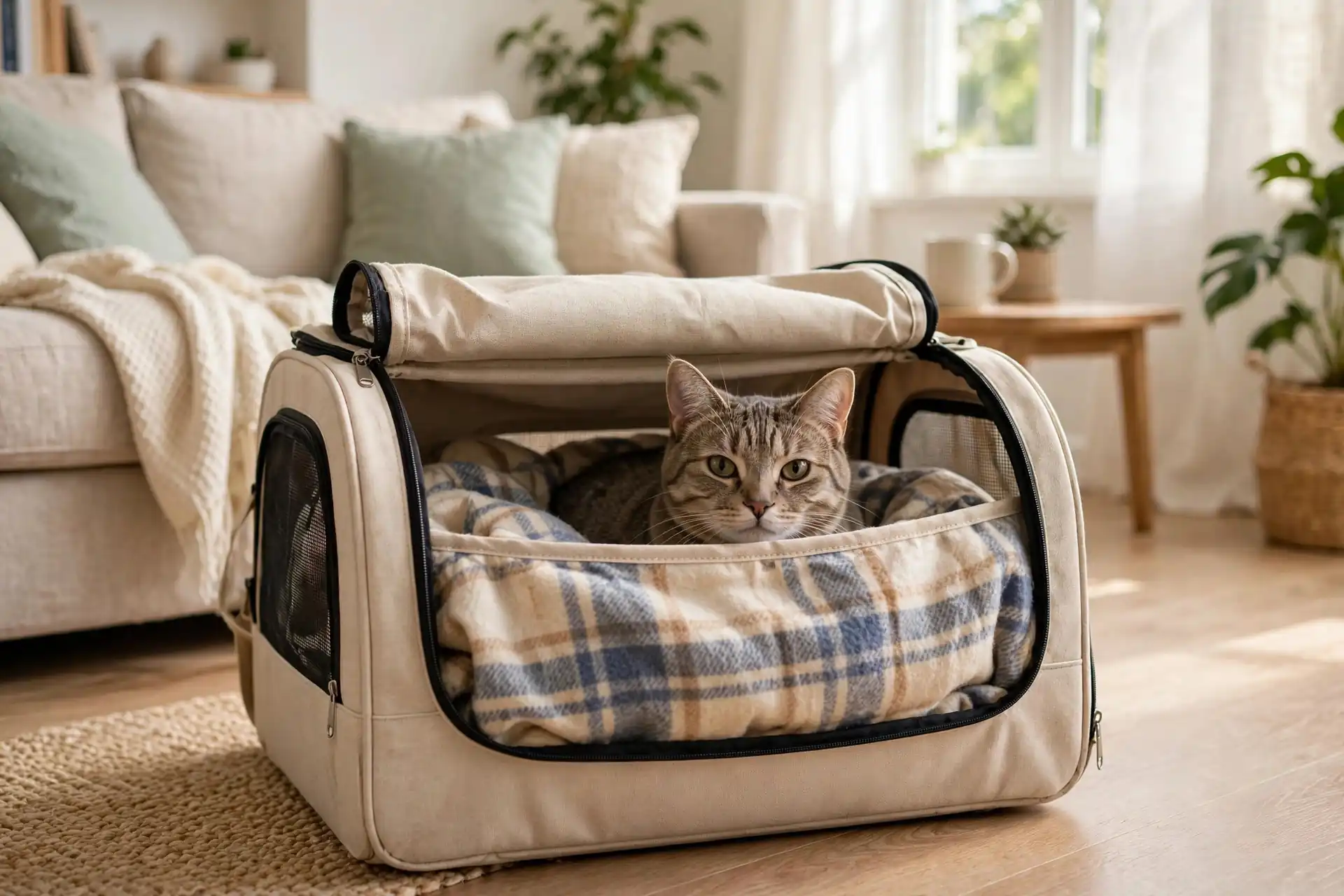
Look for a hard-sided carrier with two entry points: a front door and a full top that unclips or unzips completely. On a bad day you can lower a stressed cat in from the top instead of wrestling them through the front, and at the vet, a lot of exams can happen with the cat still sitting in the bottom half once the top comes off — which cuts the handling down to almost nothing.
Size and Latches
Bigger isn’t automatically better. A carrier should be long enough for your cat to turn around and tall enough to sit up, but a cat swimming in extra space tends to slide and brace against the walls during a car ride, which adds to the stress rather than reducing it. Snug enough to feel like a den, not a cage, is the target.
Check the latches before you buy, not after. Wire or plastic clips that a strong cat can push open from the inside during a stressful moment are a real risk — metal buckle-style latches or a locking zipper hold up better under pressure.
Making the Carrier Part of the Routine
A carrier that only appears right before a vet trip gets treated like a threat. Leaving it out in a regular room, with a blanket inside and the door propped open, turns it into a place your cat chooses to nap in on their own terms. Feeding a few meals near it, then eventually inside it, builds the association slowly instead of forcing it in one stressful morning.
Watch your cat’s tail and body language the first few times you introduce the carrier — a puffed tail or flattened ears mean back off and try again later rather than pushing through.
- Hard-sided shell with a removable or fully openable top
- Secure metal latches, not simple wire clips
- Enough room to turn around, not much more
- A washable pad or towel inside for familiar scent
Soft-sided carriers can work for a calm cat, but they flex under pressure, which means a determined cat can sometimes push a zipper or seam wider than it should go. Hard-sided shells hold their shape under a scared cat’s full weight and don’t collapse if set down on an uneven vet-office chair. The trade-off is that hard-sided carriers are bulkier to store, which is worth it for the security they add on the days it matters most.
In the car, secure the carrier with a seatbelt or wedge it against the footwell rather than letting it slide on the seat — sudden stops and turns are startling even to a cat who was calm getting in, and a carrier that shifts around adds motion on top of everything else that’s already unfamiliar about the trip.
If you’re getting ready for a first vet visit, our checklist for a first vet visit covers what else to have ready beyond the carrier itself. For more on recognizing stress signals in cats generally, the ASPCA’s cat care resources are a solid reference.
A carrier a cat walks into on their own is worth more than one that just looks sturdy on a shelf.
Why the carrier matters so much for nervous cats
For a confident cat, the carrier is a minor inconvenience. For a nervous cat, it can be the worst part of any journey, triggering panic that colors the entire trip including the veterinary visit itself. A cat that arrives terrified is harder to examine, more likely to need sedation, and slower to recover from the stress. The carrier is not just transport; it sets the emotional tone for everything that follows.
Nervous cats need carriers that minimize the specific things frightening them: exposure, instability, difficult loading, and feeling trapped without escape. The right carrier addresses these directly rather than just containing the cat. A nervous cat that can see out in all directions, slide around on a slick floor, and hear every unfamiliar sound will panic no matter how sturdy the plastic is.
Top loading versus front loading
This is the most important design choice for nervous cats. Front loading carriers require pushing the cat through a small door, which most cats resist, turning loading into a wrestling match that spikes stress before the journey begins. Top loading carriers let you lower the cat gently into the open top, which is calmer for everyone.
Carriers with both top and front openings offer the most flexibility. Load through the top at home, and let the vet use whichever opening works best for examination. Some veterinary specific carriers also have removable tops, allowing the vet to examine the cat while it remains in the carrier base, which dramatically reduces handling stress. If your cat is already carrier phobic, this feature alone is worth prioritizing.
Size: secure but not cramped
The carrier should be large enough for the cat to stand, turn around and lie down comfortably, but not so large that the cat slides around during transport. Excess space increases anxiety for nervous cats rather than reducing it; they feel more secure in snug spaces that limit motion. A carrier sized for the cat, not for your aspirations of spaciousness, is the right call.
For very anxious cats, smaller can be better within reason. The enclosed den like feeling of a properly sized carrier is calming. Avoid carriers with large mesh windows on all sides for nervous cats; visibility in every direction feeds the feeling of exposure. Drape a familiar smelling blanket over the carrier to create a dark secure hideaway, leaving one side ventilated. Darkness reduces visual stimulation that feeds panic. Our guide to what makes a scratching post worth using covers another piece of feline environmental comfort.
Hard sided versus soft sided
Hard sided carriers offer better protection, are easier to clean after accidents, and provide the structural security nervous cats need. Soft sided carriers are lighter and fit under airplane seats, but they offer less protection and some cats feel less secure in their flexibility. For car travel to the vet, hard sided is generally the better choice for anxious cats.
Desensitization: the real solution
The best carrier in the world will not help if it only appears on vet day. Leave the carrier out permanently with comfortable bedding inside and occasional treats. Let the nervous cat discover that the carrier is furniture, not a trap. Feed meals near it, then inside it with the door open. This slow process, over weeks, transforms the carrier from a fear trigger into a safe space.
Practice short sessions: close the door for a minute with treats, then open. Carry the closed carrier around the house briefly. Take short practice drives that end back home with rewards. Each positive experience weakens the association between carrier and scary outcomes. End every session on a success, even a small one, so the cat’s last memory of the carrier is positive. Rushing this process is the main reason it fails; let the cat set the pace.
Calming aids and veterinary support
Pheromone sprays applied to the carrier bedding fifteen minutes before travel can take the edge off mild anxiety. They are not sedatives and will not transform a panicking cat, but they help as part of a broader strategy. Prescription anti anxiety medication from your veterinarian is appropriate for cats with severe carrier or travel phobia; discuss this well before the appointment, since some medications need trial dosing at home first. A trial dose at home also tells you whether the medication makes your cat groggy or disoriented, which is information the vet needs before the real appointment.
Tell the clinic about your cat’s anxiety when booking. Many practices offer cat friendly handling, quieter waiting areas, or appointments at less busy times. The American Association of Feline Practitioners’ Cat Friendly resources help owners find practices designed around reducing feline stress. For a new pet’s first appointment specifically, our first vet visit checklist covers the preparation.
How To Get a Nervous Cat Into the Carrier Without a Fight
Timing matters more than strength. Load the cat when it is calm and sleepy, not after it has seen the carrier come out and panicked. Set the carrier in the room an hour before, door open, with a treat inside, then leave it alone. Chasing a cat that is already hiding guarantees a fight — wait for a quiet moment instead.
The towel technique is the most reliable method. Drape a large towel over the cat, scoop it up burrito-style with the towel wrapping its body and legs, and lower the bundle into the carrier back-end first. Going in rear-first means the cat cannot brace its front paws against the carrier opening, which is how most loading battles start. Tip the carrier so the opening faces up and lower the cat in from above.
What not to do: do not grab the cat by the scruff to force it in, do not push it headfirst while it claws at the doorway, and do not have two people wrestle it. Force makes every future trip worse because the cat remembers the struggle. If the cat escapes mid-load, stop, let it settle for twenty minutes, and try again — persistence beats pressure.
Spray the carrier’s bedding with a feline pheromone spray fifteen minutes before loading. Covering the carrier with the towel afterward gives the cat a dark, enclosed space to decompress during the ride.
Frequently Asked Questions
Should I get a top loading carrier?
For a nervous cat, yes. Top loading eliminates the stressful push through a front door and lets vets access the cat with less handling. Dual opening carriers are the most versatile.
How do I get my cat into the carrier without a fight?
Desensitize over weeks so the cat enters voluntarily. In the short term, top loading with a calm confident motion works better than chasing. Wrapping the cat gently in a familiar towel before placing it in can help.
Will my cat ever stop fearing the carrier?
With consistent positive conditioning, most cats improve significantly. Complete indifference is achievable for many cats when the carrier becomes permanent furniture associated with treats rather than a vet day ambush.
Are calming treats effective?
Mildly, for mild anxiety. They take the edge off but do not resolve genuine phobia. For severe anxiety, veterinary prescribed medication combined with behavioral work is more effective.
Should the carrier be covered during travel?
Yes for nervous cats. A light blanket over the carrier reduces visual stimulation and creates a den like feeling. Leave one side uncovered for airflow and so you can check on the cat.
Conclusion
The right carrier for a nervous cat loads from the top, fits snugly, feels like a safe den, and appears in daily life long before vet day. Combine good equipment with patient desensitization and veterinary support when needed, and travel becomes manageable for even anxious cats. For more pet care guides, visit the Factblaze homepage.