What Makes a Dog Bed Worth the Cost
A dog bed earns its price when it keeps its shape under your dog’s full weight for years, not months. The bargain version looks similar in a product photo, but the foam inside it packs down within a few weeks, and once that happens it stops doing the one job a bed has: cushioning hips, elbows, and shoulders from a hard floor.
Choosing a dog bed is really a materials decision more than a style decision. The stitching, the foam, and the cover fabric determine whether the bed holds up, and none of those show up clearly in a listing photo.
Support That Doesn’t Flatten
Open-cell memory foam or a dense orthopedic foam base is what separates a bed that lasts from one that collapses into a pancake. Look for a density figure if the listing gives one — foam under about 1.5 pounds per cubic foot tends to break down fast under a 50-pound dog. Fiberfill stuffing is fine for a small dog that mostly naps in a sunny spot, but it clumps and loses loft quickly under any real weight, especially for large breeds or older dogs managing arthritis, a topic covered in the AVMA’s pet owner resources.
A bed that’s too soft can be as uncomfortable as one that’s too firm. If your dog sinks all the way to the floor when they lie down, the base isn’t doing its job, and pressure just transfers straight through to the joints underneath.
Size and Shape for How Your Dog Sleeps
Watch how your dog actually sleeps before you buy. A dog that curls into a tight circle is comfortable in a smaller bolstered bed, while one that stretches out flat needs several extra inches of length on every side — a bed that’s too small usually gets ignored in favor of the floor or the couch. A rough rule: measure your dog nose to tail while lying stretched out, then add at least eight inches.
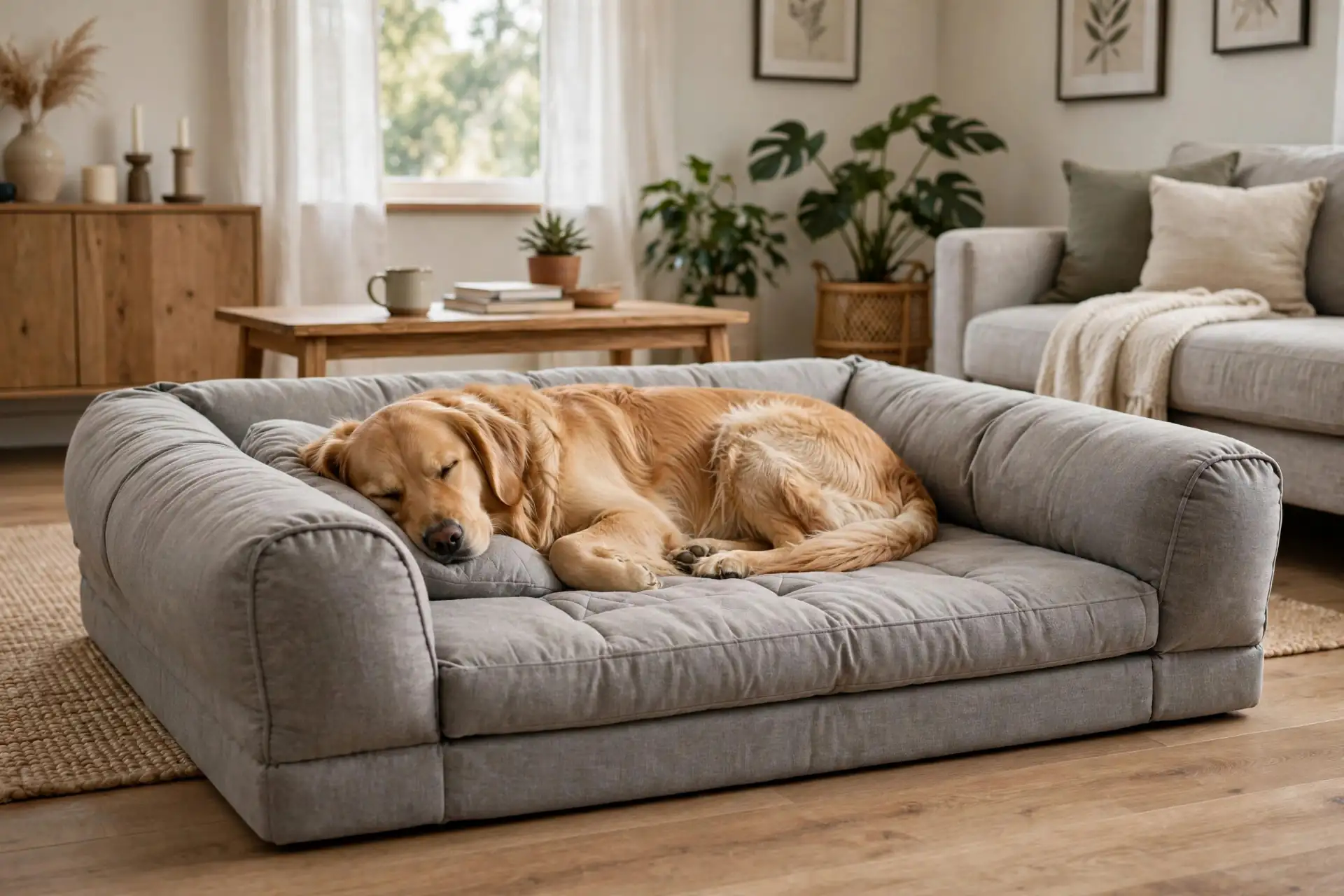
Bolstered or “donut” beds with raised edges suit dogs that like resting their head on something. Flat mattress-style beds suit dogs that sprawl. Neither is objectively better; it depends on the dog in front of you.
Covers, Cleaning, and What Wears Out First
A removable, machine-washable cover matters more than most buyers think going in. Zippers with a fabric flap over them last longer than exposed zippers, which dogs can chew or catch a nail on. Waterproof liners are worth the extra cost for a puppy who isn’t fully house-trained yet, or an older dog with occasional accidents — they protect the foam underneath, which is the part you can’t wash and can’t replace cheaply.
The zipper and the seams along stress points, not the foam, are usually the first thing to fail. Reinforced stitching at the corners is a small detail that adds real years to a bed’s life, and it’s usually mentioned in the product description if it’s there.
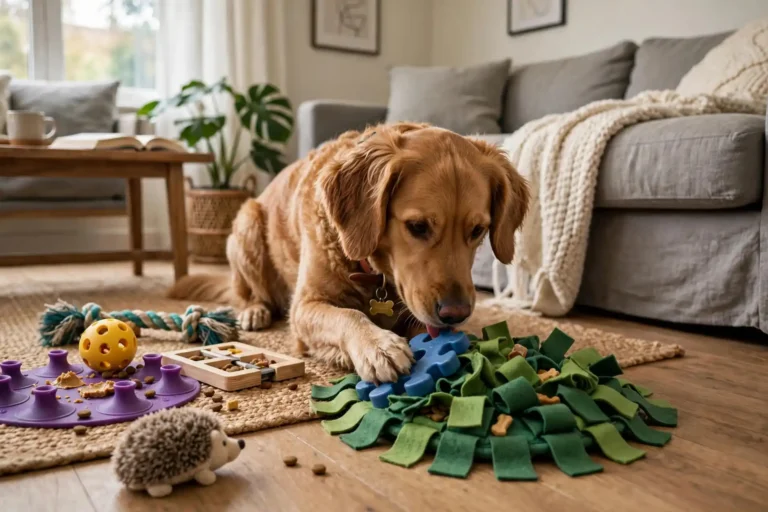
If you’re setting up a space for a new dog for the first time, the bed is one piece of a larger routine — see our guide on setting up a calm first night for a new puppy for what else to have ready. A bed that holds up matters even more for a dog who spends real time on it during the day; pairing it with enrichment toys for a bored dog gives them a reason to use that spot instead of the couch.
Price alone tells you almost nothing about which bed will last. Read the materials list before the star rating.
Why dog beds vary so wildly in price
Dog beds range from fifteen dollar flat pads to several hundred dollar orthopedic thrones, and the price spread confuses buyers. The difference is not just marketing. Materials, construction quality, support design and durability vary enormously, and these differences matter more for dogs than the price tags suggest at first glance.
Dogs spend twelve to fourteen hours a day sleeping, more for puppies and seniors. That is more time than the dog spends doing literally anything else, including eating and walking combined. The bed is the most used piece of dog equipment you will buy. Viewed as cost per hour of use, even an expensive bed is cheap compared to most pet purchases. The question is not whether to spend, but what spending actually buys.
Support: the core value question
The fundamental job of a dog bed is supporting joints and distributing weight. Cheap polyfill beds feel plush initially but compress within weeks into a thin pancake offering no support. This is by design at the low end: loose fill is cheap to manufacture and feels luxurious in the store, which is exactly where the buying decision happens. Memory foam and high density orthopedic foam maintain their shape and cushion pressure points, which matters enormously for large breeds, seniors and dogs with arthritis or hip dysplasia.
Test support the way your dog will use it: press your knee into the bed and see whether you feel the floor through it. If you do, so will your dog. Quality foam rebounds when you lift your weight; cheap fill stays compressed. For a young healthy small dog, basic support suffices. For anyone else, support is the feature worth paying for. Our guide to what makes a scratching post worth using applies the same principle to cats: the functional design matters more than the appearance.
Size and shape matching
A bed that is too small forces the dog to curl tightly or hang off the edge, defeating the purpose. Measure your dog sleeping in its natural stretched position and add several inches. Dogs that sprawl need rectangular beds; dogs that curl prefer round or bolstered designs that support the curled posture. Watch how your dog actually sleeps rather than assuming.
Bolsters, the raised edges on many beds, divide opinion. Some dogs love resting their heads on them; others ignore them entirely. If your dog currently sleeps with its head on pillows or couch arms, it will probably use a bolster. If it sleeps flat, save the money and buy a flat mattress style bed.
Multiple dogs and bed guarding
In multi dog homes, one bed per dog plus one spare prevents competition. Dogs that guard beds need separate sleeping areas rather than a bigger shared bed. Bed guarding is a management issue as much as a training one, and adequate resources reduce the conflict.
Durability and washability
A bed that cannot be washed has a limited lifespan in a real home. Look for removable machine washable covers as a minimum requirement. The best designs allow washing both the cover and the inner foam or have waterproof liners protecting the foam from accidents and drool. A waterproof liner is the unsung hero of dog beds: without one, a single accident soaks into the foam and the bed never fully recovers, no matter how many times you wash the cover.
Chew resistance matters for puppies and power chewers. No bed is truly indestructible, but tightly woven fabrics and minimal loose trim survive longer than plush beds with dangling tags. For chronic bed destroyers, elevated cot style beds remove the chewing temptation entirely and suit warm climates well. The American Kennel Club’s bed buying guide breaks down material options with their durability trade offs.
When expensive beds are worth it
Orthopedic beds earn their price for senior dogs, large breeds prone to joint issues, and any dog recovering from injury or surgery. The support genuinely affects comfort and mobility, and owners of arthritic dogs often report visible improvement in morning stiffness. For these dogs, the bed is medical equipment as much as furniture.
For young healthy dogs, mid range beds with decent foam and washable covers offer the best value. The ultra premium features matter less when the dog’s joints are resilient. Resist the temptation to buy the cheapest bed as a placeholder; a mid range bed bought now often lasts into the dog’s senior years, when you will be glad you already own it. Buy for the dog you have now, and upgrade to orthopedic when age or condition warrants it. Senior dogs slowing down often need broader comfort adjustments too, which our guide to normal aging in senior dogs covers.
When to Replace Your Dog’s Bed
Do the flattening test every few months. Press your hand firmly into the sleeping area and let go. If the fill does not spring back and you can feel the floor through it, the bed is no longer supporting your dog. Memory foam should recover within a few seconds; polyester fill that stays compressed is done.
Smell tells you what washing cannot fix. Wash the cover and the insert separately, following the label. If the bed still smells after a proper wash, or the insert has clumped so it cannot be fluffed back, replace it. A bed that cannot be cleaned is a bed harboring bacteria and dust mites.
Lifespan varies a lot by fill type. Cheap polyester-fill beds typically flatten within a year of nightly use. High-density memory foam holds up for two to three years before it loses support. Orthopedic foam rated for the dog’s weight lasts longest, but even that degrades — the heavier the dog, the faster the foam breaks down.
Watch your dog for clues. Circling for a long time before lying down, avoiding the bed for the floor, or sleeping in a new curled-up position can mean the old spot no longer feels good. Replacing the bed on time protects joints, especially in older dogs, and it costs less than the vet visit a bad bed can lead to.
Frequently Asked Questions
How do I know what size bed my dog needs?
Measure your dog in its usual sleeping position and add six to eight inches in each direction. When between sizes, size up; a slightly large bed is far better than a slightly small one.
Are orthopedic beds just marketing?
No. High density and memory foam genuinely distribute weight and relieve pressure points better than cheap fill. The benefits are most noticeable for older dogs, large breeds and dogs with joint conditions.
How often should I replace a dog bed?
When the support is gone, the cover will not stay clean, or the dog avoids it. Quality beds last two to four years with washing; cheap beds may need replacing within months.
Should the bed be in a crate or outside it?
Either works if the dog is comfortable. Crate beds should fit the crate exactly without bunching. Some dogs prefer a bed in a social area where the family gathers; location affects use as much as the bed itself.
My dog prefers the floor. Is the bed wasted?
Some dogs run hot and prefer cool floors, especially in warm weather. Try an elevated cot that allows airflow, or place the bed in a cooler spot. Do not force it; observe what the dog actually chooses.
Conclusion
A dog bed is worth its cost when it provides lasting support, fits the dog’s sleeping style, survives washing, and suits the dog’s age and health. Buy support and durability over appearance, size generously, and prioritize washability. For more pet care guides, visit the Factblaze homepage.