Common Mistakes People Make With Leash Training a Puppy
The most common mistake in leash training a puppy is pulling back the instant the leash goes tight. That triggers a puppy’s opposition reflex — the instinct to lean harder into pressure, not away from it — so a tug-of-war starts on walk one and gets harder to unlearn every day after.
Fighting the Leash Instead of Rewarding Slack
A leash that goes tight should be the signal to stop walking, not to pull back. Standing still until the puppy loosens the leash on their own, then continuing forward, teaches that a loose leash is what keeps the walk moving. It’s slower at first — some early walks turn into a series of stop-and-go five-foot stretches — but it builds the habit without a fight.
Walks That Are Too Long for a Puppy’s Attention Span
A young puppy can’t hold focus for a twenty-minute structured walk any more than a toddler can sit through a long meeting. Training sessions of five to ten minutes, several times a day, teach loose-leash walking far faster than one long walk where the puppy checks out halfway through and starts pulling out of boredom rather than excitement.
Skipping Rewards Once the Leash Is On
Treats tend to disappear the moment the leash comes out, as if the leash itself should be reward enough. Puppies learn fastest when walking next to you is reinforced constantly at first — a small treat every few steps of loose-leash walking, then gradually stretching the distance between rewards as the habit sets in.
Starting in a High-Distraction Environment
Leash manners that work perfectly in the living room can fall apart completely on a sidewalk full of smells, squirrels, and other dogs. Building the skill indoors or in the backyard first, then moving to a quiet street, and only later to a busier route, keeps the puppy set up to succeed instead of practicing pulling in an environment that’s too hard from day one.
Consistency between family members matters as much as the method — what positive reinforcement training looks like day to day applies directly here, since a puppy who gets rewarded for loose-leash walking by one person and handled differently by another never fully learns which behavior works.
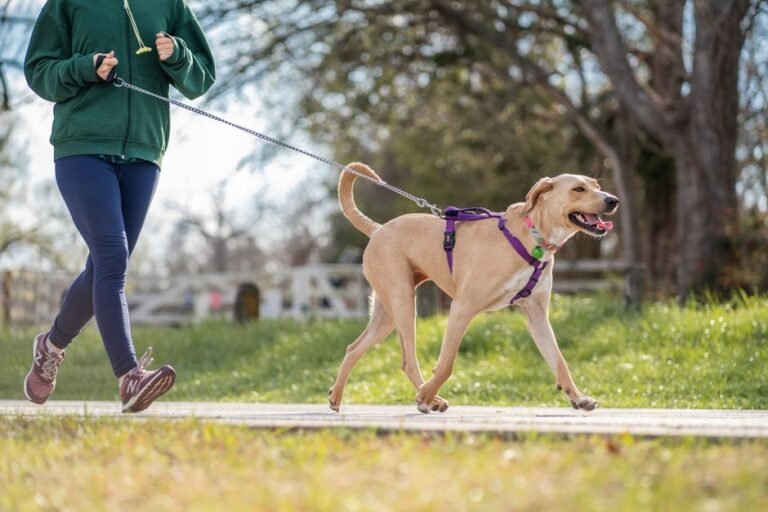
The equipment matters too. A well-fitted harness distributes pressure across the chest instead of the neck, and our guide to choosing between a slip lead and a regular collar covers the trade-offs for different stages of training.
For more background on positive, reward-based training methods, the AKC’s training resources are a good reference.
Expecting Progress Too Fast
Loose-leash walking is one of the slower skills to build, and comparing a ten-week-old puppy’s progress to a well-mannered adult dog on the same street sets everyone up for frustration. Regression is normal, too — a puppy who was walking nicely last week might pull again this week as they go through a growth spurt or a fear period. That’s not a training failure; it’s a reason to shorten the sessions and go back to easier distractions for a while, not a sign the method stopped working.
Puppies don’t learn to walk nicely from a single good session — they learn from a hundred short, boring, consistent ones.