
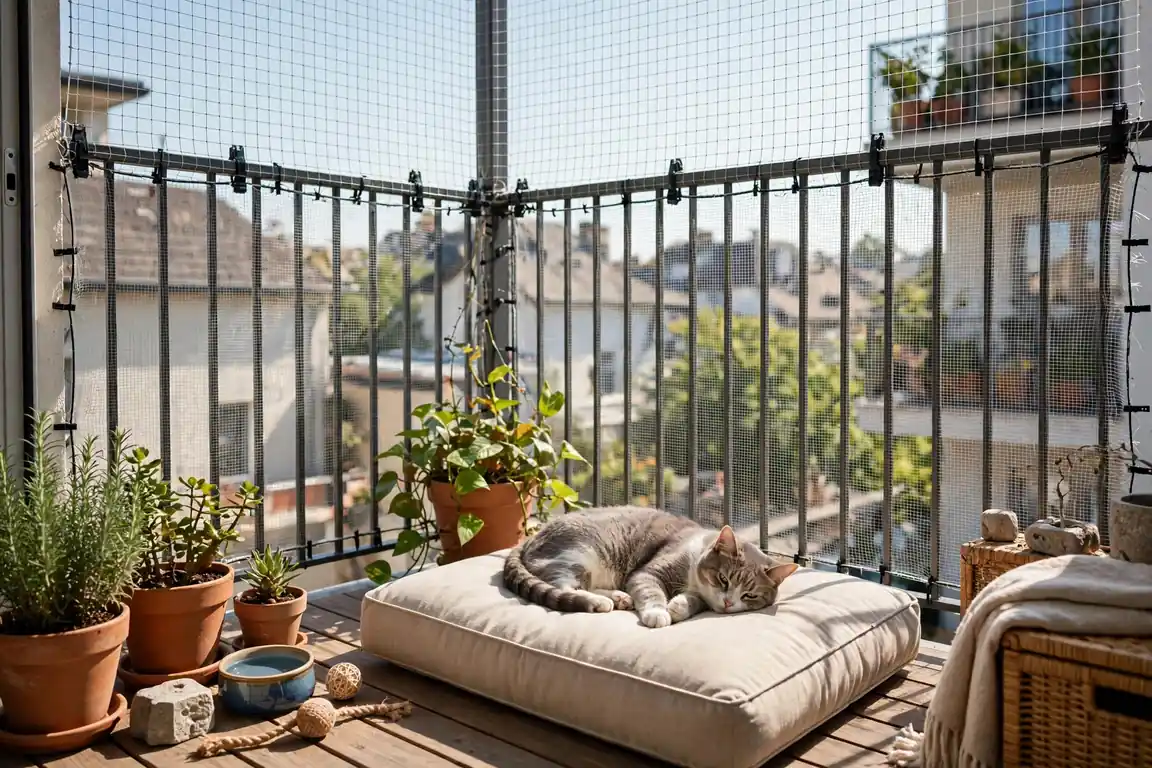
A Checklist for Pet-Proofing a Balcony or Patio
Balconies and small patios hide more hazards than a yard does, mostly because owners assume a contained space is automatically a safe one. Screening, plants, railings, and heat all need a second look before a cat or dog gets regular access.
Falls are the most common outdoor injury for apartment cats
Cats have excellent balance but not perfect judgment, especially when chasing an insect or a bird past a railing. Any balcony above the ground floor needs a secured screen or mesh barrier that a cat cannot push loose, not just a railing with gaps. Cat-specific balcony netting, installed so there’s no way to squeeze through or climb over the top, is worth the cost even on a small patio.
Dogs are less likely to fall but more likely to jump for something on the other side of a railing, so the same screening logic applies if a balcony overlooks a street, parking area, or another unit’s space.
Plants are a quieter risk
Patios often collect potted plants that would never end up in an indoor room, and several common outdoor and balcony varieties are toxic to cats and dogs, including lilies, sago palm, oleander, and azalea. A pet that has access to a balcony should only have access to plants confirmed safe for its species, not “probably fine” ones. When in doubt, move a plant indoors out of reach or off the balcony entirely rather than guessing.
- Check every potted plant against a verified pet-safe list before it goes on the balcony
- Install cat-proof netting or mesh on any railing with gaps a cat could fit through
- Remove standing water in saucers or containers, which can attract mosquitoes and become a drowning risk for small pets
- Store fertilizer, pest spray, and citronella candles somewhere a pet can’t reach or knock over
- Provide shade and a water bowl if a pet has regular balcony access during warm weather
Heat is easy to underestimate on a patio because it feels like “outside,” but concrete and tile floors get considerably hotter than grass, and a small space with a glass or metal railing can trap heat like a greenhouse in direct sun. A pet left on a balcony for more than a few minutes in hot weather needs shade and water available the entire time, not just a bowl left out that happens to be there.
Cords and string lights strung along a railing for decoration are a chewing hazard for both cats and dogs, and cheap outdoor extension cords are not always rated for a pet that might bite through the insulation. Run any cords along the wall out of reach rather than across the floor.
Finally, treat the balcony door itself as part of the checklist. A screen door alone won’t stop a cat that’s determined to push through a gap, and a dog leaning on a sliding screen can pop it off its track. If a balcony is going to be a regular part of a pet’s routine rather than an occasional supervised visit, it’s worth confirming the space is secure with the door closed and the pet unsupervised for a few minutes before trusting it long-term.
If a pet ever eats a plant or chews something on a balcony and starts showing unusual symptoms, treat it the same as any other poisoning concern and call a vet or the ASPCA Animal Poison Control Center right away rather than waiting to see if it passes.
Why balconies and patios need pet proofing
Balconies and patios feel like safe outdoor access, but they contain hazards most owners overlook. Gaps in railings, toxic plants, unstable furniture, and access to ledges or neighboring balconies all pose risks. Cats can slip through surprisingly small gaps, and dogs can be more athletic than expected when motivated by a squirrel or a sound.
The goal is not to eliminate outdoor access but to make it genuinely safe. A well proofed balcony becomes a favorite spot for fresh air and sunbathing. Many cats will choose the balcony over any indoor perch once they trust it. A poorly proofed one is an accident waiting for a moment of inattention.
Railing gaps: the primary danger
Measure every gap in your railing. Cats can squeeze through anything their head fits through, which for many cats means gaps as small as a few inches. Dogs, particularly small breeds and puppies, can also fit through wider than expected openings. Vertical railings with wide spacing are the most common hazard.
Solutions depend on your railing type. Mesh netting or lattice panels secured to the inside of railings close gaps effectively and are usually renter friendly since they attach with zip ties rather than screws. Plexiglass panels offer a sturdier permanent option. Whatever you use, check it regularly for loosening, chewing damage or weathering. Puppies in particular will test mesh with their teeth, and a determined chewer can open a gap in a single afternoon. Our guide to what to check before hanging anything heavy on a wall covers the anchoring principles that apply to securing heavier barrier panels.
The climbing factor
Some cats climb railings regardless of gap size. If your cat is a climber, barriers need to address vertical access too, not just gaps. Angled mesh extensions at the top of railings discourage climbing, and removing climbable furniture from near the railing eliminates launch points.
Fall risks beyond the railing
High rise syndrome is a documented veterinary phenomenon: cats falling from balconies and windows, often surviving the fall but with serious injuries. It happens more often than owners expect, usually when a cat lunges at a bird or insect and misjudges. Never assume your cat’s balance makes it safe; instinct overrides caution in a moment of excitement. Indoor cats are actually at higher risk because they lack the practiced coordination of cats accustomed to heights, so do not assume a lifelong indoor cat will be careful on a balcony.
For dogs, the risk is different but real. Excited dogs can jump or scramble over railings lower than owners expect, particularly when another animal appears. Never leave dogs unsupervised on balconies with railings they could conceivably clear, and be especially careful with new or unfamiliar dogs whose athleticism you have not yet learned.
Toxic plants and chemicals
Balconies often host container gardens with plants toxic to pets. Lilies are lethally toxic to cats even in small amounts. Sago palms, oleander, azaleas and many common ornamentals are dangerous to both cats and dogs. Audit every plant on the balcony against a toxicity database before allowing pet access.
Chemicals are the other concern. Fertilizers, pesticides, herbicides and even some mulches are hazardous. If you garden on the balcony, switch to pet safe products and store all chemicals in locked containers indoors. Standing water in saucers can harbor bacteria and mosquito larvae; empty them regularly.
Furniture and object hazards
Lightweight furniture that a pet could knock over or push against the railing creates both impact and escape risks. Secure or remove wobbly pieces. Tables near railings become launch pads for athletic cats. Glass top tables can break under a scrambling dog’s weight.
Small objects are ingestion hazards: pebbles, decorative stones, fallen plant material, cigarette butts flicked from above. Scan the balcony floor regularly the way you would puppy proof a room. The ASPCA toxic plant database is the definitive reference for checking every plant your pet might encounter. If you are preparing a home for a new pet more broadly, our puppy proofing checklist applies the same systematic approach indoors.
Temperature and sun exposure
Renter-Friendly Balcony Pet-Proofing That Needs No Drilling
Tension rods are the renter’s best friend. Wedge one between the balcony ceiling and floor, or between two railings, and hang pet mesh or outdoor fabric from it with zip ties or curtain clips. A standard rod holds in openings from twenty eight to forty eight inches; measure your gap first. When you move, the rod twists out and leaves zero marks.
For gaps between railing bars, which is where small dogs and cats slip through, use removable mesh panels. Plastic garden mesh or pet safety netting attaches to railings with zip ties or velcro straps, both cut away cleanly at move out. Choose mesh with openings under two inches for cats and small dogs. A twenty five foot roll costs under twenty dollars and covers most balconies.
Freestanding panels work where you cannot attach anything at all. Exercise pen panels, the kind sold for indoor puppies, link together and stand on their own in front of open railing sections. They are heavy enough to stay put and fold flat for storage. Two or three panels usually close off the danger zones.
Two rules regardless of method. Never rely on furniture as a barrier; pets climb and push. And check the floor gap too: balconies with wide gaps under the railing need a mesh skirt at the bottom, because that is exactly where a curious cat will test first.
Balconies can become dangerously hot. Dark flooring, metal railings and enclosed glass balconies trap heat, and surface temperatures can burn paw pads even when the air feels tolerable. Test surfaces with your hand on hot days. If you cannot hold your palm on the flooring for five seconds, it is too hot for paws. Provide shade and fresh water whenever pets have balcony access in warm weather.
In cold weather, the reverse applies. Pets should not be left on exposed balconies in freezing temperatures, and metal surfaces become painfully cold. Supervise winter balcony time and keep it brief for short coated animals.
Frequently Asked Questions
Can I let my cat on the balcony unsupervised?
Only after thorough proofing: gaps secured, toxic plants removed, climbing addressed, and no fall risk. Even then, many owners prefer supervision. An enclosed catio is the safest option for unsupervised outdoor access.
What is the cheapest way to secure railing gaps?
Plastic mesh netting attached with zip ties is inexpensive, effective and renter friendly. Check it regularly for damage and replace sections as needed.
Are all lilies dangerous to cats?
True lilies and daylilies are severely toxic to cats; even pollen or vase water can cause kidney failure. Peace lilies and calla lilies are less dangerous but still irritating. When in doubt, keep lilies away from cats entirely.
How do I stop my dog jumping at the balcony railing?
Training a solid leave it and recall helps, but management matters more: do not leave the dog unsupervised on the balcony, and consider barrier extensions that make jumping physically impractical.
Is a ground floor patio safer than a high balcony?
Fall risk is lower, but ground patios have their own hazards: easier escape over fences, more exposure to other animals, and greater access to garden chemicals. Proof thoroughly regardless of height.
Conclusion
A pet proofed balcony or patio is one of the best enrichments you can offer an indoor pet. Secure the railings, remove toxins, stabilize furniture, and manage temperature, and the space becomes a safe favorite rather than a hidden hazard. Revisit the checklist seasonally, since weather, plant growth and wear change the risk picture over time. For more pet care guides, visit the Factblaze homepage.